How To Swim Freestyle – Beginner Guide
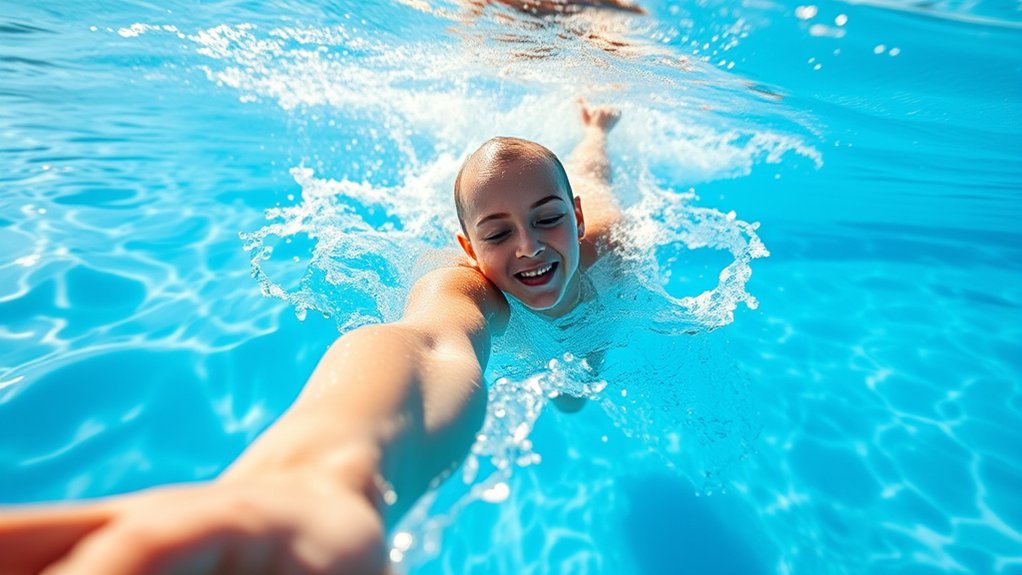
To swim freestyle, keep your head aligned looking down and rotate your body about 30 degrees with each stroke for better propulsion. Breathe by turning your head to the side without lifting it, exhaling underwater to prep for quick inhales. Use a high elbow and enter the water with your fingertips first to pull efficiently.
Kick from the hips with small, quick strokes, coordinating with your arms. Master these basics, and you’ll soon glide faster and swim with less effort as you refine your technique. It might take some practice, but once you get the hang of it, swimming freestyle will feel natural and smooth.
Get Your Head and Body Position Right for Freestyle
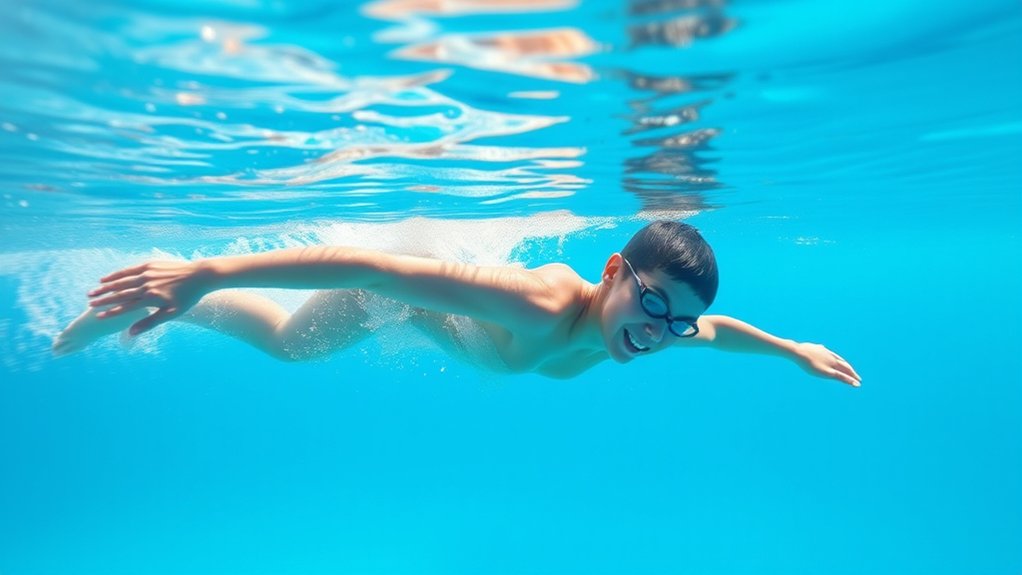
To swim freestyle efficiently, start by positioning your head and body correctly. Keep your head in line with your body and look straight down at the pool bottom. This helps you maintain a streamline position, reducing drag and making your strokes smoother.
Aim to keep the waterline at the crown of your head. Doing this keeps your hips high and improves buoyancy. Avoid lifting your head to look forward because that’ll drop your hips and legs, increasing resistance and wasting energy.
As you swim, rotate your body slightly from side to side with each stroke. This rotation maximizes your distance per stroke and engages larger back muscles for better propulsion.
Focus on a straight, aligned body position to boost efficiency and reduce the need for excessive kicking.
Master Breathing Technique for Smooth Freestyle Swimming
Maintaining a streamlined body position sets the foundation for effective freestyle swimming, but controlling your breath is what keeps you moving smoothly and efficiently through the water.
To master breathing technique, turn your head to the side, keeping one eye and one ear in the water. This helps maintain momentum and reduces resistance.
Turn your head sideways with one eye and ear in the water to keep momentum and reduce drag.
Remember to keep your elbow high during your stroke to aid rotation and make breathing easier. Inhale quickly and deeply during the head turn without lifting straight up, which can drop your hips and legs.
Focus on exhaling continuously while submerged to stay relaxed and prepare for the next breath.
With consistent practice, this side breathing rhythm will boost your comfort, coordination, and overall freestyle efficiency.
Keep practicing, and your smooth breathing will power your swim.
Perfect Your Arm Pull for Maximum Propulsion
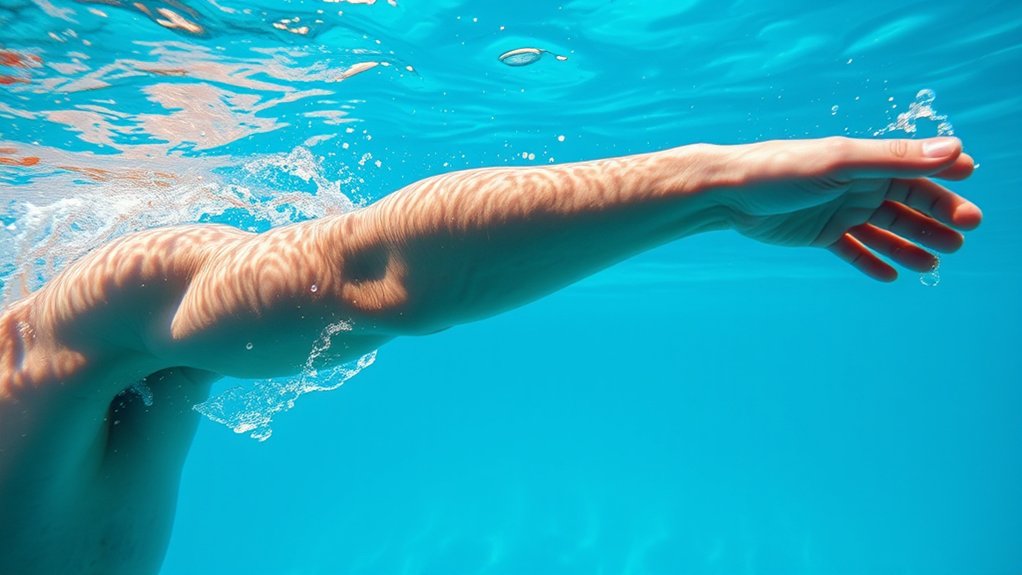
Although it may seem simple, perfecting your arm pull is essential for maximizing propulsion in freestyle swimming. Start your arm pull by entering the water fingertips first, keeping your hand wider than shoulder-width to create an effective surface area.
Use the Early Vertical Forearm (EVF) technique by bending your elbow as your hand enters, maintaining a high elbow throughout the pull. This position keeps your forearm parallel to the water, allowing you to push backward with maximum propulsion.
Focus on driving your forearm and hand straight back, avoiding side-to-side movements that waste energy.
Finish with a smooth arm recovery above the water, entering just after your hand passes your head.
Mastering this arm pull technique will boost your freestyle stroke efficiency and speed. It might take some practice, but the results are totally worth it!
Develop a Strong, Efficient Freestyle Kick From the Hips
When you start your freestyle kick from the hips instead of the knees, you release more power and efficiency in every stroke. Focus on small, quick kicks with straight legs and pointed toes to reduce drag. Keep your legs close together, about 18 inches apart, to maintain a streamlined position.
Consistent kick rhythm matched with your arm strokes helps you swim efficiently and conserve energy. It’s all about working smarter, not harder, when you get this right.
| Aspect | Tip | Benefit |
|---|---|---|
| Kick origin | Start from hips | More powerful propulsion |
| Leg position | Straight legs, pointed toes | Reduced drag, increased speed |
| Kick size | Small, quick kicks | Energy conservation |
| Leg spacing | Close together (~18 inches) | Minimized water resistance |
| Rhythm | Coordinate with arm strokes | Better body balance |
Mastering this efficient freestyle kick boosts your swimming strength and speed. It’s a game changer when you learn to kick from the hips properly.
Use Freestyle Body Rotation to Swim Faster and Feel Less Tired
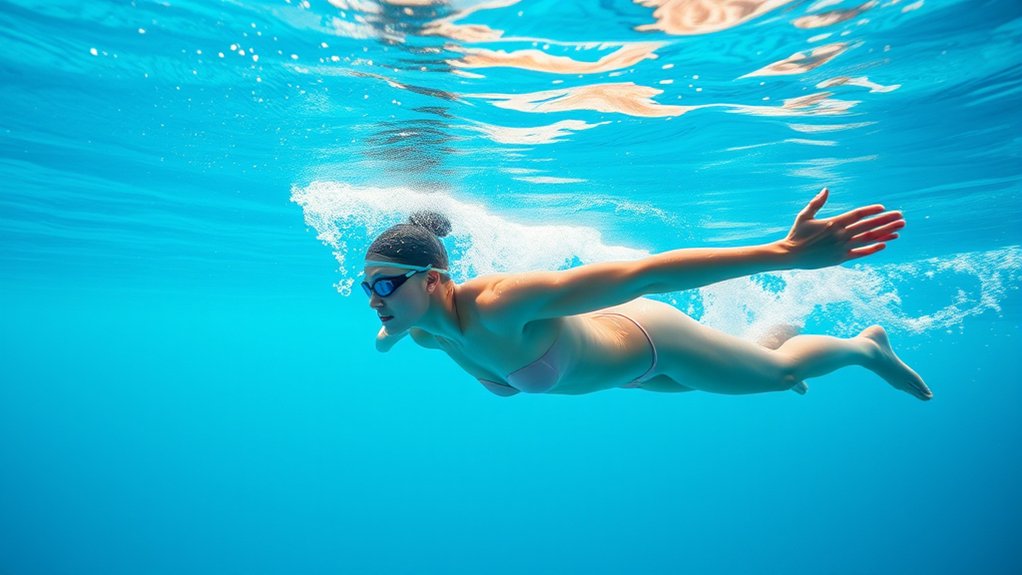
To swim faster and feel less tired, start by mastering your freestyle body rotation. Engage your core and hips to power each stroke.
When you time your rotation with your breathing, your movements become smoother and more efficient.
This technique doesn’t just boost your propulsion. It also helps you conserve energy and keep proper alignment in the water.
Give it a try, and you’ll notice a big difference in how you swim!
Benefits of Body Rotation
Because body rotation engages your core and back muscles, you’ll generate more powerful arm pulls and swim faster with less effort. By engaging larger muscle groups, your strokes become more efficient, allowing you to maintain a streamlined body position. This reduces drag, helping you glide through the water smoothly.
Body rotation also improves your balance and alignment, which means you’ll feel less tired during longer swims. Plus, rotating side to side creates space for easier breathing, keeping your stroke rhythm steady.
| Benefit | How It Helps You |
|---|---|
| Powerful Arm Pulls | Engages larger muscle groups |
| Streamlined Body Position | Reduces drag for smoother movement |
| Better Endurance | Maintains balance and reduces fatigue |
| Easier Breathing | Creates air pocket during rotation |
Proper Rotation Techniques
Mastering proper rotation techniques can transform your freestyle swimming by making each stroke more powerful and less tiring. Focus on initiating body rotation from your hips with a smooth side-to-side movement. Aim for about a 30-degree turn with each arm stroke to engage larger back muscles, boosting your speed and efficiency.
As your hand enters the water, rotate your body while keeping the other arm recovering on the opposite side. This coordinated movement helps maintain a streamlined position, reducing drag and allowing you to breathe without lifting your head too much.
By practicing these proper rotation techniques, you’ll generate longer, stronger strokes, swim faster, and feel less fatigued.
Consistent body rotation is key to improving your swimming freestyle performance and endurance. Give it a try, and you’ll notice the difference in no time!
Timing Rotation With Breathing
When you time your body rotation perfectly with your breathing, you’ll swim faster and feel less tired. Focus on rotating your body from the hips as you turn your head to breathe. Keep one eye and one ear in the water to maintain balance.
This timing rotation helps you stay in a streamline position, reducing drag and improving speed. Synchronize your breath with your arm pull. Rotate and breathe as your arm enters the water to keep your stroke smooth and efficient.
Remember to exhale rhythmically underwater to prepare for a quick, relaxed inhale during rotation. Efficient body rotation not only enhances propulsion by engaging stronger back muscles but also conserves energy. This lets you swim longer with less fatigue.
Master this, and your freestyle will feel effortless.
Avoid Common Freestyle Mistakes Beginners Make
If you want to swim freestyle efficiently, it’s all about getting the basics right—like your head position, breathing, and how you coordinate your pull and kick.
Make sure your head stays aligned with your body. When you turn it to breathe, do it smoothly to avoid creating extra drag.
Also, try to focus on a strong, high elbow pull. This helps you catch more water and move forward better.
And don’t forget about your kick—keep it relaxed and in sync with your strokes. When everything works together, you’ll swim smoother and faster.
Head Position Errors
Although it might seem natural to look forward while swimming freestyle, doing so causes your hips and legs to drop, making it harder to stay streamlined. To maintain an efficient body position, keep your head aligned with your trunk and look straight down at the pool bottom. This helps reduce drag and keeps your hips elevated.
Position the waterline at the crown of your head to create a feeling of swimming downhill, boosting buoyancy. Avoid lifting your head to breathe; instead, turn it gently to the side, keeping one eye and one ear in the water.
Consistent head position supports smooth breathing shifts and rhythm, so exhale continuously underwater to prepare for each breath.
Mastering head position is key to improving your freestyle efficiency.
Breathing Technique Issues
Maintaining the right head position sets the stage for smooth, efficient breathing during freestyle. To master your breathing technique, keep your head aligned with your body and look straight down. When it’s time to breathe, turn your head to the side, don’t lift it up.
Make sure one eye and one ear stay in the water to maintain a streamlined position and reduce drag. Practice exhaling steadily underwater so you’re ready to inhale quickly and naturally when you turn your head.
Focus on proper timing by coordinating your breath with your arm strokes. Take a breath as your arm enters the water.
This rhythm keeps your stroke fluid and helps you swim more efficiently without disrupting your body’s alignment. It might take some practice, but once you get the hang of it, breathing will feel much easier.
Just keep at it and you’ll notice the difference in no time.
Pull And Kick Flaws
If your pull and kick aren’t working together smoothly, your freestyle stroke will feel choppy and inefficient. Focus on refining your pull technique by entering the water with fingertips first, wider than shoulder width, and keeping a high elbow position throughout the underwater pull.
Avoid dropping your elbow below your hand, as this reduces propulsion and increases drag.
For kick mechanics, generate kicks from your hips with straight legs and pointed toes. Bending your knees too much weakens your drive.
Remember, timing between your pull and kick is essential; they must coordinate to maintain rhythm and power.
Finally, maintain proper body alignment by keeping a straight, streamlined position at the surface.
Fixing these flaws will boost your speed and efficiency in freestyle swimming. It really makes a difference when everything works together smoothly.
Adapt Freestyle Technique to Fit Your Body and Skill Level
Because every swimmer has a unique body and skill level, you’ll get the best results by customizing your freestyle technique.
To adapt your body position, keep your head aligned with your spine, looking straight down to reduce drag. Adjust your arm pull to match your shoulder strength, keeping elbows high for propulsion.
Maintain a streamlined position by aligning your head with your spine and keeping elbows high for effective propulsion.
Tailor your kick to your leg strength. Beginners may prefer a relaxed two-beat kick.
Experiment with breathing techniques by turning your head to the side, maintaining one eye and ear in the water.
Finally, personalize your stroke timing by coordinating your arms, kicks, and breathing for a rhythm that feels natural.
It’s all about finding what works best for you. Give yourself some time to try different approaches until it feels just right.
Build Endurance and Speed in Freestyle Training
When you focus on building endurance and speed in your freestyle training, you’ll swim more efficiently and powerfully.
To build endurance, maintain a streamlined body position to reduce drag. This helps you cover longer distances with less effort.
Incorporate low to moderate heart rate sessions that emphasize volume over intensity to boost your stamina gradually.
For speed enhancement, practice fast swimming sets with proper technique. Keep a straight line and maximize propulsion through strong arm pulls.
Use interval training with adequate rest periods to let your muscles recover while adapting to quicker paces.
Regularly track your swim times and distances to measure progress and set specific goals.
This structured approach will keep you motivated and steadily improve both your endurance and speed in freestyle.
Frequently Asked Questions
How Do I Choose the Right Swim Gear for Freestyle?
To choose the right swim gear for freestyle, start with a swim cap because it helps reduce drag and protects your hair.
Pick goggles that fit comfortably. Silicone ones usually seal well and resist fogging, which is super helpful.
When it comes to swimwear, go for materials like polyester or Lycra since they offer durability and flexibility.
Don’t forget essential accessories like a kickboard or fins to help improve your technique.
Always prioritize comfort and function. Feeling good in your gear will boost your confidence and performance in the water.
What Is the Best Warm-Up Routine Before Swimming Freestyle?
Start your warm-up with dynamic stretching to loosen your muscles and improve blood flow.
Focus on shoulder mobility exercises to prepare your arms for freestyle strokes. Practice breathing techniques on land to establish a steady rhythm.
Then, spend 5-10 minutes in the pool doing easy laps to get comfortable.
This water acclimation helps your body adjust to the temperature and feel confident before you swim harder.
Keep it consistent, and you’ll swim stronger!
How Often Should Beginners Practice Freestyle Each Week?
Practice frequency is key, key to accessing your potential in freestyle. Aim to swim three to four times a week to balance skill improvement and technique refinement.
This schedule helps you build muscle memory without overwhelming your body, giving you essential recovery time between sessions.
Remember, consistency beats intensity. Steady progress will keep you motivated and injury-free as you master each stroke with confidence and grace.
Keep pushing—you’ve got this!
Can Freestyle Swimming Help With Weight Loss?
Yes, freestyle swimming can help with weight loss by boosting your caloric burn and engaging multiple muscle groups.
To see results, focus on increasing your swimming duration gradually while maintaining good technique.
Remember, consistent workouts paired with smart diet considerations will maximize fat loss.
Keep pushing yourself, and you’ll not only burn calories but also build endurance and strength.
Stay motivated, and enjoy the full benefits of swimming!
What Should I Do if I Feel Panicked in the Water?
If you feel panicked in the water, focus on breathing techniques, practice mental strategies, follow safety tips, and use recovery methods.
Start by taking slow, deep breaths to calm your body. Remind yourself that you’re safe and in control.
Float on your back if needed, signal for help, and rest until you regain composure.
Conclusion
Remember, practice makes perfect. Freestyle swimming gets easier and more natural the more you do it. Focus on your head and body position, breathing, arm pull, kick, and rotation to swim efficiently and avoid common mistakes.
Adapt techniques to your own rhythm and skill level. Stay consistent, build endurance, and keep pushing yourself. With patience and dedication, you’ll soon glide through the water with confidence and speed.
Keep swimming strong!