How To Clean A Pond For Swimming – Step Guide
To clean your swimming pond, start by gathering tools like a clean-out pump and protective gear. Then, safely transfer fish to a shaded tank.
Drain the pond gradually from the deepest point to minimize sediment disruption. Manually remove debris and trim aquatic plants.
Use a pond vacuum and pressure wash surfaces before refilling with temperature-matched, treated water. Add beneficial bacteria to maintain balance.
Keep an eye on water quality and make sure there’s good circulation. Following these steps will help you maintain a clear, safe swimming environment before diving into detailed care tips.
Get Your Pond Cleaning Tools Ready
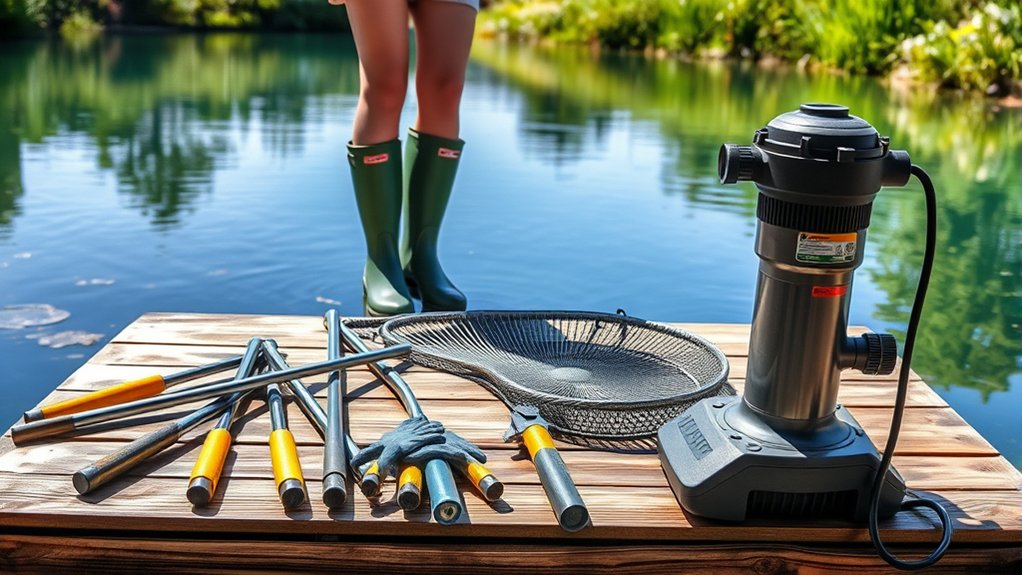
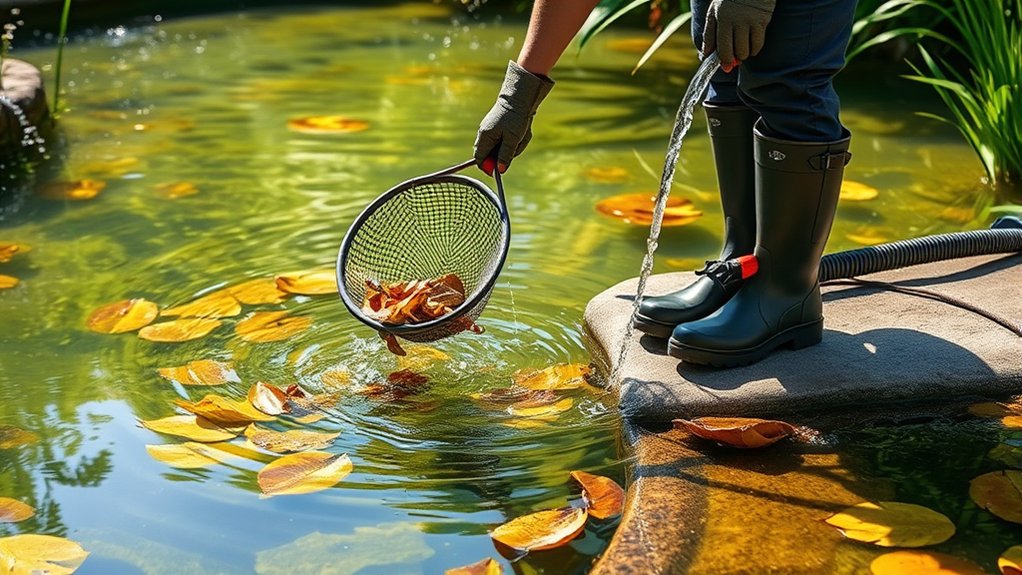
To clean your pond effectively, start by gathering five essential tools: a clean-out pump with a 25-foot discharge hose, a high-pressure nozzle, garden shears, rubber boots, and tall rubber gloves. These tools are vital for efficient pond cleaning and personal protection.
Wear your rubber boots to prevent slipping and guard against contaminants. Use garden shears to trim overgrown aquatic plants carefully.
Before starting, set up a fish container such as a child’s swimming pool to temporarily hold fish, minimizing their stress during cleaning.
Organize all tools pondside for quick access, making sure the clean-out pump and hoses are ready to operate.
After cleaning, applying beneficial bacteria supports ecological balance. This preparation guarantees an environmentally conscious, thorough pond cleaning process.
Protect Your Fish and Prepare the Pond
Before you begin draining the pond, make sure to safely transfer all fish into a shaded holding tank filled with pond water. Keep the temperatures consistent to reduce stress and avoid thermal shock. It’s important to monitor the water temperature closely in both the holding tank and the pond.
Transfer fish to a shaded tank with pond water, maintaining consistent temperatures to prevent stress and thermal shock.
This way, you can ensure a smooth transition when you reintroduce the fish later on.
Also, don’t forget to turn off and disconnect all electrical components. This protects your equipment and the aquatic life during the cleaning process.
Use a clean-out pump placed at the pond’s deepest point to drain the water efficiently while disturbing as little sediment as possible.
After you finish cleaning, add beneficial bacteria to help restore the pond’s ecosystem. This promotes a healthy environment for both your fish and plants.
Taking these steps will protect your fish and get the pond ready for maintenance without any hassle.
Drain the Pond Without Stirring Sediment
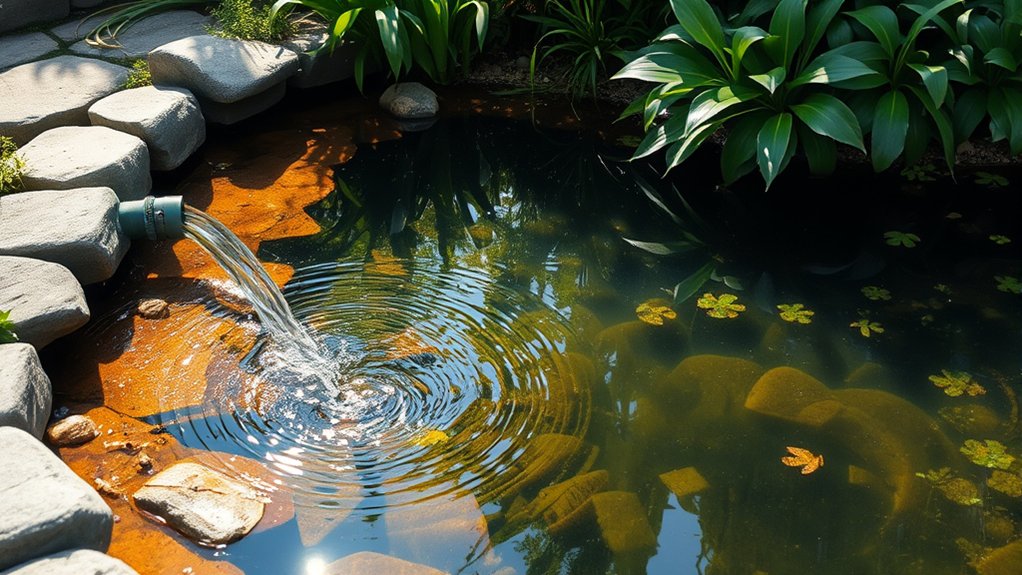
Once the fish are safely relocated and electrical components are disconnected, you can focus on draining the pond while preserving its delicate sediment layers.
Position the clean-out pump at the pond’s deepest point to effectively drain the pond with minimal sediment disturbance. Use a submersible pump equipped with a discharge hose to direct water away from structures, reducing environmental impact.
Gradually lower the water level, making sure to monitor sediment closely and avoid stirring debris through sudden water shifts.
As the water level drops, carefully relocate the pump to maintain efficient drainage and prevent sediment from resettling.
When accessing the pump or surrounding areas, walk carefully to avoid disturbing sediment. This helps keep the pond cleaner and safer for swimming.
Remove Debris and Trim Aquatic Plants
Start by manually removing larger debris like leaves and branches from the pond’s surface and bottom using a bucket. Next, trim aquatic plants with garden shears, focusing on dead or overgrown sections to promote healthy growth and enhance water clarity.
Use a pond vacuum or net to remove smaller debris and sediment, preventing algae buildup that can reduce swimming visibility. Make sure to properly dispose of all trimmed plant material and debris to avoid nutrient spikes that encourage unwanted algae growth.
This systematic approach helps maintain a clean pond, ensuring ideal water clarity and a safe swimming environment.
| Task | Tool | Purpose |
|---|---|---|
| Remove debris | Bucket | Clear surface & bottom |
| Trim aquatic plants | Garden shears | Promote healthy growth |
| Extract sediment | Pond vacuum | Improve water clarity |
| Dispose waste | Compost/bin | Prevent algae growth |
| Monitor algae | Visual check | Maintain water quality |
Pressure Wash Pond Walls and Bottom
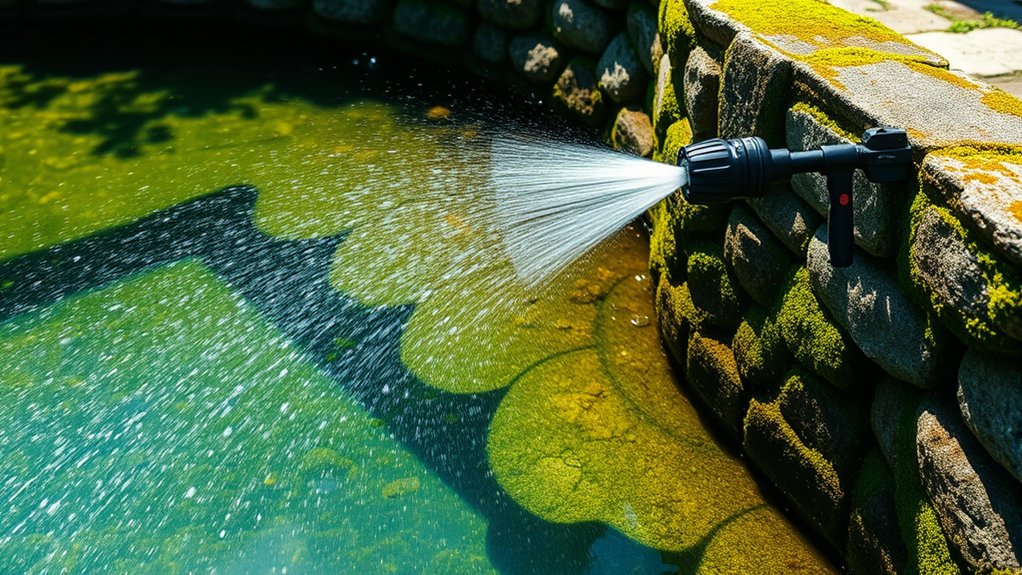
Operate a pressure washer with carefully selected PSI settings to dislodge algae and debris from your pond’s walls and bottom.
Work methodically from the top down to minimize sediment disturbance. This way, you keep the water clearer and make the cleaning more effective.
Start cleaning from the top to prevent sediment from clouding the water and improve overall effectiveness.
When cleaning your pond, use the pressure washer to remove debris without harming the ecosystem or aquatic life.
Keep a safe distance from plants and fish habitats to protect water quality and avoid stress to the wildlife. It’s always good to check for any hidden aquatic life before you start washing.
After washing, rinse the surfaces thoroughly with a garden hose to guarantee clear water and complete debris removal.
Don’t forget to wear safety goggles and protective gear to avoid injury during the process.
- Select PSI appropriate for pond clean-out
- Work top-down to avoid sediment clouding
- Avoid delicate plants and fish zones
- Check for hidden aquatic life before washing
- Rinse thoroughly after pressure washing
Fix Rocks and Gravel During Cleaning
As you clean, make sure to carefully restack any rocks that have been moved. This helps keep the pond’s structure intact and reduces how much sediment gets disturbed.
When it comes to the gravel, spread it out evenly and keep it no deeper than two inches. This way, water can flow properly and aquatic life can thrive.
Taking these steps really helps maintain a balanced ecosystem and keeps the water clear for swimming.
Restacking Rocks Properly
When restacking rocks during pond cleaning, place larger stones at the bottom to create a stable foundation. Then layer smaller rocks on top to minimize shifting. This approach keeps gravel depth within two inches, which helps promote efficient filtration and ideal water flow.
Make sure to remove any plant roots that might disrupt the pond ecosystem or impair filter pads. Use a rake or your hands to redistribute gravel evenly. This prevents buildup that can block circulation.
After cleaning, keep an eye on the rock placement. Environmental factors or fish activity can change the structure over time.
- Prioritize stability by layering rocks by size
- Maintain gravel depth for filtration efficiency
- Remove invasive plant roots disrupting balance
- Evenly spread gravel to support water flow
- Monitor placement to preserve ecosystem health
Managing Gravel Distribution
Properly managing gravel distribution during pond cleaning involves carefully fixing shifted rocks and redistributing gravel to preserve both structure and aesthetics.
As you clean, remove excess gravel from the pond bottom to avoid overcrowding, which can hinder pond plants’ growth.
Use pruning shears or a pressure washer to clear roots entangled with gravel, ensuring unobstructed water flow.
Redistribute gravel strategically to create varied depths, enhancing habitats for aquatic species and promoting ideal water circulation.
Keep an eye on changes in gravel placement over time to prevent sediment buildup and maintain a balanced ecosystem.
This careful approach not only supports pond plants but also contributes to clearer water and a healthier swimming environment.
It’s all about environmentally conscious pond maintenance practices that really make a difference.
Refill the Pond and Treat the Water
Begin refilling your pond with a garden hose, carefully matching the water temperature in the holding tank to that of the pond. This helps prevent shock to fish and other aquatic life.
Before adding municipal water, treat it with a dechlorinator to protect sensitive aquatic organisms and beneficial bacteria. These bacteria are essential for maintaining water quality.
Introduce beneficial bacteria, such as Aquascape Pond Detoxifier, during the refill to speed up ecosystem recovery.
Keep an eye on water levels and water quality regularly to ensure a balanced environment. It’s important to allow the pond to circulate for at least 24 hours before reintroducing fish. This gives the water chemistry time to stabilize.
Gradually refill the pond to avoid sudden temperature changes. Use dechlorinator to keep municipal water safe for your pond.
Add beneficial bacteria to boost the ecosystem’s health. Monitor water levels daily after refilling.
Circulate the water for 24 or more hours before restocking aquatic life.
Keep Your Pond Clear and Safe for Swimming
Although maintaining clear water takes ongoing effort, keeping your pond safe for swimming really comes down to regular monitoring and proactive management. You should test water quality often, focusing on pH and turbidity. This helps prevent algae blooms that can ruin swimming conditions.
Try to do a full clean-out seasonally, preferably in fall or winter. That way, you remove sludge and debris that might harbor pathogens and make the water cloudy.
Installing a pump system ensures constant water circulation, which keeps mosquitoes away and improves overall water quality.
Plus, applying beneficial bacteria treatments breaks down organic matter and helps maintain a balanced ecosystem.
Adding aquatic plants and filtration systems naturally filters out impurities. This not only enhances the safety of your pond but also keeps the water clear.
Frequently Asked Questions
How Often Should I Clean My Pond for Safe Swimming?
You should follow a seasonal cleaning schedule, performing major cleanouts annually in fall or winter to protect wildlife and guarantee swimmer safety.
Weekly pond maintenance tips include water quality testing, debris removal techniques, and skimmer basket emptying.
Evaluate filtration system options to maintain clarity year-round.
Always consider wildlife; avoid stressing fish during cooler months.
Regular maintenance preserves ecosystem balance and keeps your pond safe and inviting for swimming throughout the season.
Can I Swim Immediately After Treating the Water?
You shouldn’t swim immediately after water treatment because of the chemical exposure risks. For your safety, it’s best to wait 24 to 48 hours. Or just follow the guidelines on the product you used.
Make sure the water is clear and all parameters are safe before you jump in.
Good pond maintenance includes using filtration systems and natural alternatives to keep harmful chemicals to a minimum. Always test the water quality before swimming.
This way, you protect your health and the pond’s ecosystem.
It also helps support sustainable and environmentally-conscious pond use and maintenance.
What Are the Best Plants to Keep in a Swimming Pond?
You should choose native varieties of aquatic plants to maintain a healthy swimming pond.
Incorporate floating plants like water lilies for shade and pond aesthetics, and marginal plants such as cattails to stabilize banks. Oxygenating species like hornwort improve water clarity and support aquatic life.
Select plants with seasonal blooms to enhance beauty year-round.
This balanced mix naturally filters water, boosts oxygen, and supports biodiversity without harmful chemicals. It’s a simple way to keep your pond looking great and feeling fresh all season long.
How Do I Prevent Algae Growth Long-Term?
To prevent algae growth long-term, you’ll use algae control methods, natural pond filters, and beneficial bacteria to maintain balance.
You’ll apply water circulation techniques and UV sterilizers to inhibit algae’s spread.
You’ll focus on plant selection strategies that outcompete algae for nutrients.
You’ll follow seasonal maintenance tips to remove debris and manage nutrients.
Together, these steps create a healthy, sustainable ecosystem that curbs algae and keeps your pond clear.
It’s all about keeping everything balanced and working with nature.
Is It Safe to Use Chemicals in a Swimming Pond?
It’s generally unsafe to use chemicals in a swimming pond because they disrupt pond filtration and harm aquatic life.
Instead, you should rely on chemical alternatives and natural treatments, like aquatic plants and biofilters, to maintain water clarity.
Regular water testing helps you monitor conditions without overdosing chemicals.
Always follow safety precautions and consider eco-friendly solutions that support the pond’s ecosystem.
This way, you ensure balanced, healthy water without toxic impacts.
Conclusion
So, there you have it. Turning your pond from a murky swamp into a sparkling swimming haven without accidentally creating a mud volcano or fish apocalypse.
Just remember, with the right tools and care, you’re not just cleaning water; you’re preserving an ecosystem. Keep your pond balanced, because nobody wants a backyard biohazard.
Swim smart, stay green, and enjoy that crystal-clear dip without inviting a frog rebellion or algae takeover.