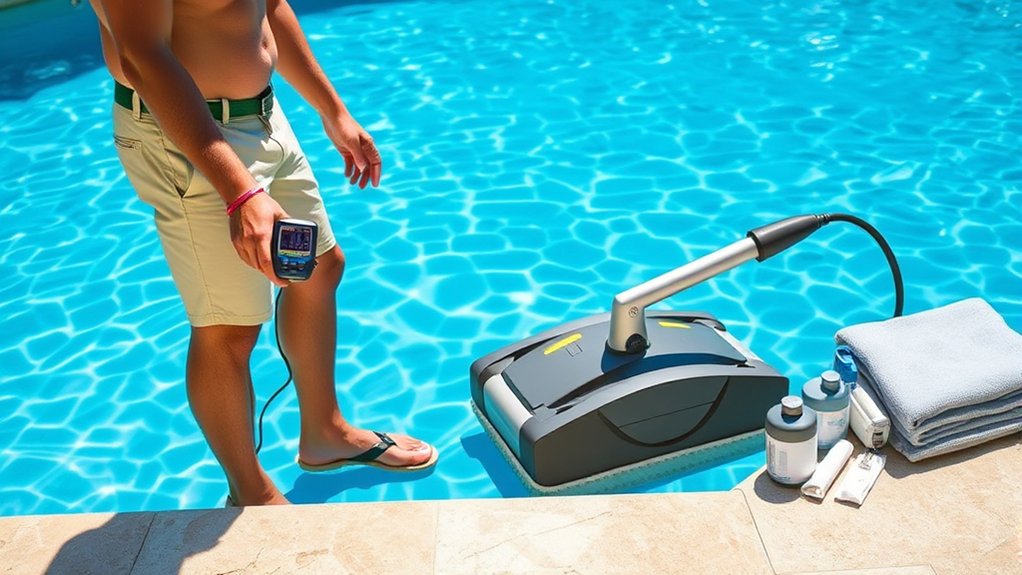
How To Maintain A Swimming Pool – Complete Guide
To maintain your swimming pool effectively, run the pump daily for 8-12 hours in summer and 4-6 hours in winter. Position the jets to promote circulation toward the skimmers. This helps keep the water moving and clean.
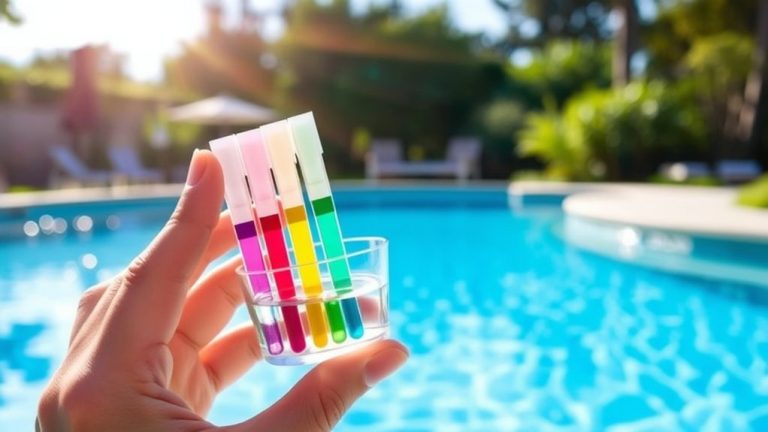
Test pH and chlorine levels weekly, aiming to keep the pH between 7.4 and 7.6. This range ensures your chemicals work their best.
Skim debris off the surface, brush the walls, and vacuum the pool weekly to prevent algae and buildup. Don’t forget to clean filters regularly and monitor pressure to make sure filtration stays efficient.
Periodically shocking your pool helps maintain clarity and sanitation. Stick to these steps, and you’ll keep your pool safe, clean, and inviting. Plus, you’ll discover even more essential care practices along the way!
Know Your Pool’s Key Parts
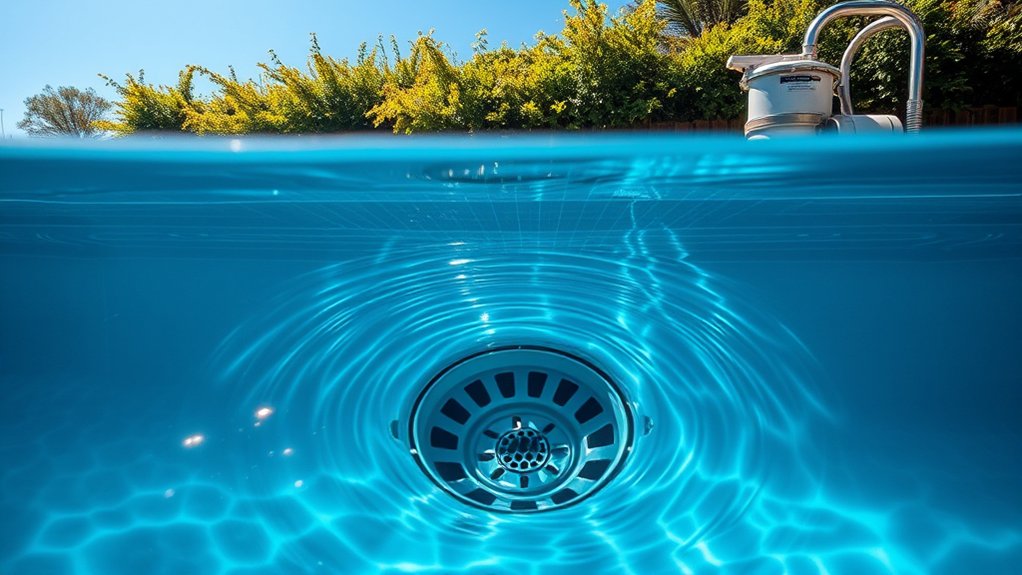
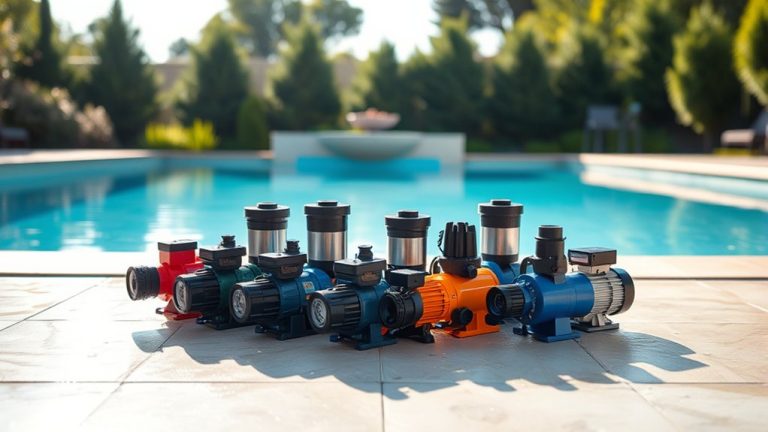
Understanding your pool’s key parts is essential for effective maintenance and troubleshooting. The pool filter system, including pumps and filters, works continuously to circulate pool water and remove contaminants. Regularly inspecting and cleaning these components guarantees optimal performance.
Pool skimmers play an important role in capturing surface debris before it sinks. So, you need to check and clear them frequently to maintain efficient water flow. The circulation systems connect skimmers and filters to promote consistent water movement, which is critical for evenly distributing pool chemicals.
Besides equipment, remember that cleaning your pool’s interior, like walls and floors, prevents algae buildup and debris accumulation. This protects swimmer safety and pool longevity.
Mastering these elements streamlines your pool maintenance routine and helps you sustain clear, healthy pool water.
Keep Your Pool Water Moving Daily
To keep your pool water clean and balanced, you’ll want to run your pump every day. In the summer, aim for about 8 to 12 hours, and in the winter, 4 to 6 hours should do the trick. This helps keep the water circulating properly.
Try positioning your jets around the 8 o’clock angle. This way, the water flows toward the skimmers, which makes it easier to remove debris from the surface.
Keeping the water moving consistently doesn’t just stop it from getting stagnant—it also boosts how well your filter works. That means you’ll use fewer chemicals and help prevent algae from taking over.
Benefits Of Water Circulation
When you keep your pool water moving daily, you guarantee that sanitizers distribute evenly. This prevents algae growth and keeps the water clear.
Good pool circulation is essential to maintain good water chemistry and avoid cloudy water. It also helps keep your pool clean by preventing debris from settling.
Here are three key benefits of water circulation:
- Enhanced Chemical Balance: Circulation makes sure pool chemicals mix thoroughly. This keeps the water chemistry consistent and stops localized imbalances from happening.
- Improved Debris Management: Moving water prevents particles from settling at the bottom. This means less cleaning time and effort for you.
- Pump and Filter Efficiency: Steady circulation reduces strain on your pump and filter system. It helps avoid clogs and extends the equipment’s lifespan.
Recommended Pump Operation
Maintaining consistent water movement relies heavily on the proper operation of your pool pump. To keep your water circulating efficiently, run the pump 8-12 hours daily in summer and 4-6 hours in winter. Using a variable-speed pump can lower energy costs while ensuring continuous circulation.
Position return jets near the 8 o’clock angle to direct water toward skimmers, optimizing flow. Regularly monitor pump and filter pressure. If sand filter pressure rises above 10-15 psi, backwash immediately to avoid reduced filtration.
Consistent pump operation prevents stagnant zones that cause algae and cloudy water, maintaining crystal-clear, safe-to-swim conditions.
Staying proactive with your pump and filter keeps your pool’s water quality high and reduces maintenance issues over time.
Your Weekly Pool Cleaning Routine
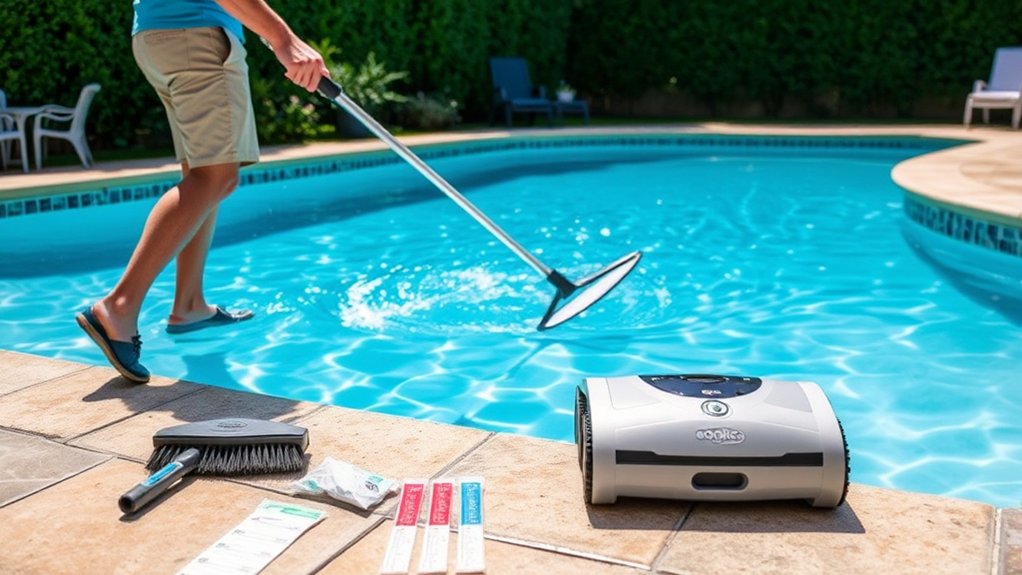
You’ll want to have some essential tools on hand, like a telescopic pole, pool brush, vacuum, and test kits to keep your pool in great shape.
Each week, try to focus on brushing the walls and steps, vacuuming the floor, cleaning out the baskets, and testing the water chemistry.
Essential Cleaning Tools
Three essential tools form the backbone of your weekly pool cleaning routine: a net skimmer, a pool brush, and a vacuum. These tools help keep your pool water clean and clear while preventing algae buildup and equipment damage.
1. Net Skimmer: Use it for weekly skimming to remove leaves and debris from the surface.
Regularly empty skimmer baskets to maintain ideal water flow.
2. Pool Brush: Scrub walls, steps, and corners to dislodge algae and dirt that automatic pool cleaners might miss.
3. Vacuum: Vacuum your pool floor at least once a week to eliminate settled debris and prevent unsanitary conditions.
Though an automatic pool cleaner reduces manual labor, combining it with these tools guarantees thorough cleaning and prolongs your pool’s lifespan.
It’s the best way to keep things sparkling and in great shape!
Weekly Maintenance Steps
A successful weekly pool cleaning routine hinges on consistent skimming, brushing, vacuuming, filter maintenance, and chemical testing.
Start by skimming the water surface daily to remove debris before it sinks and promotes algae. Then, brush the pool walls, steps, and ladders at least once a week to dislodge dirt and algae buildup.
Follow with thorough vacuuming of the pool floor to clear settled debris. For filter maintenance, clean or backwash your filters every one to two weeks to guarantee ideal water flow and filtration efficiency.
Finally, perform chemical testing weekly to monitor pH levels, ideally between 7.4 and 7.6, and maintain chlorine levels within 1 to 3 ppm.
This routine keeps your pool water clear, safe, and balanced for swimmers. It might seem like a lot at first, but once you get into the habit, it becomes second nature.
Plus, a well-maintained pool means fewer issues down the line!
Balancing Pool Water Chemistry Safely
Although balancing pool water chemistry requires regular attention, it guarantees swimmer safety and prolongs equipment life.
Maintaining proper pool chemistry is an essential part of pool care. It focuses on pH and alkalinity to keep your pool balanced.
Test the water 1-2 times per week using reliable kits to monitor pH (7.4–7.6), alkalinity (100–150 ppm), and chlorine levels (1–3 ppm).
Adjust chemicals carefully, following manufacturer instructions to avoid over-treatment that disrupts water quality and damages equipment.
Make sure your pool has good circulation to distribute chemicals evenly. This helps keep the water sanitized and prevents algae growth.
Consistent water testing and precise chemical adjustments help maintain safe swimming conditions. Plus, they extend your pool’s lifespan.
Filter Maintenance: Cleaning and Care
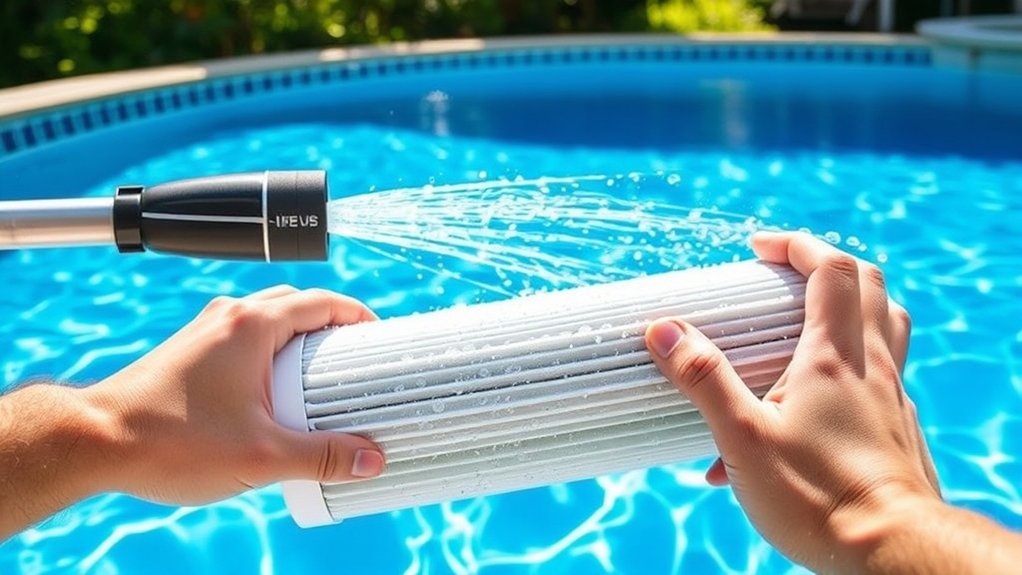
Maintaining balanced water chemistry is only part of keeping your pool in top condition. Proper filter care plays a key role in ensuring water clarity and sanitation.
Balanced water chemistry and proper filter care are essential for clear, sanitary pool water.
For effective filter maintenance, regularly monitor the pressure gauge because rising pressure means it’s time for cleaning.
With a sand filter, backwash once the pressure exceeds 10-15 psi to restore ideal flow. For cartridge filters, rinse or soak them thoroughly when the gauge reads 20-25 psi. This helps prevent clogging and extends their lifespan.
Consistent backwashing and cleaning remove trapped debris, which enhances filtration efficiency. This all contributes to clean and safe water.
How to Shock Your Pool for Clear Water
When you want to quickly eliminate contaminants like bacteria and algae, shocking your pool is essential. This process rapidly boosts sanitizer levels, helping you keep your pool safe and clear all year.
Use a Test Kit to check your water’s pH, aiming for 7.2 to 7.6 before shocking. The ideal time to shock is early morning or evening to prevent chlorine loss from UV rays.
Follow these steps:
- Measure the pool volume and calculate the correct shock dosage (typically 1 pound per 10,000 gallons) to raise chlorine levels to the proper parts per million.
- Distribute the shock evenly around the pool, focusing on problem areas.
- Run your filter system for several hours to clear a cloudy pool and maintain clarity.
Regular shocking prevents buildup and guarantees safe swimming conditions. It’s a simple step that really makes a difference!
Seasonal Pool Care and Winter Preparation
After shocking your pool to clear the water, preparing for the colder months guarantees your investment stays in good condition. Seasonal pool care focuses on maintaining water chemistry, with pH between 7.4 and 7.6 and alkalinity at 100 to 150 ppm to protect surfaces.
Lower water levels slightly below the skimmer without fully draining to avoid structural damage. Use a high-quality winter cover to minimize debris accumulation and sunlight exposure. This helps reduce algae growth.
Regularly add algaecides to maintain water quality during winter. Off-season pool maintenance, including filter cleaning and equipment servicing, extends component life and guarantees smooth reopening.
| Task | Purpose | Recommended Range |
|---|---|---|
| pH Level | Prevent surface damage | 7.4 – 7.6 |
| Alkalinity | Stabilize pH | 100 – 150 ppm |
| Water Level | Avoid structural damage | Slightly below skimmer |
Smart Tips for Maintaining Your Pool on Vacation
Although you’re away, your pool still needs consistent care to prevent water quality issues and equipment damage.
To maintain your pool effectively on vacation, start by balancing chlorine levels and pH before leaving. Use a pump timer to run your pool’s circulation system for 8 to 12 hours daily. This helps prevent algae and keeps the water clear.
Arrange for a knowledgeable neighbor or friend to check on your pool regularly. They can empty skimmer baskets, skim debris, and monitor filter pressure.
- Test and balance water chemistry, focusing on chlorine levels and pH.
- Install a pump timer to automate circulation.
- Delegate routine maintenance tasks to a trusted individual.
These steps guarantee your pool stays clean, safe, and operational while you enjoy your time away.
Frequently Asked Questions
How Do I Prevent Algae Growth Between Cleanings?
To prevent algae growth between cleanings, focus on algae prevention tips like maintaining proper chemical balance and regularly testing your water weekly.
Guarantee ideal pool circulation to distribute chemicals evenly and reduce stagnant areas.
Keep an eye on water temperature, as warmer water encourages algae.
Perform consistent filter maintenance to remove debris effectively.
Finally, minimize sunlight exposure by using covers or shading, since UV rays promote algae growth.
These steps keep your pool algae-free.
What Are the Best Pool Covers for Energy Efficiency?
For energy savings, you should choose pool cover types like solar covers, insulated covers, or liquid covers.
Solar covers offer UV protection and retain heat, while insulated covers maximize insulation benefits, reducing heat loss considerably.
Consider installation options that fit your pool size and shape for easier winterization.
Maintenance requirements vary: solar covers need regular cleaning, while insulated covers require careful storage.
Picking the right cover boosts energy efficiency and helps maintain ideal water temperature year-round.
It’s all about finding the best fit for your pool and keeping it in good condition.
Can I Use Natural Alternatives to Chlorine?
You can use natural sanitizers instead of chlorine, but they differ in effectiveness and maintenance.
Salt systems convert salt into chlorine, offering a gentler option. Mineral systems, ozone generators, and UV systems reduce chemicals but require precise calibration.
Hydrogen peroxide and baking soda help balance water chemistry but don’t sanitize alone.
You’ll need to monitor water quality closely, as natural alternatives often demand more frequent testing and adjustments to keep your pool safe and clear.
It’s definitely doable, but it takes some extra attention.
How Do I Safely Lower High Calcium Hardness Levels?
To safely lower high calcium hardness levels, start by increasing your water testing frequency to monitor changes closely.
Use calcium removal methods like partial water replacement combined with effective sequestrants to bind excess calcium. Balance water chemistry carefully to prevent scaling, which can damage equipment and affect swimmers.
Make sure to maintain a consistent maintenance schedule, adjusting chemicals gradually to avoid shock. This approach protects your pool’s integrity and guarantees comfortable, safe swimming conditions.
Just take it step by step, and you’ll keep everything in check without any hassle.
What Are Common Signs of a Leaking Pool?
Back in the days of Morse code, you’d sense a pool leak by sudden water loss or a dropping water level.
You should watch for cracked tiles and examine pool equipment closely, as plumbing issues often cause leaks.
Skimmer problems can also signal a leak, so inspect seals and fittings carefully.
Employ leak detection techniques like dye testing or pressure testing to pinpoint the source. This way, you can address the issue efficiently.
Conclusion
By mastering these essential steps, you’ll keep your pool sparkling like a well-oiled machine. Regularly moving water, balancing chemicals, and maintaining filters prevent problems before they start.
Remember, consistency is your best ally. Neglect is the silent enemy of pool health.
Whether it’s routine cleaning or prepping for winter, your diligent care guarantees crystal-clear water and a safe swim every time. Treat your pool like a precision instrument, and it’ll reward you with flawless performance.