How To Train For Swimming – Training Plan
To train effectively for swimming, set clear, measurable goals that keep you focused and motivated. Balance your weekly workouts with endurance swims, speed intervals, and dedicated technique drills to improve stroke efficiency.
Make sure to add strength training and schedule rest for recovery. This helps build power and prevents injury.
Use proper swim gear and track your progress regularly. Adjust your plan as you improve.
Stick with this approach, and you’ll uncover deeper strategies to boost your swim performance. Keep at it, and you’ll see the results!
Set Clear Swimming Goals to Guide Your Training
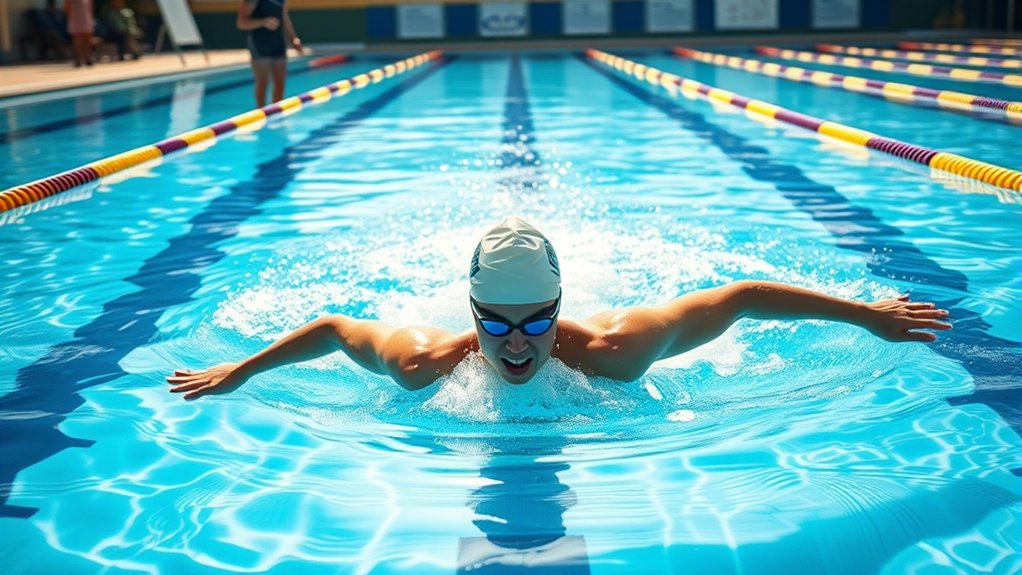
When you set clear swimming goals, you give your training purpose and direction. Whether you’re aiming to boost speed, build endurance, or refine technique, having a plan helps.
To create an effective training plan, start by defining specific, measurable goals, like cutting your 100m freestyle time by two seconds in three months. This way, you can track progress and stay motivated.
Begin your training with clear, measurable goals to track progress and keep motivation high.
Break your goals into short-term targets, such as mastering a stroke, that support long-term ambitions like qualifying for a championship.
Regularly reassess and adjust your goals based on feedback and performance to keep your training challenging and engaging.
Also, try to include both individual and team objectives. This builds accountability and motivation.
With clear goals guiding your training plan, you’ll swim smarter and see consistent improvement.
Plan Weekly Swim Workouts to Build Endurance and Speed
You’ll want to structure your weekly swim sessions by balancing endurance-focused long swims with speed-driven interval sets.
It’s all about mixing things up so you don’t get bored and your body keeps adapting.
Try to gradually increase your total yardage each week.
This way, you’re challenging yourself without pushing too hard and risking injury.
Taking it step by step like this helps you build both strength and speed in a smart, efficient way over time.
Structuring Weekly Sessions
Crafting five to six focused swim sessions each week will accelerate your progress by balancing endurance and speed training. Structure your workout plan around varied main sets, mixing long endurance swims of 2000-3000 meters with speed intervals like 10×50 meters on set sendoff times.
Tailor rest intervals to your effort level, guaranteeing proper recovery without losing intensity.
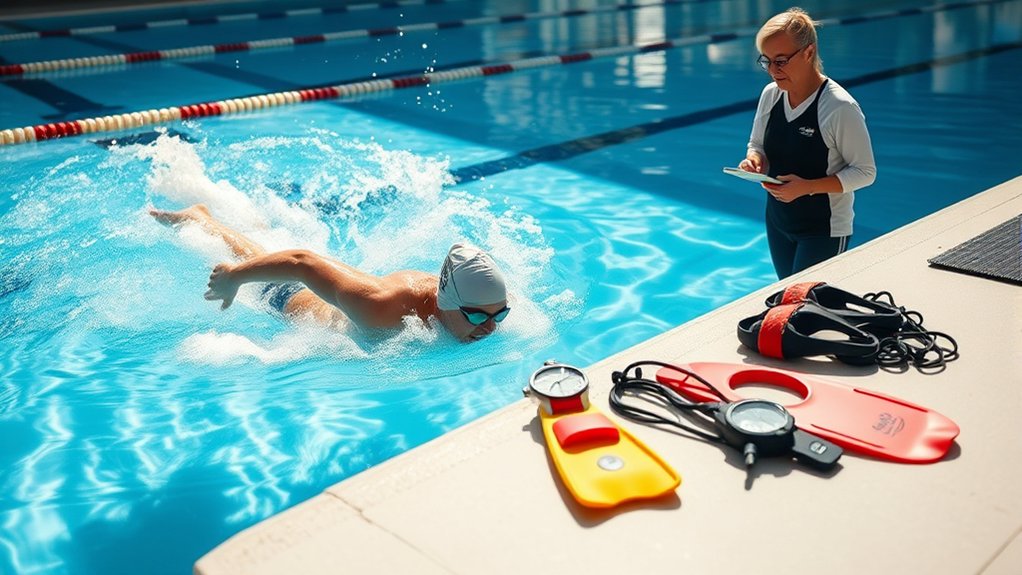
Dedicate 20-30% of each session to drills and technique work, using fins or paddles to sharpen efficiency and reduce drag. Incorporate recovery swims after intense sets to aid muscle repair and keep you engaged.
Finally, schedule periodic test sets to monitor your progress and fine-tune your training loads. This structured approach guarantees thorough development, targeting different muscle groups and energy systems throughout the week.
Balancing Endurance And Speed
Although endurance builds your swimming foundation, integrating speed work is vital to improve overall performance. Plan your week by alternating 2-3 endurance swims, which are long, steady efforts of 2000-3000 meters, with focused speed sessions that use interval training.
For example, follow a moderate-paced long swim day with high-intensity intervals like 10 x 50 meters at race pace to target anaerobic capacity. During speed sessions, include drills that emphasize stroke efficiency, such as 4 x 75 meters, to keep your technique sharp.
Structure interval training sets like 6 x 100 meters on 1:30, pushing to maintain pace while gradually reducing rest to build speed endurance.
Make sure to monitor timed swims regularly so you can adjust intensity and volume. This way, you confirm you’re balancing endurance and speed for maximum gains.
Progressive Workout Adjustments
As you progress in your training, gradually increasing workout intensity and volume guarantees continuous improvement in both endurance and speed. Making progressive workout adjustments assures you challenge your body without overtraining.
Try to increase your main set distance weekly, starting at 500 meters and adding 100 meters. This helps build endurance steadily.
Incorporate interval training like 8×100 meters, and cut rest time by 5-10 seconds each week. This will boost your speed and elevate your heart rate.
Add stroke-focused drills such as 4×50 meters of butterfly or backstroke to improve your technique while increasing intensity.
Schedule a long swim starting at 1000 meters, adding 200 meters weekly. This enhances aerobic capacity and gets you ready for races.
Track your stroke count and pace to adjust workouts as needed. This way, you keep progress consistent and effective.
Use Technique Drills to Enhance Stroke Efficiency and Speed
If you want to get better, it’s important to focus on technique drills that really sharpen your stroke mechanics and help reduce drag.
Using training aids like fins and paddles can make a big difference—they build strength and help you maintain the right body position.
The key is to practice consistently with these tools.
Over time, you’ll notice your efficiency and speed in the water improve significantly.
Just keep at it, and you’ll see the results!
Prioritize Skill Improvement
Mastering your swimming technique is the foundation for boosting both efficiency and speed in the water. To prioritize skill improvement, focus on refining your stroke mechanics through targeted technique drills.
Here’s how you can elevate your swimming:
- Incorporate drills like catch-up freestyle and single-arm swimming to sharpen your stroke and reduce drag.
- Monitor your stroke count per lap. Lowering it while maintaining speed signals improved efficiency.
- Consistently practice technique drills to ingrain proper form and build muscle memory.
- Seek feedback from coaches or use video analysis to identify and correct flaws promptly.
Utilize Training Aids
Boost your swimming efficiency and speed by incorporating specialized training aids into your drills. Use paddles to add resistance, building upper body strength and refining stroke mechanics.
Fins help you focus on leg power and maintain proper body position, boosting tempo for faster laps.
Technique drills like catch-up freestyle or fingertip drag improve stroke efficiency by encouraging correct alignment and minimizing drag.
Incorporate a snorkel to isolate breathing patterns, allowing you to concentrate on smooth, consistent strokes without turning your head.
Regular practice with these training aids sharpens your technique and enhances overall performance.
By integrating these tools into your routine, you’ll develop powerful, efficient strokes and better breathing control.
These are key factors that will translate into faster swim times and more confident racing.
Incorporate Interval Training to Boost Endurance and Power
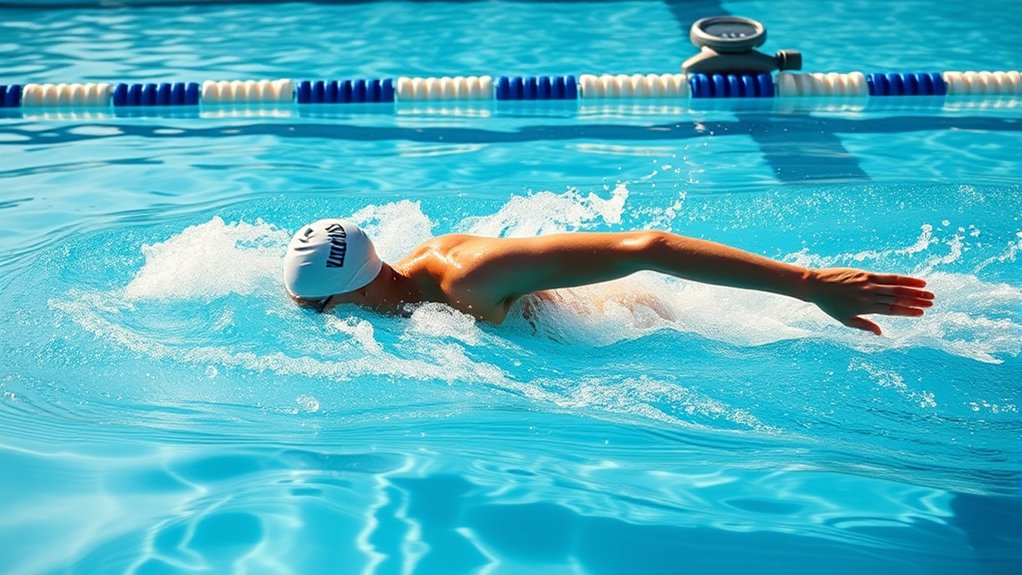
Although swimming long distances steadily builds endurance, incorporating interval training into your workouts accelerates improvements in both aerobic capacity and power.
Swimming long distances builds endurance, but interval training speeds up gains in aerobic capacity and power.
Interval training alternates high-intensity efforts with rest periods, maximizing your swim performance efficiently.
To get started, try these key steps:
- Use timed intervals like 4 x 100 meters on a 1:30 sendoff to master pacing and fatigue control.
- Incorporate short repeats, such as 8 x 50 meters with 20 seconds rest between repeats, to boost speed while maintaining stroke quality.
- Add active recovery swims at low intensity between intervals to keep your heart rate elevated and enhance endurance.
- Regularly vary interval distances and rest times to avoid plateaus and keep improving your aerobic capacity and power.
Stick to these principles, and you’ll see your swimming strength and stamina soar.
Add Strength and Conditioning for Swim Training Support
When you add strength and conditioning to your swim training, you’ll build the power and stability needed to enhance your stroke efficiency and reduce injury risk.
Focus on compound exercises like squats, pull-ups, and push-ups to boost overall strength and fitness, which are essential for effective strokes.
Incorporate core workouts such as planks and Russian twists to improve stability and body rotation. These help maintain proper form in the water.
Follow a structured plan that gradually increases intensity over 8-12 weeks. This approach allows you to safely build muscle while preventing injury.
During the off-season, emphasize higher intensity and lower volume. Then, shift to swim-specific exercises before the season starts.
Consistent strength training supports injury prevention by reinforcing muscles around vulnerable joints.
This makes your swim training more effective and durable.
Schedule Rest and Recovery to Prevent Injury and Improve Gains
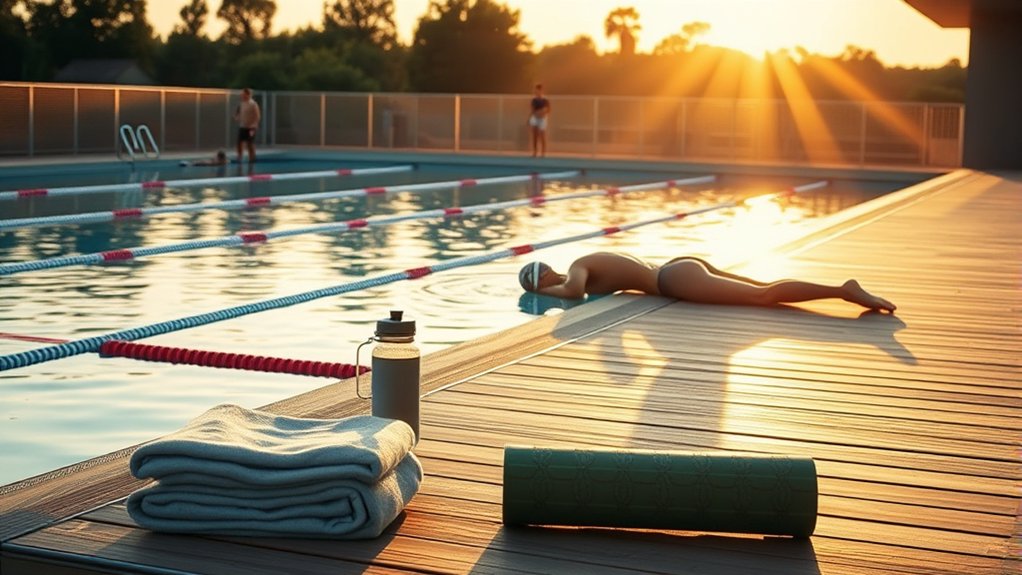
Incorporating strength and conditioning lays a solid foundation, but without proper rest and recovery, your progress can stall or even reverse. Scheduling rest and active recovery is key to preventing injury and boosting gains. Here’s how to optimize your workout plan:
First, schedule at least one full rest day weekly to allow muscle recovery and prevent fatigue. It’s important to give your body that downtime.
Next, include active recovery days with low-impact activities like yoga or light swimming. These help you stay moving without putting too much strain on your muscles.
Balance high-intensity swim sets with adequate rest intervals. Taking longer rests can improve your sustained speed and overall performance.
Finally, keep an eye on your fatigue levels. If you feel worn out, reduce workout intensity or volume to avoid overtraining and injury. Listening to your body is key to long-term success.
Pick Swim Gear That’s Comfortable and Performs Well
Selecting the right swim gear can make a significant difference in your comfort and performance in the water. Choose a form-fitting swimsuit made from polyester or spandex to reduce drag and stay comfortable during long swim workouts.
Pick goggles that fit securely and offer clear visibility with anti-fog and UV protection, so you can focus on breathing every stroke without distractions.
Don’t forget a swim cap to keep hair out of your face and minimize drag, especially if you have longer hair.
Incorporate supplemental training aids like fins and paddles to build leg power and upper body strength, enhancing speed and technique. Use a kickboard to isolate your legs and improve your kick.
With the right gear, you’ll train smarter and swim stronger. It’s all about feeling good and moving efficiently in the water.
Track Your Progress and Adjust Your Plan as You Improve
Tracking your swim times, distances, and stroke counts consistently gives you clear insight into your progress and highlights areas that need improvement.
To effectively track your progress and adjust your training plan as you improve, focus on these key steps:
Use training logs or apps to record each workout. This helps you monitor trends and stay aligned with your goals.
Incorporate regular test sets, like timed 100s or 200s, to benchmark speed and endurance.
Analyze video feedback or coach observations to identify technical flaws and target them specifically.
Review your goals monthly and adjust your training intensity and volume based on performance data.
Doing this keeps your training relevant and effective.
Frequently Asked Questions
How Do I Choose the Best Swimming Pool for Training?
To choose the best swimming pool for training, prioritize pool location tips to guarantee convenience for consistent workouts.
Check water temperature considerations; a comfortable, moderate temperature supports endurance and recovery.
Learn lane etiquette rules to respect fellow swimmers and maximize your training efficiency.
Also, consider pool length and available training aids to match your goals.
Picking the right pool sets you up for success, keeping you motivated and focused every session.
It really makes a difference when your pool fits your needs perfectly.
What Nutrition Plan Supports Effective Swim Training?
You’ll boost your swim training by mastering hydration strategies. Drink 2-3 liters daily, and even more during workouts.
Nail meal timing by eating carb-rich snacks 30-60 minutes before swimming to fuel your muscles.
After training, focus on recovery foods high in protein and carbs within 30 minutes to replenish energy and repair muscles.
This balanced approach keeps your body energized, promotes faster recovery, and maximizes your performance in the pool.
Can Swimming Help With Weight Loss and Muscle Toning?
You probably didn’t expect that splashing around could torch calories, right? Swimming is a powerhouse for caloric burn, boosting your muscle endurance and aerobic capacity at the same time.
When you swim regularly, you work multiple muscles against water resistance. That helps sculpt a toned physique while shedding fat.
Plus, it’s low-impact, so you can keep going without worrying about injuries. Just dive in, and you’ll see how swimming transforms your body efficiently and in a fun way.
How Do I Stay Motivated During Long Training Periods?
You stay motivated during long training periods by using goal-setting strategies that break your progress into achievable milestones. This keeps you focused and driven.
It really helps to partner with accountability partners who push you and celebrate your wins. That way, you’re more likely to stay consistent.
Try applying mental resilience techniques like positive self-talk and visualization. These can help you overcome setbacks and maintain confidence.
Together, these habits build unwavering motivation. They turn challenges into stepping stones toward your swimming success.
What Are Common Swimming Injuries and How to Prevent Them?
Did you know shoulder injuries affect nearly 50% of swimmers? To prevent them, focus on shoulder injury prevention by maintaining proper stroke mechanics and balanced muscle strength.
Don’t neglect ankle flexibility exercises to improve your kick and reduce strain.
Common stroke issues like poor body alignment can cause pain, so refine your technique regularly.
Listen to your body, rest when needed, and incorporate stretching to keep injuries at bay and swim stronger.
Conclusion
Immerse yourself in your swim journey with clear goals as your compass and a well-crafted plan as your paddle. By blending technique drills, interval training, and strength work, you’ll slice through the water like a finely tuned machine.
Remember, rest fuels your progress, and tracking your strides keeps you on course. Stay committed, adjust as you grow, and soon you’ll be riding the waves of your own success with power and grace.