Can You Swim in a Pool With Mustard Algae?
You shouldn’t swim in a pool with mustard algae because it compromises water clarity and encourages harmful bacterial growth. Mustard algae resist normal chlorine levels, appearing as yellowish powdery spots that reduce visibility and increase accident risks.
Swimming in such conditions puts you at risk of exposure to pathogens like E. coli. Addressing mustard algae involves thorough cleaning and chemical treatments to restore safe water quality.
Understanding these steps can help you effectively manage and prevent future outbreaks.
Understanding Mustard Algae in Swimming Pools
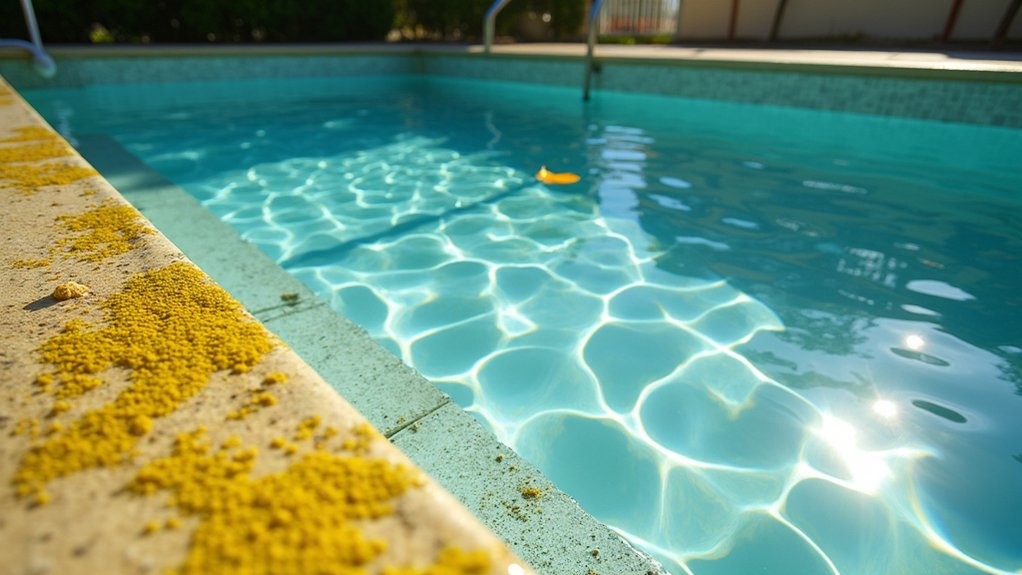
Mustard algae, a chlorine-resistant organism, often appears as yellowish or brownish spots on pool surfaces and can easily be mistaken for dirt or sand. In your swimming pool, this algae thrives under warm, humid conditions, adhering to walls, floors, and equipment.
You need to recognize that mustard algae’s resistance to chlorine means typical sanitizing may not eliminate it effectively. Maintaining balanced water chemistry is essential to control its growth. If left untreated, mustard algae can spread quickly, signaling compromised water quality.
While it’s not directly harmful, its presence indicates unsanitary conditions that can promote bacterial growth.
To manage mustard algae, you must implement thorough cleaning, including vacuuming and shocking the pool, alongside vigilant water chemistry adjustments to prevent recurrence and guarantee your swimming pool remains safe and visually clear.
Health Risks Associated With Mustard Algae
You probably won’t get sick just from mustard algae itself.
But here’s the thing: when mustard algae grows, it can attract harmful bacteria like E. coli. That means the health risks go up.
Also, swimming in water that’s murky because of algae isn’t the safest—your visibility drops, and accidents can happen.
Direct Health Effects
Although the algae itself doesn’t pose a direct health risk, its presence signals conditions that may harbor harmful bacteria such as E. coli. When swimming in pool water affected by mustard algae, you might encounter reduced visibility and an unpleasant environment. Sensitive individuals could experience mild skin irritation due to algae overgrowth.
The mustard algae’s ability to cling to swimsuits and equipment can promote recurring contamination, emphasizing the need for proper pool maintenance and chlorine balance.
| Factor | Effect on Swimming | Health Consideration |
|---|---|---|
| Mustard Algae Growth | Cloudy pool water | Possible skin irritation |
| Algae Spores | Clings to swimsuits | Recurrence of algae |
| Water Quality | Indicator of bacteria | Potential bacterial risks |
Maintaining pool hygiene is essential to minimize these effects.
Secondary Bacterial Risks
The presence of mustard algae signals more than just aesthetic or mild irritation issues; it often coincides with conditions that foster harmful bacterial growth, including E. coli.
While mustard algae itself isn’t directly harmful, its overgrowth creates a swimming environment conducive to bacterial proliferation, posing significant health risks.
This algae indicates compromised water quality, which undermines pool sanitation and increases the likelihood of waterborne infections.
Furthermore, mustard algae can cloud pool water and coat surfaces, making them slippery and hazardous.
These factors not only raise the risk of bacterial contamination but also physical injury.
To protect your health and safety, it’s essential to address mustard algae promptly, ensuring the swimming environment remains clean, clear, and free from secondary bacterial threats.
How Mustard Algae Affects Pool Water Quality
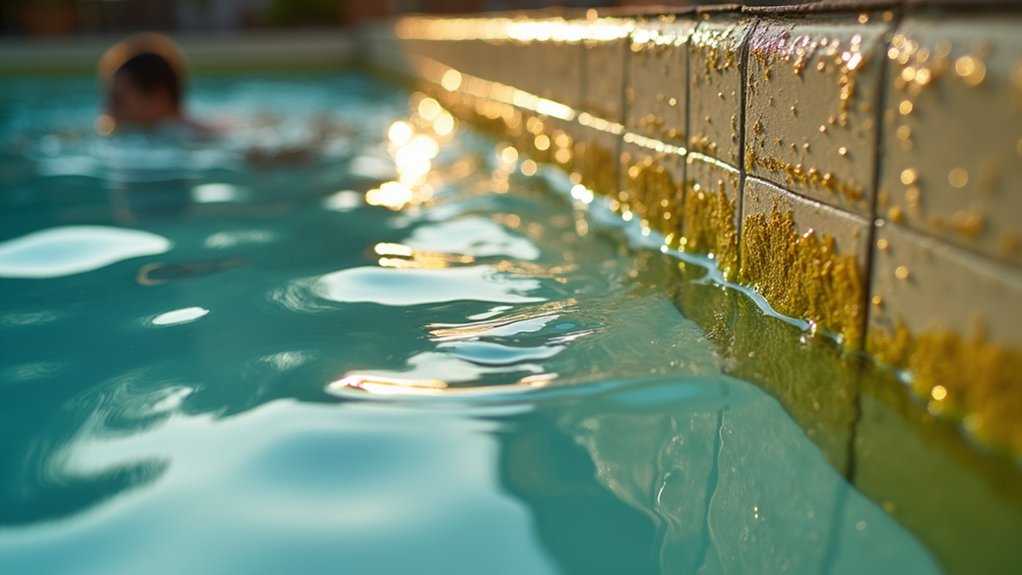
Mustard algae greatly impacts pool water quality by clouding the water and reducing visibility, which compromises the swimming experience.
This algae is chlorine resistant, meaning standard chlorine levels often aren’t enough to control its growth.
When mustard algae thrives, it signals inadequate free chlorine, allowing not only the algae but also harmful bacteria like E. coli to proliferate.
Its presence can also cause staining on pool surfaces and equipment, further degrading water quality.
Maintaining balanced water chemistry is essential because unbalanced conditions exacerbate algae problems and reduce sanitation effectiveness.
Identifying the Presence of Mustard Algae
You’ll notice mustard algae as yellowish or brownish spots clinging to pool walls, floors, and equipment.
It often looks like dirt, so it can be easy to mistake it for that.
Usually, it grows in shaded, poorly circulated areas where the water quality isn’t great.
Visual Signs
Yellowish or brownish spots clinging to pool walls, floors, and equipment often signal the presence of mustard algae. This chlorine-resistant algae resembles dirt or sand but is more persistent, requiring closer inspection.
To identify mustard algae visually, consider these key signs:
- Appearance: Look for yellowish or brownish patches that stubbornly adhere to pool walls and floors, often resisting brushing.
- Dusty residue: When disturbed, mustard algae creates a dusty, cloud-like effect on the pool bottom, unlike other algae types.
- Location clues: Though you won’t focus on exact locations here, note that poor circulation areas often foster these spots.
Recognizing these visual indicators helps you accurately detect mustard algae and tailor your pool maintenance accordingly.
Common Locations
Where does this persistent algae tend to take hold within your pool? Mustard algae commonly appears in warm, humid environments, often establishing itself in common locations like the shallow end where water circulation is poor.
You’ll frequently find it clinging to pool surfaces in shaded areas, under trees or on steps, where sunlight is limited. This algae resembles a yellowish or brownish dust, easily mistaken for dirt, making early detection challenging.
Mustard algae doesn’t just cling to pool surfaces; it can attach to equipment, toys, and swimsuits, increasing its spread risk if untreated.
To identify mustard algae effectively, you should regularly inspect these typical spots, especially areas with reduced water flow, and brush surfaces to prevent buildup and control its presence efficiently.
Why Mustard Algae Is Resistant to Chlorine
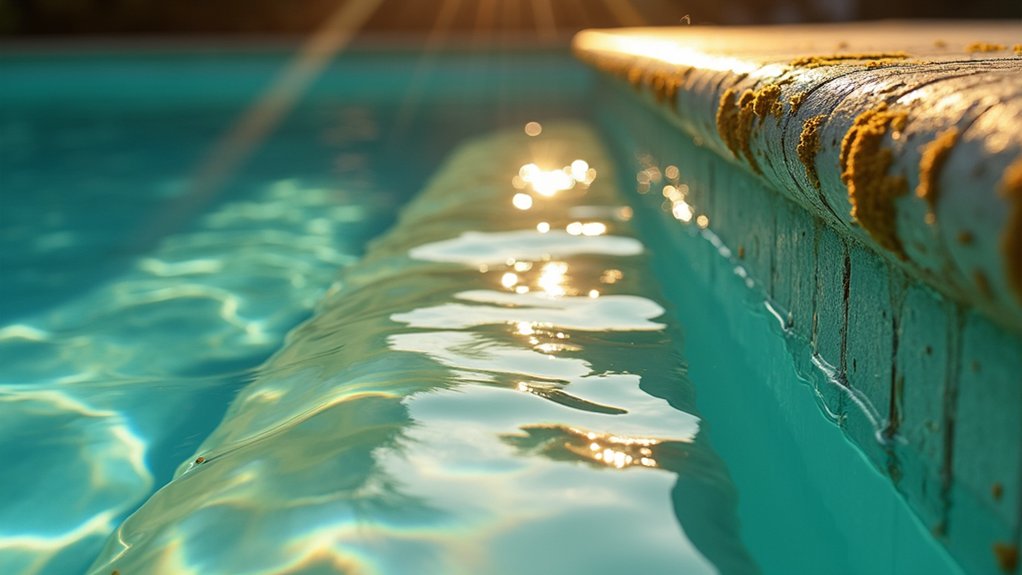
Although chlorine is a common sanitizer in pools, mustard algae resists its effects by forming a protective biofilm that shields it from chemical treatment. This chlorine-resistant algae can survive standard sanitation, often requiring more aggressive measures.
You should understand the following key reasons for its resilience:
- Mustard algae’s biofilm acts as a physical barrier, reducing chlorine penetration and efficacy.
- It demands shock treatment doses roughly double the usual amount to overcome this defense.
- Presence of cyanuric acid binds free chlorine, further lowering its availability to attack the algae.
Because of these factors, relying solely on chlorine isn’t enough. Using specialized algaecides alongside shock treatment and thorough brushing is essential to eradicate mustard algae effectively.
Immediate Actions to Take When Mustard Algae Appears
Act quickly when you spot mustard algae in your pool to prevent its spread and guarantee effective treatment. The immediate actions to take involve first removing all pool items and rinsing them thoroughly to prevent reintroducing spores.
Next, brush and vacuum the affected areas to dislodge the algae from surfaces, allowing it to settle before removal. These mechanical steps are critical to prevent mustard algae from establishing further.
Afterward, maintain continuous pump and filter operation to improve circulation and filtration efficiency.
While chemical treatments are essential, your initial focus should be on these physical interventions to control the algae’s spread.
Taking these immediate actions guarantees you address the problem systematically and lay the groundwork for successful mustard algae management.
Chemical Treatments for Mustard Algae Removal
First, you’ll want to get your pool’s pH balanced somewhere between 7.2 and 7.4. This step is super important because it helps the chlorine work its best.
Once that’s set, go ahead and apply a shock treatment—this means using double the usual amount of chlorine to really tackle those pesky mustard algae spores.
After the shock, don’t forget to add a specialized algaecide. This will help wipe out any leftover algae and keep it from coming back.
Balancing Pool Chemistry
When treating mustard algae, balancing your pool’s chemistry is vital to maximize the effectiveness of chemical treatments.
Before applying any chemicals, you must test and balance key parameters: pH, alkalinity, and chlorine levels. Here’s how to optimize your pool environment:
- Adjust pH to between 7.2 and 7.4 and maintain alkalinity between 60 and 120 ppm to guarantee chlorine remains effective.
- Use pool equipment such as pumps and filters continuously to circulate water and distribute chemicals evenly.
- Monitor free available chlorine regularly to prevent mustard algae regrowth.
Balancing pool chemistry not only improves treatment efficacy but also protects your pool surfaces and equipment from damage caused by improper chemical levels.
Accurate test and balance protocols are critical for long-term algae control.
Shock Treatment Procedures
Although balancing your pool chemistry sets the stage, effectively removing mustard algae requires a targeted shock treatment that doubles your usual chlorine dose. Before shocking, verify your pool’s pH is between 7.2 and 7.4 to maximize chlorine efficiency.
After applying shock treatment, brush affected areas vigorously to loosen mustard algae, then run your pump and filter continuously for 24 hours. This circulation improves algae removal.
Once complete, backwash or clean the filter media to expel dead algae and re-evaluate your pool’s condition.
| Step | Action |
|---|---|
| 1. pH Adjustment | Maintain 7.2–7.4 |
| 2. Chlorine Shock | Double usual chlorine dose |
| 3. Brushing | Aggressively scrub algae spots |
| 4. Filtration | Run pump/filter 24 hours |
| 5. Filter Maintenance | Backwash/clean filter media |
Algaecide Application Tips
Three essential practices optimize algaecide application for mustard algae removal.
As pool owners aiming to safely swim in a pool affected by mustard algae, you should follow these algaecide application tips precisely:
- Pre-mix the algaecide with water before adding it to guarantee even distribution and avoid localized overdosing.
- Apply the algaecide during low sunlight hours, preferably in the evening, to prevent UV degradation and maximize its potency overnight.
- Keep the pool’s circulation system running continuously for at least 24 hours post-application, maintaining a free chlorine level of at least 4 p.p.m. to improve algae elimination and prevent regrowth.
Adhering to these steps guarantees chemical treatments work efficiently, restoring safe swimming conditions quickly.
Cleaning and Maintaining Pool Equipment and Accessories
Maintaining pool equipment and accessories demands consistent attention to prevent mustard algae proliferation.
Regular cleaning of floats, toys, and other equipment with chlorine-based disinfectants minimizes algae and bacterial spread.
You should also wash swimsuits and towels thoroughly, separately from other laundry, to remove algae spores clinging to fabrics.
When cleaning pool surfaces, brush and vacuum all areas, focusing on corners and shaded spots where algae tend to settle.
Moreover, maintaining filters, skimmers, and pumps according to manufacturer guidelines guarantees efficient filtration and circulation, critical for controlling algae growth.
Store all accessories in a clean, dry place away from direct sunlight to reduce environmental conditions favorable to algae.
These steps collectively help maintain pool hygiene and reduce mustard algae risks effectively.
Preventative Measures to Avoid Mustard Algae Growth
Taking proactive steps to prevent mustard algae can considerably reduce the need for intensive cleaning and equipment maintenance.
To implement effective preventative measures, focus on these critical actions:
Focus on key steps to prevent mustard algae effectively and maintain a clean, healthy pool environment
- Maintain proper water chemistry by keeping pH between 7.2 and 7.4, alkalinity from 60 to 120 ppm, and free available chlorine consistently at 4 p.p.m. These parameters inhibit algae proliferation.
- Use algaecides proactively as a chemical barrier to deter mustard algae before it establishes.
- Regularly vacuum and brush pool surfaces, especially shaded or low-circulation areas, to eliminate early algae colonies and prevent biofilm formation.
Long-Term Strategies for Pool Algae Control
Although preventing mustard algae requires consistent effort, implementing long-term strategies can greatly improve your pool’s resistance to outbreaks.
To effectively treat mustard algae, maintain a free available chlorine level of 4 ppm, ensuring continuous disinfection.
Regularly vacuum and brush your pool, focusing on shaded areas where algae thrive.
Proper pool care involves establishing a strict maintenance routine, including filter cleaning and backwashing, to optimize water circulation and sanitation.
Monitoring and balancing total pool chemistry—pH, alkalinity, and calcium hardness—is critical to creating an environment hostile to algae growth.
Furthermore, using algaecides proactively supports long-term algae control by preventing blooms before they start.
Adhering to these scientific, analytical practices will help you sustain a clean, algae-free pool over time.
Frequently Asked Question
Can Mustard Algae Grow in Natural Bodies of Water?
Yes, mustard algae can grow in natural bodies of water, especially where conditions favor its development.
You’ll find it thriving in nutrient-rich, warm environments with ample sunlight and stagnant or slow-moving water.
It often appears as yellowish or brownish patches on surfaces like rocks and plants.
Monitoring nutrient levels and water quality is essential because excessive nutrients promote mustard algae growth, which can disrupt aquatic ecosystems and reduce oxygen availability.
Does Mustard Algae Affect Saltwater Pools Differently?
Mustard algae doesn’t affect saltwater pools differently regarding growth; it thrives just like in chlorinated pools due to its chlorine resistance.
However, you’ll need to maintain higher salinity and closely monitor chlorine levels since saltwater generates lower free chlorine.
If you neglect this, mustard algae can flourish.
You should aggressively shock treat the pool while balancing salt levels to effectively control it, ensuring your water chemistry stays ideal to prevent outbreaks.
What Is the Origin of Mustard Algae in Pools?
You might think mustard algae just appears spontaneously, but it actually originates from spores introduced into your pool through contaminated swimsuits, toys, or organic debris.
These spores thrive when your pool’s free chlorine levels drop and water circulation is poor, especially in warm, shaded areas.
Are There Eco-Friendly Treatments for Mustard Algae?
Yes, you can use eco-friendly treatments for mustard algae.
Natural algaecides made from plant extracts or enzymes effectively target algae without harsh chemicals.
You can also add baking soda to raise alkalinity, which controls algae growth safely.
Introducing beneficial bacteria helps outcompete mustard algae for nutrients, promoting balance.
Hydrogen peroxide serves as a green alternative, killing algae while breaking down into harmless substances.
Regular natural maintenance, like using solar covers, prevents algae buildup sustainably.
How Long Does Mustard Algae Take to Reappear After Treatment?
Mustard algae can reappear within a few days to a week after treatment if you don’t maintain proper water chemistry and sanitation.
If free chlorine levels drop below 4 p.p.m., the algae regrows quickly.
To prevent this, you need to regularly monitor and adjust pH, alkalinity, and chlorine levels, plus brush and vacuum the pool.
Using algaecides also helps delay or prevent mustard algae’s return after treatment.
Conclusion
You might think swimming with mustard algae is harmless, but coincidentally, its chlorine resistance means it can linger longer than you expect, subtly impacting water quality and your health.
By recognizing its presence early and applying targeted chemical treatments, you protect both yourself and your pool. So, don’t underestimate this algae’s persistence. Taking proactive steps not only keeps your pool clear but also guarantees a safer, more enjoyable swim every time.