Can I Swim With Saniderm On A Tattoo – Healing And Safety Tips
It’s not advisable to swim with Saniderm on your tattoo, as it increases the risk of infection and can compromise the healing process. Fresh tattoos are like open wounds; exposure to non-sterile water can lead to irritation and dislodgement of the bandage.
Saniderm is designed to protect your tattoo and promote healing, so consider waiting at least two weeks before swimming. If you want to guarantee the best care for your tattoo, there’s more to discover about aftercare practices.
Understanding Saniderm: How It Protects Your Tattoo
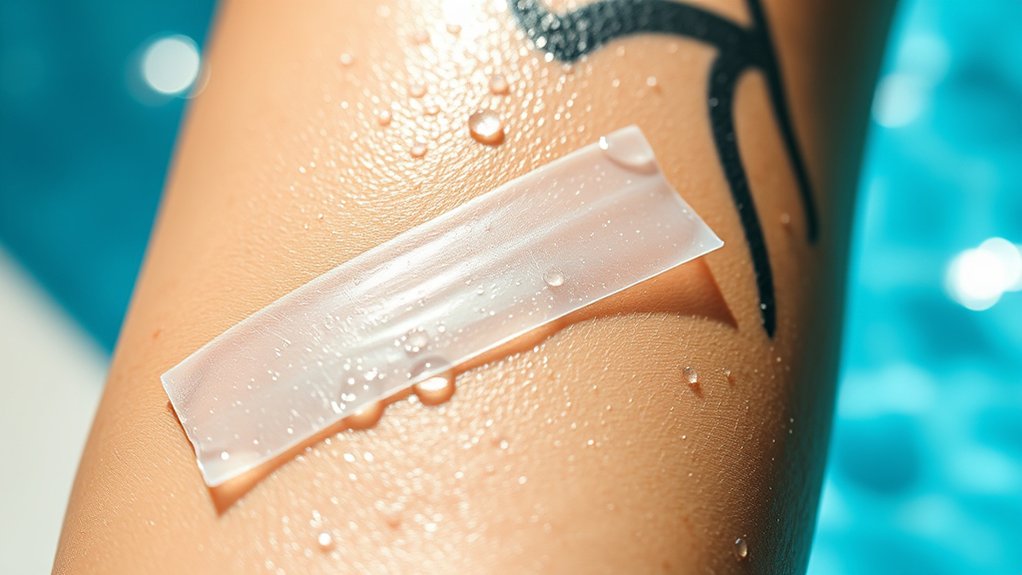
When you get a fresh tattoo, protecting it during the initial healing phase is essential, and that’s where Saniderm comes in. This waterproof bandage serves as a crucial barrier against bacteria, chemicals, and irritants, safeguarding your artwork while allowing your skin to breathe.
Saniderm retains moisture, ensuring ideal conditions for your healing process. You’ll want to leave it on for 8-24 hours after applying it so that blood and fluids can collect safely beneath the film.
Feel free to shower and keep your tattoo dry, but avoid swimming to prevent potential exposure to harmful chemicals.
After the first layer is removed, a second piece of Saniderm can protect your tattoo comfortably during the peeling stage, ensuring a beautiful, healed design.
Can I Swim Right After Getting a Tattoo?
You might feel like jumping into the water right after getting your tattoo, but it’s really not a good idea. Fresh tattoos are super vulnerable to infection and damage, especially when exposed to non-sterile water—even if you have a protective layer like Saniderm on.
So, to make sure your tattoo heals nicely and stays looking great, it’s best to hold off on swimming for at least two weeks.
Trust me, your skin will thank you for the extra care!
Risks Of Immediate Swimming
Swimming immediately after getting a tattoo poses significant risks that can jeopardize the healing process. Fresh tattoos are fundamentally open wounds, making them susceptible to infections from non-sterile water in pools, lakes, or oceans.
Submerging a healing tattoo can compromise its integrity and lead to complications. Plus, chemicals like chlorine can irritate your new ink, potentially affecting its color and overall look.
While using waterproof bandages like Saniderm may offer some initial protection, prolonged exposure to water can weaken their adhesive and increase the risk of infections.
To guarantee ideal healing, it’s generally recommended to wait at least two weeks before swimming, giving your tattoo the best chance to heal properly without complications.
Saniderm’s Protective Benefits
Although Saniderm provides a robust barrier that guards your fresh tattoo against external contaminants, it’s essential to recognize that this protective layer doesn’t make it safe to swim immediately after getting inked.
Here’s why you should wait:
- Risk of Dislodging: Submerging your tattoo area can dislodge the Saniderm, exposing it to bacteria.
- Chlorine Exposure: Swimming pools contain chlorine that may irritate your sensitive healing skin.
- Open Wound Care: The tattoo needs at least 2 weeks to heal, treating it like an open wound.
- Monitor for Irritation: If you swim with Saniderm, limit exposure and watch for any signs of irritation.
Prioritize your tattoo’s healing to guarantee long-lasting results and vibrant color.
What Are the Risks of Water Exposure During Tattoo Healing?
When you get a fresh tattoo and expose it to water, you’re actually increasing the chances of bacteria getting in, which can cause an infection. It’s something you definitely want to avoid.
Also, think about the chemicals in pools—they can irritate your skin and might mess with how your tattoo looks as it heals.
On top of that, if you submerge your tattoo, it can weaken the adhesive on any protective covering like Saniderm. That means your tattoo won’t have the protection it needs during this important healing time.
Infection Risks From Water
Exposing a new tattoo to water can greatly heighten the risk of infection, as fresh ink is vulnerable to bacteria and other pathogens lurking in various water sources.
Here are some key infection risks you should consider:
- Non-sterile Water: Pools, lakes, and oceans often contain harmful bacteria that can penetrate the tattooed area.
- Irritation from Chemicals: Chlorine and other chemicals can irritate your skin, complicating the healing process.
- Increased Moisture: Submerging a fresh tattoo can trap moisture, creating an environment for bacteria to thrive.
- Open Wound Exposure: Fresh tattoos are basically open wounds, making them more susceptible to pathogens.
To protect your new tattoo, it’s best to avoid swimming for at least two weeks to guarantee a smooth healing process.
Adhesion Compromise With Submersion
While you may be tempted to take a dip with Saniderm covering your new tattoo, it’s crucial to understand the potential risks to the bandage’s adhesion. Submerging the tattoo can weaken the seal, promoting the likelihood of dislodgement and allowing water and bacteria to penetrate.
Prolonged water exposure may also result in fluid buildup beneath the film, irritating your healing skin and jeopardizing the tattoo’s quality.
If the Saniderm seal is compromised, you should remove the bandage immediately, clean the tattoo, and switch to traditional aftercare methods to protect the healing process.
To guarantee ideal healing and mitigate risks, it’s best to avoid swimming until your tattoo is completely healed, typically taking two to six weeks.
Skin Irritation From Chemicals
Have you ever considered how the chemicals in swimming environments can impact the healing of your new tattoo? Exposure to chemical irritants can make your skin more sensitive, leading to discomfort.
Here are some risks to keep in mind:
- Chemical Irritants: Chlorine in pools can cause inflammation and redness around your tattoo.
- Bacterial Risks: Submerging your tattoo in lakes or oceans increases the chance of bacterial infections.
- Adhesion Compromise: Prolonged water exposure may weaken Saniderm’s grip, letting irritants reach your healing skin.
- Healing Interference: Chemicals can disrupt the healing process, causing scabbing or fading of your tattoo.
To protect your tattoo, stay away from swimming until it’s fully healed. Your artwork deserves the care it needs!
When Can I Wet My Tattoo?
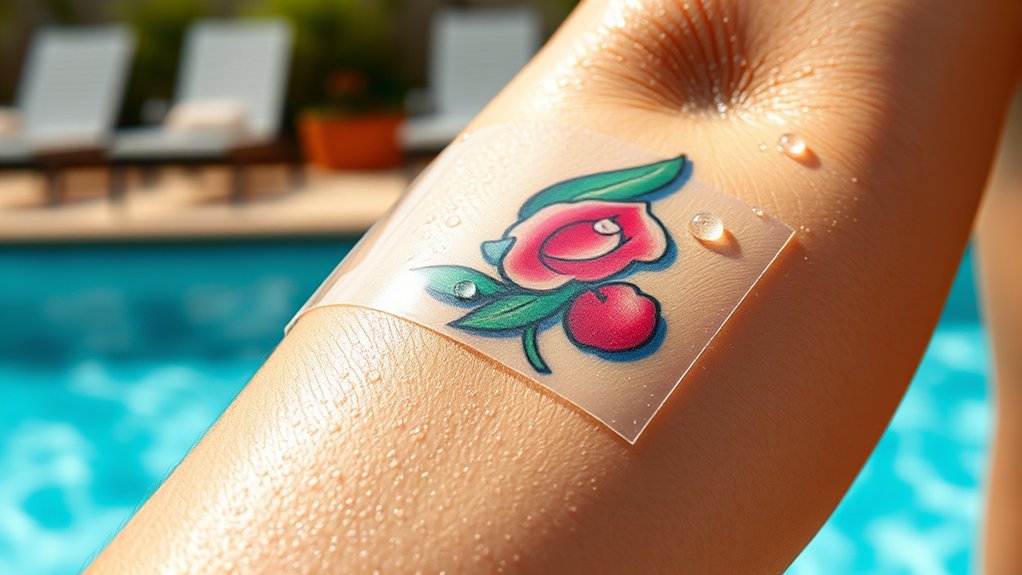
Wondering when it’s safe to wet your tattoo? While Saniderm is waterproof, it’s essential to avoid submerging your tattoo in any water for extended periods. This weakens the bandage’s grip and hinders healing.
While Saniderm is waterproof, avoid submerging your tattoo in water to ensure proper healing and protection.
You can shower with Saniderm on, but try to keep your tattoo as dry as possible. Also, skip any soaps or shampoos with fragrances or dyes.
Swimming is a definite no-go while using Saniderm. The water can dislodge the bandage and expose the tattoo to irritating pool chemicals.
If your tattoo gets excessively wet within the first 24 hours, consider replacing the Saniderm to maintain protection.
After six days, you can remove the bandage and begin traditional aftercare, which includes gentle washing and moisturizing.
How to Maintain Saniderm While Swimming?
Maintaining Saniderm while swimming requires careful attention to keep your tattoo protected. Follow these tips to guarantee your Saniderm stays effective during your swim:
1. Secure Application: Before swimming, make sure the Saniderm is applied smoothly without air bubbles to prevent water intrusion.
2. Limit Swim Time: Try to keep your time in the water short to help the bandage stick well and protect your tattoo.
3. Dry Immediately: After swimming, gently pat the area dry with a clean towel.
Then wash it with soap and water to remove any contaminants.
4. Regular Monitoring: Keep an eye on the Saniderm for any signs of peeling or lifting.
If the seal gets compromised, replace the bandage right away.
With these steps, you can enjoy swimming and still keep your tattoo safe.
How Should I Care for My Tattoo After Swimming?
Although swimming can be invigorating, it’s important to care for your tattoo properly afterward to guarantee it heals well. Start by gently washing the tattoo with antibacterial soap and warm water to eliminate any chlorine or bacteria.
Proper tattoo care after swimming is essential; gently wash with antibacterial soap to remove chlorine and bacteria for optimal healing.
Avoid rubbing; instead, pat the tattoo dry with a clean paper towel to prevent irritation.
If you notice the Saniderm has been compromised, keep an eye out for signs of irritation or infection. In that case, it’s vital to reapply a fresh piece of Saniderm, making sure the area is completely clean and dry before doing so.
Also, maintain a regular aftercare routine by moisturizing your tattoo with a thin layer of lotion or ointment to promote efficient healing.
Frequently Asked Questions About Swimming With a New Tattoo
When it comes to caring for a new tattoo, swimming raises a lot of questions. Understanding how to handle this activity with Saniderm is essential for your healing process. Here are some important points to take into account:
- Chemical Exposure: Swimming in pools or hot tubs can harm your tattoo due to chemicals, even with Saniderm’s waterproof properties.
- Avoid Submersion: Prolonged water exposure can weaken Saniderm’s adhesion, increasing the risk of irritation or infection.
- Post-Swimming Care: If you swim, dry your tattoo immediately and watch for signs of discomfort.
- Consult Your Tattoo Artist: Always seek personalized aftercare instructions from your tattoo artist regarding swimming and activities during healing.
When Can I Switch to Traditional Aftercare?
Once the Saniderm has been on your tattoo for the recommended duration, typically around 6 to 7 days, you can confidently switch to traditional aftercare.
Begin by carefully removing the Saniderm, then gently wash the tattoo with warm water and antibacterial soap to guarantee a clean canvas for healing.
After washing, pat it dry with a clean towel. Apply a thin layer of a suitable ointment, like A&D, to keep the tattoo moisturized while minimizing excess buildup.
It’s vital to monitor the tattoo for any signs of irritation or infection, as sensitivity may increase post-Saniderm.
Remember to avoid swimming, soaking, or direct sunlight exposure during this delicate healing phase for best results.
Frequently Asked Questions
Can I Take a Shower While Wearing Saniderm on My Tattoo?
Yes, you can take a shower while wearing Saniderm on your tattoo.
Use gentle shower techniques and keep it brief to avoid prolonged water exposure. Stick to mild, fragrance-free products to minimize skin sensitivity and protect your tattoo.
Make sure that water doesn’t directly hit the tattooed area for too long.
If the Saniderm seal breaks, remove it, clean your tattoo, and follow your aftercare routine to guarantee proper tattoo care.
What Is the Maximum Duration I Can Swim With Saniderm?
When you’re itching to immerse yourself, remember that Saniderm’s durability isn’t built for endless aquatic adventures.
Preferably, you should only swim for brief moments, avoiding full submersion to protect your tattoo and its film.
Take extra precautions by gently rinsing off, drying the area immediately afterward, and avoiding tugging movements.
Consulting your tattoo artist about aftercare is essential; they often advise waiting around two weeks for the best healing before taking the plunge!
Can I Apply Sunscreen Over Saniderm?
You can’t apply sunscreen over Saniderm, as it may weaken the bandage’s hold.
Instead, focus on protecting your tattoo from UV rays by avoiding direct sunlight during the healing process.
After you remove Saniderm and your tattoo is fully healed, use a broad-spectrum sunscreen with a high SPF.
Apply it gently with clean hands, making sure to cover your tattoo evenly for the best protection.
Always consult your tattoo artist for personalized aftercare instructions.
Will Chlorine in Pools Affect Saniderm and My Tattoo?
Chlorine’s like a mischievous gremlin, itching to wreak havoc on your fresh tattoo beneath Saniderm. This exposure can lead to skin irritation, compromising your tattoo’s protection.
The chemicals dance around, potentially fading vibrant colors or causing discomfort.
If you plan to take a dip, it’s best to skip it altogether.
Protect your art by keeping it dry and safe, ensuring it remains as flawless as the day you got it.
How Do I Know if Saniderm Has Trapped Moisture?
To detect trapped moisture under Saniderm, look for signs like bumps or blisters forming beneath the film.
If you see a slick, shiny appearance, it’s a strong indication of moisture buildup.
Confirm you’ve applied the Saniderm correctly, sealing it tightly without air bubbles for ideal tattoo healing.
If discomfort or excessive weeping occurs, consider adjusting or removing the Saniderm to allow your tattoo to breathe and promote better healing.
Conclusion
To sum up, while swimming with Saniderm on your tattoo offers some protection, it’s essential to be cautious. Studies show that nearly 50% of tattoo complications stem from improper care during the healing process.
By following proper guidelines and waiting until your tattoo is fully healed, you can guarantee vibrant results and minimize risks. Remember, your tattoo is an investment in art. Take the time to protect it and enjoy it for years to come!