Can You Swim With An Ingrown Toenail – Risks And Advice
Swimming with an ingrown toenail can greatly increase your risk of infection and worsen discomfort. The pressure from water and chlorinated environments can irritate the affected area.
Public swimming pools may expose you to harmful bacteria, while natural bodies of water can carry pathogens that infect compromised skin. To promote healing, it’s best to avoid swimming until your toenail improves.
You might find more effective care strategies and guidance for your condition just ahead.
What You Need to Know About Ingrown Toenails
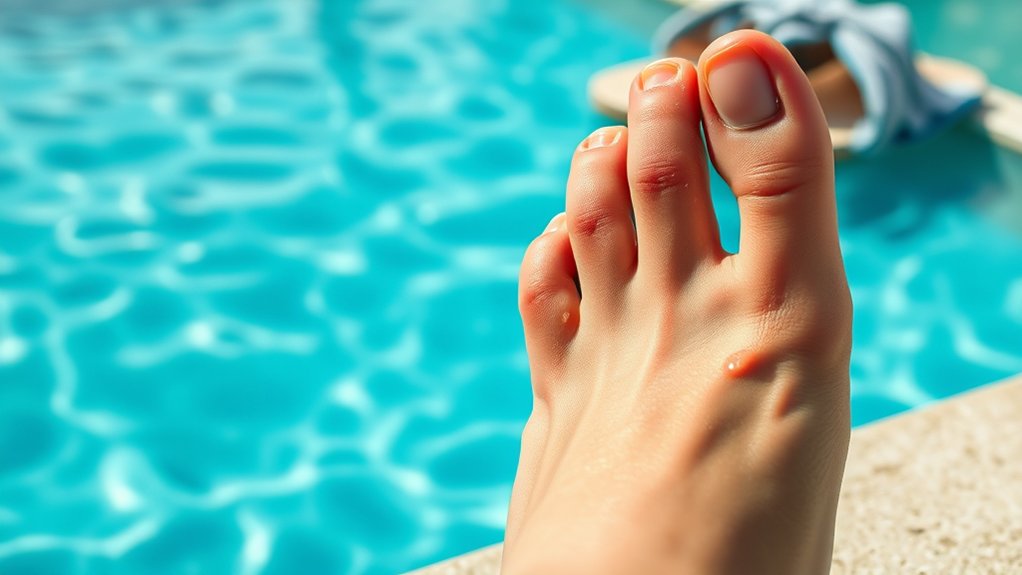
Ingrown toenails can be a painful condition that happens when the nail grows into the surrounding skin. This causes discomfort and can lead to complications. You might notice tenderness, redness, and pus drainage, especially in the big toe.
Ingrown toenails occur when the nail grows into the skin, causing pain, tenderness, and potential complications, especially in the big toe.
If left untreated, the pain can get worse and lead to serious foot problems like cellulitis or osteomyelitis.
For milder cases, try soaking your foot in warm water and gently lifting the ingrown nail edge with cotton or dental floss.
But if the problem sticks around or if you’re at high risk because of conditions like diabetes, make sure to get professional care right away.
Proper nail care is key; always trim nails straight across to prevent ingrown toenails and keep your feet healthy.
Signs of Infection to Watch For?
Infected ingrown toenails require prompt attention to prevent complications. Watch for key signs of infection, including increased redness and swelling around the toenail, which indicates inflamed skin.
If you notice pus drainage from the affected area, it’s important to seek medical help immediately, as this is a common symptom of infection.
Moreover, persistent pain that intensifies over time can signal a worsening condition requiring intervention.
You should also be cautious if you experience fever or chills alongside toe symptoms, as this may indicate a systemic infection.
Finally, if the area around your ingrown toenail becomes warm to the touch, it’s vital not to ignore this signal, as it could signify an active infection.
How Swimming Harms Ingrown Toenails
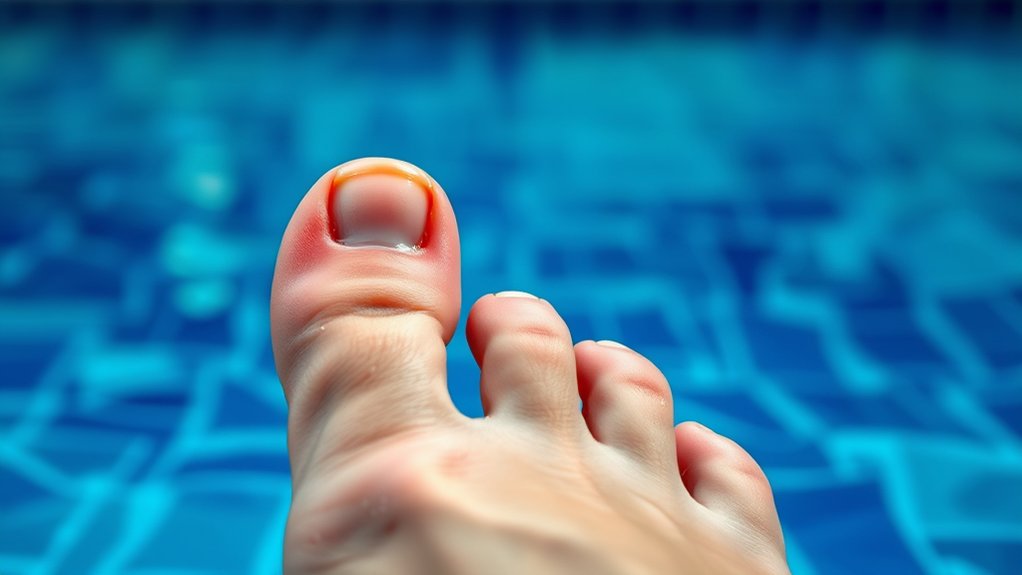
When you swim with an ingrown toenail, you risk amplifying pressure and irritation on the affected area, which can lead to increased pain and discomfort.
Chlorinated water may dry out the skin around the ingrown toenail, making irritation worse and slowing down healing.
Public swimming areas can harbor fungi and bacteria, increasing the chance of infection in the open wound caused by the ingrown toenail.
Natural bodies of water, like lakes and rivers, often contain pathogens that could severely infect compromised skin.
Soaking in clean water at home is a safer alternative. It minimizes your exposure to harmful microorganisms compared to the risks involved in swimming.
Prioritizing your health is essential when dealing with ingrown toenails.
Why It’s Important to Avoid Swimming With an Ingrown Toenail
Avoiding swimming with an ingrown toenail is essential for preventing further complications. The pressure and irritation from water can make the condition worse.
Swimming exposes your ingrown toenail to more irritation, especially in chlorinated pools. Chlorine can dry out and cause discomfort to the surrounding skin.
Natural bodies of water pose an even greater risk because they harbor pathogens that can cause infection. Public swimming areas are particularly hazardous, as they contain bacteria and fungal spores that threaten open wounds.
Ignoring these risks may lead to severe complications that need prompt treatment from a foot doctor.
Effective Care Strategies for Ingrown Toenails at Home
After soaking, gently place cotton or waxed dental floss under the ingrown portion of the nail to encourage proper growth and relieve pressure.
Next, apply a topical antibiotic ointment to the affected area and cover it with a clean bandage to prevent infection.
Opt for open-toed shoes or sandals to minimize pressure while healing.
If you experience pain, over-the-counter pain relievers like ibuprofen or acetaminophen can effectively manage discomfort and reduce inflammation.
When to Seek Professional Help for Ingrown Toenails
If you’re experiencing persistent pain, swelling, or redness around your toenail, it’s important to contemplate seeking professional help for your ingrown toenail.
Visible drainage of pus or other signs of infection, like increased warmth, signals that you need medical attention urgently.
If you have diabetes or any condition affecting circulation, consult a podiatrist at the first signs of an ingrown nail to avert serious complications.
When home care measures, such as warm soaks and proper nail trimming, fail to alleviate discomfort within a few days, professional evaluation is vital.
Regular follow-ups with a podiatrist can help manage chronic cases and minimize the risk of recurrence or complications associated with ingrown toenails.
Don’t hesitate to reach out for expert advice.
Alternatives to Swimming While Healing
While healing from an ingrown toenail, it’s essential to find alternatives to swimming that keep you active without aggravating your condition. Focus on low-impact exercises to maintain your fitness levels. Here are some options to take into account:
| Activity Type | Description | Benefits |
|---|---|---|
| Cycling | Use a stationary bike or cycle outdoors | Low stress on feet; excellent cardio |
| Yoga/Pilates | Focus on flexibility and core strength | Strengthens muscles without foot strain |
| Upper Body Workouts | Engage in exercises excluding the feet | Prevents discomfort while staying active |
| Gentle Walking | Walk on flat surfaces only, if comfortable | Promotes circulation without irritation |
Additionally, think about wearing supportive footwear and applying home remedies like soaking your foot in warm water to alleviate symptoms during the healing process.
Preparing for Your Podiatrist Appointment and Aftercare
Preparing for your podiatrist appointment involves taking proactive steps to guarantee a productive consultation and ideal aftercare. To maximize your time with the podiatrist, consider the following:
- Prepare a list of questions regarding your symptoms, treatment options, and expected outcomes.
- Bring relevant medical history, including previous foot issues or treatments, for effective assessment.
- Follow post-care instructions carefully to promote healing and prevent complications.
After treatment for your ingrown toenail, monitor the area for signs of infection, such as increased redness, swelling, or discharge.
Contact your podiatrist if you notice these symptoms. Also, make sure to schedule follow-up appointments as recommended to assure proper healing and address any recurring issues.
Frequently Asked Questions
Can Wearing Flip-Flops While Swimming Help an Ingrown Toenail?
Wearing flip-flops while swimming can offer several benefits for your ingrown toenail. They provide toe protection, reducing pressure and discomfort during movement.
The ventilation helps with nail care by keeping the area dry, minimizing irritation.
However, be mindful of swimming hygiene; flip-flops may not shield you from pathogens in public pools.
Explore other footwear alternatives if more protection is needed, and consult a podiatrist for effective pain management and personalized advice.
What Are the Long-Term Effects of Swimming With an Ingrown Toenail?
Swimming with an ingrown toenail can lead to long-term complications, with nearly 25% of untreated cases resulting in chronic issues.
You increase your infection risks, which can extend your recovery time and hinder proper nail growth.
Persistent pain management becomes necessary, affecting your daily life.
Treatment options may escalate from simple pain relief to surgical intervention if complications arise.
To avoid this, it’s best to seek medical advice before swimming.
Are Certain Swimming Locations Safer for Ingrown Toenails?
Certain swimming locations are safer for ingrown toenails. Public pools, due to chlorine exposure, generally offer lower infection risks compared to lake waters or ocean swimming, which can harbor pathogens.
However, poor hygiene in hot tubs may pose risks as well. To minimize complications, maintain excellent foot hygiene and consider soaking in clean water at home instead.
Always consult with a podiatrist for tailored advice regarding your specific condition and swimming location.
Can Swimming Worsen the Pain of an Ingrown Toenail?
Yes, swimming can certainly worsen the pain of an ingrown toenail. Imagine your toe as a delicate flower crushed under water pressure.
Effective pain management is vital; always prioritize proper toe care and select well-fitting footwear to minimize irritation.
Your swimming technique should avoid excessive kicking.
Maintain water hygiene to reduce infection risks, as bacteria can linger.
Engaging in swimming may extend your healing time, making caution essential for your comfort.
How Can I Protect My Toe While Swimming?
To protect your toe while swimming, use toe protection methods like waterproof bandages to shield the area.
Choose proper footwear such as water shoes to minimize irritation.
Incorporate swimming gear tips that include ensuring your gear fits well, preventing excess pressure on your toe.
After swimming, apply an antiseptic solution to the area, and practice post-swim care by keeping your foot dry and noting any changes in pain or swelling.
Conclusion
To summarize, swimming with an ingrown toenail isn’t just inadvisable; it can be a recipe for disaster, potentially worsening your condition. The risks of infection and prolonged pain far outweigh any temporary pleasure in the water.
Prioritize your health by implementing effective home care strategies and consulting a podiatrist when necessary. Remember, your feet are the foundation of your mobility. Don’t take that for granted.
Focus on healing, and soon you’ll be back to splashing around without worry.