How Many Lessons To Learn How To Swim – Complete Guide
To learn how to swim, the number of lessons varies by age. Babies typically need 5 to 10 sessions to feel comfortable in the water. Toddlers may require 20 to 30 lessons to master basic skills.
Adults often need 20 to 30 hours over a few months to become proficient. Consistent practice is key for all ages because it enhances comfort and confidence.
If you want specific tips on building skills and selecting the right program, keep exploring!
How Many Lessons Do Babies Need for Swimming?
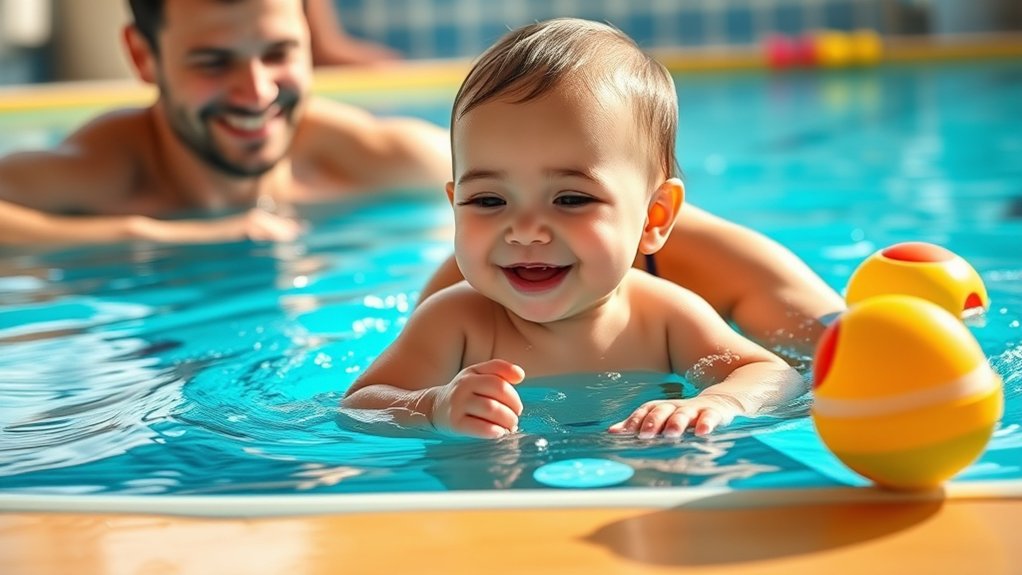
When it comes to introducing your baby to swimming, it’s important to know how many lessons they’ll truly need. For infants starting around 6 months, formal lessons are typically recommended after 12 months for ideal skill development.
Introducing your baby to swimming is key; aim for lessons after 12 months for optimal skill development.
You’ll want to aim for 5 to 10 sessions, focusing on comfort and familiarizing them with water rather than stroke techniques. Key milestones include basic skills like floating, kicking, and brief underwater swims beginning at 4 to 8 months.
Remember, safety is vital. Keep your baby within arm’s reach and use approved flotation devices during lessons.
Start sessions short, around 5-10 minutes, to foster a positive experience, gradually extending them as your baby becomes more comfortable in the water.
Key Milestones in Toddler Swimming
As your toddler begins swimming lessons, you’ll start to see some important milestones. First up is getting comfortable with the water—those water familiarization techniques.
Then come the basic floating skills, which are huge for building confidence. And don’t forget the introduction to kicking, which helps them start moving around.
These skills are like building blocks that help your little one feel safe and happy in the water.
When you practice regularly, it not only strengthens these abilities but also makes swimming fun and enjoyable for your toddler.
Before you know it, they’ll be excited to jump in and keep learning!
Water Familiarization Techniques
- Breath control: Encourage blowing bubbles to promote relaxation and safe breathing.
- Propulsion: Support their legs to foster movement and introduce basic paddling.
- Water play: Incorporate fun and games to make water familiarization enjoyable.
With consistent practice, toddlers can achieve milestones like independent floating and improve their overall swimming skills.
Remember, your support makes a significant difference in their comfort and progress.
Basic Floating Skills
Developing basic floating skills is vital for toddlers learning to swim, and it typically takes about 20 to 30 lessons to master this foundational technique. Focus on water comfort and breath control as your child learns to float.
By ages 2-3, kids should float independently for a few seconds with proper guidance. Key milestones include learning to blow bubbles and hold their breath while floating on their backs.
Consistent practice, ideally one lesson per week, will enhance their ability to float and build confidence in the water.
Always guarantee parental supervision during practice; this is essential not only for safety but also for reinforcing skills and guaranteeing a positive learning experience.
Engage actively, and watch your toddler thrive in the water!
Introduction To Kicking
Introducing your toddler to kicking is an exciting step in their swimming journey! Kicking not only promotes confidence in the water but also develops essential coordination and muscle strength for future swimming skills.
Typically, toddlers need about 20 to 30 lessons to master basic kicking techniques. Here are some key milestones to focus on:
- Learning to kick while floating
- Using leg propulsion for short distances
- Practicing kicking during supervised play
Regular practice, ideally two to three times a week, will greatly enhance your child’s comfort and ability in the water.
As they progress, they’ll gain more confidence while refining their kicking skills, setting a solid foundation for more advanced swimming techniques. Keep encouraging them on this fun journey!
What Is the Timeline for School-Age Children’s Swimming Progress?
When you consider the timeline for school-age children’s swimming progress, you’ll find that most kids between ages 6 and 12 typically need about 8 to 20 lessons to master basic strokes and build confidence in the water.
On average, acquiring simple swimming skills can take 4 to 8 weeks, depending on your child’s prior experience and comfort. Regular practice is essential; swimming year-round helps reinforce learning and prevent skill loss.
School-age children often learn quicker because of their improved motor skills and coordination. Parental support plays a significant role in their progress, enhancing their awareness and understanding of water safety.
What Sets Adult Swim Lessons Apart From Youth Programs?
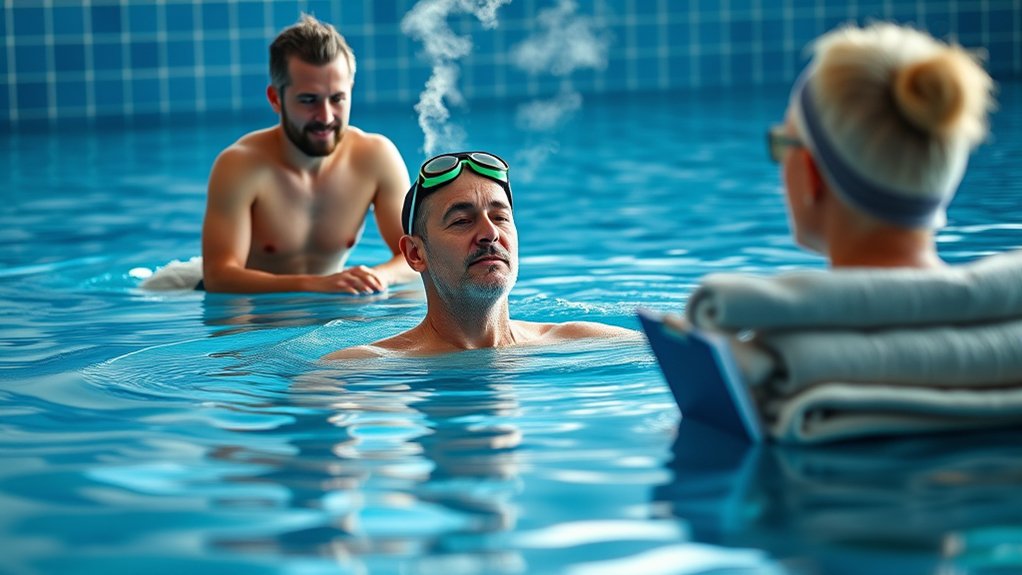
Adult swim lessons are quite different from youth programs, mostly because of age and how quickly people learn.
You’ll notice that adults usually take a bit more time to feel confident and get the hang of the strokes. It often takes around 20 to 30 hours spread over 2 to 3 months.
What really makes a difference is your motivation and commitment.
That’s why having personalized instruction is so important—it helps you reach your swimming goals at your own pace.
Age and Learning Speed
While learning to swim can be a rewarding experience at any age, the journey often unfolds quite differently for adults compared to children.
Here are some key differences in learning speed:
Adults often need 20-30 hours of swim lessons over 2-3 months to master basic strokes, while children can achieve this in just 4-8 weeks.
Adult learners frequently encounter challenges like coordination and comfort in water, which can lead to longer learning timelines.
Motivation and previous experience greatly influence adult learning speed.
With regular lessons and practice, you can accelerate skill acquisition more effectively.
Embracing these differences can help you stay motivated as you progress in your swim lessons and enjoy the journey of becoming a proficient swimmer.
Lesson Duration Differences
Learning to swim as an adult comes with its own set of challenges, particularly concerning lesson duration and structure.
Adult swim lessons typically require about 20-30 hours over 2-3 months to help you gain proficiency, while children learn basic skills in just 4-8 weeks.
Adults often need up to a year of weekly lessons to build confidence, unlike children who usually achieve comfort with 12-20 lessons.
The slower pace for adults is often due to coordination and muscle memory factors.
As you focus on mastering skills and knowledge in learning different swimming strokes, consistent swimming practice becomes essential for regular progress.
Embrace the journey; with time and dedication, you can become a proficient swimmer!
Motivation and Commitment Factors
For those considering adult swim lessons, the motivation and commitment factors play an essential role in making progress. Unlike youth programs, adult lessons focus on specific skill acquisition and goal-setting.
Here are three key elements to keep in mind:
- Regular swimming schedule: Attending lessons 2-3 times a week helps reinforce skills and build confidence.
- Consistency is key: Commit to practicing regularly to make the most of your progress.
- Tailored learning environment: Adults benefit from personalized instruction based on their previous experience with water.
Overcoming challenges like water anxiety is crucial.
With dedication, you’ll not only learn good safety habits but also boost a child’s confidence in water by showing that it’s never too late to learn!
What Factors Influence the Number of Swimming Lessons Needed?
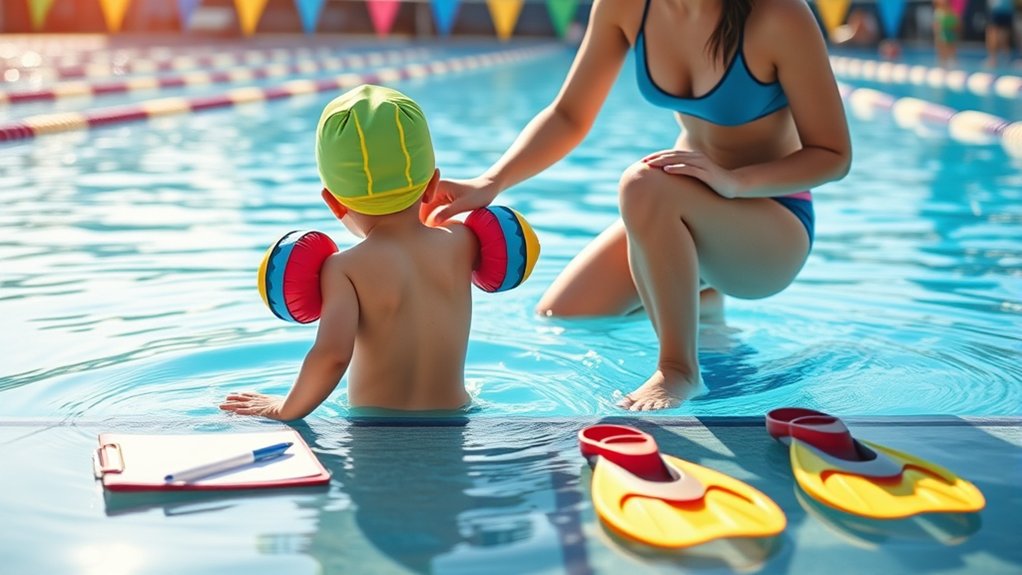
Several factors influence the number of swimming lessons you may need to reach proficiency, making it important to evaluate your unique circumstances.
If you’re helping a younger child learn to swim, you might expect them to require about 12 to 20 lessons for basic strokes.
Meanwhile, older children may need around 8 to 20 lessons for more advanced techniques.
Your child’s swimming ability and previous water experience can greatly impact the number of lessons needed, as more exposure typically increases comfort in the water.
Furthermore, lesson frequency is essential; aiming for at least two sessions per week can boost learning.
Finally, the expertise of the swim instructor matters significantly, as skilled instructors tailor lessons to enhance each child’s unique needs.
How Does Consistency Boost Swimming Lesson Success?
Building on the importance of individual factors in learning to swim, consistency stands out as a key element in maximizing success with swimming lessons. Regular and frequent lessons create an environment conducive to skill acquisition, allowing you to:
- Build muscle memory through repeated practice.
- Become more comfortable in the water, reducing anxiety.
- Build confidence as you master new techniques.
Aiming for at least two lessons a week helps reinforce learning over several months, ultimately leading to faster progress.
Infrequent lessons can hinder your development, making it difficult to retain skills. By maintaining a structured schedule, you’ll progress through various skill levels more effectively, ensuring that each lesson contributes to your overall swimming ability.
Choosing the Best Swimming Program for Your Child
Are you ready to set your child up for swimming success? Choosing the right swim program is essential for their safety and learning. Look for programs tailored to their age group, like BABY SWIM for toddlers or STARFISH for kids up to 12 years old.
Make sure the program emphasizes water safety and is led by experienced instructors certified in first aid. A consistent lesson schedule of at least once a week promotes comfort in the water.
Finally, the program should support gradual skill progression, beginning with basic strokes and advancing as your child gains confidence.
| Criteria | Importance |
|---|---|
| Age-specific Programs | Tailored learning experiences |
| Emphasis on Safety | Reduces risk during lessons |
| Experienced Instructors | Guarantees effective learning environments |
| Consistent Schedule | Reinforces skills effectively |
Tips to Build Confidence and Skills in the Water
While it’s natural for kids to feel nervous around water, there are effective ways to boost their confidence and skills. Here are some tips to keep in mind:
Enroll your child in formal swimming lessons that emphasize basic stroke techniques and breath control to improve muscle coordination.
Encourage regular water activities outside of lessons, like family swim days, to reinforce skills and enhance comfort.
Use positive reinforcement during practice sessions, celebrating small achievements to build confidence.
Set realistic goals, such as swimming short distances independently, which helps your child experience a sense of accomplishment.
With steady practice and support, they can enjoy the water and develop essential swimming skills.
Frequently Asked Questions
What Is the Best Age to Start Swim Lessons for Kids?
The best age to start swim lessons for kids is around 12 months. At this age, they can benefit greatly from water safety education and begin developing comfort in the water.
Look for qualified instructors and smaller class sizes so your child gets individual attention.
Make sure they wear proper swim gear for safety and support their learning style with your involvement.
Consistency in lesson duration and frequency will boost their skills and confidence.
Plus, it sets them up for lifelong swimming benefits.
How Can Parents Help Their Child Feel Comfortable in Water?
To help your child feel comfortable in water, start with fun water play that includes splash activities and pool games.
Introduce relaxation methods and breath control exercises to ease anxiety.
Encourage floating techniques to boost their confidence, making sure you’re always within arm’s reach for safety.
Frequent positive experiences in the water will promote comfort and familiarity.
This is essential for water safety and builds a strong foundation for future swimming lessons.
Are Group Lessons More Effective Than Private Swim Lessons?
Are you more of a social butterfly or a lone wolf in the water?
Group lessons thrive on group dynamics and social interaction, which can enhance skill retention and keep you motivated.
However, if you need individual attention and tailored instruction, private lessons might suit your learning style better.
Both options depend on your comfort levels and the instructor’s experience.
But consider lesson costs and your unique needs when making your choice.
What Safety Measures Should Be Taken During Swimming Lessons?
During swimming lessons, you should prioritize safety by ensuring a qualified instructor watches students closely, maintaining a low student-to-instructor ratio.
Use appropriate swimming gear and government-approved flotation devices.
Keep the pool temperature above 83 degrees Fahrenheit for comfort.
Limit lesson duration to 5-10 minutes initially, and establish clear emergency procedures.
Regularly review these measures and schedule lessons frequently to reinforce skills.
Doing this enhances both safety and confidence in the water.
How Can I Track My Child’s Swimming Progress Effectively?
To track your child’s swimming progress effectively, use skill milestones and keep a log of lesson frequency.
Regular swim assessments with the instructor allow for tailored feedback, enhancing parent involvement.
Implementing video analysis can visually reinforce techniques, while communication strategies guarantee everyone stays informed about strengths and areas for improvement.
Furthermore, establish reward systems to celebrate achievements, keeping your child motivated and committed to learning.
Your active participation makes a significant difference!
Conclusion
To sum up, the journey to swimming proficiency is as unique as each individual, with a blend of age, experience, and commitment shaping your path. You might find that those extra lessons come just when you least expect them, perhaps after a family trip where the kids unexpectedly take to the water!
Remember, consistency is key, and with the right program and support, you or your child can gain the confidence needed to swim safely and enjoyably.