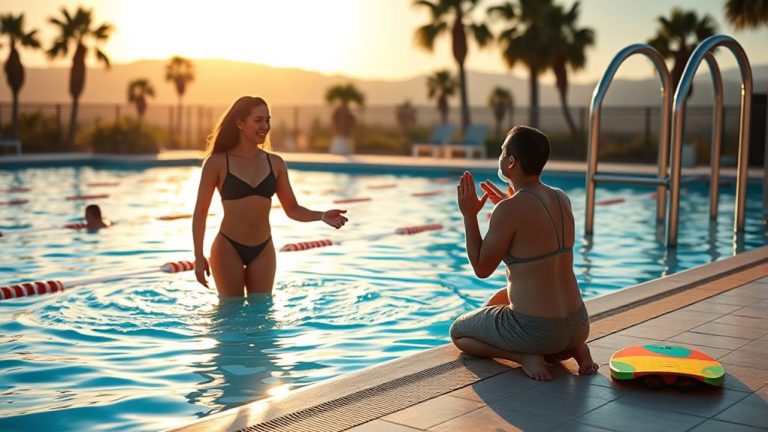
Can You Forget How to Swim?
You won’t truly forget how to swim because your muscle memory retains the basic strokes and breathing patterns. However, long breaks may make your skills feel rusty and your confidence waver, especially after six months or more.
Physical fitness and psychological factors like anxiety also play roles in how easily you return to swimming. With consistent, gradual practice, you can rebuild strength and confidence.
Keep going; you’ll find helpful tips and encouragement to get back in the water soon.
Key Takeaways
- Swimming skills are rarely completely forgotten due to muscle memory and procedural memory retention.
- Long breaks can reduce confidence and cause hesitation, impacting swimming ability more than actual skill loss.
- Psychological factors like fear and anxiety may create mental blocks, making swimming feel difficult after time off.
- Physical fitness decline from inactivity affects endurance and form, requiring gradual conditioning to regain swimming performance.
- Regular, supportive practice and swimming lessons help rebuild confidence and skill after extended breaks.
Understanding Muscle Memory in Swimming
Although you might worry about losing your swimming skills after a long break, your muscle memory keeps the vital techniques intact.
Muscle memory in swimming relies on procedural memory, which stores the necessary movements so you can perform them without conscious effort. This means you’re unlikely to completely forget how to swim, even after months away from the pool.
Your body remembers the fundamental strokes, breathing patterns, and coordination.
However, consistent practice is still essential to maintain proficiency and prevent your skills from becoming rusty.
When you return to swimming, muscle memory helps you reacquire your abilities faster than learning from scratch.
Trust your body’s ability to recall these techniques, and focus on gradual practice to rebuild your strength and confidence effectively.
How Long Breaks Affect Swimming Confidence
When you take long breaks from swimming, your confidence naturally takes a hit.
Even if your basic skills are still there, anxiety and hesitation can creep in. It can make you feel less secure in the water.
The good news? With steady practice, you can quickly rebuild that confidence and get comfortable again.
Confidence Declines Over Time
If you take an extended break from swimming, you might notice your confidence slipping even though your basic skills remain intact. Confidence declines over time because psychological factors like fear or anxiety can surface, making you doubt your abilities despite swimming skill retention.
Children especially may lose trust after negative water experiences. The good news is regular practice and gradual reintroduction can rebuild your confidence.
| Break Duration | Typical Confidence Level | Skill Retention |
|---|---|---|
| 1-3 months | Mildly decreased | Mostly intact |
| 3-6 months | Noticeably decreased | Moderately intact |
| 6+ months | Markedly decreased | Some skill degradation |
Psychological Impact on Swimming
Confidence plays an essential role in your ability to swim well, and taking a long break can shake that confidence more than you might expect.
Psychological factors like anxiety and fear often emerge after a hiatus, creating mental blocks that affect your performance and willingness to get back in the water.
Even if your foundational swimming skills remain intact, these feelings can diminish your comfort and trust in your abilities.
To overcome this, you need to gradually rebuild confidence through regular practice in a supportive environment, such as swimming lessons.
Addressing these psychological barriers directly helps reduce anxiety and fear, restoring your swimming confidence and improving your overall performance over time.
Don’t let breaks discourage you. Your skills and confidence can come back stronger.
The Role of Procedural and Declarative Memory

Although swimming may feel like second nature, it relies on two distinct types of memory: procedural and declarative. Procedural memory allows you to perform strokes effortlessly without conscious thought, while declarative memory helps you recall techniques and safety rules.
Together, they form the foundation of your swimming skills. Even after long breaks, your procedural memory typically retains these skills, enabling quick relearning.
Here’s a clear comparison:
| Memory Type | Function |
|---|---|
| Procedural Memory | Executes swimming strokes |
| Declarative Memory | Recalls rules and techniques |
| Retention | Long-lasting |
| Conscious Access | Procedural – unconscious |
| Declarative – conscious |
Understanding these roles helps you regain confidence and skill smoothly, ensuring you never truly forget how to swim.
Physical Fitness and Its Impact on Swimming Skills
Because your physical fitness directly influences your swimming performance, maintaining stamina and strength is vital for effective strokes and endurance in the water. If your physical fitness declines after a break, you’ll likely experience fatigue and struggle to maintain proper form.
To keep your swimming skills sharp, engage in regular cardiovascular and strength training, which boosts endurance and stroke efficiency. Focus on core strength; it stabilizes your body and improves coordination during each movement.
Complementary activities like yoga or Pilates can also help maintain the flexibility and strength critical for swimming success.
Psychological Factors Influencing Swimming Ability

You might find that fear and anxiety can quietly chip away at your swimming confidence, even if your skills haven’t faded.
When mental blocks take hold, they can make getting back in the water feel overwhelming.
But the good news is, with steady practice and the right support, you can overcome these challenges and regain your trust in swimming.
It’s all about taking it one step at a time and being patient with yourself.
Before you know it, those fears start to fade, and the water feels like a friendly place again.
Fear and Anxiety
When fear and anxiety take hold, they can seriously undermine your swimming ability by creating mental blocks that shake your confidence in the water. A sudden panic or feeling out of control can cause you to doubt your skills, even if your physical ability remains intact.
Children are especially vulnerable, quickly losing trust in their swimming after a setback. Recognizing these psychological barriers is key to overcoming them. Regular lessons in a supportive setting help alleviate fear and anxiety, restoring confidence through professional guidance.
| Fear and Anxiety Effects | Causes | Solutions |
|---|---|---|
| Mental blocks | Panic, loss of control | Supportive lessons |
| Confidence erosion | Negative water experiences | Gradual exposure |
| Skill deterioration | Psychological setbacks | Rebuilding trust & routine |
Confidence Loss Impact
Confidence plays an essential role in your swimming performance, and losing it can greatly impact your ability in the water.
The confidence loss impact often stems from psychological factors like anxiety and fear, which create mental blocks that interfere with your swimming skills.
Even if your foundational skills remain intact after a break or fearful incident, your fear of water can undermine your trust in your abilities.
Children are especially vulnerable to this.
However, you don’t have to accept this setback.
Regular swimming lessons and supportive environments provide the tools and encouragement you need to rebuild confidence.
Overcoming Mental Blocks
Although mental blocks can feel overwhelming, you can overcome them with the right approach and mindset. Anxiety and fear often create these blocks, especially after a long break, shaking your confidence in the water.
Overcoming mental blocks starts with acknowledging that nervousness is normal and that past negative experiences don’t define your ability. You must address any fear or panic head-on, rebuilding trust in your swimming skills.
Regular lessons in a safe, controlled environment are essential. They provide support and strategies tailored to your needs. Professional instructors guide you through each step, helping you regain control and confidence.
Techniques for Gradual Reintroduction to the Pool
Since getting comfortable in the water is key, start by warming up outside the pool to build your confidence before stepping in.
Use techniques for gradual reintroduction to the pool by first entering shallow water, where you can keep your head above the surface and adjust to the environment without stress.
Start in shallow water to stay comfortable and acclimate without pressure or stress.
Begin with the breaststroke, which allows you to see clearly and conserves energy, making it ideal for swimming lessons for adults returning to the water.
Keep your sessions short and consistent to rebuild muscle memory and increase comfort.
Set realistic goals like swimming one lap at a time, resting as needed to avoid fatigue.
Core Strength and Its Importance in Swimming
Core strength forms the foundation of your swimming ability by stabilizing your body and improving coordination during strokes.
When you wonder, can you lose swimming skills, keep in mind that maintaining a strong core is key to retaining your form and efficiency in the water.
A powerful core improves your balance and buoyancy, allowing you to glide smoothly and conserve energy.
It also supports your spine, reducing injury risk and keeping your body aligned.
You can build this strength through targeted exercises like planks, sit-ups, and stability ball workouts, which directly improve your swimming performance.
Prioritizing core training not only boosts your aquatic capabilities but also fortifies your overall fitness, helping you regain and sustain your swimming skills with confidence.
Choosing the Right Stroke to Regain Comfort
Anyone returning to swimming will find breaststroke an excellent choice to regain comfort in the water. This stroke lets you keep your head above water, reducing anxiety and helping you feel in control.
When swimming after years away, breaststroke is less demanding on your body, making it easier to rebuild confidence without overwhelming fatigue. Focus on maintaining a relaxed posture and keeping your head aligned with your spine to avoid neck strain.
As you practice, you’ll gain a clear view of your surroundings, which improves your comfort and safety. Mastering breaststroke gradually reinforces foundational skills, providing a solid base to progress toward more advanced strokes.
Choosing breaststroke is a smart, effective step to ease back into swimming after years of absence.
Practical Tips for Keeping Your Head Above Water
If you want to regain confidence in the water, start by keeping your head above the surface as much as possible.
Begin with slow, gradual immersion, allowing your body to acclimate and your mind to settle. Warm up outside the pool with stretches to prepare both physically and mentally.
Enter shallow water first, where you can control buoyancy and movement easily.
Focus on maintaining an upright position and practice breath control to stay calm. This approach frees your mind from anxiety and helps awaken your natural swimmer’s instincts.
Setting Realistic Goals for Returning Swimmers
Although returning to swimming can feel challenging, setting realistic goals will keep you motivated and on track. Start by aiming to swim one lap at a time, gradually increasing distance as your comfort and confidence grow.
Setting realistic goals prevents overwhelm and provides a structured path to rebuild your skills effectively. Track even small progress to boost motivation and reinforce your achievements.
Setting achievable goals structures your progress and tracking small wins keeps motivation high.
Remember, your pace depends on your current physical abilities and swimming history, so tailor your goals accordingly. Incorporate rest intervals between laps to manage fatigue and enjoy your sessions more.
If you consider skill retention swimming lessons, they can offer guidance tailored to your needs. These lessons help you regain form safely and efficiently while reinforcing your progress step by step.
Personal Stories of Rediscovering Swimming Skills
You know, even if you learned to swim when you were a kid, it’s totally normal for fear or hesitation to pop up out of nowhere.
A lot of people go through moments where panic kicks in or confidence just takes a nosedive. It can feel pretty overwhelming when you’re trying to get those skills back.
But here’s the thing: by listening to these personal stories, you’ll see how patience and focused support really make a difference.
They don’t just help rebuild your ability; they also help you trust yourself in the water again.
It’s a journey, but one that’s definitely worth it.
Childhood Swimming Challenges
Three common challenges often arise when children try to rediscover their swimming skills after a break.
First, childhood swimming challenges often involve a loss of confidence rather than a loss of skill. You might wonder, do kids forget how to swim? Physically, they don’t, but psychological setbacks like fear can cause panic and hesitation.
Second, even previously confident swimmers can regress after a scary experience in the water, needing time and support to regain trust.
Third, without regular practice or lessons, survival skills can diminish, increasing risk.
To overcome these, consistent swimming lessons and patient encouragement help rebuild comfort and ability.
Overcoming Water Fear
How do you regain confidence in the water after a frightening experience? Overcoming water fear starts with recognizing that your foundational swimming skills often remain intact, even if confidence wavers.
Many have faced setbacks, yet through gradual reintroduction, beginning in shallow, safe areas, they rebuild comfort step by step. You’ll find that regular swimming lessons and professional guidance accelerate this process, offering structured support tailored to your pace.
Patience is key; setting realistic goals helps you adjust without pressure. Personal stories show that with encouragement and time, fear diminishes and skills resurface.
The Benefits of Swimming Lessons After a Hiatus
Although stepping away from swimming can cause skills to fade, taking swimming lessons after a hiatus helps you quickly rebuild confidence and sharpen essential techniques.
Professional instructors offer personalized guidance, ensuring you regain your abilities safely while addressing any fears or anxiety that may have developed.
These structured lessons create a supportive environment, vital for overcoming hesitation and restoring comfort in the water. Regular sessions improve your technique and physical fitness, boosting both performance and stamina.
Beyond skill recovery, swimming lessons after a hiatus rekindle your enjoyment of the sport, encouraging a lifelong appreciation for swimming as a valuable life skill.
Frequently Asked Question
Can Swimming Be Completely Relearned After a Long Hiatus?
Yes, you can completely relearn swimming after a long break. Your procedural memory holds onto the basics, so with consistent practice, you’ll regain your skills.
Start slowly, set achievable goals, and consider refresher lessons to rebuild confidence and technique.
While your fitness might need rebuilding, patience and gradual exposure will help you overcome any mental blocks.
Keep at it, and you’ll be swimming smoothly again before you know it.
Does Age Affect the Ability to Retain Swimming Skills?
Age can be a gentle tide shaping your swimming skills rather than erasing them.
While younger you might pick up strokes faster, your foundational skills usually stick around, even as you age.
You might notice some physical changes or anxiety after breaks, but with steady practice, you can bounce back.
Don’t let age hold you back. It’s more about consistency and mindset than years.
Keep swimming, and you’ll keep those skills alive.
How Does Fear of Water Develop After Not Swimming for Years?
Your fear of water develops when you stay away from swimming for years, causing your confidence to fade.
Negative experiences or panic in the past can replay in your mind, making you anxious.
You might start associating water with danger instead of safety.
But don’t worry, you can overcome this by gradually returning to the pool and practicing regularly.
This helps rebuild trust and comfort in the water step by step.
Are There Health Risks When Resuming Swimming After a Long Break?
Like riding a bike, swimming skills stick, but your body mightn’t be ready right away.
When you resume after a long break, you risk muscle strain and quicker fatigue because your strength and endurance have declined.
You might also face anxiety in the water.
To stay safe, start slow, gradually build intensity, and consider consulting a healthcare professional or coach.
Taking these steps helps you plunge back confidently and healthily.
What Equipment Can Help Beginners Regain Swimming Confidence?
You can use flotation devices like kickboards and pool noodles to regain stability and confidence in the water.
Swim fins will boost your propulsion and improve your kicking technique, making movement easier.
Don’t forget goggles; they help you see clearly underwater and reduce anxiety.
Snorkels allow you to practice breathing without lifting your head, and resistance bands or aquatic dumbbells build strength and muscle memory.
These tools will help you swim confidently again.
Conclusion
You might worry about losing your swimming skills after a break, but don’t stress. Studies show that 70% of people retain muscle memory even after months off. Your brain and body remember more than you think.
With consistent practice and realistic goals, you’ll regain confidence faster than expected. Remember, swimming isn’t just a skill; it’s a lifelong ability.
Keep at it, and you’ll be back in the water, strong and steady, in no time.