How Long Does It Take An Adult To Learn To Swim – Timeline Guide
As an adult, you can expect to need about 20-25 hours of dedicated lessons to learn to swim effectively. You’ll start with water confidence before moving on to basic skills like floating and breathing, which takes a few weeks.
With consistent practice of 2-3 sessions per week, you can refine your strokes in 3-6 months. Remember, overcoming challenges and receiving quality instruction are key. Keep going, and you’ll discover even more helpful strategies along the way.
How Long Will It Take You to Learn to Swim?

For motivated adults, learning to swim generally requires 20-25 hours of dedicated lessons.
In this learning process, you’ll focus on crucial skills like floating and breathing, which can take 4-8 weeks.
As you gain confidence, it usually takes an additional 2-3 months to master basic strokes. Regular practice is essential; aiming for 2-3 sessions per week can accelerate your progress, allowing you to feel comfortable in deeper water.
With dedicated instruction and consistent effort, you can develop fundamental water safety skills within 3 to 6 months.
Key Stages in Learning to Swim as an Adult
As you commence your swimming journey, you’ll progress through key stages that build your skills and confidence in the water. Each stage is essential for developing adult swimming proficiency with realistic expectations.
| Stage | Description |
|---|---|
| Water Confidence | Start with shallow areas to ease anxiety. |
| Learning Basic | Focus on breath control and mastering floating, usually within 2-3 months. |
| Swim Lessons | Engage in structured lessons to refine techniques. |
| Stroke Techniques | Mastering strokes takes about 3-6 months with consistent practice. |
Why Consistent Practice Boosts Your Swimming Skills
While you might feel enthusiastic to master swimming quickly, consistent practice is the key to truly unlocking your potential in the water. Engaging in training sessions 2 to 3 times a week enhances skill retention and accelerates progress.
Short, focused practice sessions of 30 to 40 minutes are essential for developing endurance and coordination. Practicing between lessons reinforces previous skills, reducing the total instruction hours needed to achieve functional proficiency.
Structured practice helps you maintain momentum and build confidence in your abilities. With each swim, you’ll improve your familiarity with water dynamics, making your journey of learning to swim smoother and more effective.
Overcoming Common Learning Obstacles in Swimming
Learning to swim can present various challenges, especially for adults facing specific fears and anxieties. Overcoming common learning obstacles often starts with addressing the fear of water.
To build confidence, it’s essential to regularly engage in consistent practice. Simple activities like treading water can help enhance your comfort and survival skills.
Remember, emotional responses such as panic can hinder your swimming progress. Maintaining a positive attitude and a supportive environment is crucial for effective learning.
The quality of instruction plays a critical role too. Experienced instructors can assist in guiding both physical coordination and psychological barriers.
Regular, structured practice sessions, ideally 2-3 times a week, will progressively develop your fundamental skills. This ensures you feel more comfortable and confident in the water.
Why Good Instruction Makes All the Difference
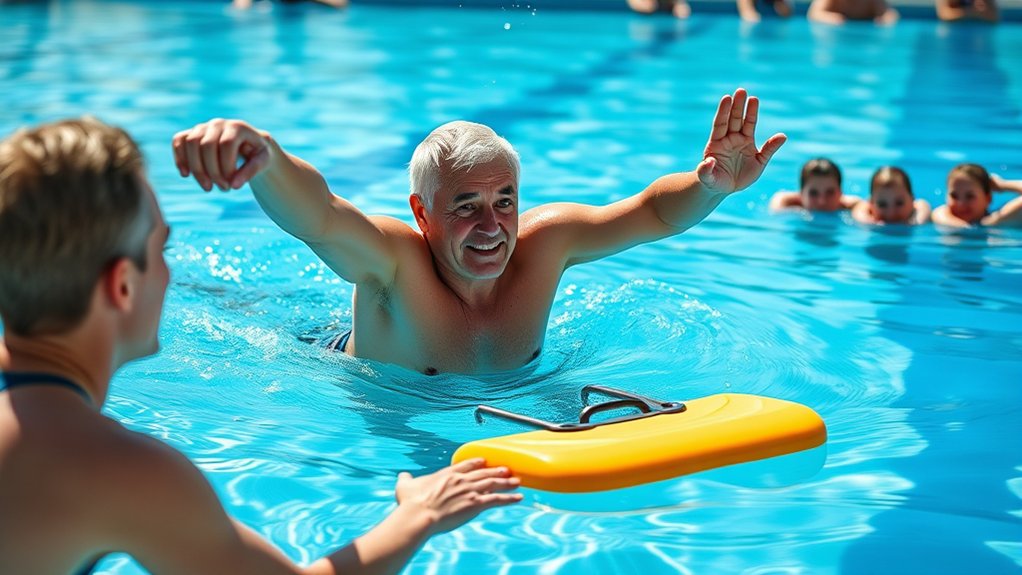
Good instruction can totally change your swimming experience in amazing ways.
When you get personalized coaching from experienced instructors, they focus on your specific fears and limitations, which really speeds up how fast you learn.
Plus, structured lessons don’t just build a solid foundation—they help you move forward quickly, making your path to swimming confidence feel a lot more doable.
Personalized Coaching Benefits
When you choose personalized coaching, you’re setting yourself up for a smoother and more effective swimming journey. This approach typically requires just 20-25 hours of structured instruction to help you achieve functional swimming skills.
With one-on-one instruction, you’ll receive real-time feedback, allowing for efficient skill acquisition and immediate corrections. This is especially beneficial for fearful non-swimmers, as experienced instructors can tailor lessons to address your specific fears and limitations.
Quality instruction helps you master foundational skills like floating and breathing techniques early on, preventing bad habits from forming.
In a supportive learning environment, you’ll build confidence, essential for overcoming anxiety and achieving swimming proficiency in no time.
Embrace personalized coaching for a transformative swimming experience.
Experienced Instructors Matter
While diving into the world of swimming can feel intimidating, having an experienced instructor by your side can transform that experience into one of empowerment and growth.
Here’s how their expertise can make a difference:
- Personalized approach addressing your specific fears.
- Quality instruction that expedites your learning timeframe.
- Immediate feedback that corrects mistakes early for faster skill acquisition.
- Supportive teaching environments that boost your comfort level in the water.
- Strategies to overcome emotional barriers that may hinder progress.
With this kind of tailored guidance, you could achieve functional swimming skills in just 20-25 hours of lessons.
Structured Lessons Accelerate Progress
Selecting experienced instructors sets the foundation for structured lessons that can greatly speed up your progress in learning to swim.
With an emphasis on quality instruction, adults typically need 20-25 hours of such lessons to achieve functional swimming.
Private lessons offer personalized coaching, allowing for real-time feedback that enhances skill acquisition more effectively than group sessions.
When combined with consistent practice, some motivated learners may develop proficiency in just 7.5 hours of focused instruction.
In addition, experienced instructors help address emotional barriers that can hinder progress, fostering confidence and enabling you to become a competent swimmer.
Embrace structured lessons to accelerate your progress toward mastering the water and enjoying the freedom swimming provides.
Set Realistic Goals to Track Your Progress
Setting realistic goals is essential for any adult learning to swim, as it provides a clear roadmap for your progression and builds confidence along the way.
Here are some strategies to help you track your progress:
Set clear and measurable goals; aim to master floating within 4-8 weeks. Commit to consistent practice, ideally 2-3 sessions weekly, to reach your swimming milestones.
Monitor your comfort level in the water; a steady sense of ease can indicate progress.
Utilize feedback from instructors to refine your technique and adjust your learning approach.
Celebrate small achievements, like completing a full lap or mastering breathing techniques, to stay motivated on your swimming journey.
With these in mind, you’ll make strides in no time!
What Affects How Fast You Learn?
Your pace of learning to swim can vary based on several factors, each playing a significant role in your journey. Comfort in water is essential. If anxiety holds you back, it may slow your progress.
Previous water experience can enhance this comfort, allowing you to adapt more quickly during lessons. Consistency in practice is equally important; frequent sessions accelerate skill acquisition. It often requires an average of 20-30 hours of instruction for adult swimmers to feel confident.
Furthermore, the quality of instruction matters. Experienced instructors tailor lessons to your needs, shortening your learning timeframe.
How to Build Confidence Learning to Swim
While learning to swim might seem intimidating at first, building confidence in the water is entirely achievable with consistent practice and the right approach.
Start with gradual exposure to help you feel comfortable, and don’t hesitate to seek help from a patient instructor. Here are some strategies to boost your confidence:
Begin with basic swimming skills like floating and treading water.
Practice controlled breathing exercises to help manage anxiety.
Splash water on your face and neck to acclimatize to temperature changes.
Spend time in shallow areas, gradually exploring deeper depths.
Focus on achieving comfort before progressing to more challenging techniques.
With determination and the right mindset, you’ll soon excel and truly enjoy the experience of swimming!
Frequently Asked Questions
Can Anyone Learn to Swim, Regardless of Age or Fitness Level?
Absolutely, you can learn to swim, no matter your age or fitness level! With motivation and quality instruction, you’ll overcome fear and achieve important fitness goals.
Swimming benefits extend beyond physical health, enhancing water safety awareness too.
Adapting to your learning style, focusing on stroke techniques, and getting community support can greatly help.
Regular practice, about 2-3 times a week, accelerates your progress, ensuring you build confidence and skill in the water.
What Should I Wear for Swimming Lessons as an Adult?
Choosing your swimming attire is like finding the perfect dance partner. For comfort and movement, opt for a well-fitting swimsuit, one-piece for women or swim trunks for men.
Don a swim cap to keep hair in place and enhance your glide. Quality goggles improve visibility, while water shoes provide grip.
For cooler waters, consider a rash guard.
Don’t forget sunscreen application before heading out, ensuring you’re protected while you learn and enjoy your time in the water!
Are Private Lessons More Effective Than Group Classes?
Private lessons are generally more effective than group classes for most adults. With personalized instruction, you receive tailored feedback that matches your comfort level and learning pace.
This one-on-one interaction fosters a supportive environment, reducing anxiety.
Furthermore, lesson frequency can be adjusted to suit your needs, maximizing progress.
While group dynamics offer social interaction, the focused attention of an experienced instructor in private lessons often leads to faster skill acquisition, despite potential cost comparisons.
How Do I Choose the Right Swimming Instructor?
When it comes to choosing the right swimming instructor, you’ll want to guarantee they’re not just going through the motions.
Look for qualified instructors with effective teaching styles and good communication skills.
Consider lesson frequency, class size, and their approach to safety protocols.
Check student feedback and confirm they track progress, using motivation techniques that match your learning pace.
Finding the right fit can make all the difference in your swimming journey!
What Exercises Can Help Improve My Swimming Technique?
To improve your swimming technique, focus on specific swimming drills like kickboard usage for leg strength and buoyancy exercises to enhance water confidence.
Incorporate breathing techniques through side breathing drills.
Practice stroke mechanics with the catch-up freestyle drill, and enhance endurance with speed training and Vasa trainer workouts for dryland strength.
Don’t forget flexibility exercises to aid movement.
Pay attention to hand position, as it’s essential for effective propulsion in the water.
Conclusion
As you dip your toes into the water, remember that each splash brings you closer to mastery. With consistent practice and good instruction, you’ll navigate those early challenges and begin to glide confidently through the lanes.
Track your progress and celebrate small victories; they’re stepping stones to success. Soon, you’ll find yourself swimming with ease, the water becoming a familiar embrace.
Are you ready to discover the joy that awaits beneath the surface? Your journey is just beginning!