Why Cant Black People Swim – History And Facts
You can’t ignore how historical segregation barred Black Americans from quality pools, causing generations to miss essential swimming lessons. Economic constraints and overcrowded or costly facilities still limit access today.
Cultural fears and family gaps, shaped by past trauma and exclusion, also reduce swimming participation. This legacy leads to higher drowning rates among Black youth.
Understanding these layered causes reveals why swimming disparities persist and how communities are now working to change the tide.
The History of Swimming Segregation in America
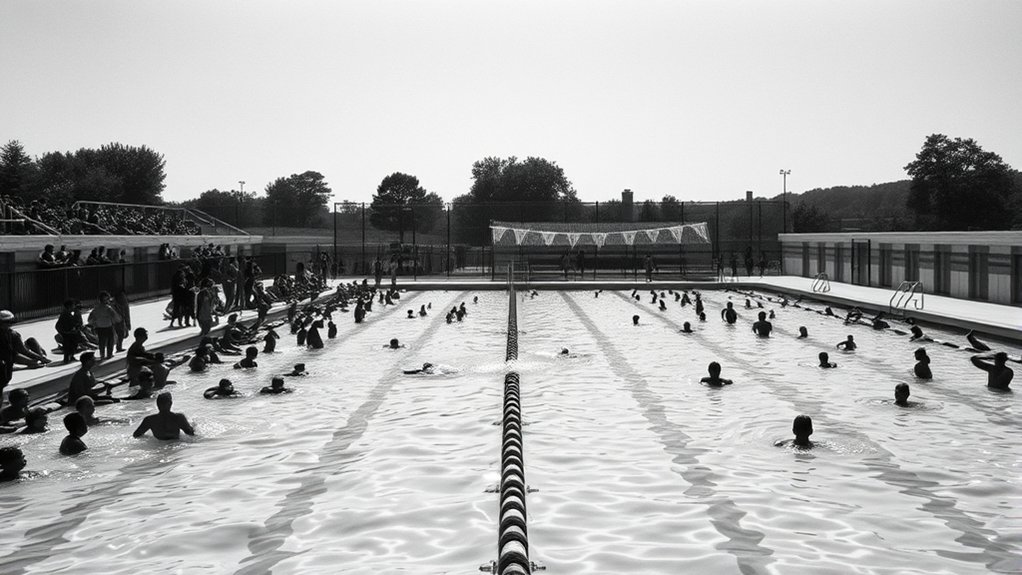
Although public pools were once inclusive spaces, by the early 20th century, they became sites of racial segregation driven by societal fears and discrimination. You’ll find that public pools in the U.S. enforced segregation policies that limited Black Americans to smaller, inferior facilities, drastically restricting their access to swimming.
This exclusion wasn’t just social but institutional, reinforcing racial divides in recreational spaces. When you examine the legacy of these practices, it’s clear how they contributed to disparities in swimming skills and opportunities.
Despite Civil Rights protests challenging segregation, many pools closed rather than integrate, reducing public swimming availability.
Today, these historical inequalities correlate with Black Americans facing drowning rates 7.6 times higher than White counterparts. This really shows the long-term impact of racial segregation in swimming and how deep these issues run.
How Segregation and Barriers Led to Declining Swimming Skills
You’ve probably noticed how segregated pools kept Black communities from having access.
But the effects went even further than that. When white families moved away and economic challenges piled up, swimming lessons became harder to come by in mostly Black neighborhoods.
All these things together made it tough for generations to build strong swimming skills.
Segregated Pool Access
When racial segregation laws barred Black Americans from equal access to public pools in the early 20th century, they were often confined to smaller, poorly maintained facilities that limited opportunities to learn swimming. This segregated access shaped swimming skills across generations.
You can see the impact through a few things. First, there was limited access to quality public pools, which restricted practice and instruction.
Then, after the 1964 Civil Rights Act, many pools closed to avoid integration, reducing the number of available swimming venues.
Even today, there are persistent disparities. In some cities, only 1.5% of Black Americans swim despite significant population percentages.
This history of exclusion and inadequate facilities directly contributed to declining swimming proficiency among Black communities, a trend still evident now.
Understanding these systemic barriers helps explain why swimming participation and skills aren’t equal across the board.
It’s not just about individual interest or ability—it’s about the opportunities that were and still are available.
Impact of White Flight
As public pools desegregated in the 1950s and 1960s, many white families withdrew their support and attendance. This caused urban pools, which were once shared spaces, to sharply decline in funding and maintenance.
The impact of white flight led to budget cuts and closures of public swimming pools that primarily served Black communities. This reduced their access to swimming pools and instruction.
Meanwhile, over 20,000 private swim clubs emerged, catering exclusively to white members and reinforcing racial exclusion.
With fewer safe, accessible public pools, Black individuals faced growing barriers to learning how to swim.
The resulting lack of swimming proficiency contributed to disproportionately high drowning rates among Black youth. Studies show that 64% of Black youth are unable to swim.
Economic And Social Barriers
The decline of urban public swimming pools due to white flight set the stage for deeper economic and social barriers that Black communities continue to face.
Historical segregation and racial discrimination restricted access to swimming facilities, causing a generational drop in swimming skills.
Economic barriers further limited opportunities, as many Black families prioritized essentials over swimming lessons.
You can visualize these challenges as:
- Segregated pools denying basic access to Black swimmers.
- White flight reducing funding and maintenance for urban pools.
- High costs of swimming lessons making skill acquisition unaffordable.
These factors combined to create an environment where 64% of Black youth remain unable to swim.
The legacy of historical segregation and ongoing economic barriers continues to shape swimming proficiency within Black communities today.
Cultural and Family Influences Rooted in Historical Barriers
Though many factors contribute to swimming disparities, cultural and family influences rooted in historical barriers play a critical role in shaping Black Americans’ relationship with water.
Historical barriers like Jim Crow laws limited access to swimming facilities, which led to a generational lack of swimming skills within Black families.
This absence of swimming knowledge often means you may not have had family members who could teach or encourage you to swim.
Plus, cultural attitudes toward swimming have been shaped by traumatic experiences and fears related to water. These feelings can create reluctance to engage in swimming activities.
Limited access to safe recreational pools further reinforces these patterns.
Understanding these cultural and familial influences shows just how deeply historical barriers have impacted Black Americans’ swimming participation over generations.
Economic and Social Barriers to Swimming Today
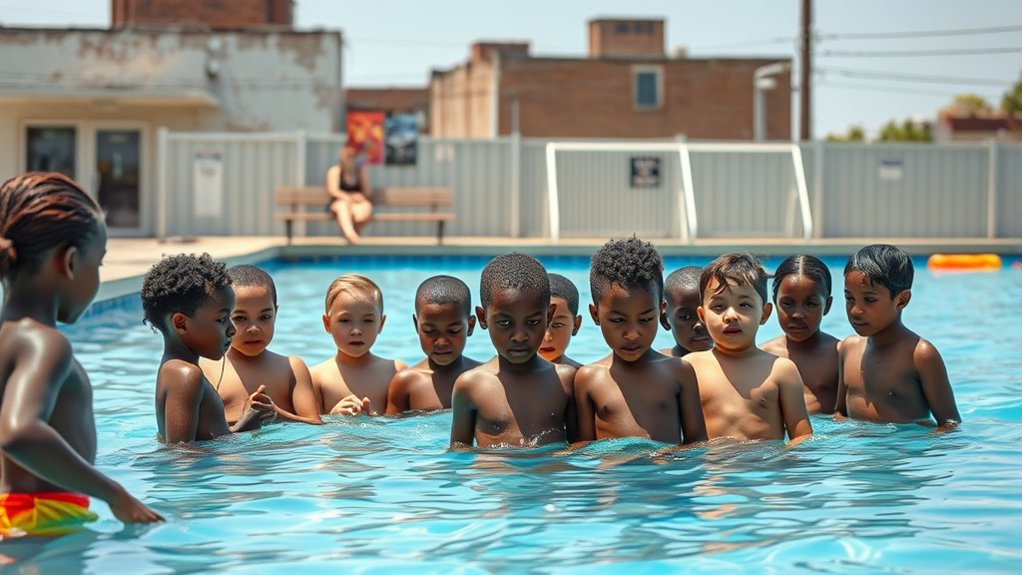
You face significant obstacles when swimming isn’t easily accessible in your neighborhood because pools are often overcrowded or underfunded.
Plus, the high cost of lessons means many families have to prioritize essentials over swimming education, which limits skill development.
On top of that, cultural and family influences—shaped by a history of exclusion—add another layer of challenge.
All these factors together create lasting barriers to becoming proficient in swimming.
Limited Pool Access
Because many urban recreational facilities are overcrowded or underfunded, Black families often struggle to find accessible swimming pools. Limited access to municipal pools continues to shape the swimming landscape for Black children, reflecting a long history of swimming exclusion. This scarcity results from a few key reasons.
First, historical closures of public pools in Black neighborhoods have reduced the number of available facilities. Then, overcrowding at the remaining pools limits swim time and lesson availability.
On top of that, financial barriers often prioritize basic needs over recreational access.
These factors create a cycle where Black children have fewer opportunities to develop swimming skills. It’s important to understand this context because the history of swimming is closely tied to economic and social challenges.
These challenges restrict access and contribute to ongoing disparities in swimming proficiency within Black communities.
Costly Swimming Lessons
While access to pools remains a challenge, the high cost of swimming lessons presents another significant barrier for many Black families. Costly swimming lessons, combined with financial constraints, often force families to prioritize essentials over swimming education. Urban areas typically have underfunded swimming facilities, limiting affordable options.
Access to private pools is scarce, which only makes the disparities in swimming proficiency worse. These economic barriers contribute to a cycle where many Black children grow up without swimming skills. This increases risks and reduces opportunities.
| Barrier | Impact | Result |
|---|---|---|
| Costly swimming lessons | Limits participation | Low swimming proficiency |
| Underfunded facilities | Reduces affordable access | Fewer learning opportunities |
| Financial constraints | Prioritize essentials over lessons | Persistent disparities |
Cultural And Family Influence
Economic barriers, like costly lessons and limited pool access, only tell part of the story behind swimming disparities in Black communities. Cultural and family influences play a big role in shaping swimming skills and attitudes. You should consider these factors:
First, family swimming history often lacks, which limits kids’ early exposure to swimming.
Then, cultural perceptions—shaped by historical trauma and negative experiences—discourage participation.
Also, overcrowded or underfunded urban pools reduce practical access, even when families have the money.
All these elements mix together, making it harder for families to invest in swimming, even when they know how important it is.
Without parents who know how to swim, kids miss out on crucial encouragement and guidance.
In the end, economic and social barriers work hand in hand, affecting swimming skills across generations in Black communities.
Understanding this complex mix helps explain why access and culture matter just as much as financial issues.
Swimming Disparities and Higher Drowning Rates Among Black Children
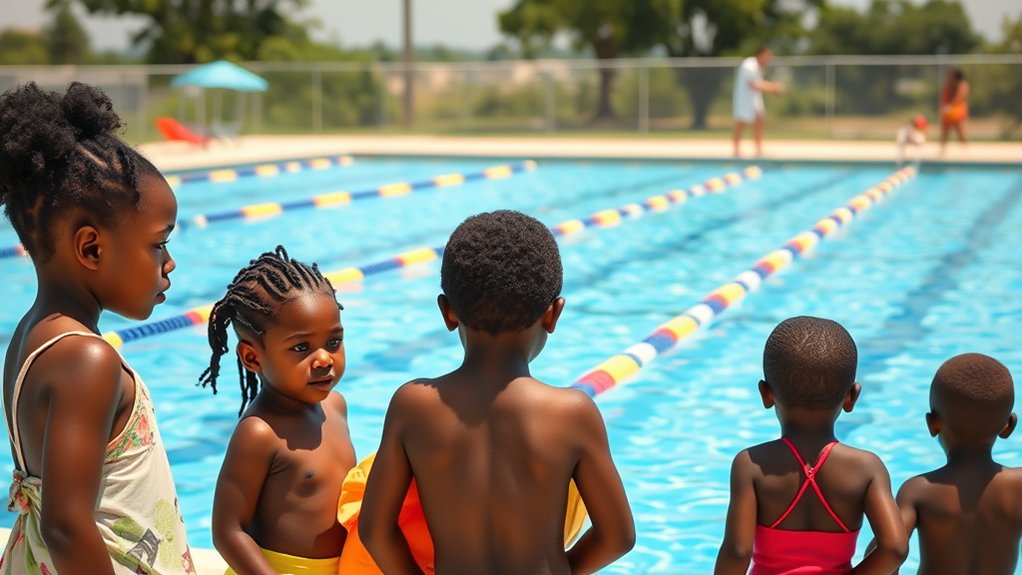
When you look at drowning statistics, the difference between Black and white children is pretty clear. Black kids ages 10 to 14 drown at rates 7.6 times higher than their white peers. That’s a huge gap that really shows how swimming skills vary between these groups.
Only 31% of Black children are skilled swimmers, compared to 58% of white children. In fact, about 64% of Black youth don’t know how to swim at all, which obviously increases their drowning risk.
A big part of the problem is limited access to swimming lessons and recreational facilities. Money and economic barriers also make it harder for many families.
Plus, there’s a history of many Black families avoiding water because of safety concerns, which keeps swimming participation low.
All these factors together explain why drowning rates are higher among Black children. It really highlights the urgent need to improve swimming access and education in these communities.
Ongoing Impact of Historical Racism on Swimming Access and Skills
The persistent gap in swimming skills and drowning rates among Black children can’t be fully understood without examining the lasting effects of historical racism on swimming access. Racism has created systemic barriers that limit Black Americans’ opportunities to learn swimming, leading to a stark disparity today.
You can see this impact in a few key ways. Segregated pools historically excluded Black communities, which reduced access and skill development.
There’s also a cultural reluctance stemming from generational trauma that discourages swimming participation.
On top of that, economic hurdles like costly lessons and scarce facilities further restrict access. Because of these intertwined factors, 64% of Black youth don’t know how to swim. Drowning rates among Black children remain considerably higher.
Understanding this context helps explain the ongoing swimming disparity rooted in historical racism and limited access. It’s important to recognize how these barriers still affect communities today.
Programs and Initiatives Boosting Swimming Skills in Black Communities
Although historical barriers have deeply impacted swimming access in Black communities, various programs and initiatives are now actively working to close this gap. Programs like the Genesis Project Initiative in Charleston County raise funds to provide swimming lessons, directly boosting swimming skills among Black youth.
Organizations such as the YMCA and Black People Will Swim focus on educational outreach to counteract longstanding disparities. Community efforts address generational trauma and misconceptions, creating a more inclusive environment for learning aquatic skills.
Given that 64% of Black youth still don’t know how to swim, these initiatives emphasize the urgent need for equitable access to swimming education. Increased funding and resources remain critical to sustaining these programs and dismantling harmful stereotypes.
With 64% of Black youth unable to swim, equitable education and funding are essential to change this reality.
This helps foster broader participation and safety in aquatic activities within Black communities. It’s clear that supporting these efforts can make a real difference.
Why Swimming Skills Matter for Safety and Community Well-Being
Because swimming skills directly impact safety, understanding their importance is essential—especially in Black communities where drowning rates among children ages 10-14 are 7.6 times higher than those of white children.
This disparity comes from systemic barriers that limit swimming education and access to private pools.
When you think about why swimming skills matter, focus on a few key points:
- Reducing drowning rates through widespread aquatic safety knowledge.
- Overcoming historical exclusion by improving access to swimming instruction.
- Building community well-being by fostering confidence and inclusion in water activities.
Tackling these issues helps break down systemic barriers and promotes fair access to swimming education.
Frequently Asked Questions
Are There Genetic Differences Affecting Swimming Ability Among Races?
You won’t find genetic predisposition affecting swimming ability among races. Instead, cultural influences and access disparities play a bigger role.
Historical context shows that systemic barriers limited swimming opportunities, especially in Black communities. This impacted skill development, as swimming isn’t an inherited trait but a learned one.
How Does Swimming Impact Physical Fitness Beyond Safety?
Swimming benefits your physical fitness by boosting cardiovascular health and promoting muscle development throughout your body.
You’ll engage multiple muscle groups, enhancing strength and endurance efficiently.
Beyond fitness, swimming equips you with lifelong skills useful for safety and enjoyment. It also opens doors to various recreational activities that keep you active and motivated.
Regular swimming supports overall well-being, making it a versatile exercise with both physical and mental health advantages.
It’s a great way to stay fit and feel good all around.
What Role Do Schools Play in Providing Swimming Lessons Today?
You might think schools alone could solve swimming accessibility overnight, but it’s more complex. Schools play an essential role by integrating swimming into the curriculum, yet they face challenges like limited funding and cultural perceptions that affect participation.
Community involvement, through partnerships with local pools and organizations, helps bridge these gaps.
Can Learning to Swim Improve Mental Health and Confidence?
Yes, learning to swim can greatly improve your mental health and confidence. It helps you build confidence and mental resilience by overcoming fears and mastering new skills.
Plus, swimming is a great way to relieve stress through physical activity and the release of endorphins.
On top of that, it encourages social integration and community bonding. You get to connect with others in supportive environments, which feels really rewarding.
All these things together boost your well-being and empower you mentally and socially.
How Can Individuals Support Local Swimming Programs for Black Communities?
You can support local swimming programs by engaging in fundraising events that boost resources and funding.
Community outreach helps raise awareness and connects more people to opportunities.
Mentorship programs guide new swimmers, building confidence and skills.
Offering or promoting swim scholarships opens doors for those who can’t afford lessons.
Partnering with local organizations through partnership initiatives strengthens program impact.
This ensures sustainable growth and wider access to swimming education in Black communities.
Conclusion
You might picture swimming skills like a bridge. Once broken by segregation and economic barriers, it’s taken generations to rebuild. For example, Black children drown at rates nearly three times higher than their white peers. That shows the lasting impact of these gaps.
But with growing programs focused on access and education, you’re witnessing a steady repair. Understanding this history helps you see why swimming isn’t just a skill. It’s a crucial step toward equity and safety.