Is Swimming A Sport – Full Explanation
You might think swimming is just fun, but it’s a demanding sport requiring skill, physical effort, and precise techniques. Since the 19th century, it’s grown into a competitive event, officially part of the Olympics since 1896.
Training is intense and builds both strength and mental resilience. Swimmers compete under strict rules worldwide. Beyond competition, swimming offers fitness, safety skills, and mental benefits.
If you want to understand why it’s truly a sport, there’s much more to explore.
What Makes a Sport: And Why Swimming Qualifies
Although many activities require physical exertion, swimming stands out as a true sport because it demands rigorous skill development and intense training. When you plunge into competitive swimming, you’ll notice it involves precise techniques, strict rules, and measurable outcomes. These are all key factors that qualify swimming as a sport.
Training for competitive swimmers isn’t casual. It’s a disciplined regimen combining in-water drills and strength workouts, often multiple times daily. This level of dedication aligns swimming with other recognized sports.
Plus, its status as an Olympic Sport since 1896 highlights its legitimacy on the world stage, with standardized events governed by bodies like FINA and the IOC.
How Swimming Became a Recognized Competitive Sport
When you trace the roots of competitive swimming, you’ll find its formal recognition began in early 19th-century England. The National Swimming Society organized official races by 1837. These events laid the foundation for swimming as a competitive sport.
They even sparked debates like the 1844 competition over the front crawl. Swimming’s global competitive status really took off with its Olympic inclusion in 1896. The sport evolved with new techniques and important milestones in gender equity.
Women joined Olympic contests in 1912, marking a big step forward. Today, organizations like FINA make sure swimming stays a standardized, competitive sport worldwide.
| Year | Event | Significance |
|---|---|---|
| 1837 | National Swimming Society Races | Formal competitive swimming begins |
| 1896 | Olympic debut in Athens | International recognition |
| 1912 | Women’s Olympic events | Gender equity in competitive swimming |
Why Olympic History Proves Swimming Is a Sport
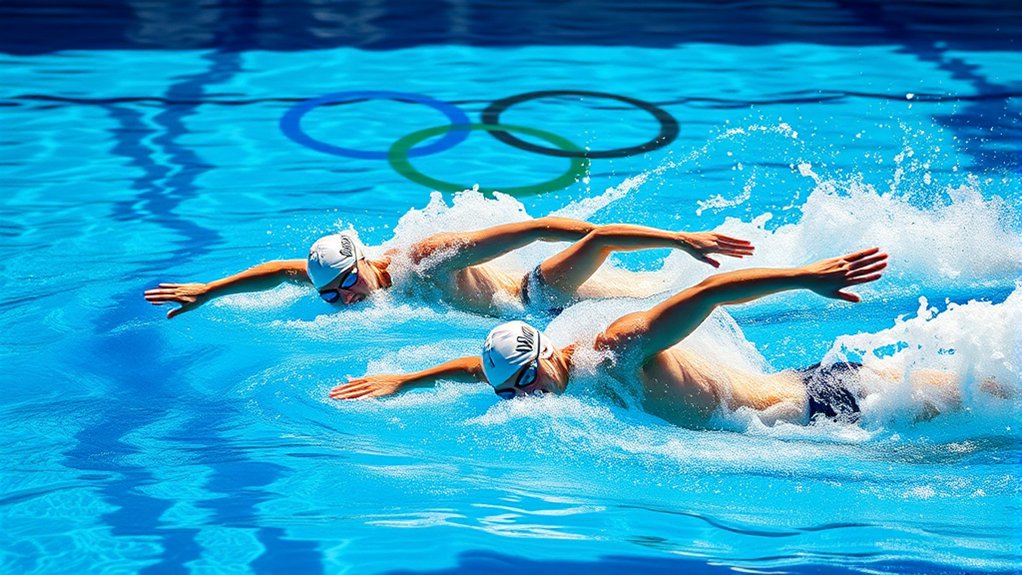
Because swimming has been a key part of the Olympic Games since 1896, its status as a legitimate sport is undeniable. As one of the core Olympic sports, swimming showcases a range of competitive strokes, highlighting the skill and endurance required by competitive swimmers. The inclusion of women’s events from 1912 further emphasizes its global and inclusive nature.
You can see that swimming is a sport defined by structure and rigor, governed by organizations like FINA and the IOC, ensuring fair competition.
Athletes like Michael Phelps have elevated swimming’s prestige, with his record-breaking 28 Olympic medals proving the sport’s demanding nature. The Olympic history clearly confirms that swimming isn’t just a pastime but a serious, competitive sport recognized worldwide.
Debunking Common Myths About Swimming as a Sport
If you’ve ever doubted swimming’s status as a true sport, it’s time to reconsider. Many myths about swimming suggest it’s just a leisurely activity lacking physical or mental challenge.
But competitive swimming demands intense training, discipline, and resilience from swimmers. It’s not just about moving through water. Races push athletes to improve technique and speed, with the clock as an impartial judge.
You might also overlook swimming’s mental health benefits, since the sport requires focus and mental toughness to excel. Dismissing it because there’s no physical contact ignores the rigorous nature of training and the strategic elements involved.
Understanding these points helps you appreciate swimming as a demanding sport that challenges both body and mind.
Inside Competitive Swimming Training
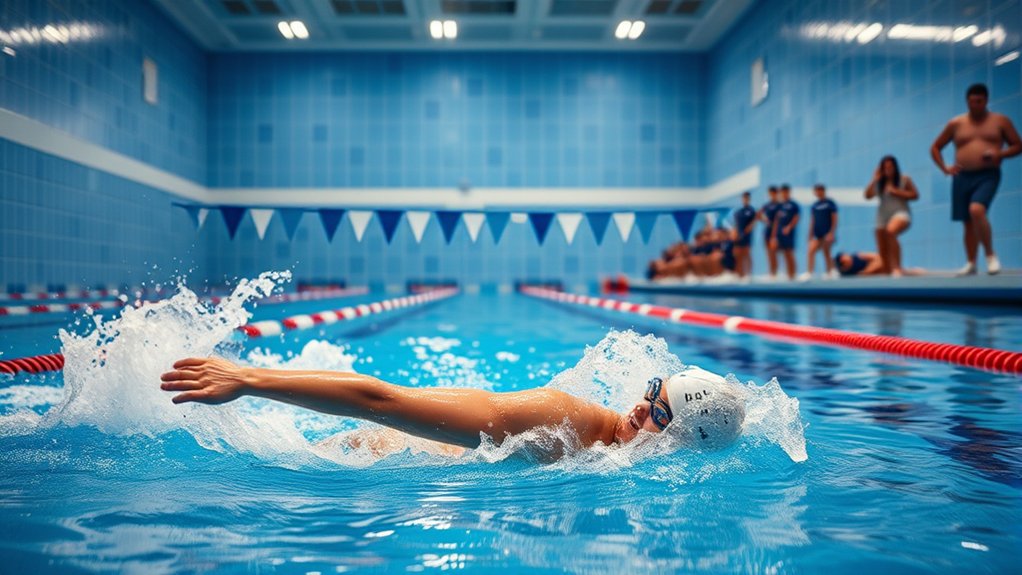
Understanding the demands of competitive swimming means looking closely at the training behind the scenes. You’ll swim several miles daily, balancing intense in-water drills with dryland workouts to boost your performance.
Training isn’t just about distance. Interval sessions vary intensity and distance to sharpen your speed and build endurance. Consistency plays a huge role. Skipping even brief periods can cause a decline in your performance, and then you have to retrain to regain your edge.
Competitive swimming training also challenges you mentally. You learn to push beyond your limits and handle setbacks, which is essential for sustained success.
This rigorous, disciplined approach guarantees you develop the endurance and skill needed to compete at high levels.
How Swimming Develops Physical Strength and Resilience
When you swim regularly, you start building muscular endurance because you’re working multiple muscle groups against the resistance of the water.
It’s a steady challenge that doesn’t just make your body stronger, but also helps boost your mental toughness. You learn to push through fatigue and setbacks.
And over time, sticking to your training really changes both your physical strength and your resilience.
Building Muscular Endurance
Although you may not always realize it, swimming works multiple muscle groups simultaneously, making it an exceptional way to build muscular endurance and strength.
As a full-body workout, swimming challenges your muscles with constant resistance from the water, which helps improve tone and resilience.
When swimmers train, they often incorporate interval sessions that boost both aerobic and anaerobic endurance. This pushes muscles to adapt and perform longer without fatigue.
The water helps by reducing joint impact, allowing you to train intensely without the strain typical of land exercises.
Furthermore, maintaining proper form demands core engagement, enhancing your overall stability.
Through consistent swimming, you steadily build muscular endurance. This enables your body to sustain effort over extended periods while strengthening muscles across your entire body.
Enhancing Mental Toughness
Because swimming demands rigorous training and consistent effort, it naturally builds both physical strength and mental toughness. Through regular swimming, you develop mental resilience by confronting challenges head-on and pushing past limits.
Here’s how swimming enhances mental toughness:
- Endurance Training: Swimming miles daily strengthens your body and conditions your mind to endure discomfort.
- Skill Mastery: Overcoming complex techniques boosts confidence and sharpens focus.
- Embracing Setbacks: Learning from failures fosters perseverance and adaptability.
- Accountability: Timing every swim session forces you to face weaknesses honestly and improve.
This combination of physical strength and mental resilience makes swimming a powerful tool for enhancing mental toughness. It helps you perform better both in and out of the pool.
Strength Through Consistency
If you commit to swimming regularly, you’ll quickly notice how consistency builds both your physical strength and resilience. Competitive swimming demands rigorous, frequent training sessions that develop muscular endurance and cardiovascular fitness through continuous effort.
Alongside in-pool workouts, strength training like weightlifting and core exercises enhances your overall athletic performance, targeting muscles crucial for efficient strokes. This balanced approach improves muscle coordination and flexibility, which are essential for executing complex techniques safely.
Beyond the physical, the mental resilience you cultivate by facing challenges in competitive swimming deepens your determination. Through steady, consistent practice, you strengthen not only your body but also your mindset.
Ultimately, swimming’s blend of physical and mental demands proves that sustained consistency is key to building lasting strength and resilience.
Swimming Beyond Competition: Fitness, Safety, and Fun
When you swim, you’re not just building physical strength—you’re also picking up important lifesaving skills that could protect you and those around you.
On top of that, regular swimming is great for your heart and even helps keep your mind sharp. It’s truly a fantastic workout that goes beyond just competing.
And don’t forget, knowing how to stay safe in the water is super important since it helps prevent the many drowning accidents that happen worldwide every year.
Health Benefits Explained
While many see swimming primarily as a competitive sport, it offers far more than just races and medals. The health benefits you gain from swimming extend to both body and mind. Here’s how:
- Cardiovascular endurance: Swimming is a full-body workout that strengthens your heart and lungs. It boosts overall stamina and can reduce the risk of heart disease by up to 50%.
- Stress reliever: The soothing effect of water combined with the release of endorphins helps lower anxiety and lift your mood.
- Cognitive function: When you swim, increased blood flow to your brain can enhance memory and mental clarity.
- Full-body engagement: Swimming tones muscles evenly and is gentle on your joints, making it perfect for all fitness levels.
Swimming isn’t just sport. It’s a holistic path to better health.
Lifesaving Skills Importance
Although many people associate swimming with competition, its role in lifesaving skills is just as important. Swimming is a vital skill that can significantly reduce the risk of drowning. After all, over 230,000 drownings happen worldwide every year.
No matter your age or ability, learning how to swim well prepares you to handle water emergencies effectively. It’s not just about fitness—swimming also helps you become more aware of water safety. This awareness can help you spot and avoid dangerous situations before they happen.
As you get more comfortable in the water, you’ll enjoy aquatic activities even more. Plus, you’ll lower your chances of accidents.
When you see swimming as a lifesaving skill, you’re not just training for competition—you’re becoming safer and more confident every time you get in the water.
Public Perception of Swimming as a Sport
How do most people really see swimming? Is it just a casual pastime or a serious sport? Often, swimming is mistaken as just a recreational activity, but this overlooks its intense nature and status in swimming competitions worldwide.
You mightn’t realize how much professional swimmers train to compete at Olympic levels. This really proves swimming’s legitimacy as a sport.
Consider these points:
- Swimming has been an Olympic sport since 1896, highlighting its competitive importance.
- Many underestimate the difficulty, but elite swimmers endure rigorous physical and mental training.
- Short swimming races challenge the idea that only long events measure athletic skill.
- Beyond competition, swimming supports mental well-being and builds strong community bonds.
Understanding these facts helps you appreciate swimming as both sport and lifestyle.
Frequently Asked Questions
What Are the Best Swimsuits for Competitive Swimming?
The best swimsuits for competitive swimming combine advanced swimwear technology advancements with high-quality competitive swimsuit materials like nylon and spandex.
You’ll want an ideal fit guide to choose between full-body or knee-length suits that reduce drag.
Top brands comparison shows Speedo, TYR, and Arena lead with water-repellent coatings and compression fabrics.
Focus on suits that enhance buoyancy and streamline your movement to boost your performance in the pool.
How Does Swimming Affect Mental Health?
Swimming offers powerful stress relief by immersing you in a calming, rhythmic environment. It boosts mood enhancement through endorphin release, helping you feel happier and more relaxed.
You’ll experience cognitive benefits as regular aerobic activity sharpens your memory and mental clarity.
Plus, swimming often involves social interaction, which supports emotional well-being and reduces feelings of isolation.
What Is the Role of Swimming Coaches in Athlete Development?
You might think swimming coaches just shout orders, but their role is much deeper. They use coach communication to tailor training techniques that boost your skills and endurance.
By analyzing your performance, they spot strengths and weaknesses, keeping your athlete motivation high. Their feedback and personalized plans push you to improve consistently, making sure you don’t just swim—you excel.
Without them, progress would be guesswork, not a science.
How Do Swimming Rules Differ Internationally?
You’ll notice that swimming rules differ internationally mainly because various international governing bodies set core standards, but you’ll find rule variations in local meets.
While FINA standardizes competition formats and event distances globally, some countries tweak rules to suit their needs.
These variations might affect relay exchanges or allowed swimwear.
Understanding these nuances helps you adapt better when competing or coaching across borders. It ensures you stay compliant and competitive.
What Equipment Is Essential for Beginner Swimmers?
For beginner swimmers, essential equipment includes well-fitting swim caps to keep your hair out of the way and reduce drag.
Focus on goggles selection to guarantee clear underwater vision and protect your eyes from chlorine.
Using kickboards helps you develop leg strength and improve kicking technique effectively.
Conclusion
Now that you see how swimming demands skill, endurance, and competition, it’s clear that it truly qualifies as a sport. Remember, “practice makes perfect.” The dedication swimmers put into training mirrors any athlete’s commitment.
Whether you’re looking to compete or just stay fit, swimming offers physical strength, resilience, and enjoyment. So next time you wonder, don’t underestimate swimming’s place in the athletic world.
It’s more than just fun; it’s a serious sport.