Can You Swim With Contact Lenses – Safety Tips
You can swim with contact lenses, but you need to be cautious to avoid eye infections and irritation. Water can introduce harmful microorganisms, causing serious infections and discomfort. Always wear tight-fitting swim goggles to protect your eyes, and consider daily disposable lenses to reduce risk.
After swimming, remove and disinfect your lenses promptly. Watch for redness, pain, or blurred vision, which require professional care. Keep these tips in mind, and you’ll find safer ways to enjoy swimming with contacts.
Why Swimming With Contact Lenses Is Risky
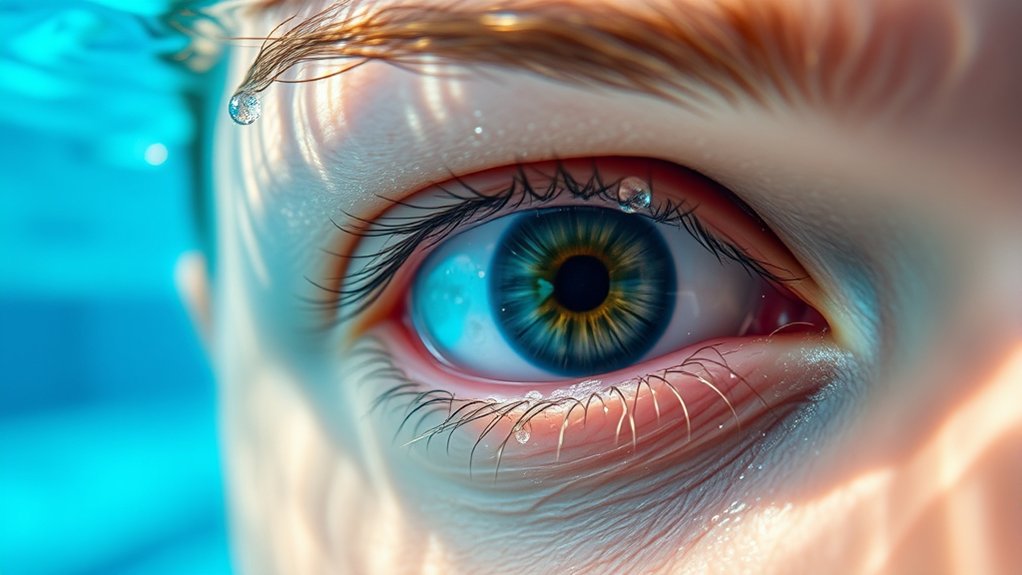
Although swimming may seem harmless with your contact lenses in, it actually puts your eyes at significant risk.
Soft contact lenses are porous and absorb bacteria and other microorganisms present in water, including the dangerous Acanthamoeba. This can lead to serious eye infections.
Soft contact lenses absorb bacteria and microbes in water, increasing the risk of serious eye infections like Acanthamoeba.
Chlorine in pools doesn’t eliminate all pathogens, and natural water bodies pose even greater risks. Plus, debris can get trapped between your lens and eye, increasing the chance of corneal abrasions.
These abrasions may cause pain and other complications.
Wearing contact lenses while swimming often results in discomfort, such as dryness and irritation. It may also cause your lenses to shift or even fall out.
How Water Affects Contact Lenses and Your Eyes
When water gets on your lenses, it can soak up harmful bacteria and make them swell. This can increase the chances of eye irritation and infection.
Even if you’re not directly exposing your lenses to water, chemicals like chlorine in pools can cause redness and discomfort. Knowing how water and these chemicals affect your contacts can help you take better care of your eyes.
Water’s Impact On Lenses
Because water contains microorganisms like Acanthamoeba, exposing your contact lenses to swimming pool or natural water greatly raises the risk of severe eye infections.
Water can harbor pathogens that easily attach to your lenses, increasing contamination.
Soft contact lenses are porous and absorb water, which can lead to swelling and changes in lens shape.
This swelling affects lens fit and comfort, potentially causing corneal abrasions.
Although chlorine in pools kills many bacteria, it doesn’t eliminate all harmful microorganisms, so swimming with contacts remains risky.
Corneal abrasions from ill-fitting lenses create entry points for infections, jeopardizing your eye health.
To protect your eyes, avoid direct contact between lenses and water, as even brief exposure can compromise lens integrity and increase your risk of serious eye infections.
Eye Health Risks
If you wear contact lenses while swimming, you increase your risk of serious eye infections caused by harmful microorganisms like Acanthamoeba. These organisms can get trapped under your lenses, which makes things worse.
Swimming pools and natural water contain bacteria that can lead to severe eye infections and tiny scratches, or micro-abrasions, on your cornea. Plus, chlorine in pools irritates and dries out your eyes, making discomfort even more noticeable.
The FDA strongly advises avoiding water exposure with contact lenses to keep your eyes safe.
| Risk Factor | Impact on Eye Health |
|---|---|
| Acanthamoeba | Causes serious eye infections |
| Swimming Pools | Harbor bacteria, contain chlorine |
| Soft Contact Lenses | Absorb water, increase contamination |
| Water Exposure | Leads to micro-abrasions and irritation |
To protect your eyes, be sure to remove your lenses before swimming.
Protect Your Eyes: Swim Goggles and Contact Lenses
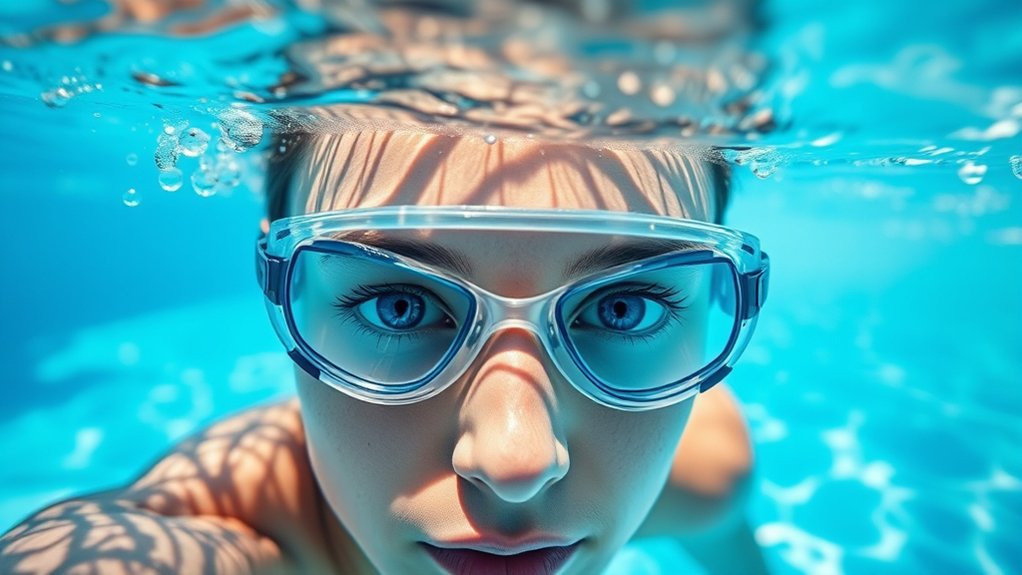
Three essential steps can help you protect your eyes while swimming with contact lenses: wearing high-quality, tight-fitting swim goggles, choosing daily disposable lenses, and practicing proper eye care afterward.
Swim goggles create a vital barrier that minimizes water exposure, reducing the risk of irritation and infections like Acanthamoeba keratitis. Make sure your goggles fit snugly to prevent water from seeping in and contaminating your lenses.
Daily disposable contacts are ideal since you can discard them right after swimming, limiting prolonged exposure to harmful microorganisms.
After swimming, rinse your eyes and lenses with sterile saline to flush out debris and protect your eyes.
If you prefer, prescription swim goggles offer vision correction without the risks associated with water exposure to contact lenses.
Prioritize these steps to maintain safe eye health during your swim sessions.
Why Daily Disposable Contact Lenses Are Better for Swimming
When you swim with daily disposable contact lenses, you’re cutting down your risk of eye infections big time.
That’s because you toss them after each use, so you’re not letting waterborne germs hang around on your lenses.
Plus, you skip the whole cleaning and storing routine, which can be a pain and might still leave some contaminants behind after a swim.
It’s super convenient and helps you keep your eyes clean and comfy every time you hit the water.
Reduced Infection Risk
Because daily disposable contact lenses are designed for single use, they greatly reduce your risk of eye infections when swimming. These lenses minimize water exposure by allowing you to discard them immediately after swimming, preventing prolonged contact with harmful pathogens.
Unlike reusable lenses, daily disposable contact lenses eliminate the need for cleaning and disinfecting, which can sometimes introduce bacteria. This approach considerably lowers the chance of serious eye issues such as Acanthamoeba keratitis, a dangerous infection linked to contaminated water.
By using daily disposables, you avoid retaining pathogens trapped between the lens and your eye, promoting both clear vision and comfort. Choosing daily disposable contact lenses is a proactive step toward maintaining eye health and reducing infection risk while enjoying swimming activities.
It’s a simple switch that can make a big difference for your eyes.
Convenient Post-Swim Disposal
One of the biggest advantages of daily disposable contact lenses for swimming is the ease of disposal immediately after you get out of the water.
With daily disposable contact lenses, you minimize the risk of infection by discarding lenses that may have absorbed harmful microorganisms from pools or natural bodies of water.
This convenient disposal means you don’t have to worry about cleaning and disinfecting as part of your post-swim care routine.
Especially if you’re an occasional swimmer, daily disposables give you the benefit of always starting with a fresh pair. That helps reduce exposure to irritants and bacteria that can build up on reusable lenses.
By choosing daily disposables, you’re supporting excellent eye health without any extra hassle.
It really makes them a practical and safer choice for swimming.
What to Do If You Swim With Contacts
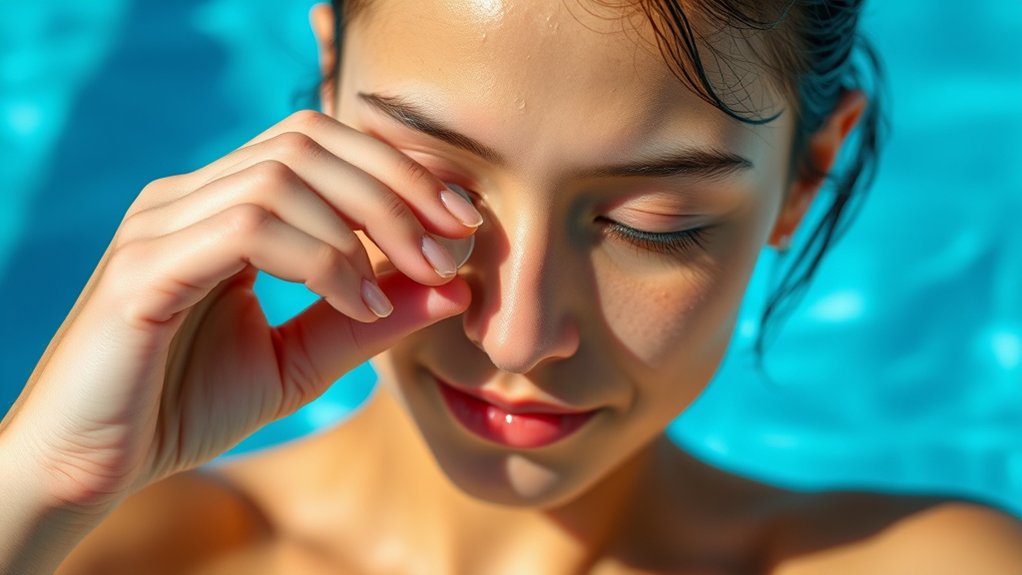
If you find yourself swimming with contact lenses, it’s important to take immediate steps to protect your eyes. First, wash your hands thoroughly before removing your lenses to minimize bacteria transfer.
If you wear daily disposables, discard lenses immediately after swimming since they can’t be properly cleaned and may harbor harmful microorganisms.
Rinse your eyes with preservative-free artificial tears to flush out debris or irritants caused by swimming. Avoid rubbing your eyes to prevent pushing germs deeper into the cornea, which increases the risk of eye infection.
Afterward, monitor symptoms such as redness, pain, or blurred vision closely. If you notice any concerning signs, consult an eye care professional promptly to guarantee proper care and avoid complications.
It’s better to be safe and get checked out if something feels off.
Signs of Eye Infection to Watch For After Swimming With Contacts
When you swim with contact lenses, your eyes become vulnerable to infections caused by bacteria and other microorganisms in the water.
After swimming with contact lenses, watch for signs of eye infection, such as redness or irritation. These can signal inflammation or infection.
Yellow or mucus-like discharge often indicates a bacterial infection and needs prompt attention. You might also notice sensitivity to light or blurred vision. Both are warning signs that bacteria may be trapped under the lens.
Persistent pain or the feeling that something is in your eye shouldn’t be ignored. These symptoms suggest an infection could be developing, so you should consult an eye care professional right away.
Staying alert to these signs helps protect your eye health after swimming with contacts.
Prescription Swim Goggles: A Safe Alternative for Swimming With Contacts
Although contact lenses provide clear vision daily, swimming with them can expose your eyes to harmful bacteria and irritants. Prescription swim goggles offer a safe alternative for vision correction in the water, protecting your eye health and ensuring safety.
Swimming with contact lenses risks eye infections; prescription swim goggles offer a safer, clearer vision alternative.
Here’s why you should consider them: They’re custom-made to match your prescription, delivering clear vision underwater without contact lenses. A watertight seal prevents chlorine and other chemicals from irritating your eyes.
Using them eliminates the risk of eye infections, such as Acanthamoeba keratitis, linked to water exposure. Prescription swim goggles enhance comfort and safety, letting you enjoy swimming without compromising your eyes.
Switching to prescription swim goggles safeguards your eyes and provides reliable vision correction during every swim. It’s definitely worth making the switch if you want to keep your eyes safe while seeing clearly in the water.
How to Care for Contact Lenses After Swimming
Protecting your eyes during swimming goes beyond just picking the right eyewear. Taking good care of your contact lenses afterward is super important to prevent infections.
Always take out your lenses right after swimming to cut down on contamination and lower the risk of infection.
Make sure to rinse them well with a proper disinfecting solution to get rid of any debris and germs. If you use reusable lenses, soak them in the disinfecting solution for at least 24 hours before wearing them again.
You might want to switch to daily disposable lenses for swimming since you can just toss them after use, which really cuts down on contamination chances.
Keep an eye on how your eyes feel—if you notice any irritation, redness, or pain, don’t wait. See an eye care professional right away to avoid any problems.
Following these simple steps will help you swim safely and keep your eyes healthy and happy.
Frequently Asked Questions
Can Swimming Pools Damage the Material of Contact Lenses?
Yes, pool chemicals can damage the lens material of your contact lenses. Exposure to chlorine and bacteria in pool water affects water resistance, causing swelling and discomfort.
This damage reduces vision clarity and shortens the lens lifespan. Different lens types react differently, but all require careful care instructions if exposed.
To protect your eyes and lenses, avoid swimming with contacts or use sealed goggles. This helps minimize bacteria exposure and keeps your lenses in good condition.
Are Colored Contact Lenses Safe to Wear While Swimming?
Colored lenses aren’t safe to wear while swimming because they can cause eye irritation and increase the risk of infections from waterborne pathogens.
Even though colored lenses can enhance your appearance and help with vision clarity underwater, their porous nature means they might lose prescription accuracy when exposed to chlorine or saltwater.
To keep your eyes safe, it’s important to follow strict lens care tips and swimming safety precautions.
Or, you might want to consider other vision options like prescription swim goggles. These provide better protection and clearer vision while you’re in the water.
How Long Should I Wait to Put Contacts Back in After Swimming?
You should wait at least 30 minutes before putting your contacts back in after swimming, as studies show water exposure increases eye infection risk by 90%.
Prioritize lens care and swimming hygiene by discarding daily lenses or thoroughly disinfecting reusable ones. This protects your eye health and maintains vision clarity.
Consider lens alternatives like prescription goggles to avoid complications.
Following these safety practices guarantees your eyes stay healthy and comfortable after water exposure. It’s better to be safe and keep your eyes happy!
Can Swimming With Contacts Worsen Existing Eye Conditions?
Yes, swimming with contacts can worsen existing eye conditions. You risk increased dry eye and lens discomfort because water and irritants can get trapped under the lenses.
Water exposure also raises your chances of infection, especially if your eyes already have some issues.
Plus, poor hygiene practices can make irritation worse and even threaten your vision clarity.
While contacts do offer some UV protection, they don’t protect against harmful microbes in the water.
Are There Special Contact Lenses Designed Specifically for Water Sports?
You might think all contact lenses are unsafe for swimming, but there are specialized lens types designed specifically for water sports.
These swim lenses offer water resistance and UV protection, which helps improve swimming safety and visibility clarity underwater.
They come with prescription options, so you don’t have to compromise your vision.
However, you still need to take diligent care of your lenses to minimize irritation risks and avoid infections.
Always wear swim goggles over them to enhance protection and keep your eyes healthy.
It’s a simple step that makes a big difference!
Conclusion
Swimming with contact lenses isn’t a risk you want to take lightly. It’s like inviting a storm into your eyes. Always protect your lenses with swim goggles, preferably prescription ones, and opt for daily disposables when you hit the pool.
If you do swim with contacts, follow strict hygiene and watch for infection signs. By caring for your lenses properly, you can keep your eyes safe and clear. This way, your vision stays flawless every time you plunge in.