Can I Build Muscle By Swimming – Fitness Guide
Yes, you can build muscle by swimming because water’s resistance activates all major muscle groups. Focus on powerful strokes like butterfly and freestyle to boost upper body strength. Structure workouts with high-intensity intervals, mix strokes to avoid plateaus, and use tools like paddles to increase resistance.
Pair swimming with good nutrition, especially protein, and proper recovery to maximize gains. Keep challenging yourself, and you’ll find smarter strategies to amplify muscle growth and stay motivated. It’s all about consistency and pushing your limits little by little.
How To Build Muscle And Strength With Swimming
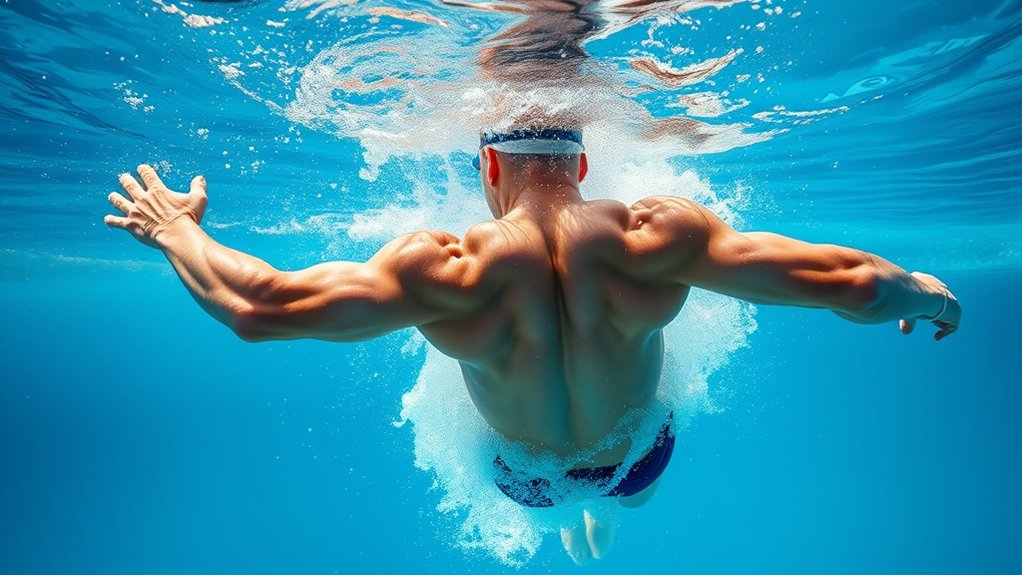
Plunge into swimming to build muscle and strength effectively by leveraging the natural resistance of water, which is about 800 times denser than air. This resistance training engages all major muscle groups, helping you build muscle while enhancing muscular endurance.
To maximize your results, incorporate swimming workouts for strength that include high-intensity intervals and varied strokes.
Using paddles and fins adds extra resistance, boosting muscle activation and accelerating strength gains. Consistency is key. Stick to your routine and support your efforts with proper protein intake and recovery.
Mixing different swim strokes and interval training not only prevents plateaus but also improves your overall muscular endurance and strength.
With dedication, swimming becomes an efficient, full-body resistance workout that transforms your physique.
Best Swim Strokes For Muscle Growth
If you want to build muscle effectively with swimming, it’s important to know how each stroke works different muscle groups.
For example, strokes like freestyle and butterfly really focus on your upper body. On the other hand, breaststroke and backstroke engage your lower body more.
By mixing these strokes up, you’ll help develop balanced strength all over and avoid hitting a plateau.
Muscle Engagement By Stroke
Maximizing muscle growth through swimming means understanding how each stroke targets different muscle groups.
To boost your muscle tone and strength gains, focus on these strokes:
1. Butterfly stroke
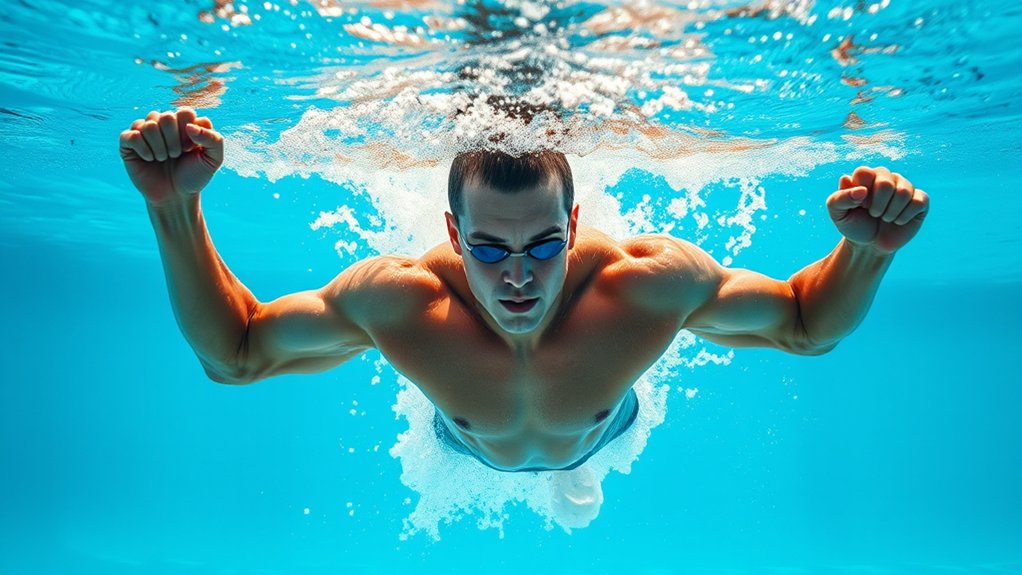
This intense stroke engages your chest, shoulders, triceps, and abs. It delivers exceptional upper body strength and core stability improvements.
2. Freestyle (Front Crawl)
It primarily works your deltoids, lats, triceps, and core. This makes it ideal for overall upper body muscle development and endurance.
3. Backstroke
Targeting shoulders, lats, and glutes, it enhances upper body muscle tone and promotes balanced muscle engagement.
Give it a try to work muscles that other strokes might miss.
Upper vs Lower Focus
Although swimming engages your entire body, certain strokes emphasize upper body muscles while others give your lower body more work. For targeted muscle building, choose your swim stroke wisely.
The freestyle and butterfly strokes heavily activate your upper body, engaging the deltoids, lats, shoulders, and triceps, boosting strength and endurance.
In contrast, breaststroke offers a balanced approach, working both upper body muscles like the pectorals and lower body muscles such as quadriceps and hamstrings.
Backstroke focuses more on upper body strength, especially shoulders and lats, while also activating glutes and hamstrings for lower body support.
Which Muscle Groups Does Swimming Work Best?
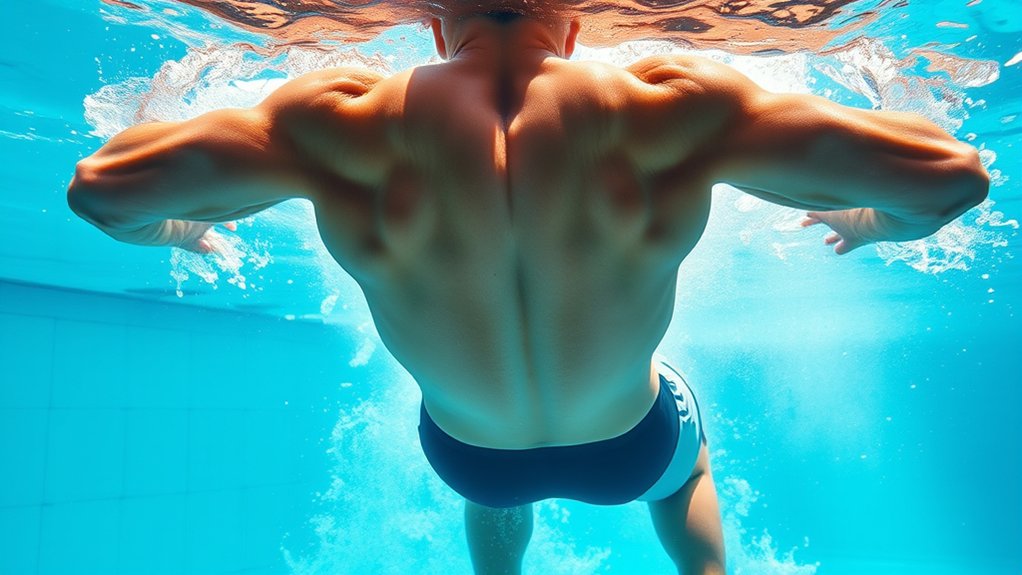
When you swim, your body activates a variety of muscle groups, making it one of the most effective full-body workouts. Swimming targets major muscle groups, building strength and endurance with low joint impact.
It’s a great way to get fit without stressing your joints.
Here’s how swimming works your muscles best:
- Upper Body: Strokes like freestyle and butterfly engage your deltoids, latissimus dorsi, pectorals, biceps, and triceps. This really helps boost arm and shoulder strength.
- Lower Body: Kicking motions activate your glutes, quadriceps, hamstrings, and calves. It’s perfect for enhancing leg power and stability.
- Core: Your abdominal and lower back muscles provide essential balance and control. This improves stroke efficiency and body positioning.
How To Structure Swimming Workouts For Muscle Gains
Kickstart your muscle-building journey in the pool by designing swim workouts that challenge your body in diverse ways.
Structure your swim training to include high-intensity interval training (HIIT), which targets fast-twitch muscle fibers and accelerates building muscle. Mix different strokes like freestyle, butterfly, and backstroke to engage various muscle groups and avoid overuse injuries.
Gradually increase your swimming distance by no more than 10% weekly to promote consistent muscle adaptation without burnout.
Increase your swim distance gradually, no more than 10% each week, to build muscle steadily and avoid burnout.
Complement your swimming with strength training exercises such as water jogging or bodyweight movements to maximize muscle gains. Using resistance tools like paddles and fins during swim training further boosts muscle workload, enhancing strength and tone.
With this strategic approach, you’ll optimize muscle growth and overall fitness through swimming.
It’s all about keeping things varied and pushing yourself just enough to see real progress. Swimming can be a powerful tool for building muscle when done the right way.
How To Use Resistance Gear To Build Muscle Faster
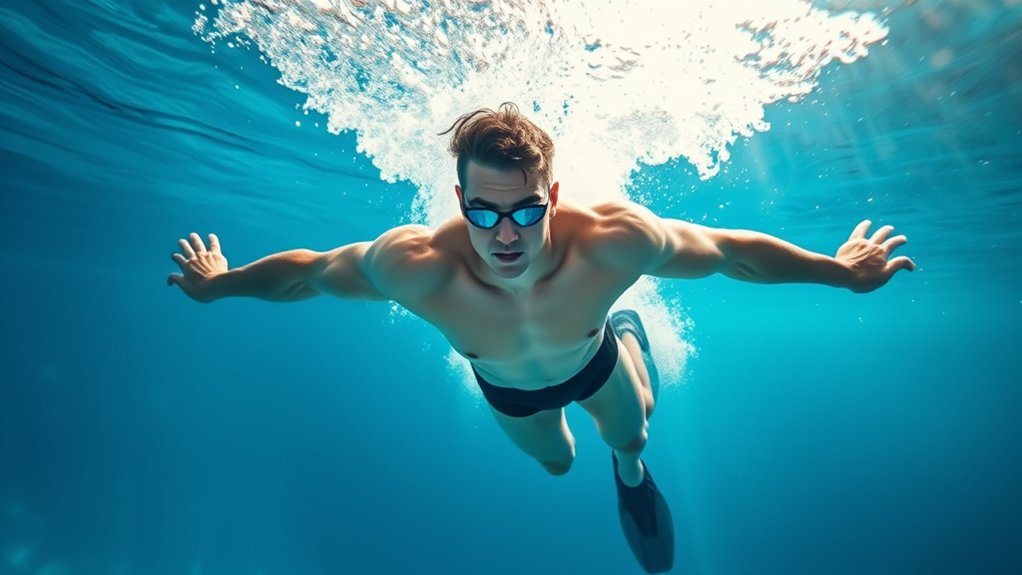
To build muscle faster, you’ll want to incorporate resistance gear like paddles, fins, and bands into your swim routine.
These tools increase water resistance, which means your muscles have to work harder and, as a result, get stronger.
The key is mastering how to use them properly.
That way, you get the most benefit without risking injury.
It’s all about working smarter, not just harder!
Types Of Resistance Gear
Five essential types of resistance gear can accelerate your muscle-building progress in the pool by increasing the intensity of your workouts.
Using the right gear boosts resistance training effectiveness during swimming, helping you build strength faster.
- Swimming Paddles: These increase your hand surface area, adding resistance that targets your shoulders, lats, and triceps for upper body gains.
- Fins: Enhance your kick strength and speed, engaging calves, quads, and hamstrings to develop lower body muscles.
- Kickboards: Isolate your legs, focusing resistance training on glutes, hamstrings, and quadriceps without involving your upper body.
Incorporating these gear types into your swimming routine challenges muscles in new ways.
It makes your resistance training more efficient and rewarding.
Give them a try and see how your strength improves!
Benefits Of Increased Resistance
Adding resistance gear to your swim routine doesn’t just make workouts more challenging, it directly boosts your muscle-building potential. By increasing the resistance of the water, tools like paddles, fins, and kickboards force your muscles to work harder. This helps you build strength faster.
Incorporating these into your training program enhances muscular endurance and accelerates muscle building. You’ll notice improved power output and functional strength by pushing against greater water resistance.
| Resistance Gear | Muscle Focus | Benefit |
|---|---|---|
| Paddles | Arms, shoulders | Increased stroke power |
| Fins | Legs, core | Enhanced kick strength |
| Kickboards | Upper & lower body | Amplified muscle activation |
Use resistance gear consistently to maximize your muscle-building gains in the pool. It’s a simple way to make your swims more effective and rewarding.
Proper Gear Usage Techniques
Although resistance gear can markedly boost your muscle gains, using it correctly is crucial to maximize benefits and prevent injury. Start by incorporating paddles to increase hand surface area. This intensifies resistance and activates upper body muscles.
Next, add fins to challenge your kicks. This strengthens your glutes, hamstrings, and calves while improving propulsion.
Finally, use pull buoys to keep your legs buoyant, isolating your arms and shoulders for targeted strength building.
To further amplify muscle engagement, integrate resistance bands for water-based exercises that maintain constant tension throughout your range of motion. Using these tools strategically guarantees balanced muscle development and faster progress.
Just remember, proper form and gradual resistance increase are key to preventing strain.
Embrace these techniques to build muscle faster in the pool. It’s all about working smarter, not harder!
How To Combine Swimming With Strength Training For Muscle Growth
When you combine swimming with strength training, you create a powerful synergy that accelerates muscle growth by engaging different muscle fibers and movement patterns.
Swimming can help build more muscle by incorporating resistance through water and tools like swim paddles or resistance bands.
To maximize results, design a training plan that includes high-intensity sprints in the pool to activate fast-twitch fibers and weightlifting sessions targeting specific muscles.
Schedule strength workouts on non-swimming days or after swimming to guarantee proper recovery and muscle repair.
Remember, adequate protein intake supports this process, fueling muscle growth effectively.
Nutrition And Recovery For Muscle Growth
Nutrition and recovery form the foundation of effective muscle growth after swimming and strength training. To maximize your gains, focus on these key elements:
- Protein intake: Aim for 1.2 to 2.2 grams of protein per kilogram of your body weight daily. Protein is essential for muscle repair and growth, so include lean meats, dairy, or plant-based sources in your nutrition.
- Hydration: Drink at least 2 to 3 liters of water daily. Staying hydrated supports performance and speeds recovery by preventing fatigue and muscle cramps.
- Recovery practices: Prioritize 7 to 9 hours of quality sleep each night.
Consume a mix of carbohydrates and protein within 30 minutes post-workout. This combination replenishes glycogen stores and boosts muscle protein synthesis.
How To Avoid Plateaus And Stay Motivated In Swimming
To keep improving your swimming and avoid hitting plateaus, you need to consistently challenge your body and mind.
Vary your workouts by mixing strokes, distances, and interval training. This helps prevent adaptation and maximizes muscle engagement.
Mix up strokes, distances, and intervals to challenge your body and boost muscle activation.
Try using resistance tools like paddles or fins to increase intensity. This can help you break through training stalls.
Setting specific goals, both short-term and long-term, keeps you motivated and helps you track progress.
Make sure to regularly refine your technique with a coach. This guarantees you’re swimming efficiently and engaging your muscles fully.
And don’t forget to cross-train with strength exercises outside the pool. It boosts overall muscle strength and endurance, supporting continuous improvement.
Staying committed to these strategies will keep your muscle growth steady and your motivation high throughout your swimming journey.
Keep at it, and you’ll see the results!
Frequently Asked Questions
Can Swimming Alone Replace Traditional Gym Workouts for Muscle Building?
Swimming alone can’t fully replace traditional gym workouts for muscle building because it lacks the focused resistance training needed for significant hypertrophy.
You’ll benefit most by combining swimming techniques with strength training to target specific muscle groups.
Adjust your workout frequency to balance swimming for endurance and resistance training for muscle size.
This combo guarantees you build both functional strength and muscle mass effectively. It also keeps your fitness journey well-rounded and motivating.
How Does Swimming Muscle Growth Compare to Other Cardio Exercises?
Swimming efficiency makes it stand out compared to other cardio exercises because it combines resistance training with full-body muscle engagement.
You’ll build lean muscle and improve endurance without the muscle loss common in some cardio workouts.
By mastering swimming techniques, you enhance muscle recovery and strength.
While it won’t bulk you up like weightlifting, swimming provides a balanced, low-impact way to develop muscle tone and cardiovascular health simultaneously.
It’s a win-win for your body!
What Are Common Mistakes That Hinder Muscle Gains in Swimming?
Common mistakes that hinder muscle gains include neglecting your form technique, which reduces muscle activation.
Skipping proper recovery strategies leads to overtraining and stalls growth.
Inconsistent training frequency prevents progressive overload, so stick to a balanced schedule.
Finally, underestimate nutrition importance at your own risk.
Without enough protein and calories, your muscles won’t repair and grow efficiently.
Focus on these areas to maximize your swimming muscle gains.
Can Swimming Help With Muscle Toning Without Significant Bulk?
Yes, swimming can help you achieve muscle toning without significant bulk. By focusing on proper swimming techniques and incorporating resistance training with tools like paddles, you boost muscle endurance and definition.
Water workouts provide natural resistance, engaging multiple muscle groups evenly. This promotes lean muscle development.
Consistent swimming enhances your strength and tone while avoiding the bulk associated with heavy weightlifting.
Just keep your routine varied to maximize results efficiently. It’s a great way to stay fit and toned without getting too bulky.
How Long Does It Typically Take to See Muscle Changes From Swimming?
You’ll typically notice muscle adaptation timeline changes in about 6 to 8 weeks with consistent swimming.
Increasing swimming intensity by pushing harder and refining your technique speeds up muscle toning.
Don’t overlook nutrition’s role. Eating enough protein fuels muscle repair and growth.
Recovery is important too. Giving your body time to heal helps you build strength efficiently.
Stay consistent, and you’ll see progress sooner than you think!
Conclusion
Building muscle through swimming is totally possible when you approach it with the right plan and mindset. Remember, slow and steady wins the race. Consistent effort, varied strokes, and resistance training will help you grow stronger over time.
Pair your swimming with good nutrition and recovery. Don’t shy away from mixing in strength workouts. Stay motivated and push through plateaus.
You’ll see impressive muscle gains while enjoying a full-body, low-impact workout. Keep swimming strong!