How To Winterize A Swimming Pool – Complete Guide
You should winterize your pool when the water temperature drops below 65°F, usually sometime between mid-September and October. Start by balancing the water chemistry with a pH of 7.4 to 7.6, alkalinity between 80 and 120 ppm, and calcium hardness in the range of 200 to 400 ppm. Then, shock the pool with chlorine and add some algaecide.
Next, lower the water level, remove all accessories, and drain the equipment and plumbing. Using an air compressor makes this step easier. Don’t forget to add antifreeze to protect the plumbing.
Protect the skimmer by installing a Gizzmo and secure a proper winter cover over the pool. It’s a good idea to inspect your pool regularly throughout the winter to catch any issues early. Following these steps will help ensure your pool stays safe and in great shape until it’s time to open it again.
When To Winterize Your Swimming Pool
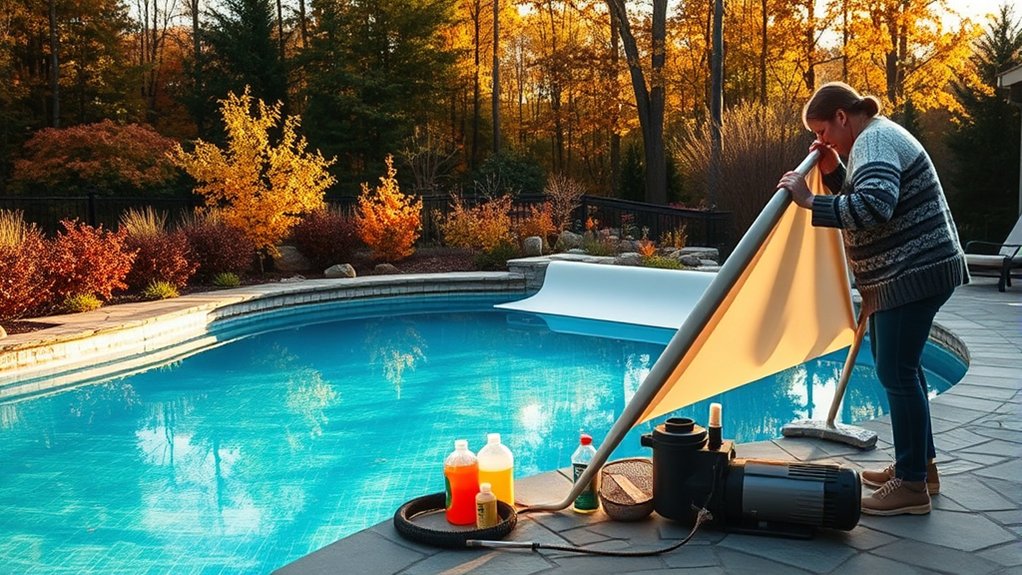
The best time to winterize your swimming pool is when the water temperature consistently falls below 65°F. This helps prevent algae growth and protects your equipment from freezing damage.
Winterize your pool once water temperatures stay below 65°F to prevent algae and freeze damage.
For most regions, the ideal timing is between mid-September to mid-October. So, you should monitor water temperature closely during this period.
If your pool hasn’t been used for two weeks, it’s wise to consider closing it. This will help minimize algae growth and prevent freeze damage.
Delaying winterizing can lead to common issues like frozen pipes and costly equipment repairs.
Effective winterizing planning means anticipating when winter temperatures consistently drop. Then, you want to act promptly to protect your equipment and keep your pool in good shape through the cold months.
Balancing Your Pool Water Before Closing
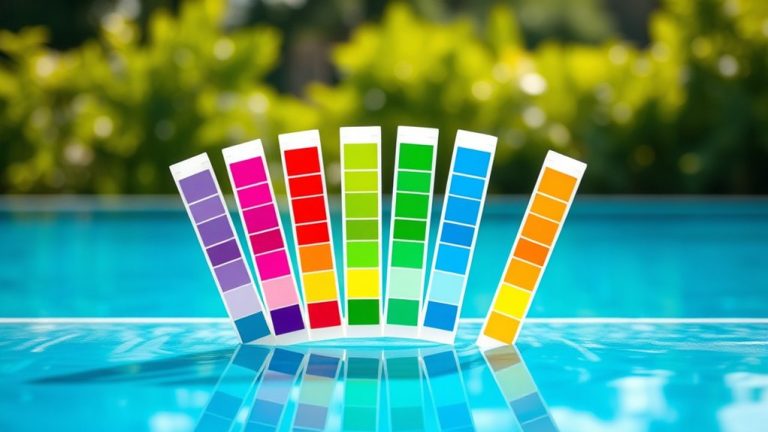
Before you close your pool, it’s a good idea to test and adjust the water chemistry to get everything just right. Aim for a pH level between 7.4 and 7.6, total alkalinity from 80 to 120 ppm, and calcium hardness in the range of 200 to 400 ppm.
If you find anything out of balance, use the right chemicals to fix it. Don’t forget to add phosphate control agents too, since they help keep algae from growing.
Once you’ve added everything, make sure to run the pump so all the chemicals circulate for at least 24 hours.
After that, you’ll be ready to move on with the winterization steps.
Ideal Chemical Levels
Balancing five key chemical levels guarantees your pool water remains stable and protected throughout winter. Before winterizing, verify the pH level is between 7.4 and 7.6 to prevent corrosion and scaling. Maintain total alkalinity from 80 to 120 ppm to stabilize pH fluctuations.
Calcium hardness should range between 200 and 400 ppm to safeguard surfaces and equipment. Chlorine levels must be 2.0 to 4.0 ppm to prevent algae growth during the off-season. Furthermore, use phosphate control by adding Pool Magic + PHOSfree to inhibit algae proliferation.
This precise balance in water chemistry is crucial for effective winterizing and guarantees your pool closing kit works effectively.
| Chemical | Ideal Range | Purpose |
|---|---|---|
| pH Level | 7.4 – 7.6 | Prevent corrosion/scaling |
| Total Alkalinity | 80 – 120 ppm | Stabilize pH |
| Calcium Hardness | 200 – 400 ppm | Protect surfaces/equipment |
Adjusting Water Chemistry
Maintaining proper chemical levels sets the foundation for effectively adjusting your pool water before closing.
Begin by testing and balancing your pH level between 7.4 and 7.6, total alkalinity from 80 to 120 ppm, and calcium hardness between 200 and 400 ppm to optimize winter protection.
Next, shock your pool with 2-3 times the normal chlorine dosage to eliminate organic material and prevent algae growth.
One week before closing, add 14 fluid ounces of Pool Magic + PHOSfree per 10,000 gallons to control phosphates and further reduce algae risk.
Allow chemicals to circulate evenly for at least 24 hours after shocking.
Regularly monitoring water chemistry every 4-6 weeks during winter helps maintain balanced conditions and addresses any imbalances promptly.
This way, you can ensure effective winterization without any surprises.
Cleaning The Pool And Applying Shock Treatment
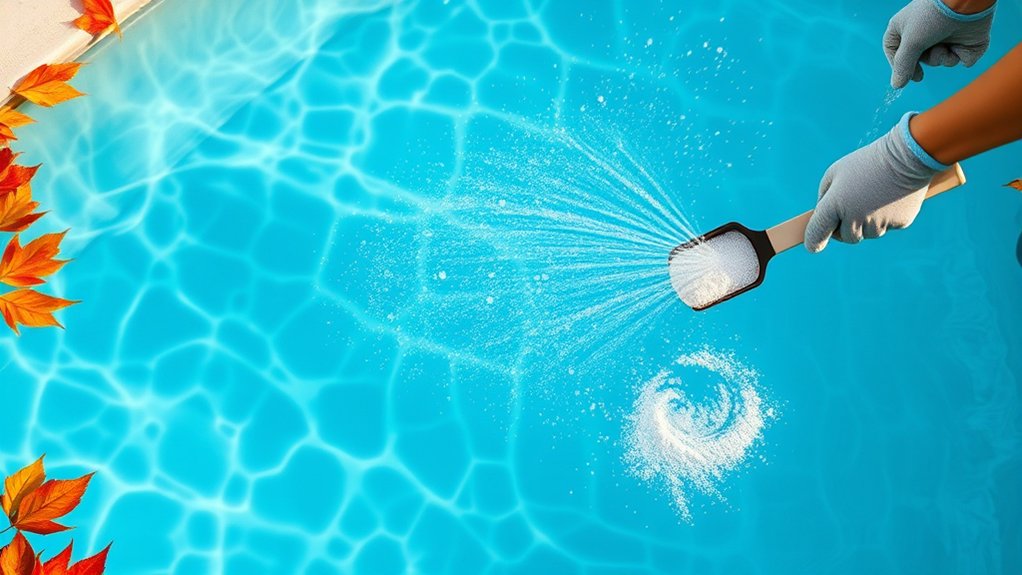
Start by thoroughly cleaning your pool to eliminate all debris and prevent algae growth during the winter months.
To clean the pool effectively, follow these steps:
To clean the pool effectively, follow these essential steps for a thorough and lasting result.
- Skim the surface, vacuum the bottom, and brush the walls to remove all dirt and organic matter.
- Test and adjust water chemistry a few days before closing, targeting a pH of 7.4–7.6 and total alkalinity of 80–120 ppm.
- Apply a chlorine shock at 2-3 times the normal dose, raising chlorine levels to 5–10 mg/L, then circulate water for 24 hours.
After shock treatment, add a winter algaecide around the perimeter to inhibit algae growth.
Let the chemicals disperse fully and give the water time to stabilize. This will help guarantee the best results for winterizing your pool.
Lowering Water Levels And Removing Pool Accessories
Once your pool water is properly treated and stabilized, the next step involves adjusting the water level to protect your pool during freezing conditions.
Lower the water level to 12-18 inches below the skimmer if you use a solid cover, or 3-6 inches below for mesh covers. This prevents ice damage during freeze cycles.
Next, remove all pool accessories, including ladders, skimmers, and floats. This helps shield them from winter weather and avoids damage to the pool cover.
Clean accessories thoroughly with a baking soda paste, rinse, and let them dry before storage.
Store ladders and other removable fixtures indoors where harsh winter conditions won’t cause cracking or deterioration.
Before storage, lubricate valves and o-rings on removed items to keep them in good condition for spring reopening.
This step guarantees long-term protection and efficient winterizing.
Winterizing Pool Equipment And Plumbing Lines
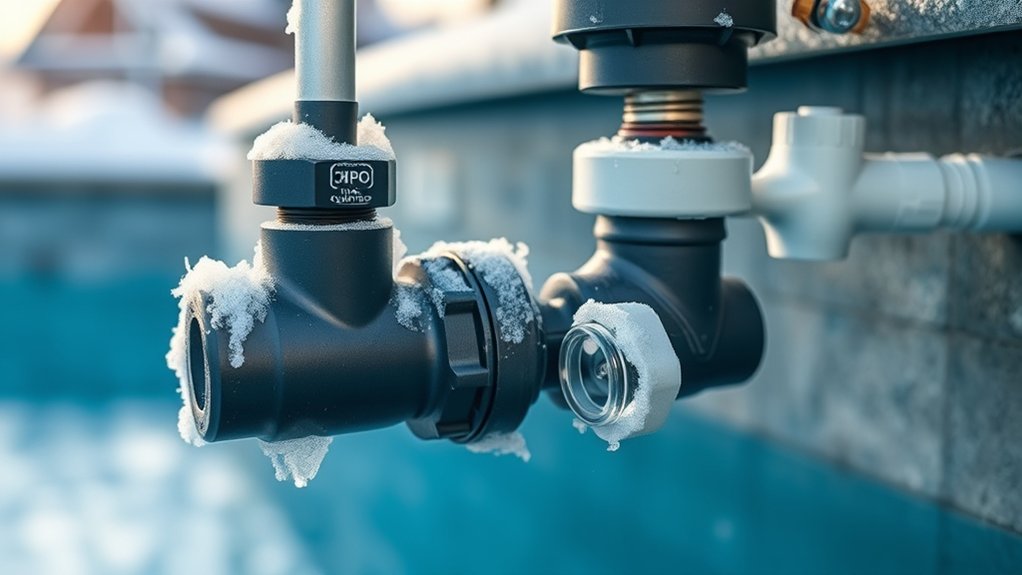
Drain all pool equipment thoroughly by removing drain plugs from the pump, filter, and heater. This helps eliminate standing water that could freeze and cause damage.
Next, winterize your plumbing lines by using an air compressor to blow out residual water. Direct the air from the equipment pad toward the pool to prevent pipe cracking.
Follow these critical steps:
- Remove all drain plugs from pump, filter, and heater to avoid freeze damage.
- Use an air compressor to clear plumbing lines of water.
- Install winterizing expansion plugs in return lines to block water re-entry.
Always consult manufacturer instructions for specific winterization procedures.
While non-toxic pool antifreeze offers extra protection, use it only as directed for swimming pools.
Properly winterizing pool equipment and plumbing lines guarantees longevity and helps you avoid costly repairs come spring.
Adding Pool Antifreeze And Protecting The Skimmer
To protect your pool’s skimmer from freeze damage, you can install a Gizzmo. It helps absorb the pressure from ice, which is pretty handy.
Another option is to add 1-2 gallons of non-toxic pool antifreeze into the skimmer and return lines. Just be sure to avoid automotive antifreeze because it can harm both your pool surfaces and the environment.
Using antifreeze properly, along with winterizing plugs, can really help reduce those costly repairs caused by frozen plumbing.
Applying Pool Antifreeze
Apply a non-toxic pool antifreeze specifically designed for swimming pools to protect your plumbing lines and equipment from freezing damage during winter.
Before applying antifreeze, blow out water thoroughly to eliminate any remaining water that could freeze and cause damage.
Then, pour 1-2 gallons of pool antifreeze into the skimmer and return lines, following the manufacturer’s guidelines for your pool size.
Install a Gizzmo inside the skimmer to absorb ice expansion, offering extra protection against freeze damage.
To guarantee peak protection against freeze during winter months:
- Blow out water completely from all plumbing lines.
- Add the correct amount of pool antifreeze into skimmer and return lines.
- Use a Gizzmo in the skimmer to manage ice expansion.
This method safeguards your pool system efficiently from freeze damage.
It’s a simple step that can save you from costly repairs in the spring!
Skimmer Protection Tips
Although winter brings freezing temperatures that threaten your pool’s skimmer, you can effectively prevent damage by installing a Gizzmo and adding pool-specific antifreeze to the skimmer and return lines. The Gizzmo absorbs pressure from ice expansion, protecting the skimmer from cracking.
Pour 1-2 gallons of pool or RV antifreeze into the lines to lower the freezing point of remaining water, preventing freeze damage. Always drain the skimmer completely and remove the drain plug to avoid water accumulation, which can cause structural damage.
Make sure to conduct regular inspections throughout winter to guarantee the skimmer remains secure and free from ice buildup.
Following these protection tips minimizes costly repairs, which can range from $400 to $800. This way, you preserve your pool’s integrity and functionality during freeze-thaw cycles.
Installing And Securing Your Winter Pool Cover
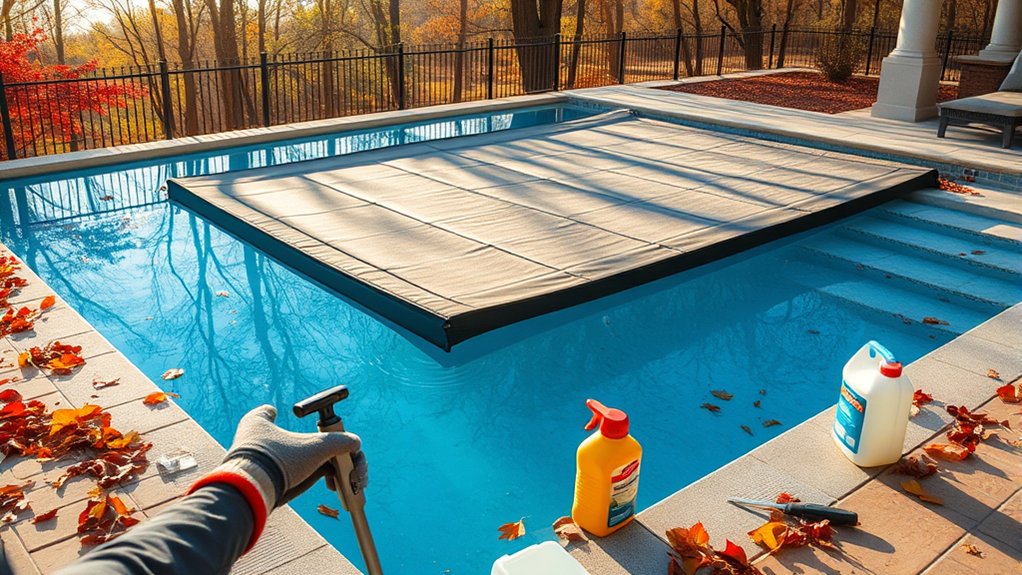
When installing your winter pool cover, start by selecting one that precisely fits your pool’s dimensions and type.
Make sure it complies with safety standards for either above-ground or inground pools.
Before installing, inspect the cover for tears or damage to keep it in good shape and prevent debris from getting in.
Secure the cover tightly using water bags or anchors. Remember, fill water bags only halfway to three-quarters full so ice can expand without causing sagging.
Use a cover pump to remove standing water from solid covers. This helps reduce stress on the material and keeps everything intact.
Here are some essential steps to follow:
- Inspect the cover thoroughly and repair any damage before installation.
- Secure the cover using water bags or anchors according to safety standards.
- Remove standing water and accumulated debris regularly to keep the cover in good condition.
Maintaining Your Winterized Pool Through The Season
Since winter conditions can place considerable stress on your pool cover and equipment, you should perform regular inspections throughout the season.
Monitor the water level frequently and add water as needed to prevent sagging or collapse of the pool cover under snow or rain.
Inspect the winter pool cover every few weeks for debris, tears, or sagging.
Check your winter pool cover regularly for debris, damage, or sagging to ensure its durability throughout the season.
Promptly remove any accumulated water with a cover pump to maintain cover integrity.
Regularly monitor chemical levels, particularly chlorine and algaecide, every 4-6 weeks to prevent algae growth and facilitate a smooth reopening.
After heavy precipitation, verify the cover is secure and free from excess weight to avoid structural damage or water contamination.
Store pool accessories and equipment in a dry, safe place, inspecting them periodically for wear before spring.
These steps help you effectively winterize your pool.
Frequently Asked Questions
Can I Winterize My Pool Without Professional Help?
Yes, you can winterize your pool without professional help by following DIY winterization techniques and a winterizing equipment checklist.
Focus on pool maintenance tips like balancing water chemistry and using essential winter supplies, including winter algaecide and antifreeze.
Avoid common winter mistakes such as neglecting pool cover options or skipping safety precautions.
Consider pool heater considerations if applicable.
These budget-friendly winter tips guarantee proper preparation for spring and protect your investment effectively.
How Long Does the Winterization Process Typically Take?
Expect the winterization process to take 4 to 8 hours, depending on your pool size and complexity.
Follow your winterization checklist carefully: perform chemical balancing steps, make water level adjustments, and apply equipment maintenance tips.
Consider temperature factors and the types of pool covers for effective protection.
Allow extra time for necessary safety precautions and avoid common mistakes.
Set realistic timeline expectations and adopt proper winter care practices to keep your pool in top shape throughout the season.
It’s all about being thorough and prepared!
What Are the Best Materials for a Durable Winter Pool Cover?
You should choose durable materials like solid polyethylene for your winter pool cover. They offer superior insulation and debris protection compared to mesh types.
Plus, solid covers tend to last longer.
Make sure to prioritize UV resistance to extend your cover’s lifespan. Also, consider the weight—thicker covers, around 8 to 12 mils, resist snow and ice better.
Custom covers fit precisely, which makes installation and maintenance easier.
Don’t forget to confirm safety features meet standards.
And of course, factor in cost and environmental impact when picking the perfect cover for your winter pool protection.
Can Winterizing Chemicals Harm Nearby Plants or Pets?
Yes, pool chemicals can harm nearby plants and pets if mishandled. You need to follow best practices like safe storage, spill prevention, and adhering to local regulations to minimize environmental impact.
Choose chemical alternatives that prioritize pet safety and plant protection. During seasonal maintenance, apply products carefully to avoid runoff toward gardens or pet areas.
Staying informed and cautious guarantees effective winterizing without risking harm to your environment or loved ones.
It’s all about being careful and thoughtful with how you use these chemicals.
How Do I Safely Reopen My Pool in Spring?
Ready to dive back in after winter? Start your pool opening with thorough spring cleaning and equipment inspection to confirm the filter operation is ideal.
Adjust chemical levels carefully for water balance and algae prevention.
Don’t forget pool maintenance tasks like removing debris and checking temperature regulation.
Follow safety precautions throughout, and perform chemical adjustments as needed. This precise approach guarantees a smooth, safe reopening.
It’ll keep your pool pristine all season long.
Conclusion
Winterizing your pool properly can extend its lifespan by up to 10 years, saving you costly repairs. By balancing water chemistry, thoroughly cleaning, lowering water levels, and protecting equipment with antifreeze and a secure cover, you prevent damage from freezing temperatures.
Regular maintenance through winter keeps your pool in peak condition. Just follow these precise steps to safeguard your investment and enjoy hassle-free pool opening next season. Don’t skip any detail—winterizing is key to durability.