Can All Dogs Swim – Breed Differences Explained
Not all dogs can swim well, as their ability depends on breed-specific traits and individual factors. Breeds like Labradors excel because they have webbed feet and water-resistant coats. On the other hand, brachycephalic breeds such as Bulldogs often struggle with breathing and buoyancy.
Age, health, and early water exposure also play a big role in how well a dog can swim. You should always keep an eye on your dog around water and consider safety gear like life jackets for those who aren’t strong swimmers. It’s worth learning more to understand how to teach and protect your dog in the water safely.
Can All Dogs Swim? What You Need to Know
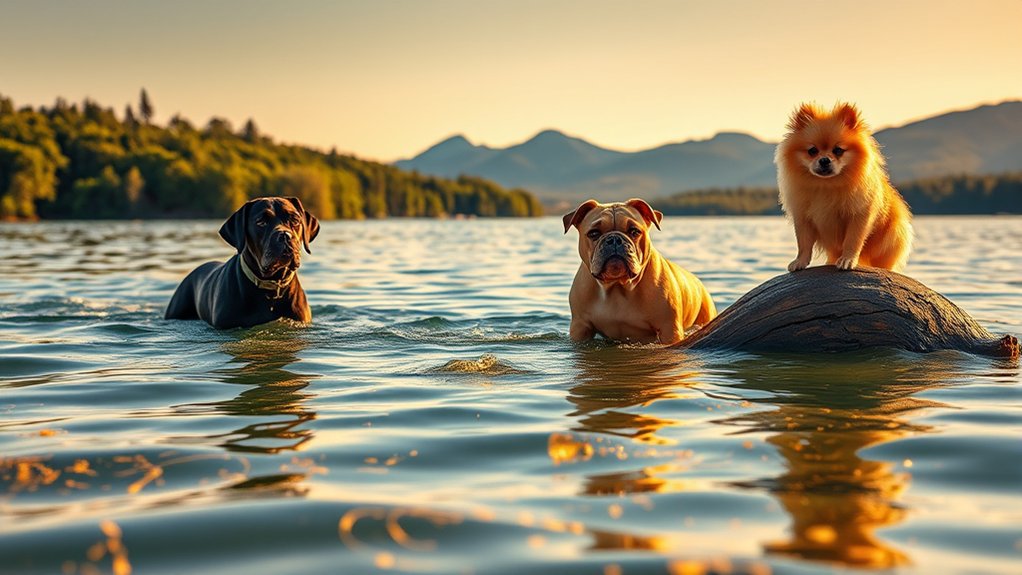
How well can your dog swim? Not all dogs have a natural ability to swim, as proficiency varies widely among breeds.
Sporting breeds like Labrador Retrievers and Newfoundlanders are strong swimmers, thanks to physical adaptations such as webbed feet and water-resistant coats.
On the other hand, brachycephalic breeds like Bulldogs and Pugs often struggle with swimming because their flat faces make breathing difficult, which increases drowning risks.
Regardless of breed, prioritizing water safety is essential.
Early positive exposure to swimming can boost your dog’s confidence, but negative experiences might cause fear.
To enhance safety, always consider a life jacket for your dog, especially if they’re not a strong swimmer or have health concerns.
Ensuring proper safety measures protects your dog during water activities.
Physical Traits That Make Dogs Better Swimmers
You’ll notice that a dog’s body structure plays a big role in how well they swim. For example, some dogs have webbed feet, which act like built-in paddles.
Plus, breeds with water-resistant coats tend to stay drier and warmer, giving them a natural advantage in the water.
When you understand these traits, it’s easier to see why some dogs seem to swim effortlessly, while others might struggle a bit.
Body Structure Impact
Physical traits play an essential role in determining a dog’s swimming ability. Certain physical characteristics, like webbed feet, considerably boost propulsion. This helps breeds such as Labrador Retrievers and Newfoundlands swim efficiently.
On the other hand, some dog breeds can’t swim well when their body structure limits buoyancy or movement. For example, short-legged breeds like Dachshunds struggle to stay afloat and navigate water effectively.
Brachycephalic breeds, including Bulldogs, face additional challenges. Their large heads and flat faces can hinder breathing, making swimming more difficult.
A streamlined body shape reduces drag, which helps with smoother swimming. But bulky or heavy builds impair movement.
Understanding how body structure influences swimming helps explain why some dogs excel in water while others find it challenging. It’s pretty interesting when you think about it!
Adaptations For Swimming
Although not all dogs are natural swimmers, certain adaptations particularly enhance their abilities in water. Many breeds of dogs that swim well have webbed toes, which improve their paddling efficiency.
Good swimmers like Labradors and Golden Retrievers combine muscular physical build with water-resistant coats, boosting buoyancy and insulation.
The Newfoundland’s thick double coat and strong limbs make it a powerful swimmer, often used in water rescues. Similarly, the Otterhound’s dense, waterproof coat helps maintain warmth and dryness while swimming.
Conversely, dogs with flat faces and broad heads, such as Bull Terriers and Boxers, often struggle with buoyancy, limiting their swimming capabilities.
Understanding these adaptations for swimming helps explain why some dogs excel in water while others face challenges.
Dog Breeds That Swim Well
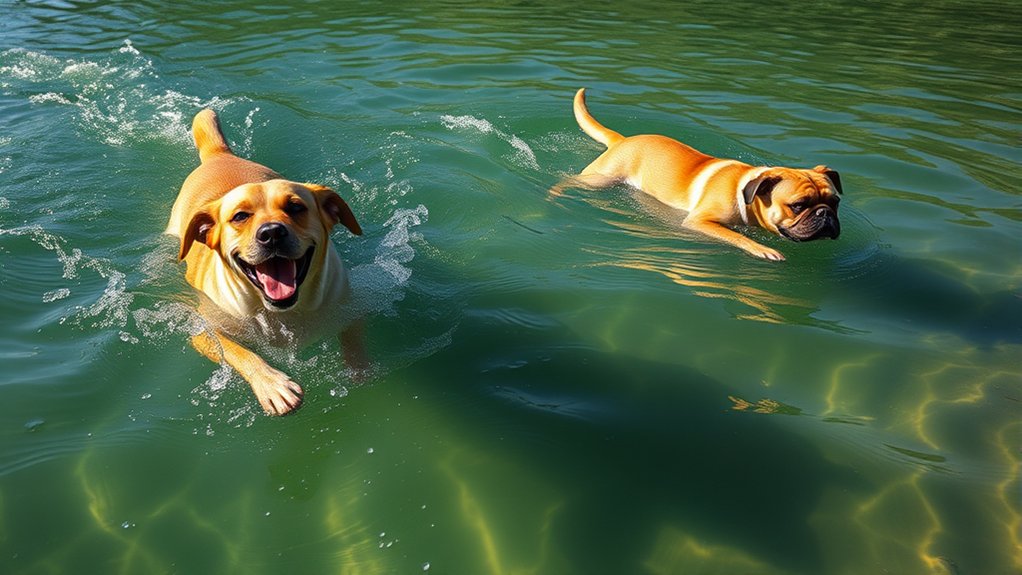
You’ll find that some dog breeds naturally excel in the water because of certain physical adaptations, like webbed feet and water-resistant coats.
For example, Labradors, Newfoundlands, and Portuguese Water Dogs have been bred specifically for swimming and other aquatic tasks.
Knowing about these traits can help you figure out which dogs are best suited for water activities.
It’s pretty fascinating how their bodies are built to make swimming easier and more efficient!
Natural Swimming Breeds
When you look at dog breeds that excel in swimming, you’ll notice they share specific traits that make them natural water enthusiasts. While dogs are natural swimmers, some breeds have a remarkable ability to swim due to their breeding history and affinity for water.
Here are key breeds that might impress you with their swimming skills:
- Labrador Retrievers and Golden Retrievers, bred for water retrieval, thrive in swimming and water tasks.
- Portuguese Water Dogs are known for their webbed feet and natural connection to water.
- Chesapeake Bay Retrievers excel in waterfowl hunting, showcasing strong swimming capabilities.
- Newfoundlands, with their powerful limbs, are exceptional swimmers often used in rescue operations.
Understanding these natural swimming breeds helps you appreciate the diversity in dogs’ water abilities. It’s pretty cool to see how their traits line up with their love for water, right?
Physical Adaptations
Physical adaptations play an essential role in a dog’s swimming ability, directly influencing how well they navigate water. Breeds like Labrador Retrievers and Newfoundlands have webbed feet, which improve their swimming efficiency and buoyancy.
Portuguese Water Dogs have water-resistant coats that keep them warm and dry during prolonged swims. The Otterhound’s unique double coat sheds water, so it doesn’t get weighed down.
Standard Poodles feature long limbs and a streamlined body, which help with agility and speed in the water. Many breeds bred for swimming show physical traits like strong limbs and powerful tails, which aid propulsion and overall efficiency.
Understanding these adaptations helps you appreciate why certain breeds excel in swimming. At the same time, others might struggle because they don’t have these specialized physical characteristics. It’s pretty interesting when you think about it!
Dog Breeds That Struggle to Swim
Although many dogs are natural swimmers, some breeds face significant challenges in the water due to their unique physical traits. When considering dogs swimming, breed differences play an essential role.
Some breeds find it difficult to swim because of:
- Flat faces, like Bulldogs and Pugs, which struggle to keep their nose above water for effective breathing.
- Short legs and elongated bodies in Dachshunds and Corgis that hinder buoyancy and propulsion.
- Large heads combined with short legs in Basset Hounds, causing balance issues.
- Heavy builds and brachycephalic features in Boxers, leading to quick fatigue.
If your dog belongs to these non-swimming breeds, always supervise your dog closely.
Watch for signs of fatigue to guarantee their safety in water. It’s better to be safe than sorry!
How Age, Health, and Experience Affect Dog Swimming
Because a dog’s age, health, and past experiences greatly influence its swimming ability, you should consider these factors before introducing your pet to water activities.
Puppies usually begin learning to swim between 3-6 months, benefiting from positive experiences that build confidence.
Older dogs may face challenges due to health issues like arthritis or decreased energy, so individual health assessments are crucial.
Older dogs may need health checks before swimming due to arthritis and lower energy levels.
Obesity and conditions common in brachycephalic breeds can impair swimming, requiring extra caution.
Experience matters: gradual exposure improves comfort and skill, while negative encounters can cause water aversion.
For dogs with limited swimming ability or those new to water, a life vest enhances safety.
How to Teach Your Dog to Swim Safely
Understanding your dog’s age, health, and experience helps you tailor a safe approach when teaching them to swim. To guarantee a positive introduction to swimming, follow these steps:
Introduce your dog to water gradually, starting in shallow areas to build comfort without overwhelming them. Use a properly fitted life jacket to provide buoyancy and support, especially for breeds less adept at swimming.
Supervise your dog closely, watching for signs of fatigue or distress, and be ready to assist immediately.
Keep swimming sessions short initially, increasing duration as your dog gains confidence and stamina.
Dog Swimming Safety Tips Every Owner Should Follow
Five essential safety tips can help you keep your dog safe and comfortable during swimming sessions.
First, always supervise your dog around water to quickly spot signs of fatigue or panic. Dogs might tire faster, especially those with short legs, so keep sessions brief and enjoyable.
Second, make sure to invest in a well-fitting dog life jacket to provide buoyancy and extra security.
Third, gradually introduce your dog to water in shallow areas to build confidence without overwhelming them.
Fourth, monitor water conditions carefully, avoiding cold temperatures and harmful substances like blue-green algae.
Following these tips will make swimming a safe and fun activity, allowing your dog to enjoy splashing while you keep them safe around water.
Fun Water Alternatives for Dogs That Don’t Like Swimming
Not every dog enjoys swimming, but that doesn’t mean they can’t have fun with water. For dogs that dislike swimming, you can explore fun water alternatives to keep them engaged and cool without forcing them into a swimming pool.
Consider these options to engage in playfulness while respecting their comfort: introduce shallow water environments like a kiddie pool or splash pads for safe, stress-free water interaction.
You can also use interactive water toys that float, encouraging fetch and play without deep water immersion.
Setting up sprinklers or gentle water hoses creates an invigorating, playful atmosphere.
Don’t forget to provide shaded areas with fresh water nearby to keep your dog cool and hydrated during water-themed activities.
These alternatives guarantee your dog enjoys water fun, even if swimming isn’t their favorite. Give them a try and watch your pup have a blast!
Frequently Asked Questions
Can Swimming Help Improve My Dog’s Joint Health?
Yes, swimming can improve your dog’s joint health by enhancing joint mobility and range of motion through aquatic therapy.
The buoyancy benefits reduce joint stress, making swimming techniques ideal for muscle strengthening and injury prevention.
Incorporating rehabilitation exercises in water supports recovery while considering age considerations guarantees safety.
Regular sessions promote flexibility and overall joint function, helping your dog maintain a healthy, active lifestyle without overloading their joints.
Are There Specific Dog Life Jackets Recommended for Non-Swimmers?
About 60% of dogs aren’t natural swimmers, so choosing the right life jackets is essential for dog safety. Brands like Ruffwear and Outward Hound offer flotation devices designed for non-swimmers, focusing on secure fits and handles for rescue techniques.
When introducing water, consider your dog’s breed characteristics and start with short swimming sessions.
Combine these jackets with training tips to guarantee a safe, positive water introduction for your furry friend.
How Does Water Temperature Affect a Dog’s Swimming Ability?
Water temperature greatly impacts your dog’s swimming ability by influencing their temperature tolerance and buoyancy factors.
Colder water may reduce water confidence and require extra health precautions, especially for breeds with low adaptability to cold.
Warmer water supports exercise benefits but watch for overheating.
Tailor swimming techniques and training tips to your dog’s breed and age, ensuring ideal water safety.
Always monitor their response to maintain comfort and prevent fatigue during swims.
Can Dogs Get Swimming-Related Ear Infections?
Yes, dogs can get swimming-related ear infections because water can get trapped in their ears. This risk is higher for breeds with floppy ears since they tend to hold moisture more easily.
You should keep an eye out for signs like your dog shaking their head a lot or having a foul-smelling discharge from their ears. These could be clues that an infection is developing.
To keep your dog safe while swimming, focus on proper swimming technique and make sure to take good care of their ears afterward. That means drying their ears thoroughly and cleaning them regularly with solutions your vet recommends.
It also helps to understand your dog’s ear anatomy. Knowing this can guide you in preventing infections, especially if your dog’s breed is more prone to them.
Should I Groom My Dog Differently After Swimming?
Yes, you should adjust your post swim grooming routine to protect your dog’s skin and coat. Use gentle drying methods and the right brush types to keep their fur from matting and tangling. It really helps to be a bit extra careful here.
Also, focus on cleaning their ears properly to avoid infections, especially if your dog has floppy ears. Bathing frequency can depend on where and how often they swim, plus their skin health. So, it’s not the same for every dog.
Remember to tweak your grooming routine with the seasons too. This helps tackle dehydration risks and keeps their coat in tip-top shape.
Regular grooming after swimming is a great way to keep your dog healthy overall.
Conclusion
Not all dogs are natural swimmers, but with patience, most can learn. Take Bella, a bulldog who initially struggled due to her stocky build. With gradual, safe practice and encouragement, she became confident in the water.
Remember, breed traits, age, and health affect swimming ability. Always prioritize safety and consider alternatives like water play for dogs less suited to swimming. By understanding these factors, you’ll help your furry friend enjoy water safely and happily.