Do Swim Diapers Hold Pee – Facts Explained
Swim diapers don’t hold pee. They’re designed to trap solid waste only, helping keep pools clean by preventing fecal contamination. They allow urine and water to pass through freely, so you can’t rely on them to contain pee.
It’s important to change swim diapers regularly and encourage bathroom breaks to reduce hygiene risks. If you’re managing incontinence, you might need specialized swimwear for better protection. Keep exploring to find the best ways to maintain pool cleanliness and comfort for your child.
What Swim Diapers Are Designed to Contain
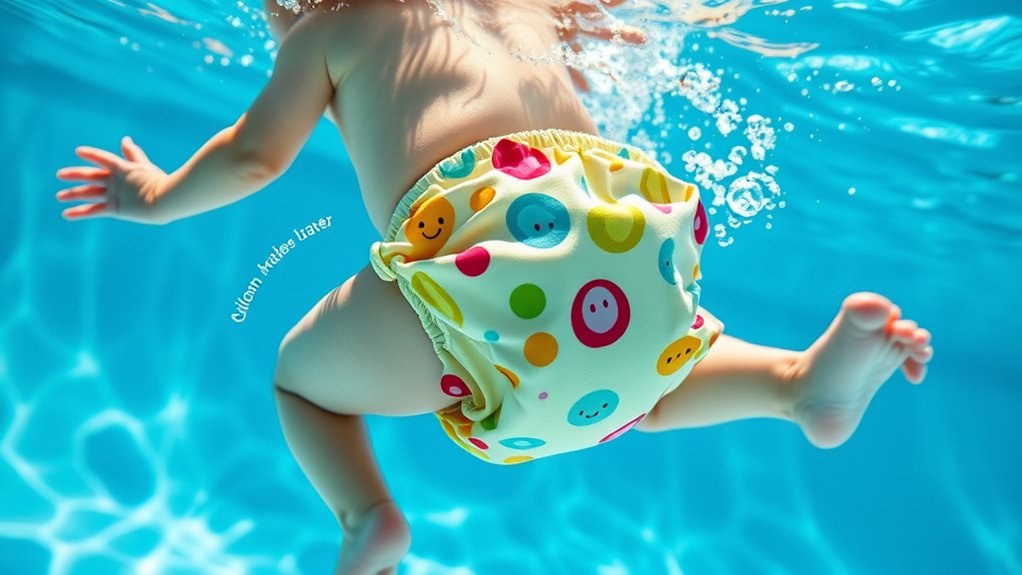
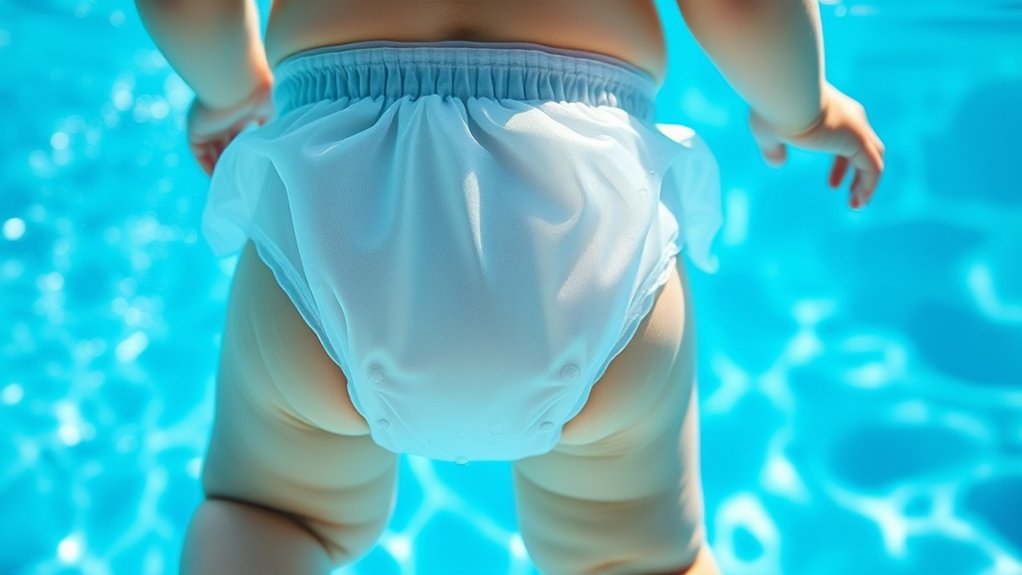
Although swim diapers can’t absorb urine, they’re designed to contain solid waste effectively and prevent leaks. When you use swim diapers, you can trust that their primary function is to hold solid waste securely.
Swim diapers are designed to securely contain solid waste, though they don’t absorb urine.
They feature leak guards that trap feces while allowing water and urine to pass through freely. This design helps maintain hygiene in pools by preventing solid contamination.
But it’s important to understand that swim diapers don’t hold liquid waste like pee. Whether disposable or reusable, swim diapers focus on containing solid waste rather than absorbing liquids.
To keep your little one comfortable and the swimming environment clean, it’s essential to change swim diapers regularly. Doing so minimizes any hygiene risks associated with their inability to hold urine.
Swim Diapers: Why They Don’t Hold Pee
Because swim diapers are designed to let liquids pass through, they don’t hold pee. When you use swim diapers, know they’re meant to contain solid waste, not to hold urine. They allow urine to flow freely to keep your child comfortable in the water.
Here’s why swim diapers don’t hold urine:
- They don’t absorb liquids, so urine passes through easily.
- Their design focuses on preventing solid waste contamination.
- The CDC recommends them to reduce solid waste risks, not urine.
- Frequent diaper changes and bathroom breaks remain essential.
Understanding this helps you manage expectations and maintain pool hygiene effectively.
Just remember, swim diapers aren’t a substitute for regular bathroom habits despite their useful role.
How Swim Diapers Help Keep Pools Hygienic
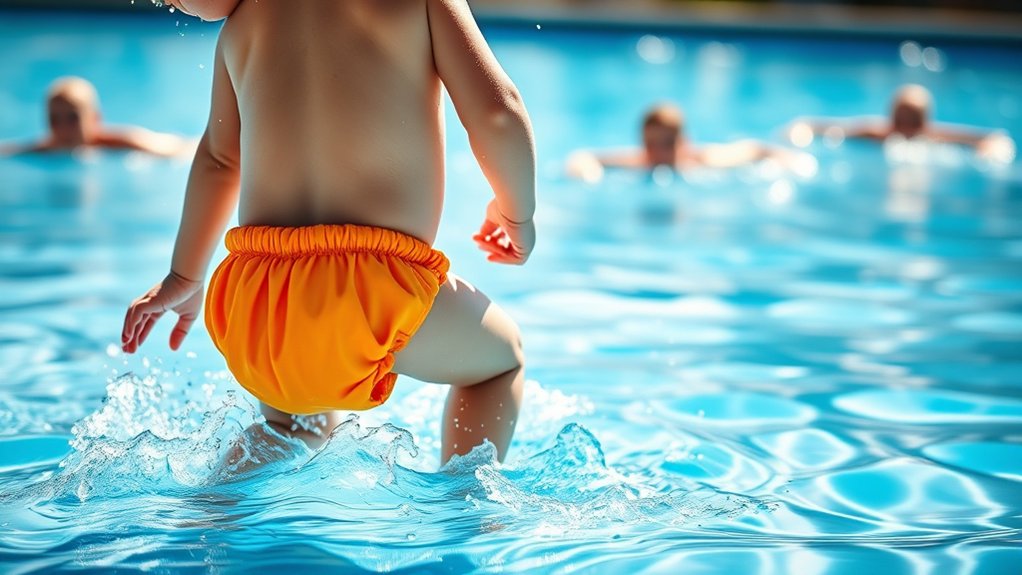
Swim diapers play a key role in keeping pools hygienic by containing solid waste. This greatly reduces the risk of contamination from harmful germs like E. coli and giardia. While they don’t hold pee, swim diapers effectively trap solid feces.
This prevents fecal matter from polluting the water. You should change swim diapers every 30-60 minutes to maintain cleanliness and reduce the spread of germs. Here’s a quick look at their impact:
| Feature | Swim Diapers | Without Swim Diapers |
|---|---|---|
| Containment of solid feces | High | None |
| Risk of bacterial contamination | Low | High |
| Recommended change frequency | Every 30-60 minutes | Not applicable |
Using swim diapers helps you protect your family and others from poolborne illnesses. It’s a simple step that makes a big difference.
Debunking Swim Diaper Myths About Pee
While swim diapers effectively contain solid waste, they don’t hold urine. This means they can’t prevent pee from entering the pool. It’s a common myth that swim diapers manage both solids and liquids, but diapers don’t hold urine because they aren’t designed to absorb liquids.
Here’s what you should know: swim diapers focus on minimizing fecal contamination, not urine leakage. Urine in pools reacts with chlorine, creating chloramines that irritate skin and eyes.
Swim diapers reduce fecal contamination, but urine still reacts with chlorine, causing chloramines that irritate skin and eyes.
Diapers don’t hold urine, so bathroom breaks remain essential for pool hygiene. Relying on swim diapers alone won’t stop the “pool smell” caused by urine-chlorine reactions.
Understanding this helps you prioritize safety and hygiene while enjoying the water with your little one.
How to Choose the Right Swim Diaper for Your Child
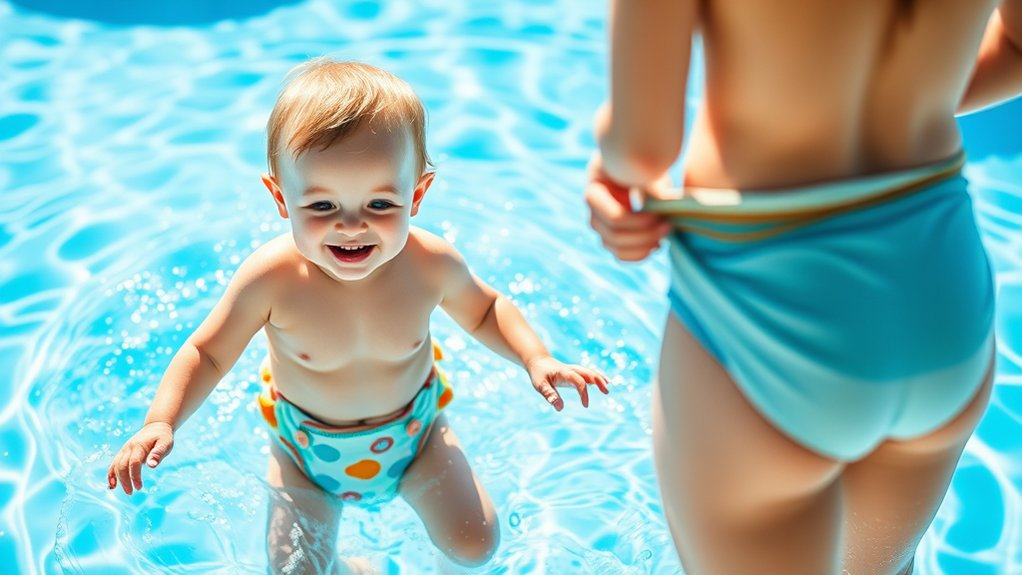
Choosing the right swim diaper for your child involves balancing fit, comfort, and functionality to keep them safe and happy in the water. Focus on a snug fit to prevent leaks and sliding, ensuring your child moves freely without discomfort.
Opt for swim diapers made from lightweight materials like polyester or nylon for better water mobility. Pay close attention to sizing based on your child’s measurements—it’s key for both effectiveness and comfort.
You’ll find disposable options from brands like Pampers and Huggies, while reusable swim diapers from Charlie Banana or Splash About offer eco-friendly, stylish choices.
Changing Swim Diapers: How Often?
You’ll want to check and change your child’s swim diaper every 30 to 60 minutes. This helps keep the pool clean and prevents any contamination.
Keep an eye out for signs like swelling or discomfort. It’s best to change diapers away from the poolside to avoid spreading germs.
Also, encouraging regular potty breaks can really help maintain water quality and keep everyone safe.
It’s a simple way to make sure the swim time stays fun and healthy!
Recommended Change Frequency
Swim diapers should be checked and changed every 30 to 60 minutes to keep your little one comfortable and maintain pool hygiene. Unlike regular diapers, swim diapers aren’t designed to absorb urine. They only contain solids. That’s why sticking to the recommended change frequency is essential to prevent contamination and keep the pool safe.
Here are some key points to remember:
- Change swim diapers frequently to reduce the risk of germs spreading, as advised by the CDC.
- Always change swim diapers away from the poolside to avoid contaminating the water.
- Encourage regular potty breaks to minimize the chances of urine entering the pool.
- Monitor your child closely since swim diapers don’t provide the same absorbency as regular diapers.
Following these tips helps you maintain hygiene and keeps swimming fun for everyone.
Signs To Change
Knowing when to change your little one’s swim diaper is just as important as how often you do it. Since swim diapers don’t absorb urine and only contain solid waste, you should check them every 30 to 60 minutes. Look for any signs of soiling or discomfort, and be ready to change immediately if your child has a bowel movement.
Swim diapers can delay germs but won’t prevent contamination, so timely changes help keep the pool clean and your child comfortable. Encouraging regular bathroom breaks is one of the best tips for using swim diapers effectively. Staying attentive to these signs guarantees hygiene and a pleasant swim experience for everyone involved.
Changing Location Tips
Although timely changes are essential, where you change your little one’s swim diaper can be just as important for keeping the pool area clean. Swim diapers don’t absorb urine, so changing them frequently every 30-60 minutes is really important.
To keep things sanitary, here are some changing location tips you might find helpful:
- Always use designated diaper-changing areas away from the poolside to prevent contamination.
- Keep extra swim diapers close by so you can change them quickly when needed.
- Dispose of used swim diapers properly to avoid spreading germs.
- Bring a waterproof mat or changing pad to protect surfaces and make changes more comfortable.
Following these simple tips can make a big difference in maintaining pool hygiene and keeping your little one comfortable.
Best Practices to Prevent Pee With Swim Diapers
Since swim diapers don’t absorb urine, you’ll need to take extra steps to keep the pool clean and safe. The best practices involve encouraging your child to take frequent potty breaks every 30 to 60 minutes while swimming. This simple routine greatly reduces the chance of urine entering the water.
Moreover, change swim diapers regularly, about every hour, to maintain hygiene and minimize contamination. Always check and change them in designated areas away from the pool to guarantee cleanliness.
It’s also important to educate all caregivers about the limitations of swim diapers, so everyone understands that these diapers only contain solid waste, not urine.
Following these best practices helps protect both your child and others, keeping the swimming environment healthier and more enjoyable for everyone involved.
Managing Incontinence: Alternatives to Swim Diapers
While swim diapers help contain solid waste, they don’t address urinary incontinence. That means different strategies are needed to keep the pool clean and comfortable for everyone.
Swim diapers contain solid waste but don’t prevent urine, so additional measures are necessary for pool hygiene.
When managing incontinence, relying solely on swim diapers isn’t enough. You can explore alternatives that complement or replace swim diapers for better control.
Consider these options:
- Empty your bladder before swimming to reduce the chance of urine release.
- Use specialized swimwear like Tranquility Swimmates or SOSecure, which are designed for discreet bowel incontinence protection.
- Take regular bathroom breaks to maintain hygiene and comfort.
- Make sure to shower before entering the pool, as this helps prevent contamination.
Frequently Asked Questions
Can Swim Diapers Cause Skin Irritation or Rashes?
Yes, swim diapers can cause skin irritation or diaper rash, especially if you don’t change them frequently.
If your child has sensitive skin, the moisture trapped against their skin can lead to redness and discomfort.
To protect their skin, change swim diapers every 30-60 minutes.
Also, apply a barrier cream before swimming. This helps reduce irritation and keeps your child comfortable while enjoying the water.
Are Reusable Swim Diapers as Effective as Disposable Ones?
Think of reusable swim diapers as a trusty backpack built for many journeys, while disposables are like single-use plastic bags. They’re convenient but limited.
When it comes to swim diaper effectiveness, reusable ones often provide a snugger fit and better containment, especially for solids.
Plus, you get eco-friendly options that reduce waste. You’ll find reusables more comfortable for your little one and kinder to the planet.
All in all, they make a smart, sustainable choice.
How Do Swim Diapers Compare in Cost to Regular Diapers?
When you compare swim diaper brands to regular diapers, you’ll notice swim diapers usually cost more per unit. They often range between $0.50 to $2.00, while regular ones are around $0.20 to $0.50.
However, reusable swim diapers, priced around $10 to $25 each, can save you money over time. Buying in bulk also helps make the cost comparison more favorable.
Swim diapers justify their price by focusing on hygiene in water.
Can Swim Diapers Be Worn Under Regular Pants?
You can wear swim diapers under regular pants, but don’t expect them to hold pee.
Swim diaper functionality focuses on containing solid waste, not absorbing urine, so leaks can happen.
Plus, swim diaper comfort is tailored for water use, so wearing one all day might feel uncomfortable.
For outings, it’s better to choose standard diapers designed to absorb urine and keep your child dry and comfortable outside the pool.
What Materials Are Swim Diapers Typically Made From?
Swim diapers are typically made from polyester, nylon, and spandex, giving you flexibility and comfort in the water.
Many feature waterproof outer layers and elastic leg openings to boost swim diaper effectiveness by containing solids without absorbing pee.
If you’re eco-conscious, look for reusable swim diapers made from sustainable fabrics.
These options not only reduce waste but also maintain performance.
Conclusion
You might think swim diapers are magic shields stopping every drop of pee. And while that’d be amazing, it’s just not true. They’re designed to catch solids, not hold in pee. So don’t rely on them as leakproof guards.
But don’t worry! Choosing the right swim diaper and changing it often keeps pools cleaner and everyone happier. By understanding their limits and practicing good habits, you’ll help create a safe, splash-friendly environment for your little one.