Can Swimming Reduce Weight – Benefits Explained
Swimming can definitely help you reduce weight by burning 250 to 450 calories in just 30 minutes, depending on the stroke and intensity. It boosts your metabolism and builds lean muscle while being gentle on your joints.
When you combine swimming with balanced nutrition, proper meal timing, and hydration, you maximize fat loss and recovery. Regular sessions improve muscle tone, endurance, and mental well-being.
This all supports sustained weight management. Keep exploring, and you’ll find ways to optimize your swim workouts for the best results.
How Swimming Burns Calories and Boosts Metabolism
Because swimming activates multiple muscle groups at once, you can burn between 250 and 450 calories in just 30 minutes, depending on your stroke and intensity.
Swimming’s resistance creates a more intense workout, increasing calories burned compared to many land exercises.
When you swim at higher intensities, your metabolism gets a boost, helping you burn more calories even when resting after your workout.
This aerobic exercise also improves your endurance, making everyday activities easier and encouraging a more active lifestyle.
Adding swimming to your workout routine supports weight loss by reducing body fat and increasing lean muscle mass.
How to Combine Swimming With Diet for Weight Loss
To get the most out of your weight loss journey, it’s important to combine your swimming routine with balanced nutrition. Focus on lean proteins, whole grains, and plenty of fruits and veggies.
Also, consider timing your meals around your workouts. This can boost your energy levels and help with recovery, making it easier to stay consistent.
When you pay attention to both what you eat and when you eat, you’ll be supporting your body’s calorie-burning efforts in a much more effective way.
Balanced Nutrition Importance
When you combine swimming with a balanced diet, you create the ideal environment for effective weight loss. To shed pounds while preserving muscle, you need a caloric deficit supported by nutrient-rich foods like fruits, vegetables, lean proteins, and healthy fats.
These foods fuel your swimming routine and boost metabolism, enhancing the health benefits of your workouts.
Hydration plays a key role. Drink water before, during, and after swimming to optimize performance and recovery.
Tracking calories with apps helps you stay accountable and makes sure you consume fewer calories than you burn, which is vital for losing weight.
Incorporating nutrient-dense snacks, such as nuts or yogurt, after your swim aids muscle recovery and helps prevent overeating later.
Balancing your diet alongside swimming maximizes weight loss results and supports overall wellness.
Meal Timing Strategies
A well-planned meal timing strategy can really boost the effects of your swimming workouts on weight loss. Eating a balanced meal with protein and healthy carbs about 1-2 hours before swimming gives you the energy you need to burn more calories during exercise.
After your swim, it’s important to focus on topping up your glycogen stores and repairing your muscles. Try to eat within 30 minutes to 2 hours post-workout to get the best results.
Don’t forget to stay hydrated before and after swimming. It helps with your performance, supports recovery, and makes fat loss more efficient.
Keeping a consistent meal timing schedule with smaller meals or snacks every 3-4 hours also helps keep your metabolism steady and energy levels up throughout the day.
When you combine proper meal timing, balanced nutrition, and hydration with your swimming workouts, you set yourself up to optimize weight loss and support overall metabolic health.
Which Swimming Strokes Help You Burn the Most Fat?
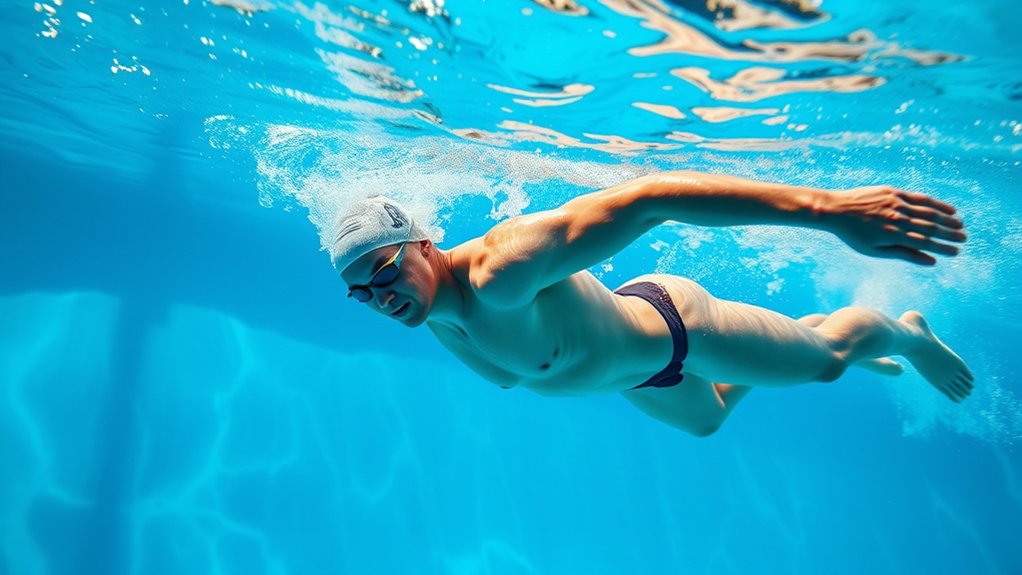
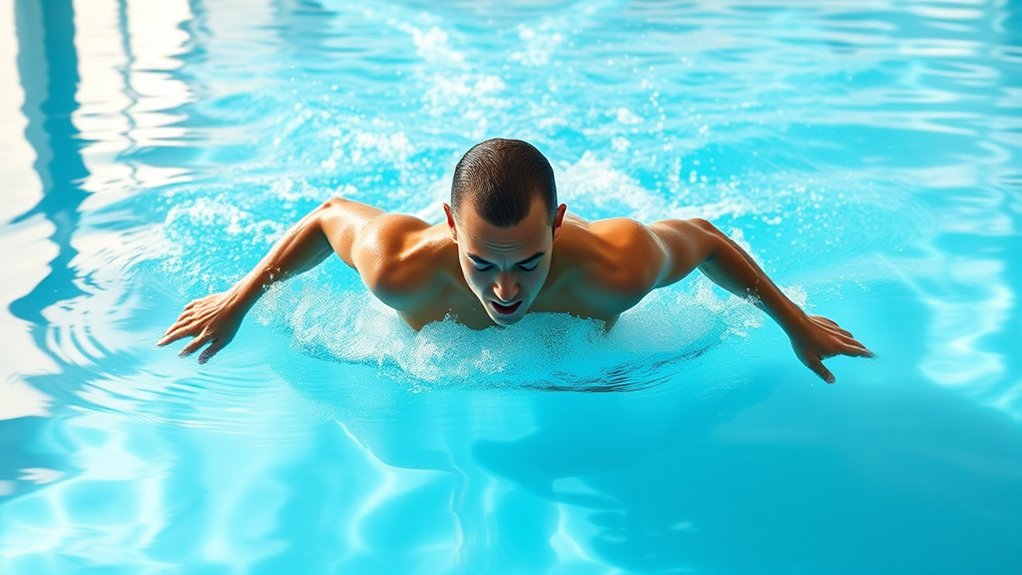
If you want to burn the most fat, focusing on strokes like the Butterfly is a great idea since it burns the highest number of calories.
Then there’s Freestyle, which is awesome because it really works your core and glute muscles.
Every stroke is a bit different when it comes to intensity and which muscles you use.
So, mixing them up can actually help you burn more calories overall and keep your workouts interesting.
Getting to know these differences can make it easier to tailor your swim sessions, making your weight loss efforts more effective.
Highest Calorie Burning
Three swimming strokes stand out for their calorie-burning potential, helping you maximize fat loss during your workouts. The butterfly stroke leads with the highest calorie burning, burning about 450 calories in 30 minutes. Freestyle follows, offering a balanced effective workout that burns around 300 calories.
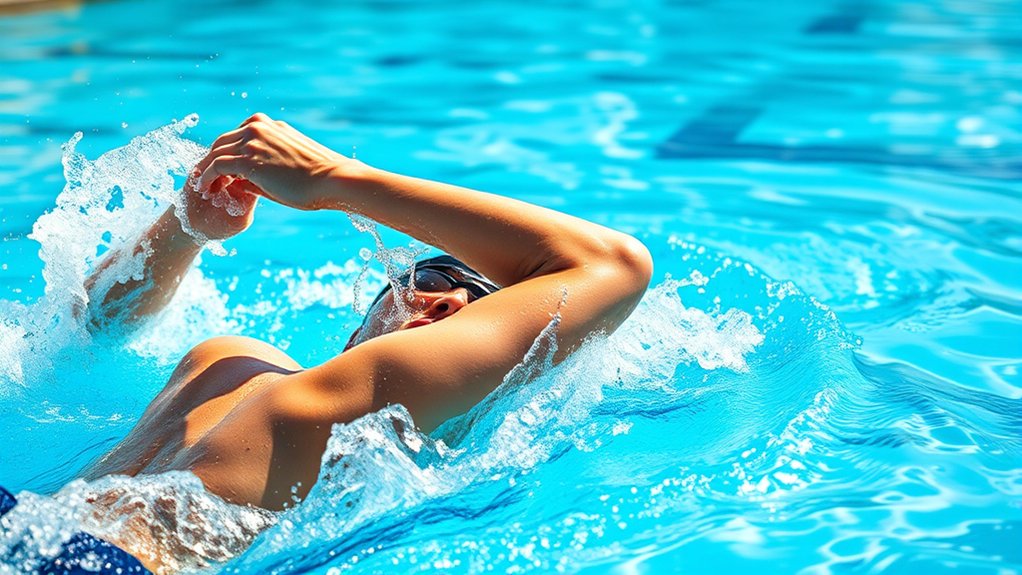
Backstroke is also beneficial, burning roughly 250 calories while improving posture. Here’s a quick overview:
| Stroke | Calories Burned (30 min) |
|---|---|
| Butterfly | 450 |
| Freestyle | 300 |
| Backstroke | 250 |
| Breaststroke | 200 |
| Mixed Strokes | Varies, optimize burn |
Muscle Engagement Variations
While each swimming stroke offers unique benefits, understanding how they engage different muscle groups can help you target fat loss more effectively.
To swim to lose weight, choose strokes that maximize muscle engagement and burn calories efficiently.
The butterfly stroke is a popular exercise for effective fat loss. It demands intense upper body and core work and burns about 450 calories in 30 minutes.
Freestyle engages your core and glutes, burning roughly 300 calories, making it excellent for full-body fat burning.
Backstroke focuses on posture and both upper and lower muscles, burning around 250 calories.
Breaststroke provides cardiovascular benefits and tones multiple muscle groups, burning about 200 calories. This low-impact cardio variety helps you burn calories while protecting joints.
That’s why swimming is an ideal fat loss workout.
Mixing strokes can keep workouts balanced and effective. It also keeps things interesting so you won’t get bored.
Give it a try and see what works best for you!
Stroke Intensity Levels
Choosing the right swimming stroke can really affect how many calories you burn and how well you lose fat.
Different strokes vary in intensity and benefits. This means they can change how effective your workout is at burning calories.
The butterfly stroke demands the highest intensity. It burns about 450 calories in 30 minutes. So, if you want maximum fat loss, this stroke is ideal.
Freestyle offers a balanced workout. It burns around 300 calories per half-hour while toning your core and glutes.
Backstroke and breaststroke provide moderate intensity. They burn 250 and 200 calories respectively.
Plus, they come with added benefits like improved posture and better cardiovascular health.
Optimal Swimming Frequency and Duration for Weight Loss
To effectively support weight loss, you should aim for at least 150 minutes of moderate-intensity swimming or 75 minutes of vigorous swimming per week, as recommended by the CDC. The ideal swimming frequency balances calorie burn with recovery, so plan swimming sessions lasting 30-60 minutes, two to four times weekly.
Incorporating high-intensity intervals in your workouts can boost calorie burn in shorter sessions, enhancing weight loss. Remember, individual needs vary, so listen to your body and complement swimming with a balanced diet for sustainable results.
| Frequency per Week | Duration per Session | Intensity Level |
|---|---|---|
| 2 | 40 minutes | Moderate-intensity |
| 3 | 30 minutes | High-intensity intervals |
| 4 | 45 minutes | Moderate-intensity |
| 5 | 30 minutes | Mixed intensity |
How Swimming Improves Muscle Tone and Full-Body Fitness
Engaging in swimming activates major muscle groups like your arms, legs, and core. It offers an extensive workout that enhances muscle tone across your entire body.
This full-body workout combines cardiovascular and strength training benefits.
Swimming uses water resistance to effectively build muscle endurance and strength. It’s a great way to get fit without the need for heavy weights or machines.
Here’s how swimming improves your muscle tone and fitness:
- Strength Training: Water’s resistance acts like natural weights, helping you tone muscles without heavy equipment.
- Calorie Burn: Depending on your stroke, you can burn 200-450 calories in 30 minutes. This supports fat loss while sculpting muscles.
- Low-Impact Exercise: Swimming reduces strain on joints while still promoting balanced muscle development throughout your body. It’s perfect if you want a workout that’s tough but gentle.
Why Swimming Is Great for Joints and Injury Recovery
Because water’s buoyancy supports your body and reduces pressure on weight-bearing joints, swimming offers an excellent low-impact exercise option for those with arthritis, joint pain, or recovering from injury.
This low-impact nature makes swimming ideal for rehabilitation, allowing you to build muscle strength and improve mobility without stressing your joints.
The gentle resistance of water helps enhance joint function and flexibility, promoting recovery while minimizing the risk of further injury.
Studies show that regular swimming not only supports physical health but also aids people with chronic pain or disabilities by maintaining muscle tone and joint health.
By incorporating swimming into your routine, you can safely strengthen muscles around affected joints and boost overall mobility.
It’s a valuable activity for joint care and injury recovery that feels good and helps you keep moving.
How Swimming Benefits Mental Health During Weight Loss
While focusing on physical benefits, don’t overlook how swimming can boost your mental health during weight loss. This exercise does more than burn calories. It actually enhances your emotional well-being and mental clarity.
Here’s how swimming supports your mental health during weight loss:
Discover the powerful ways swimming nurtures your mental well-being throughout your weight loss journey
- It reduces stress and anxiety by releasing endorphins. This promotes a positive mood and eases emotional strain.
- The rhythmic, mindful nature of swimming encourages relaxation and focus. It helps you stay mentally resilient.
- Improved lung capacity from swimming enhances oxygen flow to your brain. This supports cognitive function and long-term mental health improvements.
Tips to Keep Your Swimming Workouts Effective for Weight Loss
Boost your swimming workouts’ effectiveness for weight loss by following targeted strategies that maximize calorie burn and muscle engagement. Swimming is a great cardio workout that helps you burn more calories while building strength.
Aim for at least 150 minutes of moderate-intensity swimming weekly, as recommended by the CDC, to support a healthy weight.
Try incorporating high-intensity interval training (HIIT) by alternating fast laps with rest periods to increase fat burning. Using accessories like kickboards and fins can add resistance and challenge different muscles.
Mixing strokes like freestyle, backstroke, and butterfly engages various muscle groups, which keeps things interesting and boosts your results.
Tracking your progress with apps helps you adjust workouts for ideal outcomes. These tips will help you stay consistent and make swimming an effective tool in your weight loss journey.
Give them a try and see how your swimming sessions improve!
Frequently Asked Questions
Can Swimming Help Improve Sleep Quality During Weight Loss?
Yes, swimming can improve your sleep quality during weight loss by promoting better sleep patterns.
Adding swimming to your exercise routine supports stress reduction and boosts mental health, helping you relax more effectively.
This relaxation enhances your recovery time, allowing your body to heal and regain energy.
Improved sleep quality also aids weight management by balancing hormones.
What Swim Gear Is Best for Beginners Aiming to Lose Weight?
For beginners aiming to lose weight, choose well-fitting swim suits to boost comfort and confidence.
Use swim caps to reduce drag and keep hair dry, which helps you swim more efficiently.
Pick goggles that suit your eye protection needs for clear underwater vision.
Kickboards are great because they help isolate muscles and improve your form.
Combine these with a structured training plan and varied water workouts.
Doing this will help you burn more calories and make steady progress safely.
How Does Swimming Compare to Other Cardio Exercises for Weight Loss?
Swimming compares favorably to other cardio exercises for weight loss because the intensity of your swim directly influences how many calories you burn and how much fat you lose. You can easily adjust how long you swim to match your goals.
The water’s resistance also boosts muscle engagement more than many land exercises.
Plus, swimming helps improve your aerobic capacity while being gentle on your joints. It’s a great way to burn calories and build strength at the same time.
Can Swimming Aid in Reducing Belly Fat Specifically?
Yes, swimming can help reduce belly fat by combining effective swimming techniques with high calorie burning.
When you swim consistently, especially using interval training or freestyle, you target core muscles and boost metabolism.
Integrating a balanced diet enhances fat loss results, while consistency matters most for long-term changes.
Plus, swimming supports mental health, keeping you motivated.
Remember, targeting belly fat requires overall fat reduction, so swimming is a valuable part of your strategy.
It’s all about making swimming one part of a bigger plan to lose fat.
Is Swimming Suitable for People With Asthma Trying to Lose Weight?
Yes, swimming is suitable for people with asthma who are trying to lose weight. By practicing proper swimming techniques and keeping a consistent exercise routine, you can improve your lung capacity and overall fitness levels.
Just keep in mind that managing the water temperature is important because cold water might trigger asthma symptoms.
Swimming helps support asthma management by promoting better breathing control and boosting cardiovascular health.
It’s always a good idea to check with your doctor before starting, so you can create a safe routine that fits your specific needs and gives you the most benefit.
Conclusion
If you want to torch calories and tone every muscle like a superhero, swimming’s your secret weapon. It’s not just a workout, it’s a full-body fat-burning, joint-loving, mood-boosting machine backed by science. Combine it with smart eating, and you’re unstoppable.
Swim regularly and you’ll see your metabolism skyrocket while feeling stronger and happier. So jump in, your body and mind will thank you for turning weight loss into a splash-worthy success!