Can You Swim After Getting Ears Pierced – Safety Advice
You should wait at least six to eight weeks before swimming with new ear piercings to avoid infection and guarantee proper healing. Swimming too soon exposes your piercing to bacteria, chlorine irritation, and increases redness or discharge risk.
Stick to clean, chlorinated pools if you swim after healing. Avoid hot tubs and natural waters. Always rinse and apply saline after swimming.
Keep monitoring your piercing closely for signs of infection. Learn how to protect and care for it effectively. Taking these steps will help you heal safely and enjoy swimming without worries.
How Long Should You Wait Before Swimming With New Ear Piercings?
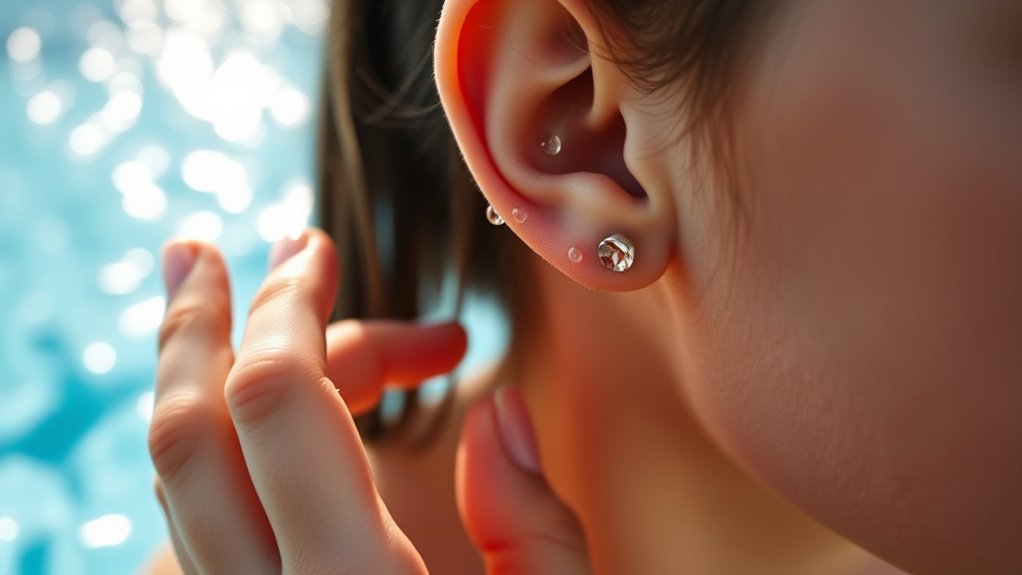
Although you might be enthusiastic to swim, you should wait at least 6 to 8 weeks for earlobe piercings and 3 to 12 months for cartilage piercings to heal properly before exposing them to water.
During the initial healing period, it’s essential to avoid submerging your new piercings, even in clean water, to reduce the risk of infection.
Avoid submerging new piercings in any water during healing to minimize infection risks.
While some suggest that swimming in chlorinated pools may be acceptable after 10 days, it’s best to exercise caution and follow strict aftercare tips.
Regularly clean your piercings with a recommended solution, especially after any water exposure. Always monitor for signs of infection, such as redness or discharge, to guarantee proper healing and avoid complications.
Waiting the advised time helps protect your piercings and promotes a smooth recovery.
What Are the Risks of Swimming Too Soon After Piercing?
If you swim too soon after getting your ears pierced, you increase the risk of infection because bacteria in water, especially from lakes and rivers, can easily enter the healing piercing. Even chlorinated pool water can cause irritation and swelling, which messes with the healing process.
For earlobe piercings, it’s important to wait at least two weeks before swimming. Getting your piercing wet too early can cause redness, discharge, and slow down recovery.
Make sure to follow strict cleaning routines with sterile solutions after any water contact. This helps keep the risk of infection to a minimum.
| Risk Factor | Impact on Piercing | Recommended Action |
|---|---|---|
| Bacterial Exposure | Infection, irritation | Delay swimming |
| Chlorinated Pool | Swelling, irritation | Use sterile cleaning |
| Early Water Exposure | Prolonged healing process | Follow aftercare routines |
Which Waters Are Safe or Unsafe for New Piercings?

When you have a new ear piercing, choosing the right water for swimming is essential to avoid infections and irritation.
Chlorinated pools generally offer clean water that’s safer during your healing time, but you should still be cautious to prevent infection.
Ocean swimming is possible if you avoid fully submerging your ears and keep exposure minimal.
You must avoid stagnant water like hot tubs and natural bodies such as lakes and rivers because they contain bacteria that increase infection risk.
After swimming, always rinse your piercing thoroughly with clean water to remove any residual contaminants.
Protecting Your Piercings When Swimming Early
Choosing safe water for swimming is just one part of protecting your new ear piercing. To properly protect your ears during the healing time, you should take extra precautions to reduce the risk of infection.
Here are three essential steps for effective piercing aftercare when swimming early:
- Always cover your piercing with a waterproof bandage before entering the water to shield it from bacteria and contaminants.
- Avoid swimming if possible during the initial 6 to 8 weeks of healing time, as submerging your piercing increases infection risk.
- After swimming, rinse your piercing with clean water and apply a saline solution to promote healing.
Make sure to monitor for irritation or redness closely. Taking these steps will help you protect your ears and enjoy swimming safely.
Cleaning Your Piercings After Swimming
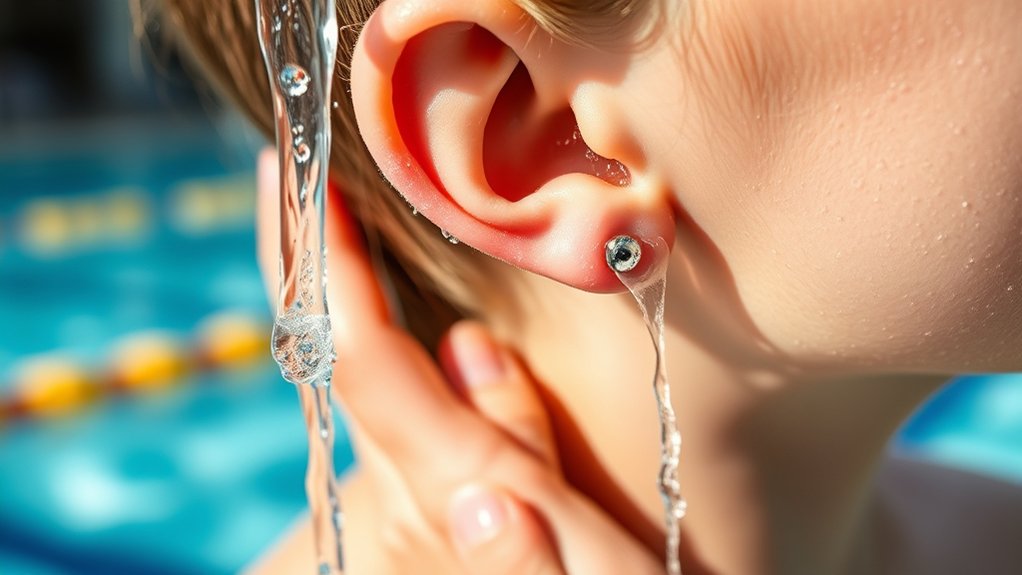
How should you clean your new ear piercings after swimming to guarantee proper healing?
Begin by rinsing your piercings with clean water to remove chlorine or saltwater residue that can irritate the skin.
Then, use a saline solution or a piercing-specific aftercare spray to thoroughly clean the area.
During the healing period, clean your earrings and surrounding skin at least twice a day to prevent infections.
Avoid twisting or spinning the earrings while cleaning, as this can delay healing and cause irritation.
After cleaning, dry your piercings completely since moisture encourages bacterial growth.
Proper cleaning after a swim not only supports healing but also protects your piercings from potential infections caused by chlorine and other contaminants in pool water.
Why You Should Use Aftercare Solution When Swimming
You should definitely use an aftercare solution when swimming to protect your new piercings from bacteria and irritation. It’s a simple step that can make a big difference.
Applying a dermatologist-tested spray right after you swim helps promote healing and keeps infections at bay, especially during those first crucial days.
Don’t forget to clean both sides of the piercing—that way, you’re keeping things hygienic and supporting healthy skin closure. It really helps your piercing heal smoothly.
Essential Aftercare Benefits
Although swimming can expose your new ear piercings to bacteria and irritants, using an aftercare solution like a hypochlorous spray greatly reduces the risk of infection and promotes healthy healing.
This pH-neutral formula is gentle on sensitive skin around a fresh piercing and supports effective healing.
When you incorporate aftercare solutions during swimming activities, you benefit by preventing infections through immediate cleansing of contaminants.
It also soothes irritation caused by exposure to pool chemicals or natural water. Plus, it helps maintain hygiene after bathing or swimming to keep the piercing free from harmful bacteria.
Using an aftercare solution consistently guarantees your ear piercings stay clean and heal properly.
That’s why it’s an essential part of your routine when swimming or bathing with fresh piercings.
Post-Swim Cleaning
Since swimming introduces various bacteria and chemicals to your fresh ear piercings, thorough post-swim cleaning becomes vital to prevent infection and promote healing.
After you finish swimming, especially in chlorinated water, rinse the piercing with fresh water to remove surface contaminants. Then, apply an aftercare solution to both the front and back of the piercing.
This step is important because the aftercare solution eliminates bacteria and irritants that water alone mightn’t remove. Using a pH-neutral, dermatologist-tested spray supports the healing process by keeping the piercing clean and balanced.
Always keep your aftercare solution accessible to perform immediate post-swim cleaning, reducing the risk of complications.
By following these steps consistently, you’ll effectively prevent infection and guarantee your new piercings heal properly.
It’s a simple routine but makes a big difference in keeping your piercings healthy and looking great. So, make sure to stick with it after every swim!
Swimming After Your Piercings Heal: What You Need to Know
When your ear piercings have fully healed, typically 6 to 8 weeks for lobes and up to 12 months for cartilage, you can generally swim without restrictions.
Once the protective barrier is established, swimming after getting ears pierced becomes safer.
However, keep these points in mind.
Choose clean swimming locations to minimize exposure to bacteria and reduce infection risk.
Continue using aftercare spray or saline solution after swimming to maintain hygiene and protect the piercing.
Always clean your piercings thoroughly post-swim to remove any irritants from bodies of water.
How to Spot and Handle Piercing Infections From Swimming
If you swim too soon after getting your ears pierced or in unclean water, you increase the risk of developing an infection. You should monitor your piercing carefully for signs like redness beyond the site, swelling, discharge, or throbbing pain.
Avoid swimming in lakes or hot tubs to keep your piercing clean. If you notice warmth, fever, or chills, consult a healthcare professional immediately.
| Symptom | Recommended Action |
|---|---|
| Redness/Swelling | Clean gently with saline |
| Discharge/Pain | Avoid swimming, monitor closely |
| Fever/Chills | Consult a healthcare provider |
Promptly addressing symptoms helps prevent complications and guarantees safe healing after swimming. It’s always better to be cautious with new piercings when you’re around water.
Frequently Asked Questions
Can Swimming Affect the Healing Time of Ear Piercings?
Yes, swimming can prolong the healing process of your ear piercings. Water exposure increases infection risk by introducing bacteria, which complicates piercing care.
To protect your ear hygiene and reduce swimmer’s ear chances, follow strict aftercare tips and avoid swimming within the recommended time frame. That’s usually 6 to 8 weeks for lobes and longer for cartilage.
Make sure to clean your piercings with saline solution after swimming. This helps support a smooth healing process and prevents complications.
Are There Specific Types of Earrings Better for Swimming?
You’ll want to choose hypoallergenic earring materials like titanium or surgical stainless steel for swimming safety. These materials reduce infection risks during the healing process.
Studs work best because they minimize movement and water exposure, which lowers the chances of irritation.
Try to avoid dangling types of jewelry since they can snag or get dislodged easily.
Also, following aftercare tips and swimming precautions, such as using waterproof covers, will protect your piercings and help them heal while you enjoy the water.
It’s all about keeping things safe and comfortable!
How Does Saltwater Compare to Chlorinated Water for Healing Piercings?
Saltwater benefits your piercing by offering natural healing properties and acting as a gentle antiseptic. This can reduce infection risks and soothe skin sensitivity.
In contrast, chlorinated water often causes irritation and dryness, which might slow down the healing process. So, it’s best to be careful with it.
When it comes to maintaining your piercing, try to limit how often you swim. Follow strict aftercare tips to protect your new piercing.
It’s a good idea to prioritize saltwater from clean areas over chlorinated pools.
But remember, always keep an eye on how your piercing is healing.
Can Ear Piercings Close if You Avoid Swimming Completely?
Yes, your ear piercings can close even if you avoid swimming completely. Proper piercing care is key, which means keeping your jewelry in place and following aftercare tips during the healing process.
Infection risks depend more on hygiene than how often you swim or the water temperature. The material of your jewelry also plays a role in how well your piercing heals and holds up over time.
Is It Safe to Use Earplugs With New Piercings While Swimming?
Yes, you can use earplugs with new piercings while swimming, but only after the initial healing process of 2-3 weeks.
Choosing the right earplug types, like hypoallergenic soft silicone, helps reduce the risk of infection and irritation.
Make sure to clean your earplugs thoroughly before and after each use.
Also, try to minimize how much water gets into your ears to keep everything safe.
Following these aftercare tips will help you swim safely without affecting your piercing materials or healing progress.
Just keep an eye out for any signs of infection, and if you notice anything unusual, take care of it promptly.
Conclusion
Think of your new ear piercings as delicate seedlings. Nurture them carefully before exposing them to the waters of swimming. Waiting until they’re fully healed protects you from infections and complications, much like shielding young plants from harsh rain.
When you do swim, use proper aftercare to keep your piercings healthy and vibrant. By respecting this process, you guarantee your piercings flourish beautifully, reflecting both your patience and care.