Can You Swim in the River Thames?
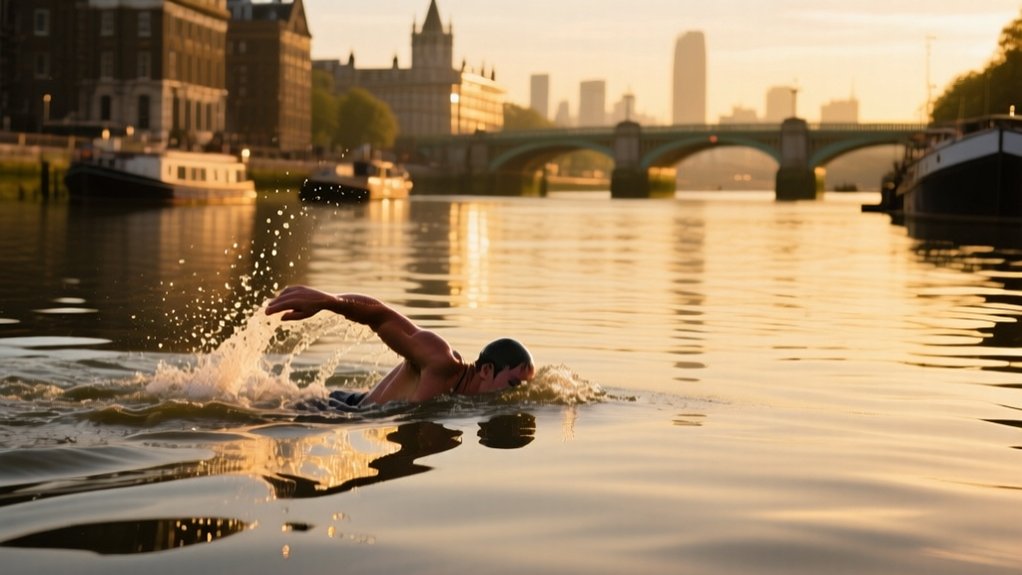
You can swim in the River Thames, but only in designated areas such as between Putney Bridge and Teddington. You need to follow strict legal and safety guidelines.
Swimming is banned in central London and certain hazardous zones due to strong tidal currents, pollution risks, and heavy boat traffic. Always check water quality reports, wear high-visibility gear, and stay close to shore for safety.
If you want to understand the regulations, hazards, and safer locations, there’s more essential information ahead.
Key Takeaways
- Swimming is prohibited between Crossness and Putney Bridge without written permission due to safety and legal restrictions.
- Designated swimming areas exist upriver from Putney Bridge to Teddington with guidelines to ensure safety.
- Strong currents, sewage pollution, and heavy boat traffic pose significant risks to swimmers in the Thames.
- Swimmers should wear hi-vis caps, stay within 10 meters of shore, and avoid busy fairways for safety.
- Checking real-time water quality and sewage spill reports is essential before swimming in the river.
Swimming Regulations and Legal Restrictions on the Thames
Although swimming in the River Thames may seem appealing, you must follow strict regulations set by the Port of London Authority (PLA).
Thames swimming regulations, particularly Bye law 21.1, prohibit swimming without prior written permission between Crossness and Putney Bridge.
Swimming is explicitly banned in designated anchorage zones and areas marked with warning notices to protect safety. Central London and downstream areas enforce stringent legal restrictions, strongly discouraging swimming due to hazards.
However, swimming is allowed upriver from Putney Bridge to Teddington, where you must adhere to Thames river safety guidelines, including staying within 10 meters of the shore.
The PLA prioritizes safety for swimmers and other river users, recognizing risks from fast currents and maritime traffic.
Compliance with these rules guarantees lawful and safer interaction with the Thames.
Safety Risks and Hazards of Swimming in the Tidal Thames
While the Port of London Authority permits swimming in certain upriver sections of the Thames, you must remain aware of the significant safety risks involved.
The risks of swimming in the Thames include fast-flowing tidal currents reaching about five miles per hour, which can sweep you away with strong eddies and undertows.
Fast-flowing tidal currents up to five miles per hour create strong eddies and undertows, posing serious swimming hazards.
Cold water shock may occur even in warmer weather, causing dangerous involuntary breathing spasms. Furthermore, sewage discharges, especially after heavy rain, contaminate the water and pose health hazards.
With over 20,000 ship movements annually, the risk of collisions and underwater dangers is high. Despite some Thames swimming permissions, the Port of London Authority actively discourages swimming in tidal areas due to these unpredictable and hazardous conditions.
You should weigh these risks carefully before entering the water.
Designated Swimming Areas and Recommended Locations
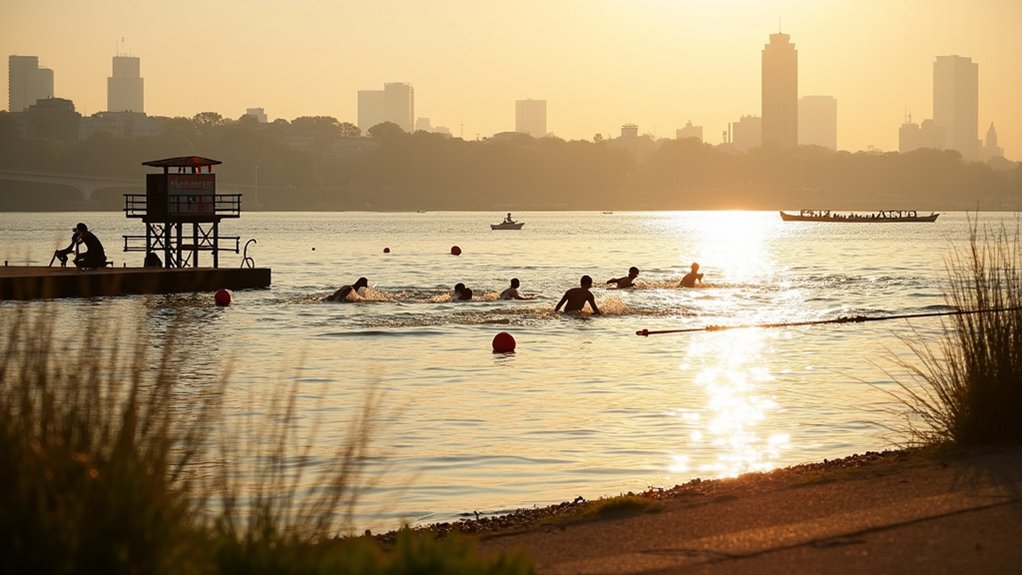
Several designated areas upriver of Putney Bridge to Teddington allow swimming under controlled conditions to boost safety. You should swim only in these designated swimming areas, staying within 10 meters of the water’s edge and avoiding the busy fairway.
Thames swimming clubs and groups, like the Teddington BlueTits, offer valuable guidance and community support. Wearing hi-vis swimming caps and buoyancy aids improves your visibility to other river users, reducing risks.
| Location | Features |
|---|---|
| Teddington | Calm waters, club support |
| Richmond | Monitored swimming zones |
| Kingston | Close to riverbank |
| Putney | Safe entry points |
| Hammersmith | Regular safety patrols |
These locations guarantee you swim safely within controlled environments managed by local organizations.
Environmental Concerns and Water Quality Issues
You should know that sewage pollution is still a problem in the River Thames, especially after heavy rain. This can pose a risk to people who swim there.
Also, the oxygen levels in the river go up and down, which affects the wildlife living in it. Sometimes, this means people have to step in to help during tough times.
On top of that, climate change is likely to make these problems worse, so we’ll probably see more issues with water quality in the future.
Sewage Pollution Challenges
Although water quality in the Thames has improved since the Victorian era, sewage pollution remains a pressing challenge.
It directly impacts both environmental health and swimmer safety. Raw sewage still enters the river during heavy rainfalls, causing contamination and health risks.
You should stay informed about these sewage pollution challenges to decide when it’s safe to swim. Key points include:
- Occasional sewage overflow incidents during storms degrade water quality in the River Thames
- August 2022 saw emergency actions due to sewage-induced oxygen depletion
- Public health risks arise from exposure to pathogens in sewage-contaminated water
- Organizations like the National Open Water Coaching Alliance offer water quality guidelines
- Real-time monitoring tools, such as the Thames Waters EDM map, help you track sewage spills
Understanding these factors helps you assess the safety of swimming in the Thames.
Oxygen Levels and Wildlife
When sewage discharges combine with high temperatures, oxygen levels in the River Thames can drop sharply, threatening aquatic life. In August 2022, this oxygen depletion required specialized boats to inject oxygen, preventing severe ecological damage.
You should understand that oxygen levels and wildlife in the Thames are closely linked. Low oxygen harms fish and other species that rely on clean water.
Despite improvements since 1957 when the river was biologically dead, fluctuations in Thames water cleanliness still occur, especially after heavy rain causes sewage overflow.
These changes impact the river’s diverse ecosystem, including fish, herons, and seals.
While cleanup efforts continue, you must recognize that maintaining stable oxygen levels is essential to preserving the river’s wildlife and overall ecological health.
Impact of Climate Change
As climate change drives higher temperatures and more extreme weather, it intensifies sewage overflow incidents in the River Thames, worsening water quality.
You should be aware that rising pollution levels in the Thames increase river bacteria and sewage risk, directly affecting your safety when swimming.
Key impacts include:
- Increased frequency of sewage overflow due to heavy rainfall and heat
- Oxygen depletion caused by organic waste, harming aquatic life
- Raised river bacteria counts after storm events
- Challenges in timely water quality monitoring amid rapid changes
- Long-term threats to ecological balance and recreational water use
Despite recent cleanup efforts, these climate-driven stressors demand continuous vigilance.
You must consider these factors carefully before deciding to swim, as water quality can fluctuate rapidly with environmental conditions.
Practical Safety Tips for Thames Swimmers
When you’re swimming in the Thames, it’s really important to make sure you’re visible. So, wear bright, noticeable gear—that way, boats and other watercraft can spot you easily.
Also, keep an eye on the water quality reports. It’s a good idea to avoid swimming right after heavy rain because the water can carry more pollutants and pose health risks.
And don’t forget to prepare for emergencies. Always let someone know your plans before you head out.
Plus, try to stick to safe, shallow areas near the shore where it’s easier to get out if you need to. Staying safe makes your swim much more enjoyable!
Visibility and Signaling
Although the River Thames presents unique challenges for swimmers, enhancing your visibility and signaling clearly to other river users greatly reduces the risk of accidents.
Prioritizing visibility and signaling is a critical open-water swimmer precaution, helping you stay safe amid river traffic.
To bolster your safety, consider these measures:
Wear bright, visible flotation devices or hi-vis swimming caps.
Stay within 10 meters of the water’s edge for safety and easier exit.
Keep your head above water to reduce ingestion of contaminated river water.
Inform a friend or local swimming group about your swim plans.
Use neon-colored floats or markers to signal your presence to boats.
Implementing these steps improves your visibility and signaling, minimizing hazards while swimming in the Thames.
Water Quality Awareness
How can you guarantee the water quality in the River Thames is safe before you swim? Developing water quality awareness is essential, especially considering how dirty the River Thames can get after heavy rainfall.
You should check the Thames Water EDM map for real-time sewage spill updates, as discharges can greatly reduce water quality. Visual cues like murky water or unusual odors also signal contamination.
Monitoring recent weather patterns helps; prolonged dry spells typically improve conditions, while rain increases risks.
To protect yourself, avoid swallowing river water and rinse with fresh water after swimming to minimize exposure to contaminants.
Emergency Preparedness
Since swimming in the River Thames involves inherent risks, you should take practical safety measures to prepare for emergencies. Adhering to open-water swimming rules UK and applying river current safety tips is essential for your safety.
Consider these precautions: Always inform someone about your swim plans and join a local swimming club for added support. Wear a hi-vis swimming cap and buoyancy aids to improve visibility and flotation.
Swim close to shore, avoiding distances over 10 meters from the bank to reduce exposure to strong currents and boats. Be mindful of cold water temperatures, which can weaken muscles and increase drowning risk.
Check local water quality reports and avoid swimming after sewage spills or contamination alerts. Following these guidelines boosts your emergency preparedness when swimming in the Thames.
Alternatives to Swimming in the River Thames
When you consider the risks of swimming in the River Thames, exploring alternatives like leisure centers and lidos offers safer options.
These controlled environments provide regulated water quality and lifeguard supervision, aligning with UK open-water safety advice.
You can also join local swimming clubs or participate in events organized by the National Open Water Coaching Alliance, which promotes structured, safe open water swims.
Moreover, platforms like the Active Thames website guide you toward safer watersports and physical activities.
To stay informed about water quality, using tools such as the Surfers Against Sewage app helps you monitor pollution levels at coastal locations.
Frequently Asked Question
What Is the History of Swimming Events in the River Thames?
You’ll find that swimming events in the River Thames date back to the 19th century, reflecting its long-standing recreational use.
Over time, races have evolved, balancing tradition with growing concerns over pollution and safety.
Today, organizations like the National Open Water Coaching Alliance promote events with strict safety and water quality standards.
Community groups, such as the Teddington BlueTits, swim year-round, showing how swimming in the Thames remains both historical and active.
Are There Any Famous Swimmers Associated With the Thames?
Imagine a Victorian-era swimmer wearing goggles and a swim cap.
That’s how notable figures like David Walliams and Olympic athlete Keri-Anne Payne stand out in Thames swimming history.
You’ll find that Walliams swam the entire river in 2006, raising over £1 million for charity.
Meanwhile, Payne competed in open water events, highlighting the Thames as a competitive swimming venue.
Environmentalist Ben Fogle also swims here, promoting river conservation efforts.
How Does the Tidal Schedule Affect Other River Activities?
The tidal schedule directly impacts your river activities by altering water flow and safety conditions.
During high tide, you’ll face stronger currents and higher water levels, affecting navigation and increasing collision risks.
Low tide exposes underwater hazards, limiting access.
To stay safe, you must plan boating or swimming around tide times.
The Port of London Authority advises you to monitor tides closely, ensuring safe and compliant use of the busy Thames waterway.
What Wildlife Might Swimmers Encounter in the Thames?
Diving into the Thames, you’ll swim alongside a living mosaic of wildlife. Expect to spot over 125 fish species like salmon, eels, and trout gliding beneath you.
Above, herons, swans, and kingfishers dance through the air. You might even glimpse seals maneuvering the currents.
Freshwater shrimps and mollusks add to this intricate underwater web. Keep in mind, though, pollution still shadows this recovering ecosystem, affecting the health of its inhabitants.
Are There Any Cultural or Community Events Involving the Thames?
Yes, you can join various cultural and community events involving the Thames.
You’ll find the Great River Race, a traditional boat race attracting international teams, and the Thames Festival, celebrating the river’s history and art with performances along the banks.
Local groups like the Teddington BlueTits organize swimming events, while environmental campaigns focus on promoting cleaner waters.
Seasonal markets, such as the London Bridge Christmas Market, also improve community interaction with the river.
Conclusion
Swimming in the River Thames is tightly regulated, with legal restrictions protecting both swimmers and the environment. Despite its appeal, the tidal Thames poses serious safety risks, including strong currents and pollution.
Only a few designated spots are safe and recommended for swimming. Importantly, water quality tests show that some areas exceed safe bacteria levels after heavy rain.
If you want to swim safely, consider these designated locations or investigate alternative swimming venues instead.