Can You Swim With Athlete’s Foot?
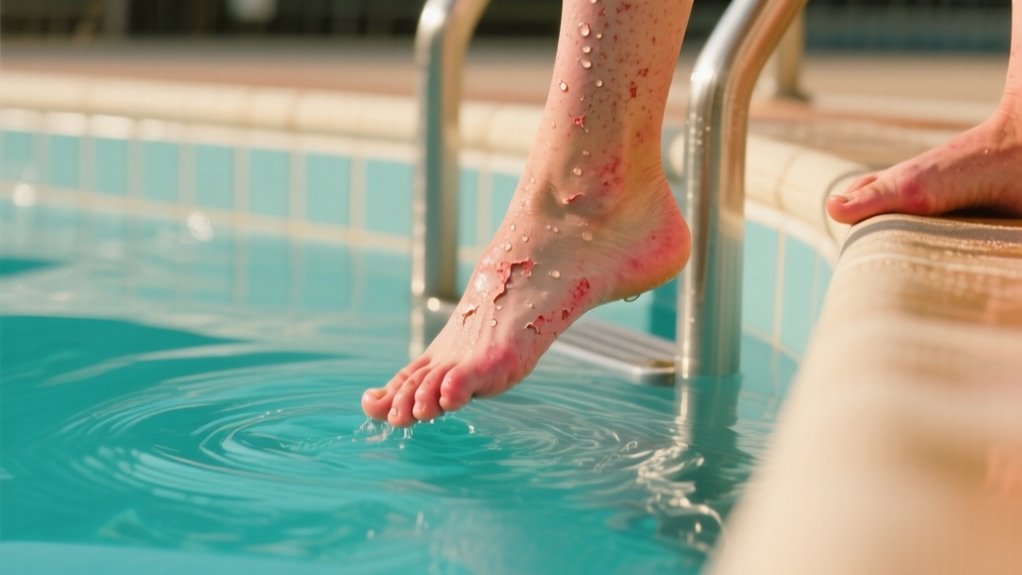
You can swim with athlete’s foot if you take precautions to avoid spreading the infection. Keep affected areas covered with waterproof plasters or rubber swim socks, and wear flip-flops in locker rooms and pool areas.
Always dry your feet thoroughly after swimming and maintain strong foot hygiene to prevent irritation and further infection. Avoid swimming if you have open sores or pus.
To understand more about managing athlete’s foot safely around pools, consider the following detailed guidance.
Key Takeaways
- Swimming with athlete’s foot is possible if the infection is mild, dry, and covered with waterproof plasters or rubber swim socks.
- Avoid swimming when there is pus, spreading redness, or open skin to prevent worsening and spreading the infection.
- Use flip-flops around pools and locker rooms to reduce the risk of spreading and catching fungal infections.
- Thoroughly dry and clean feet after swimming to prevent fungal growth and further irritation.
- Seek medical advice if symptoms persist beyond two weeks or worsen, especially before swimming again.
Understanding Athlete’s Foot
Athlete’s foot, medically known as tinea pedis, is a common fungal infection caused by dermatophytes that thrive in warm, moist environments like swimming pools and locker rooms.
You should understand that athlete’s foot transmission occurs mainly through direct contact with contaminated surfaces or infected individuals.
Walking barefoot in communal areas increases your risk of contracting the fungus. Symptoms you might notice include itching, burning, peeling skin, and redness, especially between your toes.
Because the infection is highly contagious, you need to take precautions to avoid spreading it to others or other parts of your body.
Timely treatment with antifungal creams or powders is essential to control the infection and stop further athlete’s foot transmission.
Proper hygiene and avoiding shared damp environments help reduce your risk considerably.
Causes and Risk Factors
Because fungi thrive in warm, humid environments, you’re more likely to contract athlete’s foot in places like swimming pools, locker rooms, and communal showers.
This fungal infection, known as tinea pedis, spreads easily through water exposure and contact with contaminated surfaces.
Your risk increases if you:
- Frequently expose your feet to moist, warm environments without proper drying.
- Wear tight or non-breathable footwear that traps sweat.
- Use shared towels, shoes, or walk barefoot in communal areas.
- Have cuts or skin injuries on your feet, providing an entry point for fungi.
Poor foot hygiene and prolonged moisture between your toes create ideal conditions for tinea pedis.
Understanding these causes and risk factors helps you prevent athlete’s foot effectively.
Common Symptoms of Athlete’s Foot
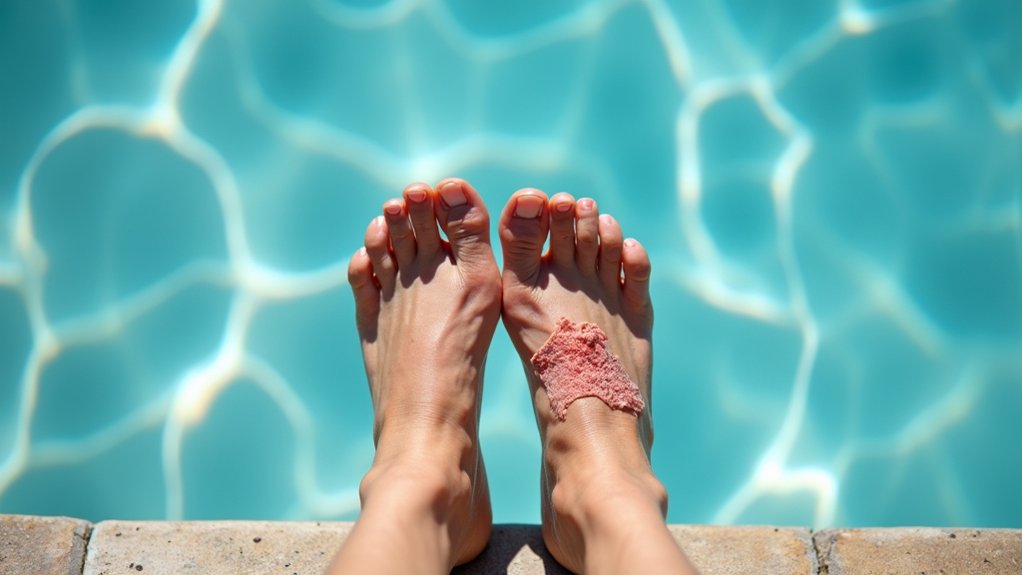
You’ll often notice intense itching and burning, especially after you take off your shoes or socks.
It’s pretty common to see skin cracks, peeling, and redness, usually between your toes.
Sometimes, those areas can even develop blisters.
Catching these symptoms early is key—it helps stop the infection from getting worse or spreading around.
Itching and Burning
One of the most noticeable signs you’ll experience with athlete’s foot is intense itching, which often worsens after you remove your shoes and socks.
Along with itching and burning, these symptoms usually appear between your toes, where the skin becomes red, scaly, and inflamed.
Understanding these signs is essential since athlete’s foot is contagious in water environments like pools and showers.
Key symptoms include:
- Persistent itching that intensifies without footwear
- Burning sensation causing discomfort and restlessness
- Redness and inflammation primarily between toes
- Increased irritation after moisture exposure
If untreated, these symptoms can lead to secondary infections.
Recognizing itching and burning early helps you manage the condition effectively and reduces the risk of spreading athlete’s foot, which is contagious in water.
Skin Cracks and Peeling
Several symptoms characterize athlete’s foot, with skin cracks and peeling being among the most common and noticeable. You’ll often find these symptoms between your toes and on the soles, where the fungal infection thrives.
The peeling skin can worsen if you scratch due to intense itching, leading to deeper cracks that may become painful. These cracks create an entry point for bacteria, increasing the risk of secondary infections if left untreated.
Since athlete’s foot is contagious in swimming pools, open cracks heighten the risk of spreading the infection to others. Prompt treatment helps prevent severe peeling and cracking, reducing complications like cellulitis.
Avoid swimming until your symptoms improve to protect both your health and that of others using communal pool facilities.
Redness and Blisters
Beyond skin cracks and peeling, redness and blisters often signal the presence of athlete’s foot. These symptoms indicate inflammation and potential infection, especially between the toes.
When you notice redness and blisters, swimming isn’t advisable because athlete’s foot is contagious in water, and moisture can worsen your condition.
Consider these points about redness and blisters:
- Red patches typically appear on the skin, marking infection severity.
- Blisters cause discomfort and risk bacterial infection if broken.
- Water exposure, especially swimming, can irritate blisters and prolong healing.
- Avoid swimming to prevent spreading athlete’s foot contagious in water to others.
Why Swimming Environments Promote Fungal Growth
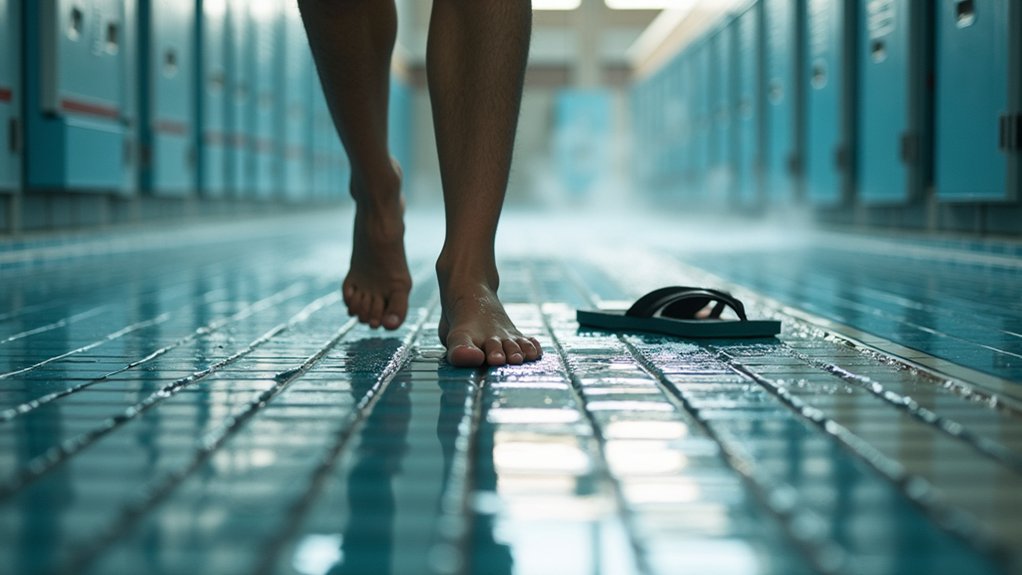
You’ll find that swimming environments, especially pools and communal showers, are warm and moist—perfect for fungal growth.
These conditions create an ideal spot for fungi to thrive. Plus, surfaces like wet floors and benches can easily get contaminated with fungal spores, which ups your chances of getting an infection.
Knowing this can help you take simple steps to protect your feet when you’re at the pool or locker room.
Warmth and Moisture
Because fungi that cause athlete’s foot thrive in warm, damp environments, swimming areas like pools and showers create ideal conditions for their growth.
If you’re wondering, “can you get athlete’s foot from a public pool?” the answer lies in how warmth and moisture support fungal survival.
Here’s why these environments promote fungal growth:
- Warm temperatures around pools accelerate fungal reproduction.
- Moisture trapped between your toes after swimming fosters fungal proliferation.
- High humidity in changing rooms keeps fungal spores viable longer.
- Prolonged water exposure can cause skin damage, allowing fungi to invade more easily.
Although chlorine reduces many pathogens, it doesn’t eliminate all fungal spores, so the warmth and moisture in these areas remain a significant risk factor for athlete’s foot.
Contaminated Surfaces
Warmth and moisture set the stage for fungal growth, but contaminated surfaces in swimming environments play a significant role in spreading athlete’s foot. Public pools, showers, and changing benches often harbor the contagious skin fungus responsible for athlete’s foot, as these areas remain moist and warm.
Walking barefoot on pool decks exposes you to fungal spores that can survive for months on damp surfaces. Pooled water around pools increases moisture between your toes, creating an ideal environment for fungi to thrive.
To reduce your risk of infection, avoid direct contact with these surfaces whenever possible and always wear protective footwear.
Facilities must prioritize regular cleaning and disinfection to minimize the spread of this contagious skin fungus in communal swimming spaces.
How Athlete’s Foot Spreads in Pools and Changing Rooms
Although pools and changing rooms seem inviting, they create ideal environments for athlete’s foot to spread rapidly. Understanding how this fungal infection transmits can help you answer how do you prevent athlete’s foot at the gym or pool.
Warm, damp areas like pool decks and showers allow fungal spores to thrive and survive for months.
Direct contact with contaminated surfaces like locker room floors and shared towels helps spread the infection.
Chlorine reduces spores but doesn’t eliminate them completely, so the risk of infection remains.
Using rubber socks or waterproof coverings on affected feet can prevent spreading the fungus to others.
When Swimming Is Not Recommended
You really shouldn’t swim if you have open wounds or any bleeding on your feet. Doing so can increase your risk of getting a bacterial infection.
And if you start noticing things like severe redness, pus, or if your symptoms just keep getting worse, it’s a good idea to stay out of the pool.
Waiting until you’ve gotten the proper treatment is the safest move. After all, protecting your health—and the health of others—means putting healing first, especially when your infection is serious or not getting better with treatment.
Open Wounds Risk
Because swimming with open cracks or bleeding skin from athlete’s foot exposes you to bacteria and communal surfaces, it greatly raises the risk of bacterial infections. This open wounds risk means you should avoid swimming until your skin fully heals. Here’s why:
- Open wounds increase susceptibility to bacterial infection, especially in shared pools.
- Signs like pus or spreading redness indicate you must stop swimming immediately.
- Water exposure irritates broken skin, prolonging recovery and worsening your condition.
- Open wounds can help spread the fungal infection to others, posing a public health concern.
Prioritizing healing over swimming speeds your recovery and reduces the chance of complications.
Avoid swimming when you have open wounds from athlete’s foot to protect yourself and others from infection risks.
Infection Severity Concerns
When your athlete’s foot shows signs of severe infection, such as open cracks, bleeding, pus, or spreading redness, you shouldn’t swim. Water exposure can worsen the condition and delay healing.
Infection severity concerns with fungal foot infection require you to prioritize treatment and hygiene over swimming activities. Water can irritate broken skin, increasing the risk of secondary bacterial infections and making symptoms worse.
If the infection is rapidly worsening or accompanied by severe pain, avoiding swimming is essential to prevent further complications. Focusing on proper medical care and keeping the foot dry supports quicker recovery.
Ignoring these signs and swimming despite infection severity concerns can prolong healing and lead to more serious health issues.
Conditions for Safe Swimming With Athlete’s Foot
Although athlete’s foot is contagious, you can swim safely if the infection is mild and there are no open wounds or bleeding. Understanding the conditions for safe swimming with athlete’s foot helps protect you and others.
Before entering the pool, make sure you follow athlete’s foot treatment to reduce fungal presence. Key conditions include:
- The infection appears as dry, scaling skin without cracks or bleeding.
- You cover the affected areas with waterproof plasters or rubber swim socks.
- You wear flip-flops around the pool and in changing areas to avoid spreading fungi.
- Avoid swimming if there’s pus, spreading redness, or significant skin damage from the infection.
Meeting these conditions minimizes irritation and transmission risks during swimming.
Protective Measures for Swimming With Athlete’s Foot
To protect yourself and others while swimming with athlete’s foot, you should always cover the affected areas with waterproof plasters or rubber swim socks.
These protective measures help prevent fungal spread and further irritation.
Always wear flip-flops in pool areas, showers, and changing rooms to minimize contact with contaminated surfaces.
Keep in mind that pool chlorine reduces fungal spores but doesn’t eliminate them entirely, so precautions remain vital.
Avoid swimming if you have open cracks or signs of bacterial infection, as this can worsen your condition.
After swimming, thoroughly dry your feet and maintain diligent foot hygiene for swimmers by applying antifungal treatments as recommended.
These steps are essential to managing symptoms and protecting both you and others.
Effective Treatment Options Before Swimming
Before you swim with athlete’s foot, addressing the infection through effective treatment is necessary to reduce symptoms and lower the risk of spreading the fungus.
Here are key effective treatment options before swimming to guarantee safety and promote healing:
- Apply over-the-counter antifungal creams, sprays, or powders consistently for several weeks.
- Maintain rigorous foot hygiene by keeping your feet clean and completely dry.
- Use protective measures like waterproof plasters or rubber swim socks during swimming to minimize exposure.
- Consult a healthcare professional if symptoms persist beyond two weeks despite treatment.
Following these steps not only helps resolve the infection but also plays an essential role in preventing reinfection of athlete’s foot.
This way, you can swim safely without worsening the condition or spreading it to others.
Natural Remedies and Their Role in Treatment
When managing athlete’s foot, incorporating natural remedies can complement traditional treatments and help alleviate symptoms.
Natural remedies for athlete’s foot like tea tree oil offer antifungal benefits, reducing itching and inflammation when applied topically.
Apple cider vinegar, diluted for foot soaks, creates an acidic environment that discourages fungal growth and soothes irritation.
Coconut oil, rich in medium-chain fatty acids, moisturizes and combats fungal infection effectively.
Consuming garlic may boost your immune response due to its antifungal and antibacterial properties, though it’s less effective topically.
While these natural remedies for athlete’s foot provide supportive care, they work best alongside prescribed antifungal medications to guarantee more thorough and effective treatment outcomes.
Always consult healthcare professionals before combining treatments.
The Importance of Foot Hygiene in Prevention
You should wash your feet daily with warm, soapy water and make sure to dry them thoroughly, especially between the toes.
This helps prevent moisture buildup, which can create the perfect environment for fungi.
On top of that, using antifungal powders or sprays can give your feet an extra layer of protection by stopping fungal growth before it starts.
Taking these simple hygiene steps is key to lowering your chances of getting athlete’s foot.
Daily Foot Cleaning
Although athlete’s foot is a common fungal infection, maintaining daily foot hygiene greatly reduces your risk of contracting it. This is especially important when frequenting places prone to swimming pool infections.
To protect your feet, follow these steps:
- Clean your feet daily with warm, soapy water to remove dirt, sweat, and fungal spores.
- Change socks regularly, choosing moisture-wicking fabrics to keep feet dry.
- Apply antifungal powders or sprays if you’re prone to infections.
- Avoid walking barefoot in communal areas to limit exposure to fungi.
Proper Drying Techniques
Maintaining clean feet is only part of preventing athlete’s foot; drying them thoroughly after swimming plays an essential role in stopping fungal growth. Proper drying techniques reduce moisture between toes, a prime fungal breeding ground.
Use a clean towel or a cool hairdryer to guarantee your feet are completely dry. Air out your feet and change into moisture-wicking socks promptly to maintain dryness and hygiene.
| Drying Method | Benefits | Tips |
|---|---|---|
| Towel drying | Removes surface moisture | Use a clean, dry towel |
| Cool hairdryer | Dries hard-to-reach areas | Avoid heat to prevent irritation |
| Air ventilation | Keeps feet dry longer | Remove shoes when possible |
| Moisture-wicking socks | Prevents sweat accumulation | Change socks regularly |
Use of Antifungal Products
Since athlete’s foot thrives in warm, moist environments, consistently applying antifungal products like creams, sprays, or powders plays an essential role in both treating and preventing the infection.
To effectively use antifungal products, follow these key steps:
- Apply the product daily as directed, usually for several weeks, to fully eradicate fungi.
- Maintain good foot hygiene by washing and thoroughly drying your feet, especially between toes.
- Use waterproof plasters or rubber swim socks to cover affected areas during swimming, preventing spread.
- Incorporate antifungal treatments as a preventive measure in communal areas to reduce reinfection risk.
Tips for Preventing Athlete’s Foot at the Pool
When you visit a public pool, taking precautions can greatly reduce your risk of contracting athlete’s foot. Preventing fungal spread involves simple yet effective habits to protect your feet from contaminated surfaces and moisture.
| Preventing Fungal Spread | Practical Tips |
|---|---|
| Wear flip-flops or water shoes | Avoid direct contact with floors |
| Towel dry feet thoroughly | Focus on spaces between toes |
| Shower before and after swim | Rinse off any fungal spores |
Also, don’t share towels or footwear. Regularly apply antifungal powder to keep fungi at bay. These steps minimize the moist, warm environment fungi need to thrive, substantially lowering your risk of infection while enjoying the pool.
Managing Athlete’s Foot During Swim Training
Although athlete’s foot can be managed during swim training, you must guarantee there are no open wounds or bacterial infections before entering the pool.
To minimize public shower fungus risks and prevent spreading the infection, follow these steps:
To reduce fungus risks in public showers and stop infection spread, follow these crucial preventive steps.
- Cover the affected foot with waterproof plasters or rubber swim socks while swimming.
- Maintain proper foot hygiene by wearing flip-flops in communal areas and thoroughly drying your feet after swimming.
- Apply antifungal creams or sprays as directed to speed up recovery before resuming training.
- Monitor your symptoms closely; if they worsen, prioritize healing over swimming to avoid complications and infection spread.
Impact of Pool Chemicals on Infected Skin
Managing athlete’s foot during swim training involves more than just hygiene and protective coverings. Understanding how pool chemicals affect infected skin is essential too.
Chlorine, the primary disinfectant in swimming pools, can irritate skin already compromised by athlete’s foot. This irritation can intensify itching and burning sensations. While chlorine helps reduce some pathogens, it doesn’t fully eliminate fungal spores. So, swimming with athlete’s foot still risks spreading the infection.
Chlorine’s drying effect can worsen skin cracks and peeling, which increases vulnerability to bacterial infections. You might notice heightened discomfort and inflammation due to this chemical exposure combined with the fungal infection.
To protect your skin, maintain strict foot hygiene and use waterproof coverings to minimize chlorine’s irritating impact when swimming with athlete’s foot.
When to Seek Professional Medical Advice
How do you know if athlete’s foot requires professional medical advice? If your symptoms persist despite self-treatment or worsen, it’s essential to consult a healthcare provider.
Knowing when to seek professional medical advice helps prevent complications and addresses concerns about whether athlete’s foot is contagious in water.
Consider these signs:
- Rash doesn’t improve after two weeks of over-the-counter antifungal use.
- You have diabetes or a weakened immune system.
- Symptoms like swelling, pus, fever, or increasing redness appear, suggesting bacterial infection.
- Severe itching or discomfort continues, indicating the need for tailored treatment.
Seeking timely medical help prevents spread, reduces infection risk, and guarantees safe swimming practices despite athlete’s foot.
Frequently Asked Question
Can Athlete’s Foot Affect Swimming Performance or Endurance?
Yes, athlete’s foot can affect your swimming performance and endurance.
The itching and burning can distract you and reduce your focus, while pain from open sores may limit your ability to push off pool walls effectively.
This discomfort might make you less willing to push yourself during training, decreasing endurance.
Moreover, visible infections can impact your confidence, further affecting performance.
Managing and treating athlete’s foot promptly helps maintain your swimming efficiency.
Are Special Socks Recommended When Swimming With Athlete’s Foot?
Yes, you should wear special swim socks when swimming with athlete’s foot.
These rubber or waterproof socks protect the infected area, reducing irritation and preventing fungal spread in communal pools.
They also help keep your feet dry, which limits fungal growth.
Combining these socks with waterproof plasters and flip-flops in pool areas guarantees you manage the infection responsibly while minimizing risks to yourself and others.
Does Athlete’s Foot Increase the Risk of Other Pool-Related Infections?
Yes, athlete’s foot does increase your risk of other pool-related infections. The damaged skin barrier from athlete’s foot lets bacteria enter more easily, raising your chances of infections like cellulitis.
Even though pools are chlorinated, pathogens can still thrive, especially where your skin is cracked or blistered.
To protect yourself, maintain good foot hygiene and treat athlete’s foot promptly before swimming in communal pools.
How Long Should I Wait After Treatment Before Resuming Swimming?
You should give yourself a gentle pause of at least 48 hours after starting antifungal treatment before hopping back into the pool.
However, it’s wiser to wait until your symptoms have fully waved goodbye, which usually takes 2 to 4 weeks.
Make sure any skin cracks or open areas have healed to avoid complications.
Wearing waterproof swim socks can help, but always check with your healthcare provider to confirm you’re ready to swim safely again.
Can Athlete’s Foot Cause Allergic Reactions in Other Swimmers?
No, athlete’s foot doesn’t cause allergic reactions in other swimmers since it’s a fungal infection, not an allergen.
However, if you have athlete’s foot, you can shed fungal spores in communal areas, increasing the risk of others getting infected.
To protect yourself and others, always practice good hygiene, like wearing flip-flops in showers and pool areas.
This helps prevent spreading the infection and keeps everyone safer.
Conclusion
So, can you swim with athlete’s foot? While it’s possible, you risk spreading the infection to others and worsening your symptoms.
Pools and locker rooms create perfect conditions for fungus to thrive, making prevention essential. Always practice good hygiene, keep your feet dry, and treat the infection promptly.
Isn’t protecting both your health and others’ worth a little extra care? If symptoms persist, don’t hesitate to seek professional medical advice.