Do Ducks Need Water to Swim In?
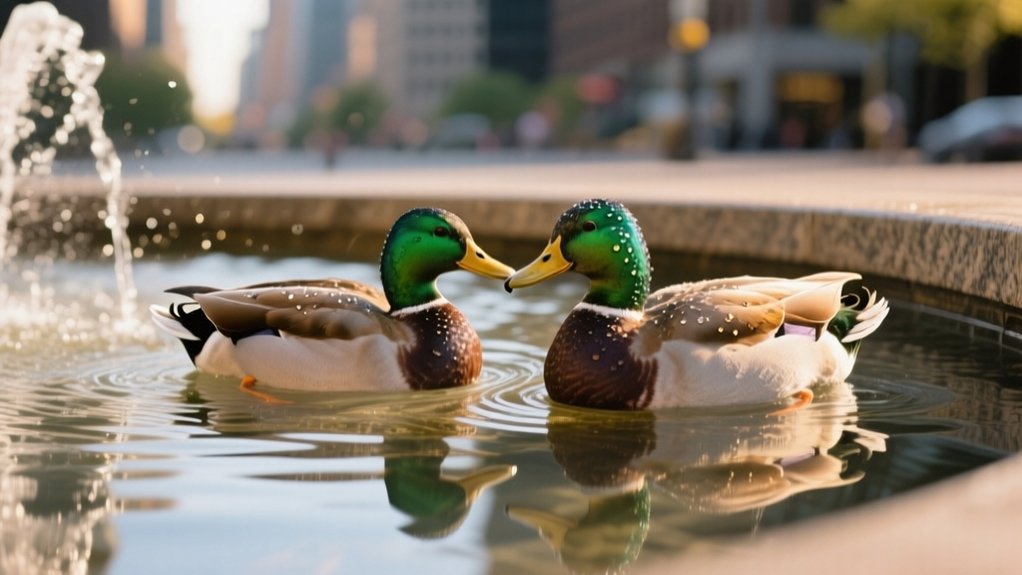
You do need to provide ducks with regular access to clean water for swimming and grooming, which supports their health and natural behaviors like cleaning their feathers and eyes. While large pools aren’t required, shallow containers such as kiddie pools or buckets work well if you keep the water fresh and change it every few days.
Young ducks need shallower water for safety. Seasonal adjustments and proper hygiene also play key roles. Understanding these details helps you meet ducks’ water needs effectively.
Understanding Ducks’ Water Needs
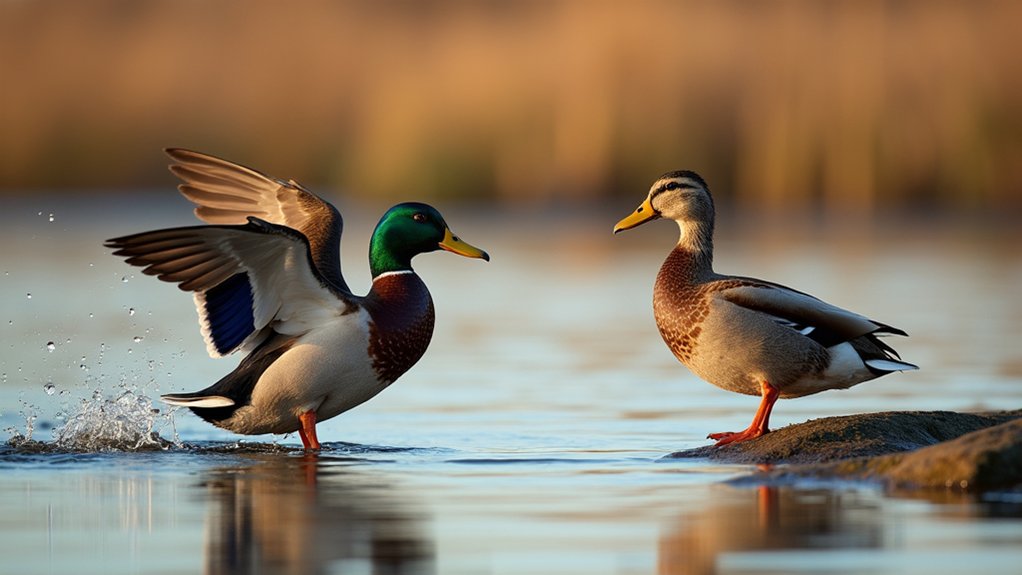
Although ducks don’t need a pond or swimming pool to stay healthy, they require regular access to water for essential functions such as grooming, drinking, and cleaning their nostrils and eyes.
Ducks need regular water access for grooming, drinking, and cleaning their nostrils and eyes.
Ducks need water sources that provide both clean drinking water and swimming water to support these behaviors. You can offer shallow containers like large buckets or kiddie pools to facilitate ducks to dunk their heads and maintain hygiene.
While ducks can swim outdoors 4-5 times weekly, daily swimming isn’t necessary for their well-being, as they adapt to periods without swimming water. For ducklings, avoid deep water to prevent chilling and waterlogging.
Regularly replacing water every 3-5 days, or when visibly dirty, guarantees clean drinking water and swimming water, critical for ducks’ health and comfort.
Alternatives to Swimming Pools for Ducks
Anyone caring for ducks can provide alternatives to traditional swimming pools that fulfill their water needs effectively. Ducks primarily need water for drinking, grooming, and bathing rather than swimming.
You don’t need swimming pools; instead, consider these practical options:
- Child’s paddling pools or shallow feeding troughs offer sufficient water depth for ducks to dunk their heads and maintain cleanliness.
- Regular buckets or laundry soap containers serve as small ponds where ducks can clean their beaks and nostrils.
- Stable water sources like dog bowls provide clean, accessible water spots for grooming purposes.
Maintaining clean water is critical. Make sure you top up water regularly and replace it every 3-5 days to meet ducks’ hygiene and hydration needs without requiring a large swimming pool.
Managing Swimming Water and Hygiene
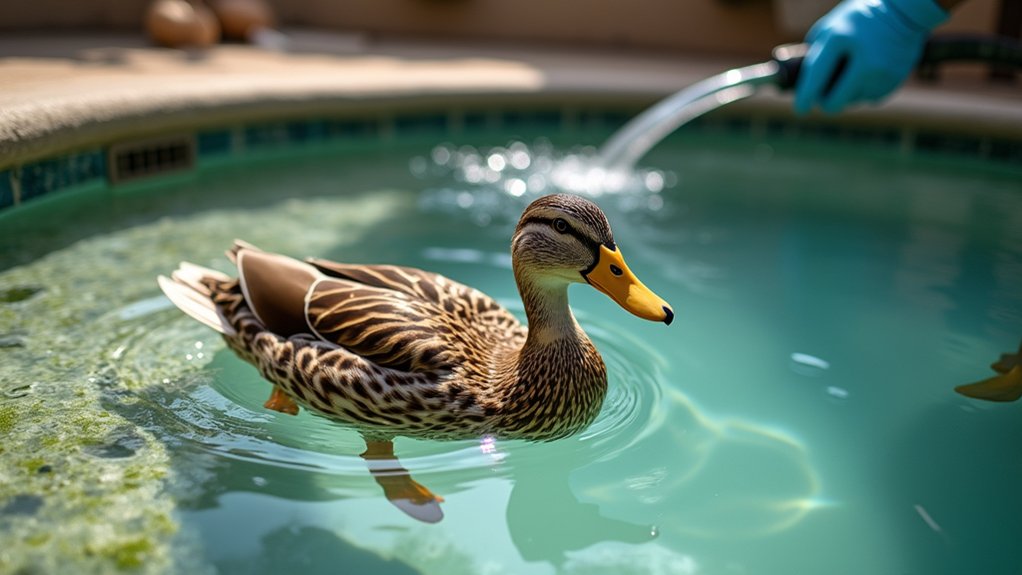
When managing swimming water for ducks, maintaining hygiene is essential to prevent health risks. Ducks need swimming water regularly, about 4-5 times a week, to support their health and natural behaviors.
Providing enough water is vital. Small kiddie pools or shallow troughs are effective because they minimize contamination and make cleaning easier. You must change the water frequently to avoid bacterial buildup that can cause illness.
Use small pools or shallow troughs and change water often to keep ducks healthy and prevent illness.
While dirty water shouldn’t remain for long, it can be repurposed for garden irrigation, promoting sustainability.
Managing swimming water also means ensuring the water depth and pool design prevent drowning risks by avoiding steep sides and allowing easy exit.
Safety Considerations for Young Waterfowl
Since young waterfowl lack waterproofing oils in their feathers during their early development, you must restrict their access to deep water to prevent drowning.
Providing controlled access to swimming in shallow, safe environments helps them build strength without risking their safety.
Implement safety measures that include offering water deep enough for grooming but shallow enough to prevent submersion hazards. Ensure frequent access to fresh water for hydration and cleaning.
Monitor young waterfowl closely during swimming sessions to intervene promptly if needed.
Additionally, allow young ducks to dry thoroughly after exposure to water to avoid chilling, and maintain clean bedding to reduce health risks.
Seasonal Care and Water Access Adjustments

Although ducks thrive with regular swimming opportunities during warmer months, you’ll need to adjust their water access as seasons change to support their health and well-being.
In warm weather, providing swimming water enough for ducks to swim every day or at least 4-5 times weekly improves feather condition and natural behaviors.
A kiddie pool offers a manageable solution, balancing play and maintenance.
However, in colder months, swimming water isn’t necessary; ducks adapt by focusing on fresh drinking water, which must be monitored to prevent freezing and dehydration.
Adjusting water access seasonally means prioritizing hydration in winter while minimizing muddy conditions caused by excess water in cooler weather.
Regular cleaning and shallow pools help maintain hygiene and comfort year-round, ensuring ducks receive appropriate care through environmental changes.
Frequently Asked Question
Can Ducks Swim in Saltwater or Only Freshwater?
You can expect ducks to swim primarily in freshwater, as their bodies aren’t designed to handle saltwater.
While some sea duck species tolerate brackish water, they still require freshwater for drinking and grooming.
Saltwater can cause dehydration and health problems, so even though their feathers repel water, that protection doesn’t extend to salt’s harmful effects.
For healthy swimming and maintenance, ducks depend on regular access to freshwater environments.
How Much Water Do Ducks Need Daily for Drinking?
How much water do you think a duck needs daily to stay healthy?
Typically, each duck requires about 1 to 2 cups of fresh, clean water every day. This amount varies based on their size and number.
You should provide water deep enough for them to dunk their heads, which helps keep their eyes and nostrils clean.
Changing the water every 3-5 days maintains hygiene and supports their well-being effectively.
Do Baby Ducks Require Swimming Water Immediately After Hatching?
No, baby ducks don’t require swimming water immediately after hatching. Their down feathers lack waterproofing oil, so swimming can lead to chilling and drowning risks.
Instead, you should provide shallow water for gentle dipping to clean their beaks and nostrils.
Introduce swimming water gradually once they’re about two weeks old, ensuring they’re better developed and can regulate their body temperature safely during swimming activities.
Always supervise closely around water.
What Types of Water Containers Are Best for Pet Ducks?
You should choose water containers that provide easy access and appropriate depth for your pet ducks. Regular buckets and laundry soap buckets work well for cleaning their nostrils.
Kiddie pools offer improved swimming opportunities but need frequent cleaning. Dog bowls are stable for drinking and splashing, while shallow rubber feed pans suit smaller breeds like call ducks.
Always clean and refill containers every 3-5 days to maintain hygiene and prevent disease.
Can Ducks Get Sick From Stagnant or Dirty Water?
Yes, ducks can get sick from stagnant or dirty water. When water isn’t clean, harmful bacteria and parasites multiply, increasing disease risks like botulism, which can be fatal.
You should regularly change and clean their water sources to prevent contaminants from building up.
Providing fresh, clean water supports their digestion and overall health, reducing illness chances and promoting better behavior and quality of life.
Conclusion
You might think ducks could survive without swimming water, but without it, their natural behaviors and health would suffer dramatically. Swimming isn’t just a pastime; it’s vital for their physical conditioning, feather maintenance, and psychological well-being.
While alternatives exist, none perfectly replicate natural water’s benefits. So, providing clean, safe water isn’t optional. It’s essential to prevent serious health issues and guarantee your ducks thrive in a way that mimics their wild, aquatic lifestyle.