How Much Does It Cost For An Inground Swimming Pool – Price Guide
You can expect to pay between $40,000 and $120,000 for an inground swimming pool. The cost depends on the material you choose, like fiberglass, concrete, or vinyl liner. Size, shape, and how complex the installation is will also affect the price.
Maintenance costs vary a lot, too. For example, fiberglass pools might cost around $500 a year to maintain, while concrete pools can go over $4,000 annually.
Most standard installation packages cover the basics, but extras will add up quickly. Knowing these factors will help you budget smartly for both the upfront and ongoing expenses. Keep reading to find out more about saving money and how different choices impact the value.
What Affects Inground Pool Costs?
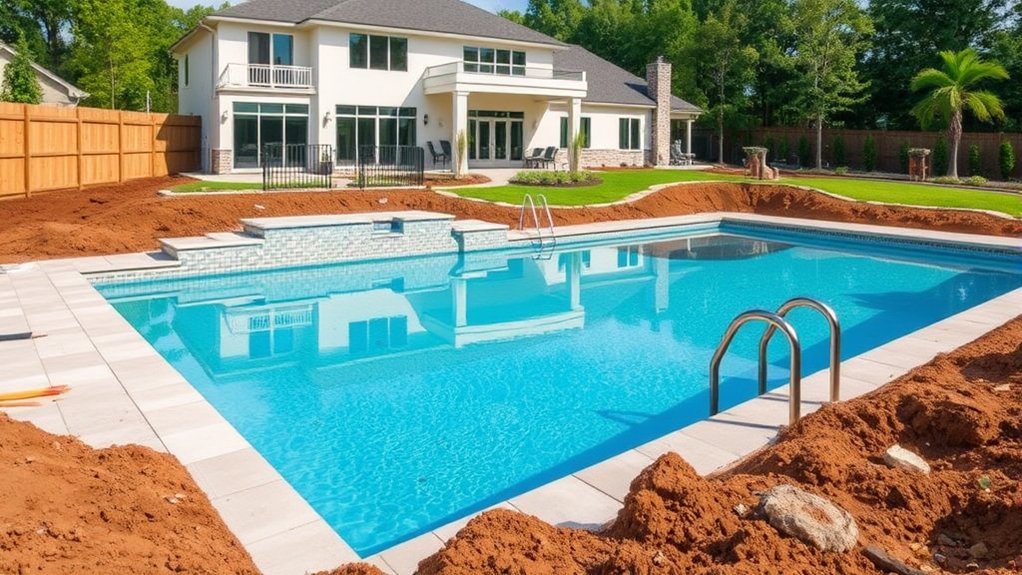
Because several factors directly influence the total expense, understanding what affects inground pool costs is vital before making decisions.
Knowing the key factors affecting inground pool costs ensures smarter decisions and better budgeting.
The choice of pool material plays a critical role in installation costs. Fiberglass pools generally incur an average cost ranging from $55,000 to $100,000, while concrete pools are higher, between $65,000 and $120,000.
Pool size and shape further impact these costs, with prices spanning $50 to $250 per square foot depending on complexity. Excavation and safety features also add to initial expenses.
Furthermore, ongoing costs, particularly maintenance costs, differ markedly. Fiberglass pools typically require $500 to $1,500 annually, whereas concrete pools demand considerably more, around $2,700 to $4,000 each year.
Accurately gauging these variables guarantees informed budgeting and long-term financial planning.
Installation Costs by Pool Type
Installation costs for inground pools vary considerably depending on the pool type you choose, each presenting distinct pricing and maintenance profiles.
Fiberglass pools typically involve in-ground pool costs ranging from $55,000 to $100,000, offering lower annual maintenance between $500 and $1,500.
Vinyl liner pools present lower installation costs, averaging $40,000 to $75,000, but their total cost increases due to liner replacement every 5 to 9 years, with annual maintenance of $1,100 to $1,700.
So, while you might save upfront, keep in mind those recurring expenses.
Concrete pools, or gunite, require the highest installation costs, $65,000 to $120,000 on average, and incur significant maintenance expenses, $2,700 to $4,000 yearly, including resurfacing every 10 to 15 years.
Understanding these average costs helps you anticipate both upfront and ongoing expenses tied to each pool type.
That way, you can make a well-informed investment decision.
How Pool Size and Shape Affect Prices
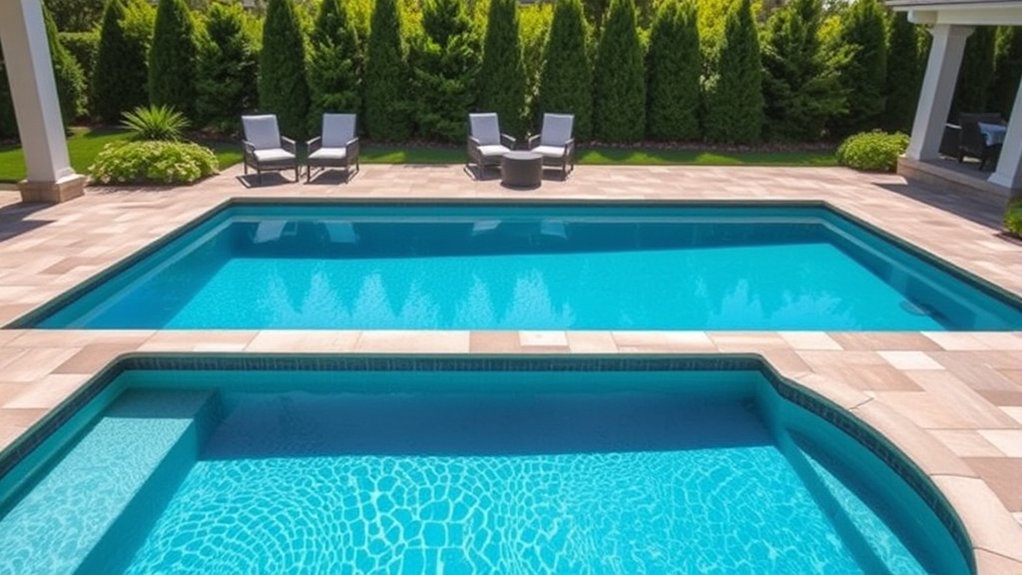
You’ll find that pool size directly impacts your total cost.
Larger pools need more materials and labor, so they typically range from $90 to $250 per square foot.
On top of that, custom shapes tend to cost more because they require more complex excavation and higher installation effort.
Knowing how these factors work together can really help you budget accurately—not just for the initial build but also for ongoing maintenance.
Size Impact On Cost
When determining the cost of an inground swimming pool, size plays an essential role in shaping the final price. The average cost per square foot ranges from $90 to $250, directly impacting your overall cost.
Smaller pools, like a 10×10 ft. vinyl option, start around $17,500, whereas a 15×30 ft. pool typically costs $39,400.
Larger sizes demand more materials and greatly increase labor expenses, which can represent 25% to 50% of the total installation costs. Different pool types, such as vinyl versus concrete, also influence size-related costs.
As size increases, the complexity of excavation and structural requirements adds to your installation expenses.
Shape Influences Pricing
Three key factors, pool size, shape, and depth, directly influence your inground pool’s pricing.
The shape really affects both installation costs and long-term expenses.
Standard pool sizes like rectangular designs usually cost less because construction is straightforward. Custom designs, including freeform shapes, need more complex excavation and specialized materials. This means higher labor and material costs.
Also, deeper pools require more water and chemicals, which raises maintenance expenses.
Here are some shape-related cost influencers to keep in mind:
- Rectangular pools: simpler installation, lower costs
- Freeform or custom shapes: complex excavation, higher labor fees
- Larger or irregular shapes: increased materials, prolonged build time
What’s Included in Pool Installation Packages
When you’re checking out inground pool installation packages, you’ll usually see the basics covered—like the pool shell, delivery, and the essential equipment.
If you go for a turn-key package, it often includes things like project management, permits, and site preparation too.
That said, extras such as patios or fencing typically aren’t part of the standard deal and usually cost extra.
Knowing what’s included and what’s not can really help you budget better and avoid surprises when it comes to upgrades.
Standard Installation Components
A standard inground pool installation package typically includes the pool shell, essential equipment, delivery, and basic site preparation.
When budgeting, you need to understand what this standard installation covers to manage installation costs effectively and avoid unexpected costs.
This package usually excludes additional features such as patios or fencing. These extras can greatly raise the final price depending on the complexity of your design.
Standard installation components generally include:
- Excavation and grading to prepare the site
- Installation of the pool shell with structural supports
- Delivery and setup of filtration and circulation equipment
Turn-Key Package Details
Turn-key pool installation packages streamline the entire process by bundling essential services such as project management, permit acquisition, and water filling into a single offering.
When evaluating the cost to install, you’ll find turn-key packages vary by pool type.
For fiberglass pools, basic packages include the shell, delivery, and essential equipment.
Concrete pools start around $85,000, with turn-key options ranging from $95,000 to $225,000 depending on complexity.
Vinyl pools typically fall between $45,000 and $100,000 for full-package installations.
These packages cover all necessary components, ensuring a finished project without surprises.
However, additional features like patios or fencing usually aren’t included and should be factored separately in your budgeting.
Understanding these inclusions helps you accurately plan your investment and avoid unexpected expenses.
Additional Upgrade Costs
Although inground pool installation packages cover essential components like the pool shell, delivery, and basic equipment, you’ll need to budget separately for popular upgrades such as lighting, water features, and automation systems.
These additional upgrade costs can greatly impact the total pool installation costs because of installation complexity and specialized materials.
So, it’s important to clarify what’s included to avoid surprises affecting the cost of your pool.
Think about how added features influence long-term costs and whether financing options accommodate these enhancements.
Common upgrades include:
- Integrated LED lighting for ambiance and safety
- Custom water features like fountains or waterfalls
- Automated control systems for filtration and temperature
Understanding these variables guarantees you accurately estimate your project budget while optimizing both function and aesthetics.
Maintenance and Ownership Costs to Budget For
When budgeting for an inground swimming pool, you’ll need to account for ongoing maintenance and ownership costs that vary considerably by pool type and usage.
Annual maintenance costs can range from $500 to $4,000, with fiberglass pools being the most affordable and concrete pools demanding higher expenses.
Annual maintenance varies widely, with fiberglass pools costing less and concrete pools requiring more upkeep.
Vinyl liner pools require liner replacement every 5 to 9 years, which is a significant long-term cost. Concrete pools face resurfacing needs every 10 to 15 years, adding to your expenses.
Cleaning and repairs, including seasonal opening and closing, typically cost $50 to $100 per hour and $200 to $300 per season.
Furthermore, insurance and property taxes might increase due to the pool’s classification as an “attractive nuisance.” These costs can vary, so factor all into your long-term value assessment to avoid surprises.
It’s always better to plan ahead when it comes to pool ownership.
Why Hiring a Professional Installer Saves Money
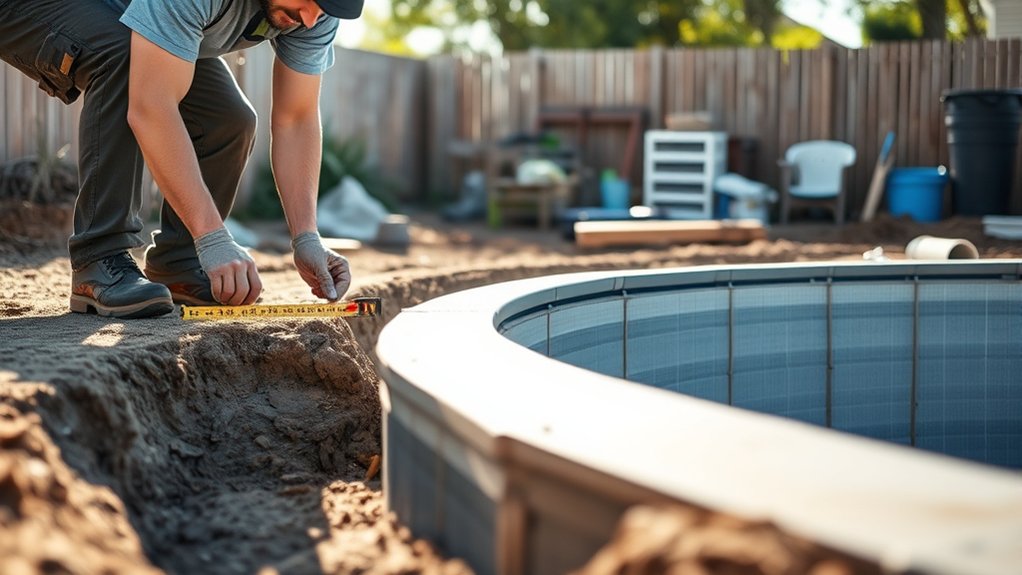
Managing ongoing maintenance and ownership costs effectively starts with a properly installed pool. Hiring a professional installer reduces costly errors homeowners make, such as incorrect excavation or structural flaws. These mistakes can inflate pool prices with expensive repairs.
Professionals guarantee adherence to local building codes, which helps prevent fines and legal issues. They also use specialized equipment and techniques for efficient installation. This not only optimizes your Cost to Build but also saves on labor expenses.
Reputable installers provide warranties and insurance, which safeguard your investment and minimize future repair costs.
Consider how a professional installer:
- Assesses site conditions precisely, selecting appropriate materials and designs
- Navigates complex local building regulations seamlessly
- Offers thorough warranties and insurance coverage
All these factors contribute greatly to controlling home improvement expenses and preserving the long-term value of your inground pool.
Practical Tips to Lower Pool Installation Costs
To lower your pool installation costs effectively, focus on strategic decisions during the planning phase that directly impact your budget without compromising quality. Opt for a smaller pool size to save $90 to $250 per square foot. Choosing a vinyl liner pool will give you lower initial costs, but keep in mind you’ll need to replace the liner every 5 to 9 years.
Try to minimize extra features like waterfalls or slides since those can add thousands to the total cost. Also, look into financing options such as home equity loans to help manage upfront expenses with lower interest rates. And if you’re up for it, doing your own pool maintenance can save you at least $1,000 every year.
| Practical Tip | Cost Impact |
|---|---|
| Smaller pool size | Saves $90–$250 per sq. ft. |
| Vinyl liner pool | Lower upfront cost, periodic liner replacement |
| Minimize features | Cuts thousands from installation |
| DIY maintenance | Saves $1,000+ annually |
| Financing options | Lowers upfront financial burden |
How an Inground Pool Impacts Your Home’s Value
Balancing installation costs with long-term benefits is key when considering an inground pool. While the inground pool might cost between $44,499 and $87,349, this investment can boost your home’s resale value by approximately 7%.
Adhering to local building codes guarantees safety and avoids costly fines, which can positively impact the final price. You might even leverage home equity loans to finance the project efficiently.
Pools attract buyers by enhancing outdoor living spaces, making your property more appealing. Think about how a durable, well-maintained pool can become a focal point for family recreation.
Also, enhanced curb appeal with professional landscaping around the pool adds to the attraction. Plus, increased market demand in warmer climates can boost property value even more.
Keeping these factors in mind helps you maximize returns while managing costs effectively.
Frequently Asked Questions
How Long Does It Typically Take to Build an Inground Pool?
You’ll typically face a pool construction timeline of 8 to 12 weeks, but soil conditions and weather impact can cause project delays. Your contractor selection is essential to managing these factors efficiently.
Design considerations also influence timing, especially for complex shapes or features.
Proper maintenance planning should start early to guarantee longevity. Expect excavation to take 1-2 weeks.
Fiberglass pools install faster, while concrete pools require longer curing times.
Are There Financing Options Available for Pool Installations?
Though it might feel like negotiating a treaty in the Roman Senate, you do have financing options for pool installations.
You can explore pool loans with competitive interest rates and manageable monthly payments. Lenders typically require credit scores between 600 and 670, plus a down payment.
Using home equity lines of credit, you can cover installation costs efficiently.
Compare financing options carefully to guarantee terms suit your financial profile and project scope. It’s worth taking the time to find a plan that works best for you.
What Permits Are Required Before Installing an Inground Pool?
You’ll need to secure pool installation permits that comply with local regulations before starting.
Check zoning laws to confirm setbacks and property line requirements. Prepare for safety inspections related to fencing and covers.
Also, address environmental considerations like drainage or protected areas. It’s a good idea to consult homeowner associations for any additional guidelines.
Don’t forget to notify utility companies to avoid damaging underground lines.
Getting early coordination with authorities guarantees compliance and helps prevent costly delays or fines during your inground pool project.
Taking these steps upfront makes the whole process smoother and less stressful.
Can I Customize the Pool With Features Like Lighting or Waterfalls?
Imagine adding LED pool lighting and a cascading waterfall to your custom-shaped pool. These features not only elevate the aesthetics but also boost energy efficiency.
However, keep in mind they can increase maintenance costs.
You can definitely customize your pool with lighting, waterfall features, and landscaping options. These choices align well with current design trends.
It’s best to plan these features during the initial design phase. This way, you can integrate systems seamlessly and avoid costly retrofits later on.
Thoughtful customization enhances your pool’s appeal and long-term value.
Plus, it helps you manage operational expenses more effectively.
How Does Climate Affect the Choice of Pool Materials?
You should consider climate carefully since it directly impacts pool durability and maintenance requirements.
Fiberglass handles temperature effects well, offering superior material insulation and resisting cracking in extreme heat or cold.
Concrete pools suit cooler regions due to their strength but need more upkeep under intense UV exposure.
Vinyl liners degrade faster with seasonal usage in harsh climates, increasing costs.
Regional preferences often reflect these factors, influencing your aesthetic choices to guarantee long-term satisfaction.
Conclusion
Now that you understand the key factors influencing inground pool costs, you might wonder what’s the real price tag for your dream oasis? Don’t rush. Each choice, from size to materials, can dramatically shift your budget.
Consider installation, maintenance, and long-term value carefully. With professional guidance, you’ll avoid costly mistakes and maximize your investment.
Ready to plunge in? The true cost reveals itself only when you weigh every detail with precision.