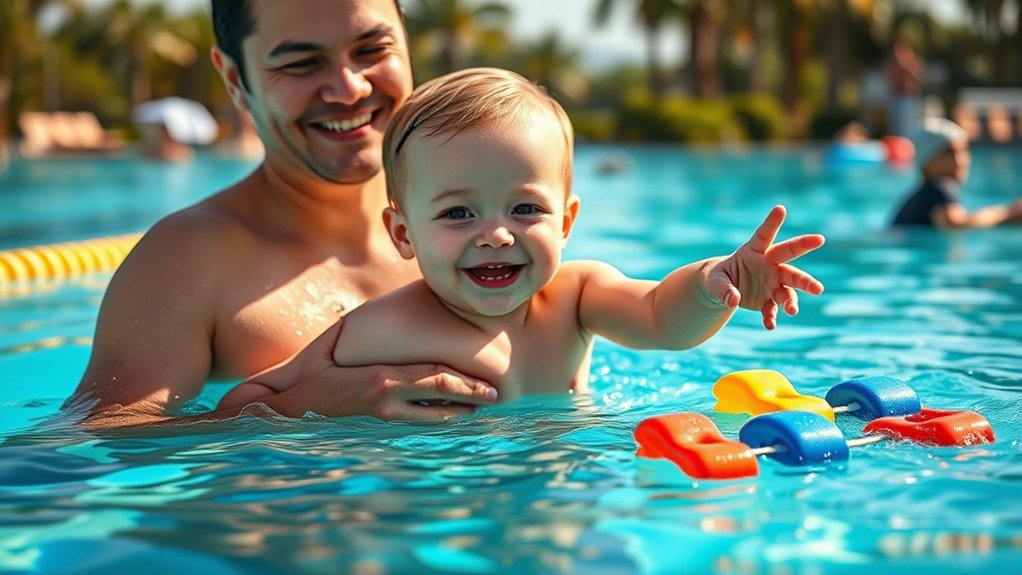
How To Teach A Child To Swim Quickly – Effective Methods
To teach your child to swim quickly, start lessons early to build water confidence and guarantee safety. Create a fun, engaging environment with playful activities and games.
Focus on foundational skills like bubble blowing and floating, and establish a routine with consistent practice. Set achievable goals to keep your child motivated and celebrate their progress.
Encourage resilience by normalizing challenges in learning. Keep going, and you’ll discover even more effective techniques to enhance your child’s swimming journey.
Start Early to Build Water Confidence With Swimming Lessons
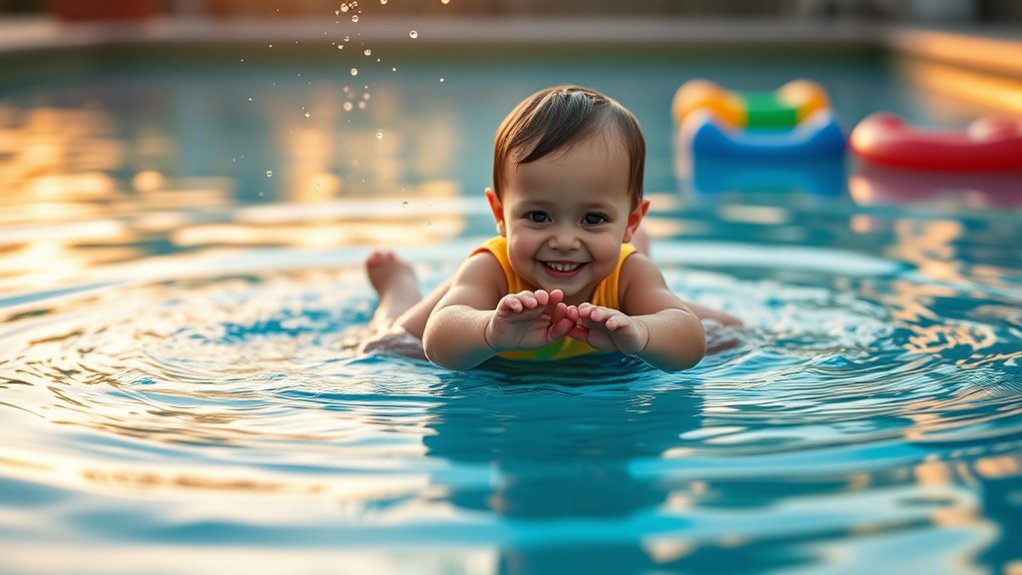
When you start your child in swimming lessons as early as six months, you’re not just teaching them to float. You’re fostering their comfort in the water and enhancing their safety awareness.
Early exposure to water boosts water confidence in young children, making them more enthusiastic to explore. Group lessons offer valuable social interaction, helping them build teamwork skills as they learn alongside peers.
Early water exposure enhances confidence and enthusiasm in children while fostering teamwork through engaging group lessons.
Plus, consistent practice helps develop essential motor skills, improving their coordination and balance. By familiarizing them with water early on, you greatly reduce any fear they might have.
This solid foundation sets the stage for their future swimming abilities while instilling a lifelong love for the water.
Start early, and watch your child’s confidence soar!
Create a Fun and Engaging Learning Environment for Kids
Building on the early foundation of water confidence, creating a fun and engaging learning environment can make all the difference in your child’s swimming journey.
Incorporate playful activities during lessons to foster enthusiasm and ease.
Here are three effective strategies:
- Games and Challenges: Use playful games like counting bubbles while your child blows them. This helps reinforce breathing techniques in a stress-free way.
- Celebrate Milestones: Recognize achievements, such as retrieving toys from the water, to boost confidence and motivation.
- Laughter and Joy: Emphasize laughter during practice. It helps reduce anxiety and makes learning swimming skills enjoyable.
Incorporate Foundational Skills for Swimming Mastery
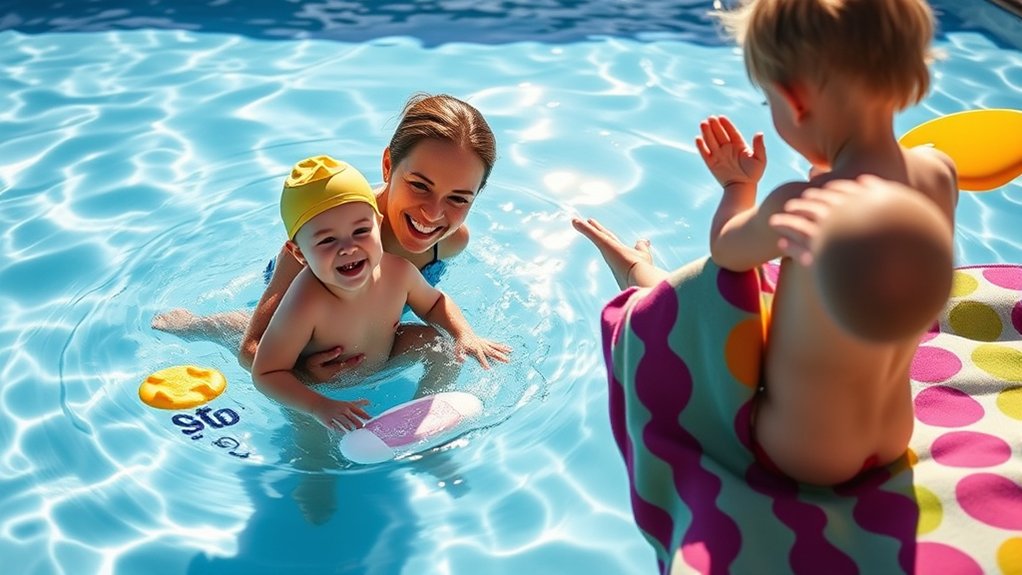
Incorporating foundational skills early on is essential for your child’s swimming success. By focusing on bubble blowing, face wetting, and kicking, you’ll establish comfort in the water.
Introduce arm pulls through playful activities to emphasize smooth movements. Teaching floating techniques like back floating and front gliding helps kids grasp buoyancy and balance.
| Skill | Description | Fun Activity |
|---|---|---|
| Bubble Blowing | Simple technique for comfort | Blow bubbles together |
| Arm Pulls | Essential for effective swimming | Splash with toys |
| Floating | Builds buoyancy awareness | Float on noodles |
Gradually increase challenges, like retrieving submerged toys, to boost confidence. These foundational skills are key to helping your child learn how to swim and understand water safety.
Consistent Practice: The Key to Retention of Skills
Consistent practice is really important for your child’s swimming success and confidence. When you set up structured lesson schedules and encourage them to practice skills often, it helps them remember what they’ve learned.
And don’t forget, practicing outside of formal classes is just as important. It’s a great way to keep their skills sharp and make your child feel more comfortable in the water.
Structured Lesson Schedules
Establishing a structured lesson schedule is essential for helping your child retain swimming skills effectively. Aim for two to three swim lessons each week to enhance muscle memory and coordination.
Here’s how to create a successful schedule:
- Set Consistent Days: Choose specific days for lessons to build a routine.
- Track Progress: Maintain a log of skills learned and improvements made, helping both you and your child stay motivated.
- Include Practice Time: Dedicate time outside of lessons for additional practice, reinforcing skills and techniques learned.
Frequent Skill Reinforcement
To really help your child master swimming, frequent skill reinforcement is key. Consistent practice solidifies their skills retention, helping children learn critical techniques like kicking and arm pulls.
Aim for lessons two to three times a week; this structured routine accelerates their progress and builds muscle memory. With each session, your child gains confidence as they practice these essential skills repeatedly.
It’s important to commit to a year-round swimming schedule to maintain their water confidence and prevent any skill regression. The more they swim, the better they’ll become, leading to a sense of accomplishment and mastery.
Practicing Outside Classes
Practicing outside of formal classes is essential for your child’s swimming development. To help your child learn and retain skills, aim for regular practice. Here are some tips to enhance their progress:
- Set a Routine: Try to engage in swimming activities two to three times a week. Being consistent really helps reinforce what they’ve learned.
- Incorporate Fun: Make practice enjoyable by adding games or fun challenges in the water. This keeps their interest alive and makes learning feel like play.
- Review Techniques: Encourage your child to focus on specific skills from their lessons. This helps them sharpen their technique and build muscle memory.
Motivate Your Child With Realistic Goals
To keep your child motivated, try setting short-term goals like mastering floating or swimming a short distance.
When they hit these small milestones, celebrate it! It really boosts their confidence and makes learning feel rewarding.
Plus, get them involved in setting these goals—it helps them feel like they’ve ownership over their progress.
Set Short-Term Objectives
Setting short-term objectives can be a game changer in your child’s swimming journey. By focusing on achievable goals, you can boost their confidence and motivation.
Here are three ways to set short-term objectives effectively:
- Identify Personalized Goals: Tailor targets like completing a lap or mastering floating based on your child’s current skills.
- Discuss Goals Regularly: Engage in conversations about swim objectives to keep your child focused and motivated.
- Create Incremental Challenges: Use short-term objectives as stepping stones toward more significant aspirations, like swimming independently.
Celebrate Small Achievements
Recognizing and celebrating small achievements can make a significant difference in your child’s swimming experience. When your child masters bubble blowing or successfully kicks, give them praise. Celebrating small achievements boosts their confidence and motivates them to keep learning.
Set achievable short-term goals like completing a lap or floating independently. This way, your child has clear milestones to aim for, keeping them engaged and excited about their progress.
Incorporate positive reinforcement through verbal praise or small rewards. This enhances their willingness to take on new challenges and fosters a love for swimming.
Find the Right Instructor for Effective Learning
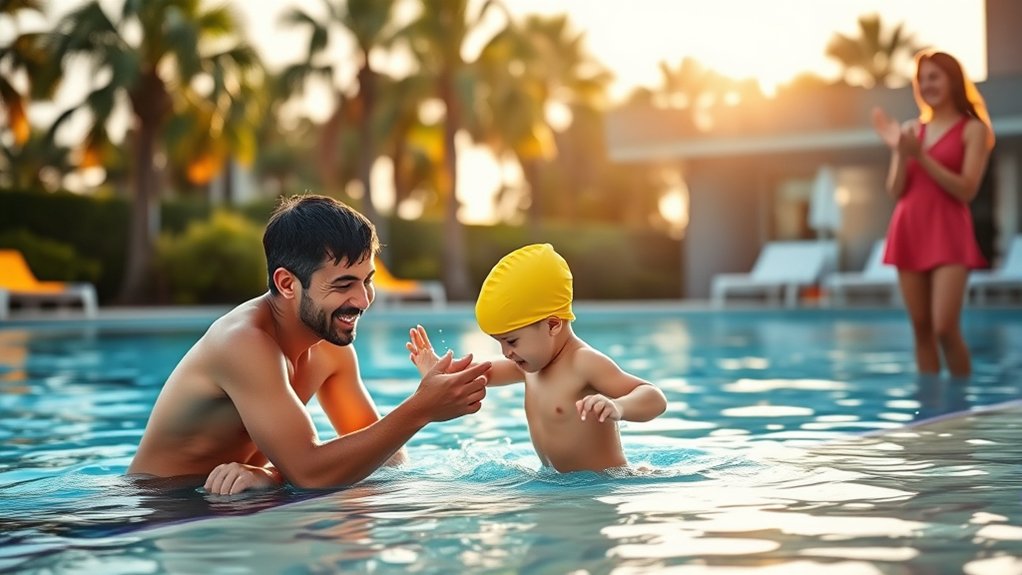
Finding the right instructor can make all the difference in your child’s swimming journey, as a skilled teacher boosts both confidence and ability.
When selecting an instructor, consider the following important factors:
- Qualifications: Verify they hold certifications from recognized swimming organizations. This shows their commitment to high standards and water safety.
- Experience: Choose instructors with a solid background in teaching kids. Their experience can greatly enhance your child’s learning experience.
- Engaging Methods: Look for instructors who provide fun, engaging lessons. Enjoyment is key to keeping your child motivated and enthusiastic to learn.
Building Perseverance Through Challenges in Swimming
While swimming can present various challenges, embracing these obstacles is essential for building your child’s perseverance. Celebrate small milestones, like mastering floating or completing a lap, to boost their morale.
Normalize challenges and setbacks, helping your child understand that struggling is a natural part of learning.
Embrace challenges and setbacks; they are vital to your child’s learning journey and growth.
Create a supportive environment filled with positive reinforcement during lessons, which increases their willingness to tackle difficult skills and overcome fears.
Set achievable, short-term goals, such as retrieving a toy from the shallow end, giving them tangible objectives that motivate persistence.
Consistent encouragement from you and their instructor reinforces the idea that perseverance leads to improvement, ultimately enhancing your child’s confidence in the water.
Emphasize the Importance of Water Safety for Kids
Water safety is an essential skill every child should learn, as it can be the difference between life and death.
When helping your child learn to swim, prioritize their safety by focusing on these key points:
- Start Early: Children aged 1 to 4 are at the highest risk of drowning, so beginning lessons early is vital.
- Involvement Matters: Parents who swim improve their child’s chances of learning by 87%. Get involved and show them the ropes.
- Highlight the Risks: Understanding that drownings are a leading cause of accidental death reinforces the need for swimming skills.
Frequently Asked Questions
What Age Is Best to Start Swimming Lessons for Children?
The best age to start swimming lessons for children is around six months. Early exposure to water promotes swim readiness and enhances developmental milestones, like motor skills and coordination.
It’s essential that you participate alongside your child, as your involvement fosters comfort and safety awareness.
The sooner you introduce them to swimming, the easier it’ll be for them to form a strong connection to water, paving the way for their swimming journey.
How Can I Help My Child Overcome Fear of Water?
To help your child overcome their fear of water, think of it like introducing a puppy to its first bath.
Start with water play in shallow areas, allowing gradual exposure to build comfort.
Use positive reinforcement to celebrate each small victory, like splashing or floating.
Incorporate fun activities like bubble blowing to make the experience enjoyable.
With your support and gentle encouragement, your child will feel more confident and ready to embrace the water.
What Safety Equipment Should My Child Use While Learning?
While your child learns to swim, guarantee they use essential safety equipment like properly fitted flotation devices and swim goggles.
Flotation devices enhance buoyancy and security, while swim goggles protect their eyes and boost confidence.
Always enforce safety rules, like never letting them swim alone and keeping a watchful eye.
Equip your child with emergency tools, like a whistle, to guarantee they can signal for help if needed.
Making safety a priority keeps learning fun and secure!
How Can I Reinforce Skills Between Lessons at Home?
To reinforce skills between lessons at home, engage your child with fun pool games and water play.
Incorporate skill drills during these activities, like kicking or floating, to make practice enjoyable.
Use toys for retrieval games to enhance their confidence and comfort in the water.
Celebrate their progress, no matter how small, and keep the atmosphere light and encouraging.
Regular practice will help solidify what they’ve learned and boost their enthusiasm for swimming!
When Should I Consider Private Lessons for My Child?
You should consider private lessons when your child shows anxiety around water, needs personalized attention, or has specific learning goals.
Assess their readiness levels and identify whether they benefit more from one-on-one instruction.
Choosing the right instructor can make a significant impact, so look for someone experienced with children’s unique needs.
The benefits of private lessons include tailored guidance that helps build confidence and accelerates skill acquisition in a supportive environment.
Conclusion
With the right approach, you can teach your child to swim quickly and confidently. Remember, it’s all about building that water confidence, making learning fun, and practicing consistently.
As you set achievable goals and choose the right instructor, you’re not just teaching them to swim; you’re giving them an essential life skill.
So, aren’t you excited to see your child splashing around with joy and confidence in the water? Let’s jump in!