Can I Teach My Child To Swim – Parent Guide And Tips
Absolutely, you can teach your child to swim! Start with safety by supervising them at all times and using U.S. Coast Guard-approved life jackets in deep water.
Introduce water play as early as six months, focusing on fun and comfort. As they grow, consider formal lessons around age four.
Practicing floating, kicking, and breath control are key skills to master. With the right approach, your child will gain confidence and become water-safe. Discover more tips on making the journey enjoyable!
Essential Swimming Safety Tips
When it comes to swimming safety, keeping children safe around water is essential; just a moment of inattention can lead to serious accidents.
Always prioritize adult supervision to maintain constant attention, minimizing distractions.
Prioritize constant adult supervision to ensure safety around water, minimizing distractions for a secure swimming environment.
Equip younger children with U.S. Coast Guard-approved life jackets, especially in deep water or natural bodies.
Secure pool areas by ensuring gates close and lock, preventing unsupervised access.
Teach children crucial water safety tips, like never swimming alone and understanding pool rules.
Encourage them to learn to swim through swim lessons for children, emphasizing patience and progress.
Regularly review safety procedures, like rolling onto their backs or treading water in emergencies.
With these strategies, you’re well on your way to drowning prevention and a safer swimming experience.
Understanding the Right Age to Start Swimming Lessons
Knowing when to start swim lessons for your child is really important for both safety and skill development.
The American Academy of Pediatrics actually recommends beginning water acclimation as early as age 1.
Then, around age 4, kids can usually start formal swim lessons.
Of course, it also depends on your child’s emotional maturity and how comfortable they feel in the water.
These factors play a big role in deciding if they’re ready to dive in.
Recommended Starting Ages
Starting your child on swimming lessons at the right age can play an essential role in their safety around water. The recommended starting ages for swim lessons can vary, but here are some key points to reflect on:
- Ages 1-3: Focus on water acclimation and comfort through playful activities, not formal swim instruction.
- Age 4: Children typically begin to learn basic water survival skills, vital for drowning protection, such as floating and treading water.
- Ages 4-5: This is the ideal time for consistent swim lessons, helping your child develop essential skills like breath control and safe exit strategies.
Factors Influencing Readiness
As you consider when your child is ready for swimming lessons, it’s crucial to recognize that individual factors can influence their preparedness. The American Academy of Pediatrics recommends starting swim lessons at age 1 for drowning protection, but most children are better suited for formal lessons by age 4.
Assess your child’s developmental abilities, emotional maturity, and comfort in the water. While infants can enjoy parent-child water play classes, lessons should focus on vital skills like floating and treading water from ages 4 to 5.
Regular swim lessons foster mastery of swimming skills and enhance safety.
Finally, make sure any program you choose emphasizes water safety and survival skills for effective drowning prevention.
How Can You Introduce Water Play for Safety and Comfort?
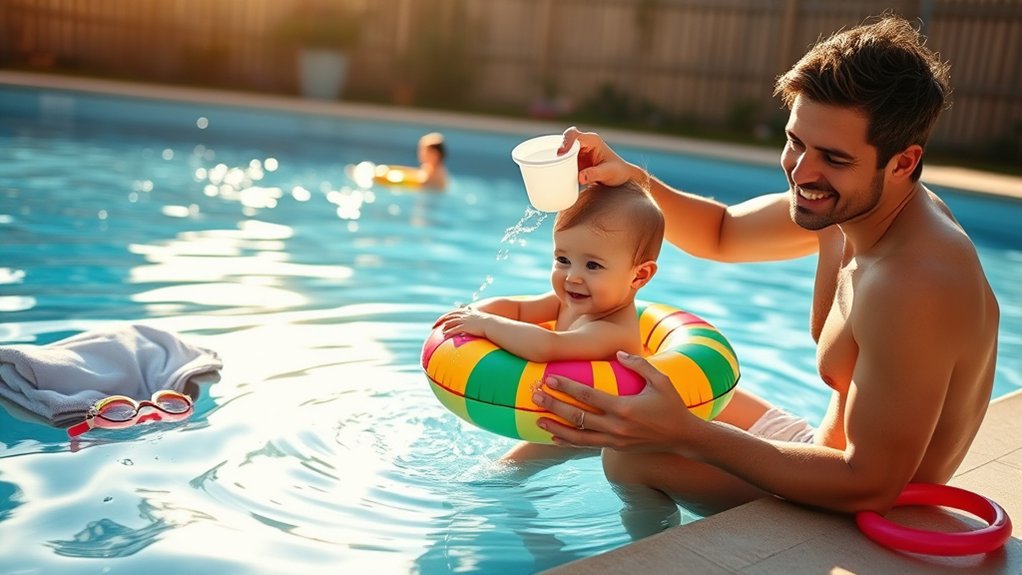
Introducing your child to water play can be a delightful way to foster safety and comfort around water early on.
Begin this journey as early as 6 months with fun activities that encourage splashing and gentle play.
Here are three ways to introduce water play for comfort and safety:
- For Infants: Focus on splashing games to build familiarity without submerging them.
- For Toddlers: Engage them in activities like reaching for floating toys or blowing bubbles, which promote movement.
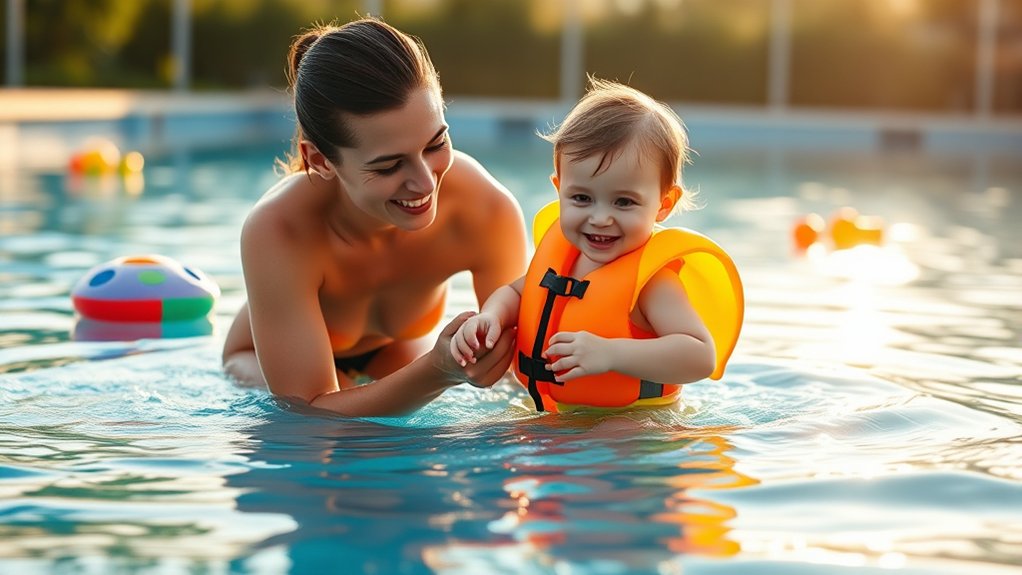
- Supervision & Gear: Always supervise closely and use U.S. Coast Guard-approved life jackets for younger kids.
Regular exposure to water, about twice a week, boosts confidence, making future swim lessons smoother and more enjoyable!
Master Swimming Skills With These Step-By-Step Techniques
Mastering swimming skills is an exciting journey that takes time and practice. Start by acclimating your child to the water; let them splash and play in shallow areas to feel comfortable.
Once they’re at ease, teach them breath control through slow exhalation and calm inhalation, which is vital for swimming.
Focus on independent floating by guiding them into front and back floats to develop balance.
Use the pool wall or a kickboard to strengthen leg action, promoting effective kicking for propulsion.
Gradually introduce arm movements on land before practicing them in the water. This technique guarantees they learn proper rhythm.
Consider enrolling your child in a learn-to-swim program with certified swim instructors for additional support and guidance.
Don’t Make These Mistakes When Teaching Your Child to Swim
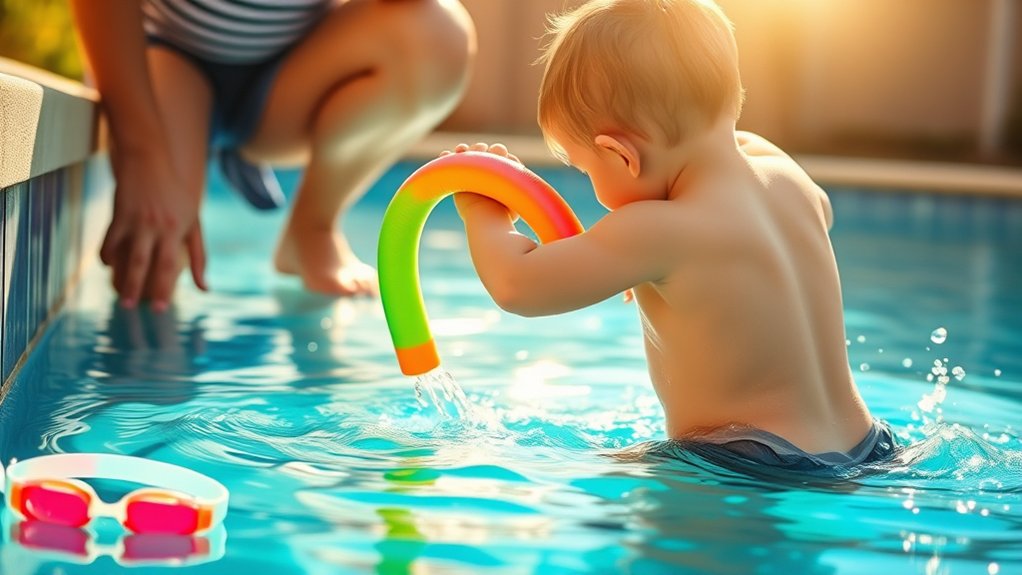
Teaching your child to swim can be a rewarding experience, but it’s easy to make mistakes along the way. To help guarantee water safety and build your child’s confidence, avoid these common missteps:
- Relying on Flotation Devices: Don’t use inflatables like water wings. They may hinder your child’s natural buoyancy development and create a false sense of security.
- Rushing the Process: Focus on one skill at a time, whether it’s floating or swimming strokes. This helps in effectively teaching your child according to their developmental abilities.
- Ignoring Supervision: Always supervise your child near water. Drowning can happen quickly, and it’s crucial to guarantee their safety while they practice and learn.
Use these tips to foster a positive swimming experience!
Finding Certified Swimming Programs for Kids
When you’re ready to help your child learn to swim, finding the right certified swimming program is essential. Look for programs that focus on swimming skills and water survival competency skills, ensuring they’re certified through a nationally recognized learn-to-swim curriculum.
Verify that instructors hold CPR and First Aid certifications to keep safety a priority. Choose age-appropriate classes that accommodate your child’s developmental abilities and limitations, providing a comfortable environment with warm, clean water.
Ensure instructors are CPR and First Aid certified, and select classes suited to your child’s age and developmental needs for a safe and welcoming environment.
Local options at community centers, schools, and sports clubs can be convenient. If you have younger children, consider parent-child programs that help them acclimate to the water while fostering bonding experiences.
You’ll be setting them up for a positive and enriching learning experience!
Encouraging Independence and Confidence in the Water
Once your child has started their swimming journey in a certified program, it’s essential to nurture their independence and confidence in the water.
Here are three strategies to help boost their skills:
- Explore Shallow Water: Let your child play in shallow areas where they can comfortably explore. This builds confidence and enhances their experience in the water.
- Minimize Support: Rather than providing constant physical support, encourage them to grip and recover independently. This helps foster a sense of autonomy.
- Practice Floating: Regularly practice floating on their front and back. This skill is vital for their overall swimming ability.
Continuing Support for Your Child’s Swimming Journey
As your child progresses in their swimming journey, it’s crucial to provide ongoing support to foster their development and enjoyment. Aim for at least two swim sessions a week to help reinforce lessons and build comfort in the water.
Encourage independence by minimizing physical support. This boosts their confidence and self-reliance. Celebrate small achievements along the way; positive reinforcement will enhance their motivation.
Stay involved by observing lessons and participating in family swim times, creating a supportive environment.
Continue education on water safety and survival skills at home to complement formal lessons. This helps your child feel safe and secure while swimming and equips them with essential skills.
Your support is key in helping them thrive in their swimming journey!
Frequently Asked Questions
What Should I Do if My Child Is Scared of Water?
If your child’s scared of water, start with gradual exposure. Allow them to play near the water and slowly introduce splashes.
Use positive reinforcement by celebrating small victories, like dipping toes.
Incorporate playful activities and aquatic games to make it fun. Your calming presence is essential, so model comfort and safety.
Teach breathing techniques to ease anxiety, and be actively involved in their journey to overcoming fear.
It’s all about creating a positive experience!
How Can I Tell if My Child Is Ready for Swimming Lessons?
Around 70% of kids aren’t ready for swimming lessons before age 4, so watch for key swimming readiness signs. Assess your child’s emotional maturity, previous experiences, and physical development.
Look for their comfort level in the water and interest in water activities.
Group dynamics can also impact readiness; they might thrive better in a class setting.
Finally, consider instructor recommendations, as they can provide valuable insights on your child’s preparedness for lessons.
What Equipment Do We Need for Swim Practice at Home?
For swim practice at home, you’ll want to gather essential swim gear. Invest in a U.S. Coast Guard-approved life jacket for safety, and get swim goggles to help your child feel more comfortable in the water.
Floatation devices like pool noodles can aid balance while your child enjoys water games. Swim caps keep hair out of their face, and you can create engaging lesson plans to guide your practice.
How Can I Make Swimming Fun for My Child?
To make swimming fun for your child, plunge into playful splashes with colorful floats and water games!
Imagine treasure hunts, searching for toys underwater, or friendly races that turn lessons into exciting adventures.
Incorporate music swimming, creating a rhythmic atmosphere as you explore together.
Always weave in water safety while giggling through activities, so they learn and play effortlessly.
Celebrate their achievements, turning each swim into a joyful journey they’ll love returning to!
How Often Should We Practice Swimming Together?
You should aim for at least two swimming sessions each week to establish a solid swimming schedule.
Consistency is key, so try to incorporate family swim days into your routine.
Outdoor pools can make practice fun, especially with swim games.
Monitor your child’s skill progression and adjust practice as needed.
To keep them engaged, use a rewards system and make sure you’re actively involved in their learning and water safety.
Conclusion
In the journey of teaching your child to swim, you’re not just splashing in the water; you’re planting seeds of confidence and courage. Each lesson builds a bridge between fear and fun, transforming your little one into a confident swimmer.
Remember, patience and encouragement are your best allies in this adventure. Celebrate their progress, no matter how small, and soon you’ll see them glide through the water like a fish, ready to explore the depths of their own potential.