At What Age Do Kids Learn To Swim – Milestones Explained
Kids can start learning to swim as early as 6 months, though formal lessons are best after 12 months. You’ll notice your infant can float and swim short distances by 12-18 months if they show excitement in the water.
For toddlers, focus on comfort and safety skills like backfloating. As children grow, introduce vital techniques and safety awareness. Setting realistic goals with your child can boost their confidence.
Discover more about essential skills at each age for a smoother swimming journey!
Understanding Infant Swim Readiness
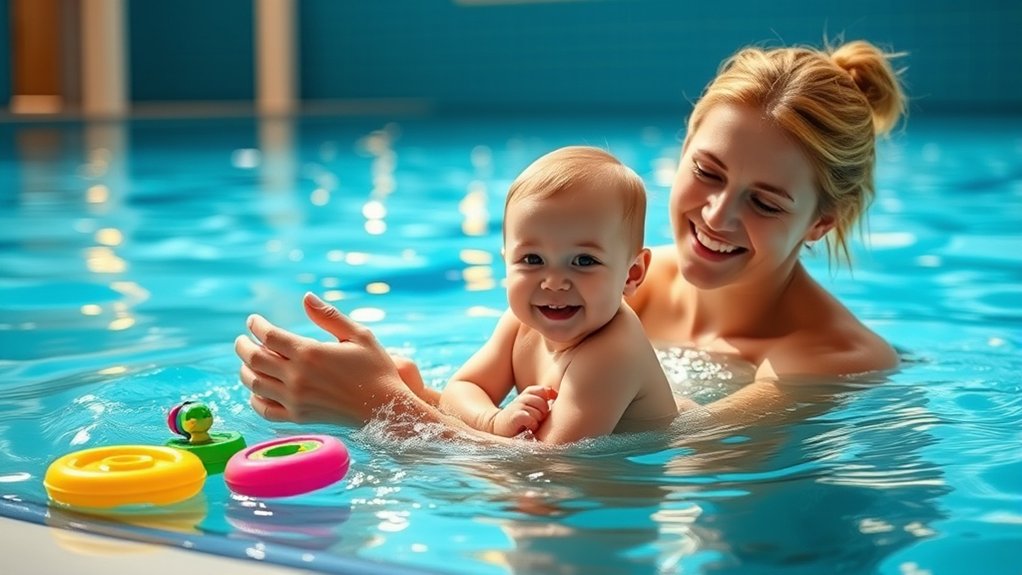
When it comes to infant swim readiness, parents often wonder about the right age to start their little ones in the water. Infants can begin swimming programs as early as 6 months, but formal swim lessons are recommended after 12 months for ideal water safety and comfort.
During the vital 4-8 month stage, focus on developmental milestones like floating and underwater skills, which form the foundation for future swim skills.
As your infant approaches 12-18 months, they’ll likely start swimming short distances independently, boosting their confidence.
Signs Your Toddler Is Ready to Start Swimming Lessons?
Recognizing when your toddler is ready for swimming lessons is key to a positive experience. You might notice they really enjoy bath time or love splashing around. These little moments can be great clues.
Also, pay attention to physical milestones like crawling or climbing. When they can do these things, it usually means they’re ready to explore the water safely.
Physical Readiness Indicators
Determining whether your toddler is ready for swimming lessons involves observing key physical readiness indicators that reveal their comfort and coordination in the water. Look for the following signs:
- Expert crawling or climbing skills, indicating strength and coordination.
- Excitement during water play, such as splashing or enjoying bath time, which suggests comfort level.
- An increased energy and willingness to explore new activities, signaling readiness to engage in swimming lessons.
- Interest in floating and playing in water, showing curiosity towards aquatic environments.
- Mastery of developmental milestones like reaching for objects or rolling over, reflecting physical and cognitive growth suitable for swimming skills.
Recognizing these indicators can help you decide when it’s time to start swimming lessons.
Water Enjoyment Signals
Curiosity about water is another good sign. If your child wants to jump in or explore, they may be prepared for lessons.
Furthermore, observe their comfort in water; toddlers who can float on their backs or willingly submerge briefly typically demonstrate readiness for structured instruction.
Finally, increased energy and creativity during water-related play can reflect their physical ability to engage in swimming activities.
Trust your instincts. If your toddler shows these signs, it might be time to start swimming lessons!
What Preschoolers Need to Know About Swimming
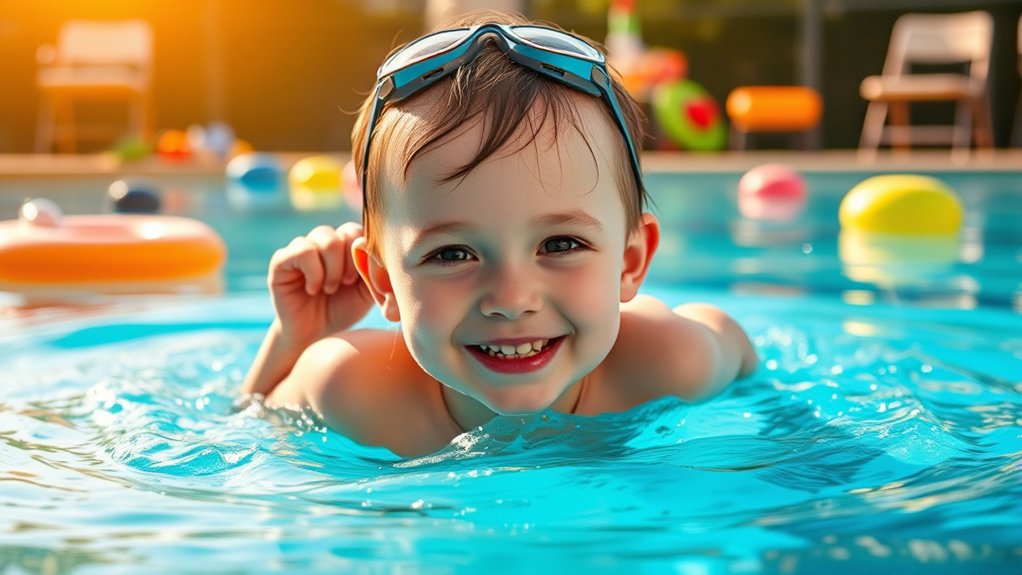
As you introduce your preschooler to swimming, it’s important to focus on building their comfort and safety in the water. At this age, your child will develop essential skills that foster independence and confidence.
Introduce your preschooler to swimming by prioritizing their comfort and safety, helping them build essential skills for independence and confidence.
Consider these key aspects for their swimming journey:
- Encourage basic skills like kicking and paddling.
- Teach safe pool entry and exit methods.
- Practice backfloating and fundamental strokes like freestyle and backstroke.
- Simulate emergency scenarios, such as turning over after falling in.
- Engage in structured lessons, aiming for about 12 sessions.
Your active participation can greatly enhance your child’s learning experience and guarantee they feel supported.
Together, you can navigate the exciting path of learning to swim while prioritizing water safety!
Key Skills for School-Age Swimmers
As your child moves forward in their swimming journey, it’s really important for them to focus on some key skills. Things like safety techniques and developing more advanced strokes should be on their radar.
They’ll be building on what they already know from earlier lessons. For example, mastering how to tread water and learning effective self-rescue methods are great next steps.
And here’s the thing—regular practice doesn’t just improve their technique. It also helps boost their confidence when they’re in the water.
Essential Safety Techniques
While kids are drawn to the excitement of swimming, mastering essential safety techniques is crucial for building their confidence and awareness in the water.
As a parent or coach, you can help children learn and practice these key skills:
- Treading water to stay afloat and calm in emergencies
- Backfloating for energy conservation
- Recognizing signs of exhaustion while swimming
- Importance of swimming with a buddy for safety
- Practicing real-life scenarios to prepare for unexpected situations
Advanced Stroke Development
Mastering advanced stroke techniques can greatly enhance a school-age swimmer’s confidence and enjoyment in the water. At this stage, focusing on advanced stroke development is vital. You’ll refine swim techniques in freestyle, backstroke, breaststroke, and butterfly, concentrating on breath control and body positioning.
Regular lessons and practice are important, helping to solidify skill development, endurance, and muscle memory. In addition to stroke refinement, emphasize self-rescue techniques and treading water to guarantee safety.
Engaging in competitive elements like time trials and team relays can boost both stroke proficiency and teamwork skills.
Essential Techniques for Building Confidence in Teen Swimmers
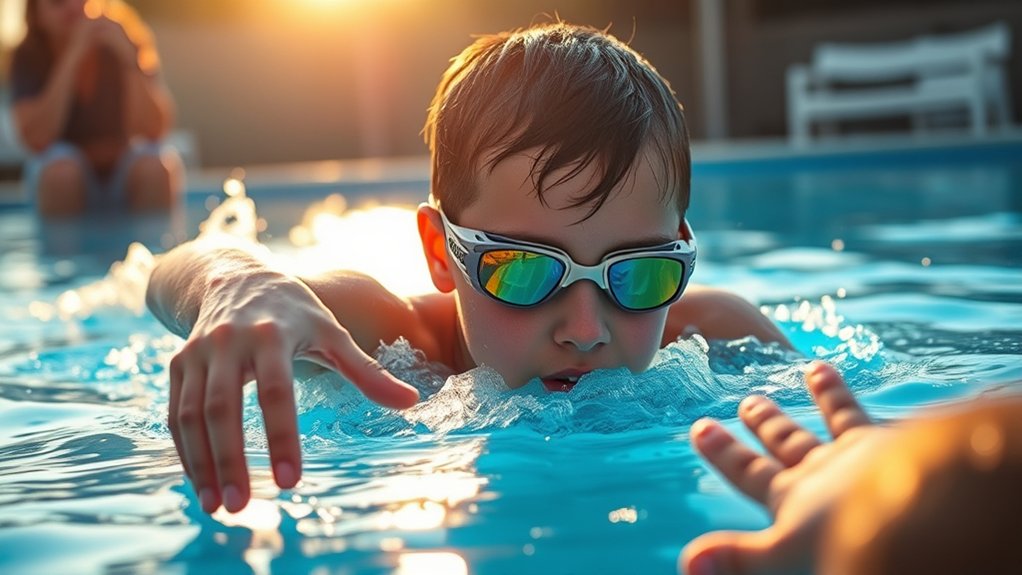
Building confidence in teen swimmers involves a strategic approach that considers their unique needs and motivations. To support their growth, focus on these essential techniques:
Set realistic, incremental goals to track progress and celebrate achievements.
Practice regularly, aiming for 2-3 times a week to reinforce water safety skills and comfort.
Incorporate competitive elements like time trials, fostering motivation and camaraderie.
Emphasize safety tips, such as recognizing fatigue and swimming with a buddy to promote responsibility.
Encourage self-assessment for teens to reflect on improvements, nurturing a positive mindset.
With professional instruction tailored to their pace, teens can become confident swimmers ready to take on new challenges in swim programs and beyond.
Setting Realistic Expectations for Swimming Lessons
Understanding what to expect from swimming lessons can greatly enhance a child’s learning experience and boost their confidence in the water. As they progress, the age and frequency of lessons will influence the speed of skill acquisition.
Here’s a quick reference for what to expect:
| Age Group | Lessons Needed | Key Skills Developed |
|---|---|---|
| Ages 1-3 | 5-10 lessons | Backfloating, basic mobility |
| Ages 4-5 | 8-15 lessons | Water safety, fun strokes |
| Ages 6-12 | 8-20 lessons | Simple strokes, confidence |
| Ages 13+ | 20-30 hours | Proficiency in swimming |
| Private Lessons | Flexible timing | Personalized skill development |
Remember to set realistic expectations, as learning speeds vary based on prior experience and comfort levels. Regular assessments will help to track progress.
The Importance of Safety Skills at Every Age
While learning how to swim is certainly important, prioritizing safety skills at every age is essential for ensuring a child’s well-being in and around water.
Instilling these skills early can greatly reduce the risk of drowning.
Infants and toddlers should focus on backfloating to stay afloat in emergencies.
Children aged 3-5 practice emergency scenarios, like turning over to backfloat.
At ages 5-7, kids learn to recognize signs of exhaustion and continue practicing backfloating.
Teens and older children benefit from discussions about safety procedures.
Swimming with a buddy reinforces awareness and preparedness.
How to Prepare Your Child for Success in Swimming
Preparing your child for success in swimming involves a combination of early exposure, consistent practice, and safety education. Start by enrolling your child in swimming lessons as early as 6 months to increase their comfort in the water.
Focus on essential safety skills like backfloating for infants and toddlers, giving them important instincts for emergencies. For toddlers, aim for around 52 lessons a year to develop solid swimming abilities.
As your child grows, stay involved; your presence can boost their confidence and enthusiasm to learn. Set age-appropriate goals, recognizing every child is unique and develops at their own pace.
Consistent practice will guarantee your child is ready to thrive in the water and enjoy swimming safely.
Frequently Asked Questions
What Are the Benefits of Early Swim Lessons for Toddlers?
Early swim lessons for toddlers offer numerous benefits, including enhancing toddler safety and boosting water acclimation. You’ll see your child’s swim confidence grow as they engage in fun activities that promote skill development.
These lessons provide opportunities for social interaction with peers, fostering friendships while enhancing physical fitness through active play.
How Can I Assess My Child’s Comfort Level in Water?
To assess your child’s comfort level in water, watch for water-loving behaviors.
Observe their floating techniques and see if they enjoy breath control activities.
Look for enthusiasm during swimming games and fun activities in the pool.
Check if they’re overcoming fear by submerging their face or blowing bubbles.
Your involvement as a parent is vital.
Encourage their curiosity to foster confidence and prioritize water safety so they feel secure every splash!
Are Private Lessons Better Than Group Lessons for Young Children?
Private lessons can be better for young children, especially if they need personalized attention and learn at their own pace.
With focused instructor experience levels, your child can overcome water anxiety more effectively.
While group lesson dynamics offer socialization, they can slow progress due to varied skills.
Moreover, consider cost and your involvement; private lessons may require fewer overall hours, ultimately benefiting your child’s swimming proficiency and confidence.
What Should My Child Wear for Swim Lessons?
When it comes to swim lessons, think of your child’s swim gear as their secret superhero costume! Equip them with a well-fitting swimsuit for comfort and ease.
Don’t forget swim caps to keep hair in check and goggles fitting snugly for a clear underwater view.
If your little one’s still in diapers, make sure they’ve swim diapers on.
And remember, frequent lessons with instructor support foster essential water safety skills for life!
How Can I Encourage My Child to Practice Swimming at Home?
To encourage your child to practice swimming at home, set up a mini pool for fun water activities.
Incorporate swimming games like “splash tag” to make learning enjoyable.
Focus on safety skills and building water confidence by practicing floating and blowing bubbles.
Use positive reinforcement to celebrate small achievements, strengthening your bond.
Regularly engage in these activities during family swim days, making sure your child feels comfortable and excited about swimming!
Conclusion
As your child begins their swimming journey, remember that every swimmer, like those in Olympian dreams, started with small strokes. Embrace the milestones they’ve reached and encourage them to splash into new challenges.
Safety and confidence are key, so keep nurturing their skills while you both enjoy the water. With your guidance, they’ll plunge into success, turning what might seem an intimidating task into a joyous adventure of growth and discovery.
Every wave brings a new lesson!