How To Teach 5 Year Old To Swim – Simple Step Guide
Teaching your five-year-old to swim starts with prioritizing water safety and comfort. Always supervise them, and begin in shallow water to foster familiarity.
Incorporate fun water games, like treasure hunts and floating races, that build essential skills while keeping things enjoyable. Focus on key movements like kicking and arm strokes, and practice back floating for relaxation.
Celebrate every small achievement to boost their confidence. Keep going; the journey to confident swimming is filled with exciting activities and helpful tips!
Prioritizing Water Safety and Comfort
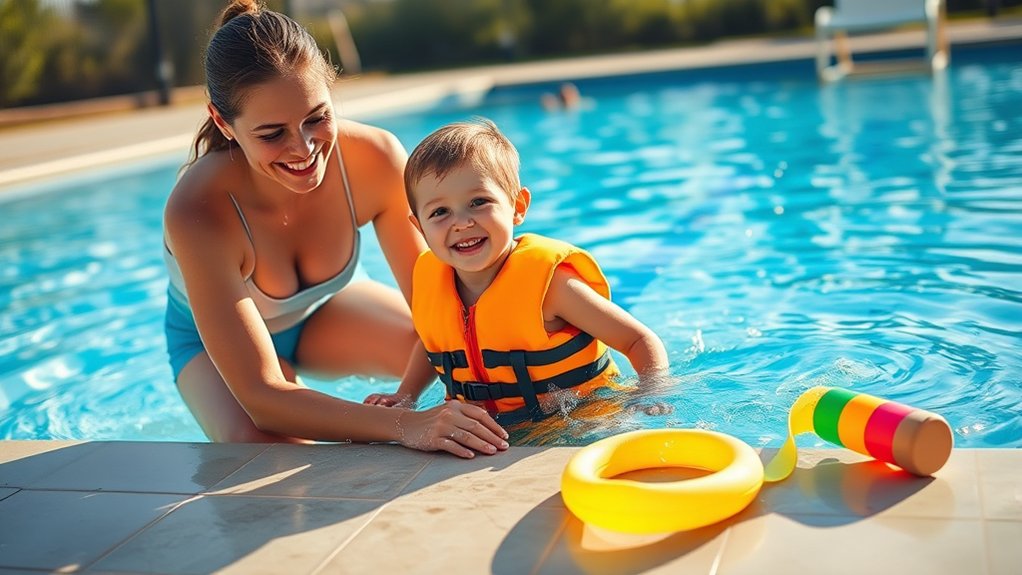
When it comes to teaching your child to swim, prioritizing water safety and comfort is essential. Start by ensuring constant adult supervision as drowning remains a leading cause of accidental death for young kids.
Begin in shallow water, allowing your child to grow more familiar with their surroundings. Gradual exposure helps build their comfort levels, making learning to swim more enjoyable.
Teach them essential safety skills, like floating on their backs, to boost their confidence in the water. Incorporate play during swim lessons to reinforce safety concepts. This not only makes learning fun but encourages a healthy respect for the aquatic environment.
With regular practice in a safe setting, your child can overcome fears and swim confidently, keeping them safer around water.
Fun Water Games and Activities for Kids
While teaching your child to swim can feel like a challenging task, incorporating fun water games and activities transforms the experience into an exciting adventure. Games like “Treasure Hunts” encourage children to dive for toys, making underwater exploration enjoyable.
Try “Jumping from the Side” to build their confidence and teach proper entry techniques while reinforcing trust between you both. “Monkeys on the Wall” promotes safety and grip strength as kids navigate the pool’s edge.
Jumping from the side builds confidence and trust, while Monkeys on the Wall enhances safety and grip strength.
Furthermore, “Cuddle Kicks” lets you assist with kicking, enhancing their comfort in water and understanding of propulsion.
Finally, “Floating Races” introduce back floating skills in a playful manner.
These fun water games during swimming lessons help children learn essential skills while ensuring safety tips are always followed.
Introducing Key Skills: Kicking and Arm Movements
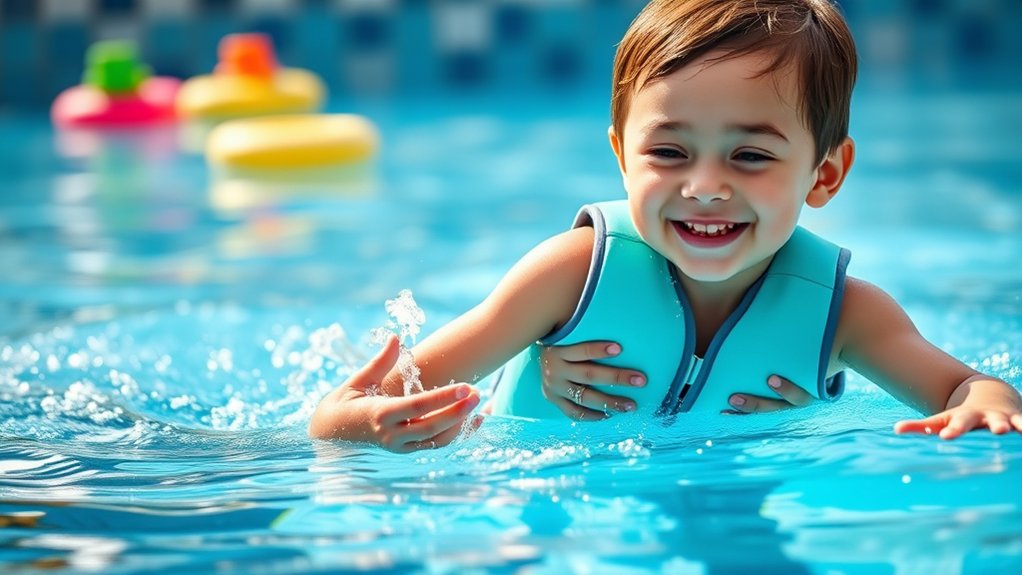
Building on the excitement of fun water games, introducing key skills like kicking and arm movements is essential for developing your child’s swimming abilities. Start with “cuddle kicks,” holding your child while guiding their legs, promoting muscle memory and confidence.
Next, try “soccer kicks” with them sitting against you for support, building independence. Encourage pushing off the pool’s ledge to reinforce kicking and propulsion.
Using visual aids, like colored balls, you can motivate and guide arm movements for proper paddling techniques. Set achievable goals, such as kicking for 10 seconds, to track their progress and keep them motivated.
| Activity | Goal | Benefit |
|---|---|---|
| Cuddle Kicks | Muscle Memory | Builds confidence |
| Soccer Kicks | Independence | Encourages self-reliance |
| Push Off Ledge | Propulsion | Links kicking to swimming |
| Visual Aids | Arm Movement | Makes learning fun |
| Goal Setting | Motivation | Tracks progress |
Master Back Floating for Safety and Relaxation
Mastering back floating is an essential skill for ensuring safety and relaxation in the water. This swimming skill not only builds confidence but also helps your child enjoy their time in the pool.
Here are some supportive steps to guide them:
- Start with assisted back floats: Maintain face-to-face contact to ease anxiety.
- Encourage relaxation: Teach them to focus on “eyes to the sky” to stay calm.
- Use a kickboard: Add stability and set small goals for floating duration.
Consistent practice of back floating can greatly enhance your child’s safety around water.
As they grow more comfortable, they’ll develop the confidence needed to swim independently and truly learn to swim!
Jumping In and Swimming to the Steps
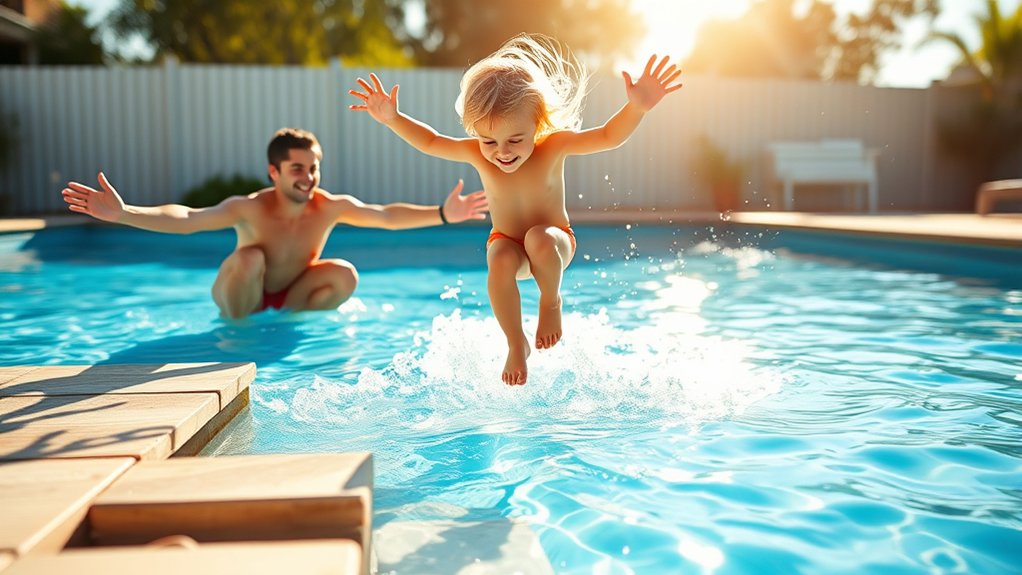
Jumping into the water can be exciting, but it might feel a little scary for your child at first.
So, start small—make sure they’re comfortable in the shallow areas before moving on to the deeper parts. And remember, always stay close by to keep things safe.
As they get more confident, try using a fun visual cue, like a floating toy.
This can encourage them to swim back to the steps. It turns each jump into a little adventure that they’ll look forward to!
Safety First Approach
When teaching your five-year-old to swim, prioritizing safety is essential, especially when it comes to jumping into the water.
Here’s how to guarantee a safe and fun experience for your child:
Always keep a guardian within arm’s length to provide support and build trust.
Start with shallow water for jumps, helping your child gain confidence before moving to deeper areas.
Teach your child to jump in feet first, promoting control and preventing injuries.
Encourage them to swim directly to the steps after jumping, reinforcing their ability to return to safety.
Building Confidence Gradually
To help your child build confidence in the water, start by introducing the concept of jumping in gradually.
Begin in the shallow end, letting them practice jumping while holding onto the edge for safety.
Encourage your little one to jump toward you, emphasizing trust and reinforcing their sense of security.
Use floating toys to make it fun; when they jump, they can swim back to the steps to retrieve them.
Start with short distances, gradually increasing as their comfort grows.
Celebrate every successful jump and swim. These little victories will reinforce their confidence and build a positive association with water.
With patience and encouragement, your child will enjoy their swimming experience more and more!
Building on Floating Skills Through Play
Splashing into the joy of floating can turn your child’s swim lessons into a playful adventure!
By incorporating games and toys, you can help your child build essential floating skills while ensuring safety and boosting their confidence in the water.
Play “Monkeys on the Wall”: This fun activity teaches a strong grip and comfort when floating.
Use Incentives: Encourage your child to float by using toys as rewards, promoting exploration and independence.
Gradual Back Floating: Start with assisted floats and use cues like “eyes to the sky” to keep them calm and relaxed.
These playful approaches not only make learning fun but also foster a love and respect for water, setting the stage for swimming success!
How to Safely Climb Out of the Pool
Teaching your child how to safely climb out of the pool is essential for their confidence and safety in the water. Start with shallow water during their swimming lessons, gradually moving to deeper areas as they practice.
Use a fun phrase like “elbow, elbow, tummy, knee” to guide them in using their limbs effectively. Encourage your child to utilize kickboards or the pool wall for support as they learn the proper climbing movements.
Repetitive practice will help strengthen their skills and make the process familiar. Always supervise your child closely during this practice to guarantee safety and offer immediate help if needed.
Celebrating Progress in Learning to Swim
After your child learns how to safely climb out of the pool, it’s time to celebrate their achievements in swimming. Celebrating progress boosts their confidence and makes learning enjoyable.
Celebrating your child’s swimming achievements builds confidence and makes learning a joyful experience.
Incorporating positive reinforcement is essential. Here are a few ideas:
- Verbal Praise: Offer enthusiastic compliments for their efforts, like floating or submerging.
- Milestone Chart: Document their progress with fun milestones, such as swimming specific distances or mastering skills.
- Family Celebrations: Involve family in celebrating successes to create a supportive environment.
Recognizing these moments encourages your child’s willingness to engage in practice. It reinforces water safety and fosters a lifelong love for swimming.
Celebrate every step, and watch their confidence soar!
Frequently Asked Questions
What Should I Do if My Child Is Afraid of Water?
If your child’s afraid of water, start with gentle water play in a shallow area.
Use gradual exposure to help them feel comfortable, like splashing or dipping toes.
Incorporate fun activities, like playing with floatable toys, and always celebrate their small victories with positive reinforcement.
Your involvement is essential, so stay close, reassure them, and join in the fun.
This supportive approach will help build their confidence around water over time.
How Can I Make Swimming Lessons More Engaging for My Child?
To make swimming lessons more engaging for your child, incorporate fun water games and colorful floaties that grab their attention.
Use engaging songs to create a lively atmosphere, and introduce playful exercises that keep them active and excited.
You can also incorporate storytelling techniques, turning each lesson into an adventure.
When Is the Best Age to Start Swimming Lessons for Children?
The best age to start swimming lessons is around four or five years old. At this age, kids can develop essential aquatic skills while you actively support them.
Early lessons boost confidence and promote water safety awareness. Aim for shorter lesson durations, around 30 minutes, to keep their attention and enthusiasm high.
Engaging your child in these lessons will enhance their enjoyment and willingness to learn, making swimming benefits even more meaningful.
How Do I Know if My Child Is Ready to Swim Independently?
To know if your child’s ready to swim independently, look for swimming readiness signs like their water comfort and confidence.
Observe how they react to water. Do they enjoy it and feel relaxed?
Use parental observation tips to assess their swim skills, like floating and basic strokes.
Make sure you engage in age-appropriate activities that build their confidence.
If they show excitement and can follow instructions, they’re likely prepared for more independent swimming!
What Safety Gear Is Recommended for Young Children Learning to Swim?
When young children are ready to swim, safety gear can make all the difference. While life jackets offer essential buoyancy, flotation devices let them explore water playfully.
Swim goggles help them see underwater clearly, and swim caps keep hair dry and out of their faces.
Don’t forget sunscreen application to protect their delicate skin.
Balancing fun and safety means setting them up for an enjoyable, secure swimming experience.
Conclusion
To sum up, teaching your five-year-old to swim isn’t just about instructing. It’s about creating joy. By prioritizing safety, celebrating small victories, and embracing play, you’re not just helping them float but also fostering their confidence.
With every splash, every kick, and every joyful laugh, you’re building not just swimming skills but lifelong memories. So grab that colorful floatie, jump into the fun, and watch your little one transform from hesitant to happy in the water!