How To Teach Swim Lessons – Step By Step Guide
To teach swim lessons, start by ensuring your child feels safe and excited about the water. Gather essential gear like a swimsuit and goggles, and schedule regular lessons.
Begin with fun activities that promote comfort, like blowing bubbles and playful games. Gradually introduce breath control techniques and floating skills.
Celebrate small successes to build confidence. As they progress, encourage independent swimming through practice and fun challenges.
Keep going, and you’ll discover even more strategies to enhance their learning experience!
Understanding the Importance of Swim Lessons for Kids
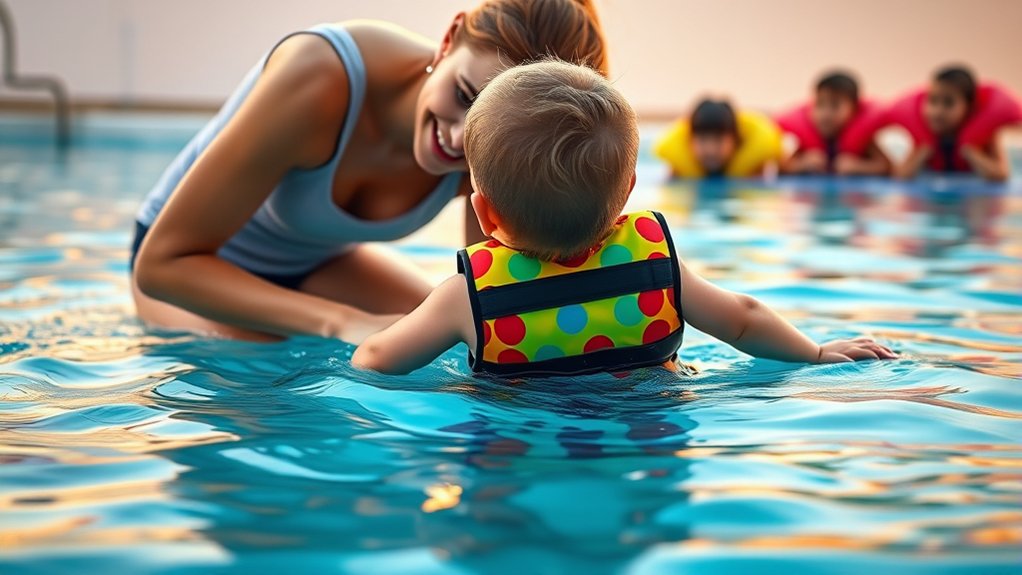
With drowning being the leading cause of accidental death among young children, you can’t overlook the necessity of swimming lessons.
They not only equip kids with crucial skills but also build their confidence in aquatic settings.
You’ll be playing a key role in drowning prevention by encouraging young children to learn to swim.
By following well-structured swim lesson plans, you can teach kids essential water safety techniques.
Making swim lessons a priority contributes to a cultural shift towards valuing safety, just like in many European countries.
Preparing for Your First Swim Lesson With Your Child
Before heading to your child’s first swim lesson, make sure they’re healthy and rested. That way, they can really enjoy the experience.
Also, don’t forget to gather all the essential swim gear—like a swimsuit, goggles, and sunscreen. Having everything ready will help them feel prepared.
A little preparation really goes a long way in making sure they’re comfortable and ready for the exciting journey ahead!
Gather Necessary Swim Gear
Getting ready for your child’s first swim lesson means gathering the right gear to guarantee a fun and safe experience. Make certain your child has a comfortable swimsuit that fits well, allowing for easy movement.
Don’t forget to apply sunscreen 30 minutes before entering the water, especially for outdoor lessons. Equip them with swim goggles to help with visibility underwater and protect their eyes from chlorine.
Swim aids like kickboards or pool noodles can build confidence as they learn. Finally, bring a towel and a change of clothes to keep them warm and dry after the lesson.
Here’s a quick gear checklist:
| Item | Purpose | Importance |
|---|---|---|
| Swimsuit | Comfort and movement | Essential |
| Goggles | Eye protection and visibility | Confidence booster |
| Sunscreen | UV protection | Skincare safety |
| Swim Aids | Support during learning | Learning tool |
| Towel | Warmth and comfort post-swim | Essential for comfort |
Ensure Child’s Readiness
How can you guarantee your child is ready for their first swim lesson? First, confirm your child is at least 3 years old, as lessons are designed for their developmental stage.
Check their comfort level with water; start with simple activities like practicing blowing bubbles to build confidence. If they’re nervous, gradually introduce them to water play to encourage familiarity.
Schedule swimming lessons regularly, ideally once or twice a week for 8 to 12 weeks, to reinforce learning.
Also, confirm your child is healthy and well-rested before each lesson because fatigue can hinder progress.
Finally, maintain a safe environment by teaching them about safety around water.
With these steps, you’ll set your child up for a successful first experience in swimming!
Key Breath Control Techniques for Beginner Swimmers
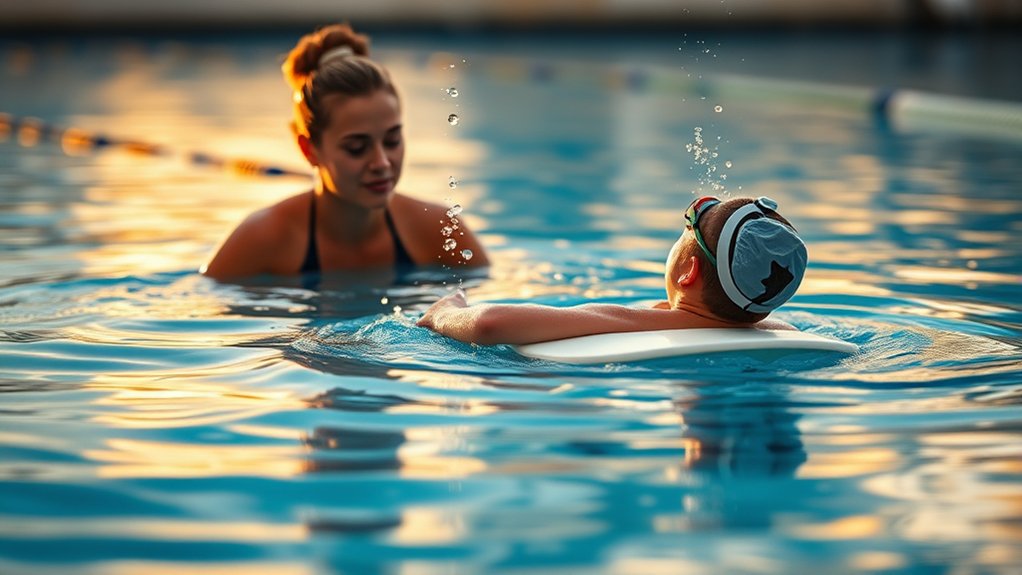
Teaching breath control techniques is essential for beginner swimmers, as these skills lay the foundation for a safe and enjoyable swimming experience. Start by encouraging your child to hold their breath above water, gradually working towards a 5-second hold.
Encouraging breath control is vital for beginner swimmers, setting the stage for a safe and enjoyable aquatic adventure.
Introduce blowing bubbles at the surface with soap bubbles or toys to make it fun. When they’re ready, shift to exhaling through their nose underwater.
Practice holding onto the pool’s edge while pinching their nose, making it feel like a game. Moreover, use cups or hands for face wetting to build comfort with having their face in the water.
Regular practice will help them feel confident and relaxed while developing crucial breath control skills.
Fun Ways to Overcome Water Anxiety
If your child feels nervous around water, a great way to start is with playful water games that make the whole experience fun.
You can begin with simple activities like blowing bubbles or gently wetting their face. These small steps help them get used to water little by little, at a pace that feels comfortable for them.
And don’t forget to celebrate every little success! Positive encouragement goes a long way in building their confidence and making them feel good about being in the water.
Before you know it, they’ll be enjoying water time much more.
Playful Water Games
Water games can be a fantastic way to help kids overcome their anxiety and develop a love for swimming. Incorporate playful activities like bubble blowing and imaginative games such as “cracking eggs” or “fishing” with toys to distract from fears.
Use floating toys to make skill practice exciting, allowing them to retrieve objects while promoting positive associations with water.
Here are some engaging water game ideas:
| Playful Activity | Description | Goal |
|---|---|---|
| Bubble Blowing | Kids blow bubbles in the water | Comfort with face wetting |
| Fishing with Toys | Retrieve floating toys | Skill practice |
| Watering Can Play | Pour water on themselves | Face wetting exposure |
| Diving Sticks | Grab sticks from the bottom | Confidence building |
| Celebrating Achievements | Reward small successes | Boost confidence |
Celebrate their small achievements with praise to encourage a positive attitude!
Gradual Exposure Techniques
As kids engage in playful water games, you can introduce gradual exposure techniques to help them conquer water anxiety. Start by having them wet their faces with cups or hands, turning it into a fun activity.
Use games like “cracking eggs” to simulate a gentle face wetting, making the experience enjoyable. Teach them to blow bubbles, promoting comfort in the water and focusing on achieving a short breath-hold before progressing to face immersion.
Incorporate toys that encourage children to dip their faces into the water, helping reinforce positive experiences. Schedule daily practice sessions in a safe environment, providing constant supervision so they can build familiarity and confidence with water over time.
Every small step counts!
Teaching Kicking and Floating Skills Effectively
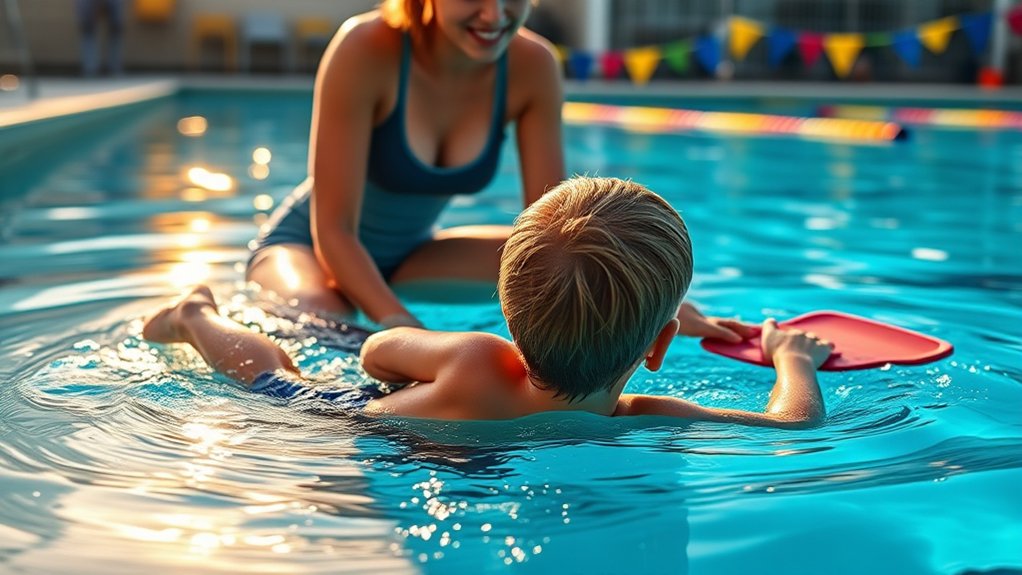
When teaching kids to kick and float, it’s important to prioritize straight legs and relaxed ankles to enhance both propulsion and buoyancy.
Start with kicking exercises using kickboards to help your child focus on technique without balancing concerns.
Encourage short bursts of front kick drills, aiming for 10 seconds at a time to keep them engaged and fresh. Once they can comfortably kick for five seconds, introduce back floating, reinforcing breath control while they practice floating face down.
To make the process enjoyable, incorporate fun activities like racing to retrieve floating toys. This approach will help your child swim while building muscle memory, making each lesson with swimming teachers more effective and rewarding.
Introducing the Monkey Crawl and Wall Grab Techniques
To help your child gain confidence and skills in the water, introducing the Monkey Crawl and Wall Grab techniques is essential.
Start by positioning them at the pool edge, ensuring they grip firmly. Encourage your child to move hand over hand towards a toy. This makes the Monkey Crawl both fun and effective. Sing a playful song to keep them engaged!
Position your child at the pool edge, encouraging a fun hand-over-hand movement towards a toy while singing a playful song!
Next, teach the Wall Grab technique by having them reach for the pool edge after jumping in. This promotes safety and builds comfort in the water.
Repeated practice of both techniques reinforces essential skills and instills confidence. It ensures your child is comfortable floating and retrieving themselves to safety.
Next Steps: Transitioning From Floating to Jumping in
Once your child feels comfortable floating on their back, it’s time to elevate their confidence by moving to jumping in. Start by reinforcing their back floating skills, making sure they can maintain it for 5-10 seconds.
Next, practice jumping from a seated position at the pool’s edge, encouraging them to leap toward a toy or you. Teach proper jumping technique: they should keep their arms open and head up, trusting your support.
Incorporate playful elements like treasure hunts in shallow water to make jumping fun and reinforce their swimming skills.
Always supervise closely to guarantee their safety, helping your child build confidence as they shift from floating to jumping in the pool.
Encouraging Independent Swimming: Strategies for Ongoing Practice
While your child may have made great strides in floating and jumping in, encouraging independent swimming takes consistent practice and creative engagement.
Schedule regular practice sessions in varied water depths to boost comfort with different buoyancy levels.
Incorporate playful elements like underwater treasure hunts to motivate your child and build confidence in their swimming skills. Use positive reinforcement by celebrating small achievements, which can inspire them to take initiative during practice.
Create structured routines that include kicking, floating, and retrieval exercises, reinforcing essential skills for independence in the water.
Frequently Asked Questions
What Age Is Best to Start Swim Lessons for Children?
You can start swim lessons for your child as early as age 4, when they develop the coordination and confidence needed for water safety.
Focus on fun activities that build their water confidence while ensuring a structured lesson plan.
Look for an instructor with good communication skills and experience.
As a parent, get involved and track your child’s progress.
How Long Should Each Swim Lesson Last?
When it comes to lesson duration, aim for 30 to 45 minutes per session. It keeps kids engaged without wearing them out, like a round of musical chairs!
Incorporate engagement techniques, focusing on skill progression while respecting safety measures.
Make certain instructors have the right qualifications, and keep class sizes manageable.
Use feedback methods to encourage improvement, allowing students to build confidence and enjoy their time in the water.
What Equipment Do I Need for Teaching Swim Lessons?
You’ll need a few essentials for teaching swim lessons. Start with floating devices like puddle jumpers or pool noodles to boost confidence.
Include swim toys to make learning fun and engaging.
Kickboards are great for practicing strokes. When selecting goggles, verify they fit well to avoid leaks. Swim fins can help with kicking technique.
Don’t forget to prioritize pool safety in your lesson plans, keeping an eye on each student’s progress and comfort.
How Do I Handle a Child’s Fear of Deep Water?
To handle a child’s fear of deep water, focus on fear management through gradual exposure.
Start in shallow water and involve parents for support. Use positive reinforcement to celebrate small successes.
Incorporate playful techniques like games to create a fun atmosphere.
Teach breathing exercises to promote relaxation, and use visualization methods to help them imagine safe, enjoyable experiences in deep water.
With patience and encouragement, you’ll help them build confidence and overcome their fear.
Can Swim Lessons Be Adapted for Children With Disabilities?
Yes, swim lessons can absolutely be adapted for children with disabilities.
Use adaptive techniques that suit their specific needs and integrate sensory considerations to create a comfortable learning environment.
Set personalized goals to keep them motivated and engaged.
Employ effective communication strategies to guarantee they understand instructions.
Make certain to maintain supportive environments with safety measures in place.
These inclusive practices will help every child thrive in their swimming journey.
Conclusion
By now, you’re equipped with everything to turn your child into a swimming superstar! Immerse yourself in those lessons with enthusiasm, and you’ll watch them conquer the water like a mermaid or merman effortlessly gliding through the ocean!
Remember, consistent practice is key, so keep the fun alive! Soon enough, your little one will be doing cannonballs and racing alongside dolphins!
So grab those goggles, jump in, and make magical memories one splash at a time!