Teach How To Swim – Beginner Friendly Methods Explained
To teach yourself how to swim, start by getting comfortable in the water. Practice floating and submerging your head. Always prioritize safety by swimming with a buddy or in supervised areas.
Master breathing techniques by exhaling underwater and timing your breaths. Focus on kicking fundamentals and body positioning to propel yourself efficiently. Learn each basic stroke, like freestyle and backstroke, by breaking them down into components.
Stick with it, and you’ll uncover more tips to enhance your skills.
Getting Comfortable in the Water: Essential First Steps
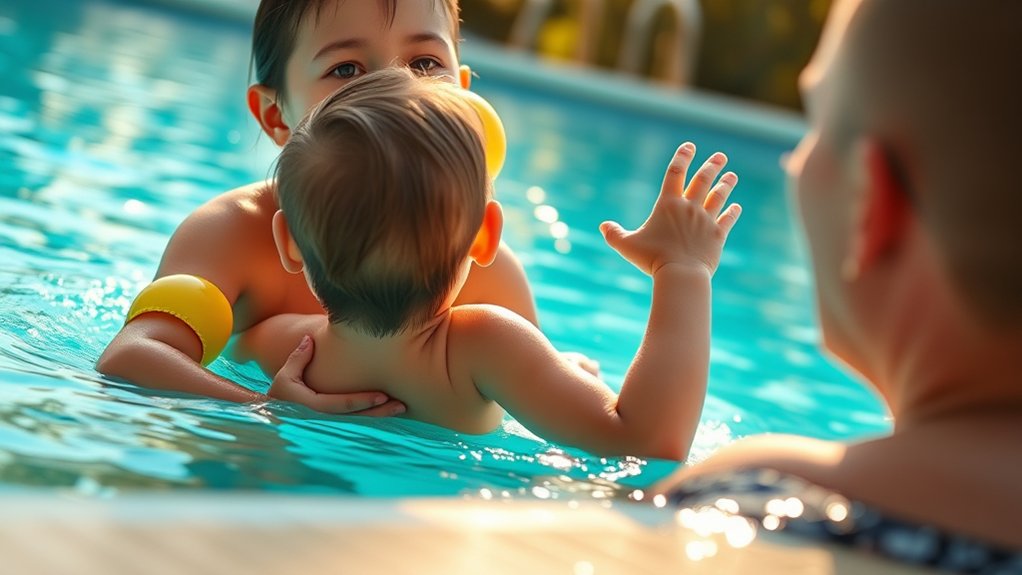
When you start your swimming journey, it’s essential to get comfortable in the water. Begin by practicing floating while holding onto the pool’s edge. Fill your lungs with air to enhance buoyancy, making it easier to float.
As you float, use your arms to stabilize your position in a T shape. This helps maintain balance and boosts your confidence. Once you feel secure, gradually shift to floating on your back and stomach.
Use your arms in a T shape while floating to maintain balance and build confidence as you transition to floating on your back and stomach.
Don’t forget to practice exhaling underwater; this’ll help you get used to submerging your head.
Introduce kicking techniques by holding on to the edge, focusing on keeping a relaxed posture and a consistent rhythm.
This foundation sets you up for successful swimming strokes in the future.
Must-Know Swimming Safety Tips for Beginners
When you’re just starting to swim, it’s super important to have someone watching you at all times—whether that’s a buddy or a lifeguard. It really makes a difference.
Also, learning some basic rescue techniques is a smart move. That way, if something unexpected happens, you’ll be ready to help and keep everyone safe.
Ensure Supervision At All Times
To guarantee a safe swimming experience, always prioritize supervision. It plays an essential role in preventing accidents.
Here are some crucial tips to guarantee safety for beginner swimmers:
- Swim with a buddy or in a supervised area with a qualified lifeguard present.
- Never leave children unattended near water; even in shallow areas, accidents can happen quickly.
- Familiarize yourself with the swimming area, noting the depth and potential hazards to avoid danger.
- Set clear boundaries for swimming and steer clear of unfamiliar or hazardous waters, like strong currents or unmonitored beaches.
Learn Basic Rescue Techniques
Mastering basic rescue techniques is essential for anyone who spends time around water. Start by learning to recognize drowning signs, like someone struggling to stay afloat or calling for help.
When you spot a distress situation, remember to “reach or throw, don’t go.” Use a long object, like a pole, or throw a flotation device instead of jumping in.
Practice the “Reach, Throw, Row, Go” strategy to guarantee safety for both you and the individual in trouble.
Familiarize yourself with CPR basics, as these skills can be lifesaving.
Most importantly, stay calm during an emergency. Maintaining your composure will help you effectively assess the situation and execute the right rescue technique.
Your basic swimming skills could save a life!
Master Your Breathing Techniques: Discover Your Rhythm
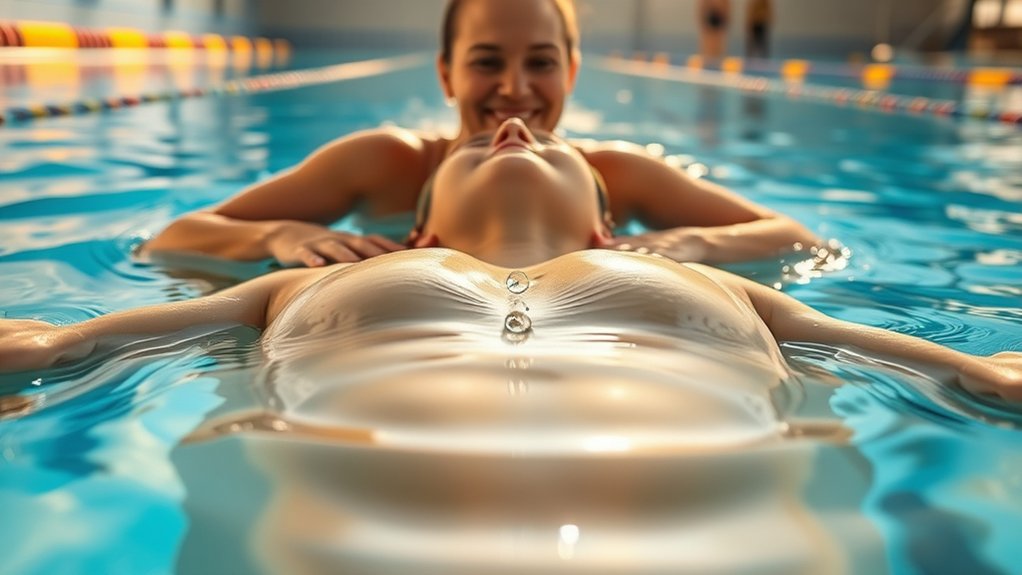
Harnessing effective breathing techniques is essential for becoming a confident swimmer. You’ll need to master your breathing techniques to boost your overall swimming performance. Follow these steps to discover your rhythm:
- Exhale underwater: Clear your lungs before inhaling as your head surfaces. This relaxation reduces panic.
- Timing your breaths: Inhale quickly during your arm recovery and fully exhale when your face is submerged.
- Utilize rhythmic breathing patterns: Establish a consistent inhale-exhale cycle that matches your stroke pace.
- Practice face-down floating: Start with this to naturally integrate breathing into your strokes and feel more comfortable in the water.
Regular practice will improve your breath control and enhance your swimming efficiency.
Embrace these techniques, and swim with confidence!
Kicking Fundamentals: Propel Yourself Forward
Kick strong and feel the water surge beneath you! Kicking is essential for propulsion in swimming, and mastering it will boost your confidence.
Start with the flutter kick, where your legs remain mostly straight, alternating kicks to propel yourself forward. Keep your ankles relaxed and your heels below the water’s surface for an efficient position.
To practice, hold onto the pool’s edge or use a kickboard. This lets you focus solely on your leg movements.
Remember, a consistent, rhythmic kick enhances your swimming strokes and helps maintain a streamlined body position.
As you develop your kicking technique, you’ll lay the groundwork for more advanced strokes, making sure you’re ready for greater challenges in the water.
Why Floating and Treading Water Matter in Swimming?
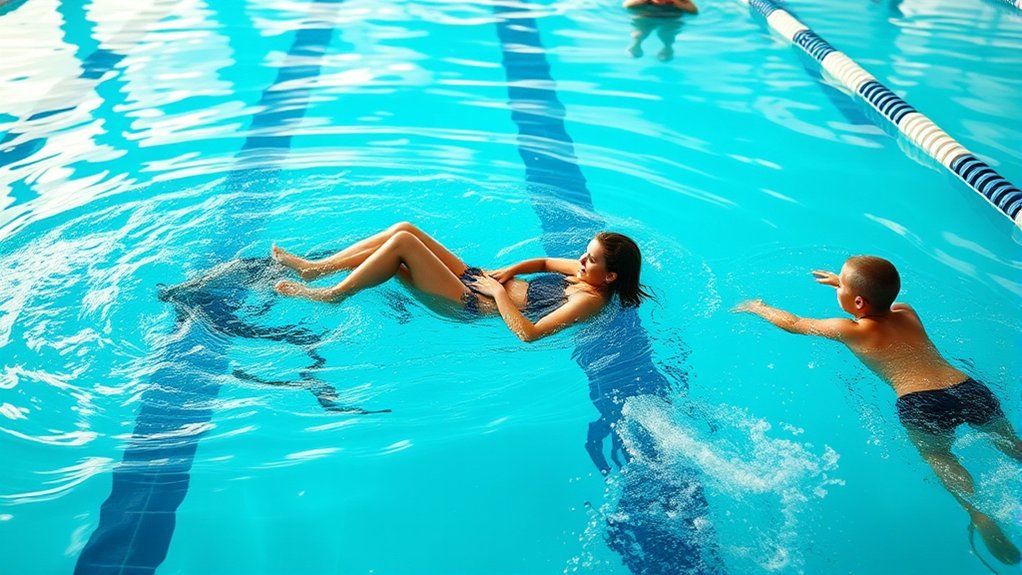
Floating and treading water are super important skills to have when you’re in the water. They help keep you safe by letting you conserve energy and stay calm, especially if something unexpected happens.
Plus, knowing how to do these things can really boost your confidence as you get more comfortable in deeper water.
When you master floating and treading water, you’re not just improving your swimming skills. You’re also getting ready for all kinds of situations that might come up while you’re swimming or just hanging out in the pool or ocean.
It’s a smart way to be prepared and enjoy the water more!
Safety and Survival Skills
While you might think swimming is all about strokes and speed, mastering the essential skills of floating and treading water is crucial for your safety.
These survival skills can save your life and boost your confidence in the water.
Here’s why you should focus on these techniques:
- Floating conserves energy, helping you stay buoyant and reducing drowning risks.
- Treading water allows you to maintain a stable position while you assess your surroundings or wait for help.
- Proper body positioning enhances your ability to float and tread effectively.
- Regular practice mitigates panic, teaching you how to manage breathing calmly in the water.
Developing these skills is essential for any beginner, so don’t overlook them!
Building Confidence in Water
To build your confidence in the water, mastering the skills of floating and treading water is essential.
Floating allows you to conserve energy and feel secure, as you’ll realize you can remain afloat without constant movement. This practice helps reduce panic and fear, which is vital during your swimming journey.
Meanwhile, treading water uses a mix of arm and leg movements to keep you stable, ensuring you stay visible and can breathe easily.
By mastering both skills, you’re laying a strong foundation for more advanced strokes.
Regular practice not only enhances your overall swimming capabilities but also considerably decreases the risk of drowning in emergencies.
Coordinating Your Limbs: Keys to Effective Swimming
Achieving effective swimming relies heavily on how well you coordinate your limbs. To master limb coordination, focus on the following key elements:
Effective swimming is rooted in mastering limb coordination for enhanced efficiency and enjoyment in the water.
- Arm Strokes: Make sure your arm movements are smooth and well-timed.
- Leg Kicks: Keep your leg kicks rhythmic and aligned with your arm strokes for better propulsion.
- Core Engagement: Activate your core to enhance stability and facilitate smoother changes in your strokes.
- Floating and Kicking: Practice floating and kicking drills to build confidence and establish a strong foundation.
Use visual cues, like observing experienced swimmers, to refine your technique.
With patience and practice, effective limb coordination can greatly improve your overall swimming efficiency and enjoyment in the water.
How to Swim Each Basic Stroke: Freestyle, Backstroke, and Breaststroke
Mastering the basic strokes of swimming, freestyle, backstroke, and breaststroke, is essential for building your skills in the water.
In freestyle, keep a horizontal body position. Use a flutter kick and alternate your arms for propulsion. Focus on your timing to maximize efficiency.
For backstroke, lie on your back, tilting your pelvis up while executing a small, controlled kick. Alternate your arm strokes and breathe easily, keeping your face above water.
In breaststroke, use a frog-like kick by drawing your heels toward your hips.
Meanwhile, your arms perform a synchronized “Y” shape sweep for the pull. Prioritize the timing and coordination of your arms and legs in each stroke to enhance your swimming technique and movement.
Optimizing Your Swimming Skills: Overcoming Common Challenges
While swimming can seem intimidating at first, overcoming common challenges is entirely possible with the right approach. Here are some effective strategies to optimize your swimming skills:
- Focus on breathing techniques: Practice exhaling underwater and time your inhalation with your strokes. This helps improve coordination and reduces fatigue.
- Work on body position: Use drills like floating exercises and kickboards to develop foundational skills. These drills enhance swimming efficiency.
- Break down strokes: Practice individual components, like arm movements and kicking. Once comfortable, combine them into a cohesive technique.
- Seek feedback: Regularly ask instructors or experienced swimmers for input. This helps identify areas for improvement.
Stick to a consistent practice schedule to build confidence and endurance, which are essential for mastering swimming skills!
Frequently Asked Questions
What Age Is Best to Start Swim Lessons for Beginners?
The ideal age to start swim lessons for beginners is around 1 to 4 years old.
Early exposure offers numerous swimming benefits, such as improved safety skills and confidence in the water.
Parents should stay actively involved and guarantee lesson frequency aligns with their child’s readiness.
Always remember to follow safety tips, like monitoring closely and choosing a qualified instructor, to create a fun and secure learning environment for your little swimmer.
How Long Will It Take to Learn to Swim?
Learning to swim’s like growing a garden. It takes time and care. You’ll generally need 6 to 10 lessons, but your practice frequency matters.
With consistent practice, ideally two to three times a week, you can accelerate your progress. Focus on swimming techniques and seek qualified instructors to guarantee you’re learning safely.
What Should I Wear for Swim Lessons?
For swim lessons, choose comfortable swimwear options like a fitted swimsuit made of stretchy, chlorine-resistant fabric.
Don’t forget your goggles for clear underwater vision and a swim cap to keep hair secure.
If you’re in a public pool, consider water shoes for safety.
For sun protection, look for swimwear with UV-blocking fabric if you’re outdoors.
Prioritize comfort and fit so you can focus on learning without distractions or discomfort.
Are Swim Aids Like Floaties Beneficial for Beginners?
Absolutely, swim aids like floaties can be beneficial for beginners.
Picture a child learning to walk with supportive hands; floaties offer similar beginner confidence building in water.
They help with water acclimation techniques, allowing you to focus on basic skills.
However, watch out for their limitations. Relying too much on these devices might hinder proper swimming techniques.
As you gain confidence, consider shifting to alternative swim aids for a better foundation in swimming safety.
How Can I Overcome My Fear of Deep Water?
To overcome your fear of deep water, start with gradual exposure.
Begin in shallow areas, practicing your breathing techniques to stay calm. Use visualization methods, imagining yourself swimming confidently in deep water.
Establish support systems by enlisting a friend or instructor who’ll encourage you.
Focus on mindset shifts, celebrating small victories like swimming short distances.
With patience and practice, you’ll gradually build confidence and ease your fears about deeper water.
Conclusion
As you glide through the water, feeling the cool liquid embrace you like a gentle hug, remember that every stroke you take brings you closer to mastery. Embrace the rhythm of your breath, kick with purpose, and let your limbs dance in harmony.
With each practice session, you’re not just learning to swim; you’re crafting a skill that opens up a world of adventure. So plunge into it, trust yourself, and enjoy the journey of becoming a confident swimmer!