How To Swim With Menstruation – Tips And Safety
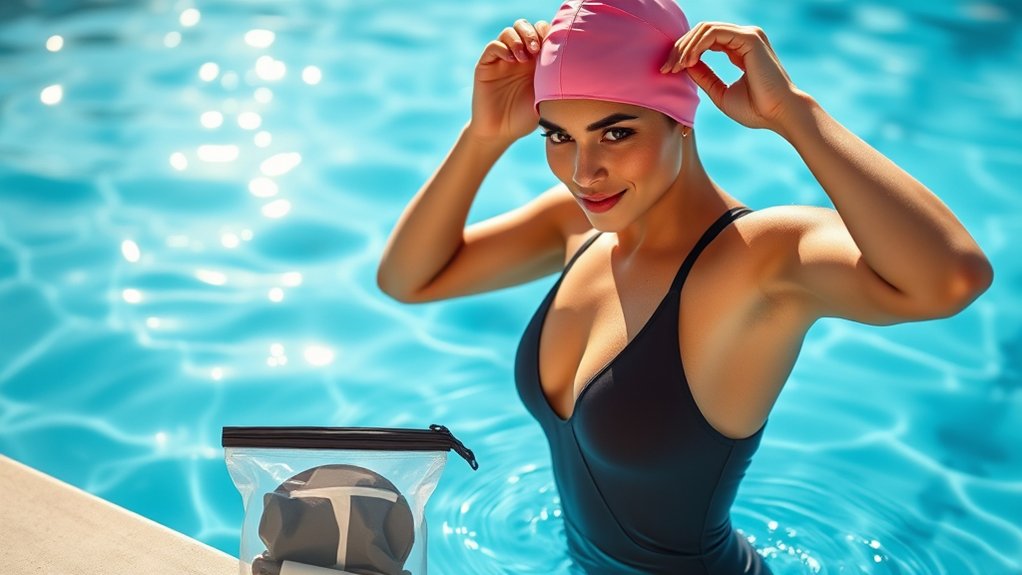
You can swim confidently during your period by choosing tampons or menstrual cups designed for water use and inserting them before getting in the pool. Make sure to use the lowest absorbency needed and pack extras to stay hygienic. Period-friendly swimwear offers added leak protection and comfort.
Swimming can even ease cramps thanks to water’s soothing effects. Trust pool hygiene and change products promptly after swimming. With the right preparation, you’ll feel secure and comfortable.
Explore more tips for managing flow and busting myths.
How To Prepare For Swimming On Your Period
Before you hit the pool, take a few essential steps to prepare for swimming on your period. Start by choosing the right menstrual products like tampons or menstrual cups designed specifically for swimming. They’re super effective at preventing leaks in the water.
Know your flow and pick an absorbency that works for you. Super absorbent tampons or cups are best on heavier days. Make sure to insert your tampon or menstrual cup before you get in the water to ensure a secure fit and good protection.
Choose absorbency based on your flow and insert your tampon or cup before swimming for secure protection.
Don’t forget to pack extra tampons or menstrual cups to change afterward. This helps keep things hygienic and lowers the risk of issues like toxic shock syndrome.
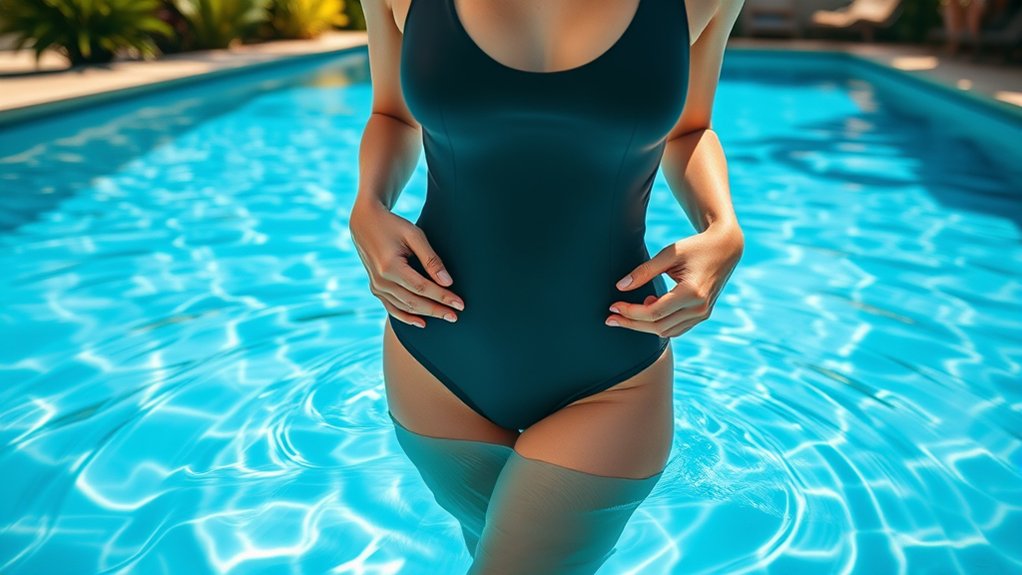
Also, consider wearing period-friendly swimwear for extra comfort and peace of mind while you swim.
Choosing The Best Period Products For Swimming
When selecting period products for swimming, you’ll want options that offer reliable protection without compromising comfort. Tampons and menstrual cups are excellent choices because they absorb menstrual blood discreetly and securely.
Menstrual cups hold more fluid and last longer, while tampons are easy to change every few hours. Pair these with period-friendly swimwear, designed to absorb menstrual blood and provide an extra layer of security. Avoid pads, as they absorb water and lose effectiveness.
| Product Type | Key Benefit |
|---|---|
| Tampons | Discreet, effective absorption |
| Menstrual Cups | Reusable, longer protection |
| Period-Friendly Swimwear | Absorbs leaks, boosts confidence |
| Pads | Not suitable for swimming |
Choose what fits your flow and comfort to swim confidently on your period.
How To Use Tampons Safely When Swimming
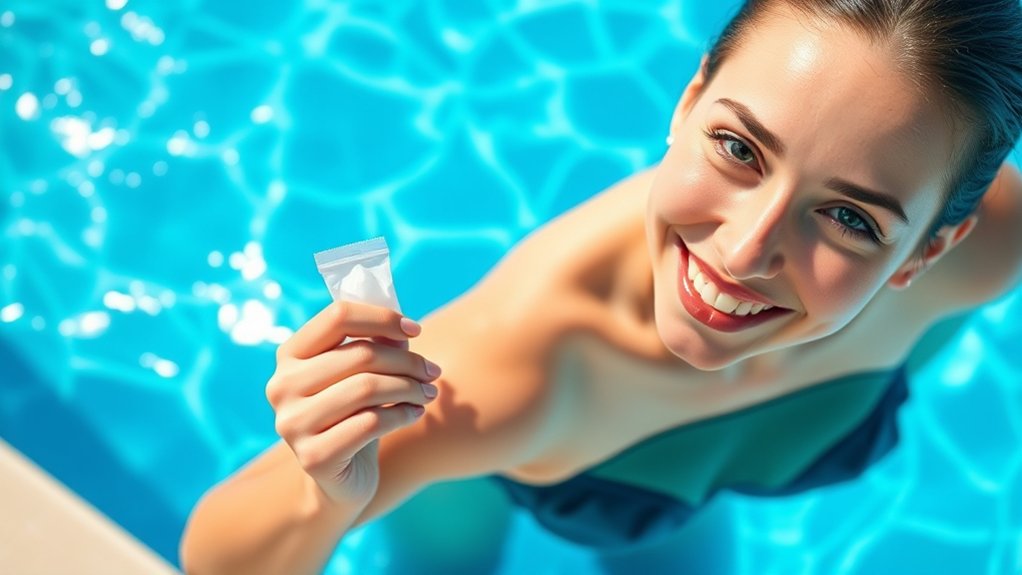
Although inserting a tampon might feel tricky at first, doing so before you enter the water guarantees it can absorb menstrual flow effectively and prevent leaks while you swim.
Use the lowest absorbency tampon necessary to reduce the risk of toxic shock syndrome, which can happen with prolonged use. Always wash your hands before and after insertion to minimize bacteria exposure.
Change your tampon every 4 to 8 hours, and make it a point to replace it immediately after swimming to keep things hygienic.
Practicing tampon use during your period before swimming helps assure comfort and proper placement. This can really boost your confidence in the water.
Swimming Comfortably With Menstrual Cups
Though using menstrual cups might seem unfamiliar at first, they offer excellent protection and comfort while swimming. Made from flexible silicone or rubber, menstrual cups collect menstrual fluid instead of absorbing it, so water won’t affect their effectiveness.
To swim comfortably, make sure you insert the cup properly before entering the water and check for any leaks afterward.
Insert your menstrual cup securely before swimming and always check for leaks to stay comfortable in the water.
Keeping your menstrual cups clean is essential to minimize the risk of infection. Always rinse and wash them before and after use. Since many cups are reusable, they provide an eco-friendly and cost-effective alternative to disposable products.
With proper care and insertion, menstrual cups can help you swim confidently and comfortably during your period. It might take a little practice, but once you get the hang of it, you’ll find they’re super convenient for water activities.
Using Period-Friendly Swimwear For Leak Protection
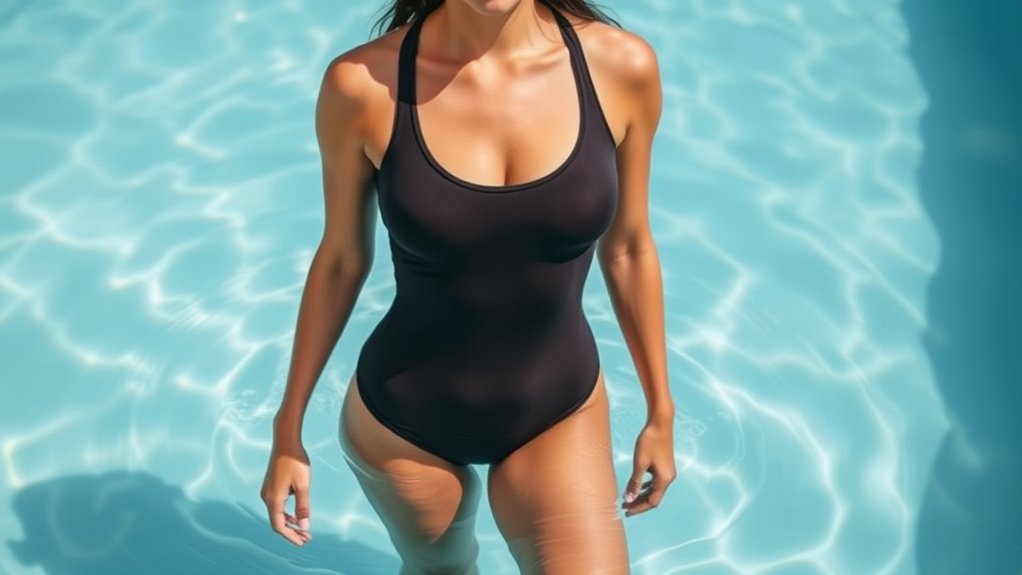
If you want reliable leak protection without relying solely on menstrual products, period-friendly swimwear offers a practical solution. These are designed with absorbable, reusable materials that can hold the equivalent of one to two tampons. That means you can feel confident while swimming without worrying about leaks.
Though the initial costs might be a bit higher, these durable options actually save you money over time. Just remember to change and clean your swimwear at least every 12 hours to keep things hygienic and effective.
| Feature | Benefit | Care Tip |
|---|---|---|
| Reusable Materials | Eco-friendly and durable | Follow brand-specific instructions |
| Absorbency Level | Holds 1-2 tampons worth blood | Change every 12 hours |
| Leak Protection | Enhances swimming confidence | Choose dark colors to conceal leaks |
All in all, period-friendly swimwear is a smart and safe choice for managing your flow in water.
How To Prevent Leaks And Manage Flow While Swimming
Three key strategies can help you prevent leaks and manage your flow effectively while swimming.
First, use a tampon or menstrual cup instead of pads, since pads aren’t suitable for water. Remember to change the tampon every 4 to 8 hours. Menstrual cups can last up to 12 hours depending on your flow.
Second, water pressure may reduce flow visibility but doesn’t stop it, so always wear reliable protection.
Third, consider period-friendly swimwear designed to hold the equivalent of one to two tampons for added security.
Finally, maintain hygiene by washing your hands before and after inserting or removing these products to minimize infection risks.
Following these steps helps you stay comfortable and confident while swimming during your period.
Can Swimming Reduce Period Cramps?
Because swimming combines gentle movement with the soothing properties of water, it can effectively reduce period cramps. The buoyancy of water lightens pressure on your muscles and body, promoting relaxation and easing muscle tension.
When you swim, your body releases endorphins, natural pain relievers that help lessen menstrual cramps. Regular aerobic exercise like swimming may even reduce cramp severity over time, making it a great choice during your period.
Plus, swimming can serve as a distraction from discomfort, helping you feel more comfortable and active despite menstrual pain.
Swimming distracts from pain, promoting comfort and activity even during menstrual discomfort.
Adding swimming to your routine offers both immediate relief and long-term benefits, supporting your well-being throughout your menstrual cycle.
Common Myths About Swimming On Your Period
You might’ve heard that your period attracts sharks, or that swimming isn’t hygienic during menstruation. But honestly, those are just myths.
Chlorinated pools keep everything safe, so there’s no need to worry about that. Plus, swimming is actually a great way to get some exercise, which can help ease cramps.
Periods Don’t Attract Sharks
Although many people worry that swimming while menstruating might attract sharks, research shows this concern is largely unfounded. Studies reveal that shark attacks rarely involve women and that sharks are more drawn to fish blood than human menstrual blood.
The myth that your period increases shark attack risk persists mainly due to stigma, not evidence.
In reality, shark encounters are extremely rare, with only a few attacks reported annually, mostly in shallow waters where women commonly swim.
Experts agree that swimming during your period doesn’t raise your chances of a shark attack. By understanding these facts, you can feel confident and safe enjoying the water without fear or hesitation tied to this common misconception.
Swimming Is Hygienic
Three key facts help debunk common myths about swimming during your period, especially concerns around hygiene.
Swimming pools are designed to be hygienic, with chlorination and filtration systems that neutralize menstrual flow and kill harmful bacteria. You can feel confident that well-maintained pools minimize any health risks linked to menstruation.
Chlorine in swimming pools effectively sanitizes water, making it safe despite menstrual flow. Menstrual blood doesn’t increase the risk of swimming-related illnesses.
Water pressure can temporarily reduce menstrual flow visibility, but using the right menstrual products remains essential.
Changing into dry clothes after swimming helps prevent irritation and maintains hygiene.
Trust these facts to enjoy swimming without worry during your period.
Exercise Eases Cramps
Beyond concerns about hygiene, many wonder how swimming affects menstrual cramps. The good news is that exercise, especially aerobic exercise like swimming, can actually help ease these cramps.
When you swim, your body releases endorphins, natural painkillers that reduce discomfort. The water’s buoyancy also soothes your muscles, providing relief from cramping.
Research shows that staying active during your period doesn’t worsen cramps; instead, it distracts you and often improves your overall mood and well-being. Regular aerobic exercise may even reduce other PMS symptoms such as bloating and mood swings.
Frequently Asked Questions
Can Swimming Affect the Duration of My Period?
Swimming won’t affect the duration of your menstrual cycle, but it does offer several swimming benefits during your period.
Water activities can help ease cramps and boost your mood by increasing endorphins, making you feel more comfortable.
While your flow might feel different in the water, the length of your period generally stays the same.
Is It Safe to Swim During Heavy Menstrual Flow?
You absolutely can swim during heavy menstrual flow without fear. It’s like the ocean itself couldn’t stop you!
Just make sure you use reliable menstrual products like super absorbent tampons or menstrual cups designed for heavy flow.
Pair these with period-friendly swim attire to boost your comfort levels.
Remember, changing your products regularly after swimming keeps you safe and fresh.
With the right prep, swimming can be both safe and comfortable during your heaviest days.
How Does Chlorine Impact Menstrual Products While Swimming?
Chlorine exposure doesn’t substantially affect your menstrual products’ effectiveness while swimming. Tampons may absorb some chlorine, but they still manage flow efficiently.
Menstrual cups, made from silicone or rubber, resist chlorine without losing integrity.
To keep things fresh, just change your product promptly after swimming and rinse it to remove chlorine residue. This simple step helps keep your products clean, safe, and comfortable for continued use during your period.
It’s really not a big deal once you get used to it!
Can Swimming While Menstruating Influence PMS Symptoms?
Swimming while menstruating can be like a gentle tide easing your menstrual cramps. The water pressure acts as a natural massage, soothing discomfort and promoting circulation.
Plus, the rhythmic movement boosts mood enhancement by releasing endorphins, your body’s feel-good chemicals.
Are There Any Special Post-Swim Care Tips for Menstruating Swimmers?
After swimming, prioritize post swim hygiene by rinsing off chlorine and bacteria to prevent irritation.
Change your tampon or menstrual cup promptly, disposing of tampons responsibly to avoid infections.
Choose swimwear that dries quickly and change out of it immediately to reduce moisture buildup.
Washing reusable menstrual cups thoroughly before storing is essential.
Tracking your flow helps you manage these steps better, ensuring comfort and safety every time you swim during menstruation.
It’s all about staying clean and feeling good while you enjoy the water!
Conclusion
So, swimming on your period isn’t the apocalypse you might’ve imagined. It’s actually quite manageable with the right prep and products. You won’t turn into a red sea or leak like a busted dam, promise.
With tampons, cups, and period-friendly swimwear, you can enjoy the water confidently. Plus, swimming can even help soothe those cramps. Who knew your period could be just another part of your swim routine?
Immerse yourself. Your flow won’t stop you.