Can Bats Swim – Surprising Facts
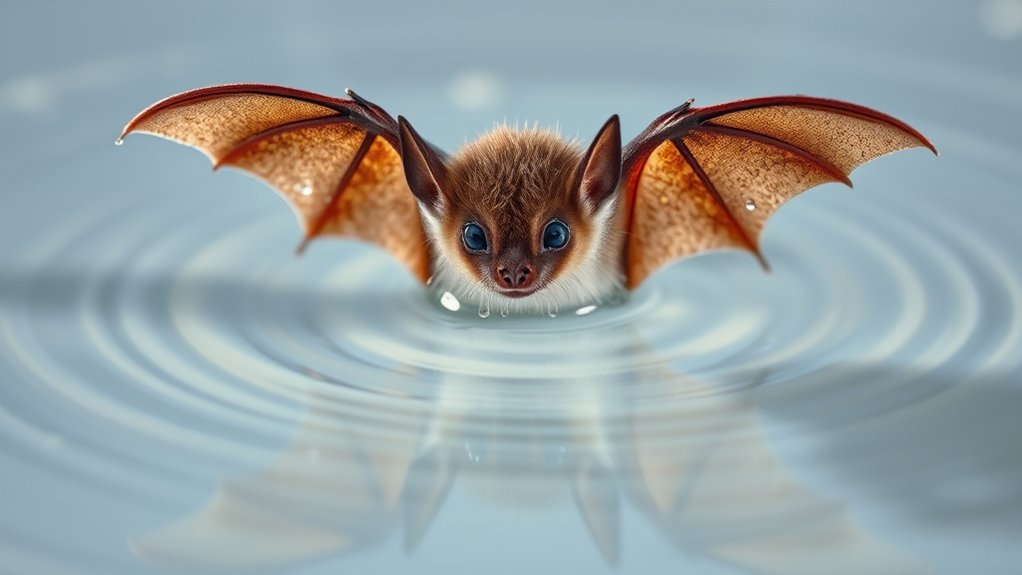
You might not expect it, but bats can swim by flapping their wings and kicking their feet. They use motions like breaststroke to navigate water.
They usually swim to escape predators, reach safer spots, or find hydration when skimming water isn’t enough. Some species, like giant fruit bats, are especially skilled swimmers.
However, swimming pools with steep sides can trap them and pose serious risks. Discover how these surprising abilities help bats survive and why pool safety matters for them.
How Do Bats Swim and Which Species Are Best at It?
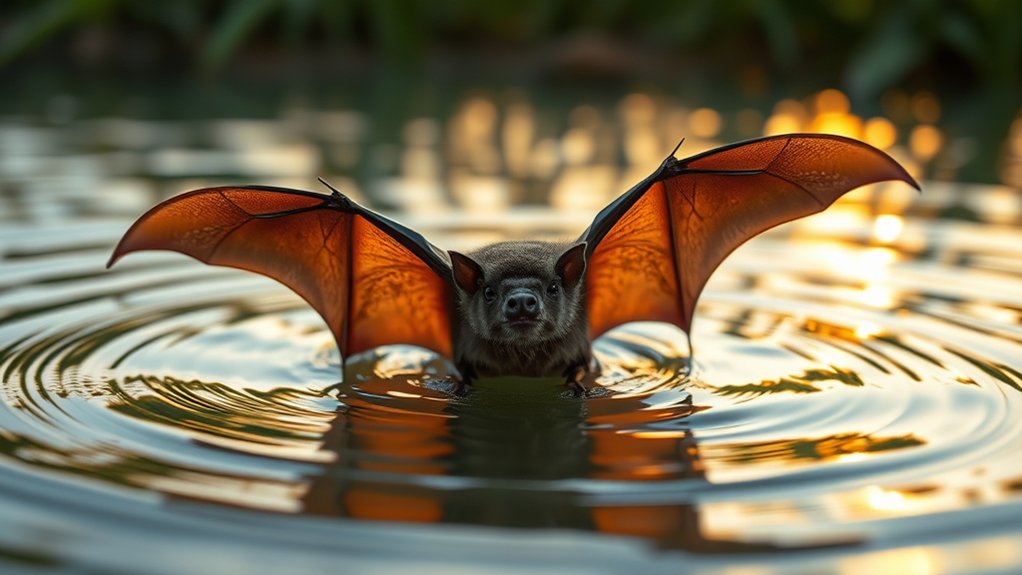
Although bats aren’t natural swimmers, they can propel themselves through water using a motion similar to the breaststroke or butterfly stroke by flapping their wings and kicking with their feet.
When bats swim, they employ this unique swimming technique to move efficiently despite their flying adaptations.
The giant fruit bat, or Pteropus giganteus, is one of the species best at swimming, demonstrating impressive control in water.
While bats rarely seek out water access, they sometimes end up swimming when forced to escape predators or after misjudging water surfaces while drinking mid-flight.
Understanding how bats swim reveals their surprising adaptability, but it also highlights their vulnerability in aquatic environments, especially in artificial bodies like swimming pools where drowning risk increases.
Why Do Bats Need to Swim Sometimes?
When bats misjudge their approach to water or collide with obstacles like pool walls, they sometimes have no choice but to swim to safety. Bats swim to escape danger, especially when trapped in swimming pools or natural water bodies. They also swim to access water when skimming the surface isn’t enough or after forced landings.
Bats sometimes swim to safety when they misjudge water approaches or get trapped by obstacles.
Some species, like flying foxes, may swim to find food or reach safety.
You’ll notice:
- Bats use swimming as a last resort to escape predators or hazards.
- Natural ponds provide safer exit points compared to man-made pools.
- Many drown in swimming pools, highlighting risks of artificial water sources.
- Swimming helps bats access water they can’t reach while flying.
Understanding why bats swim helps you appreciate their adaptability and the challenges they face in their environment. It’s pretty impressive how they manage despite these obstacles!
How Bats Drink Water While Flying or Swimming
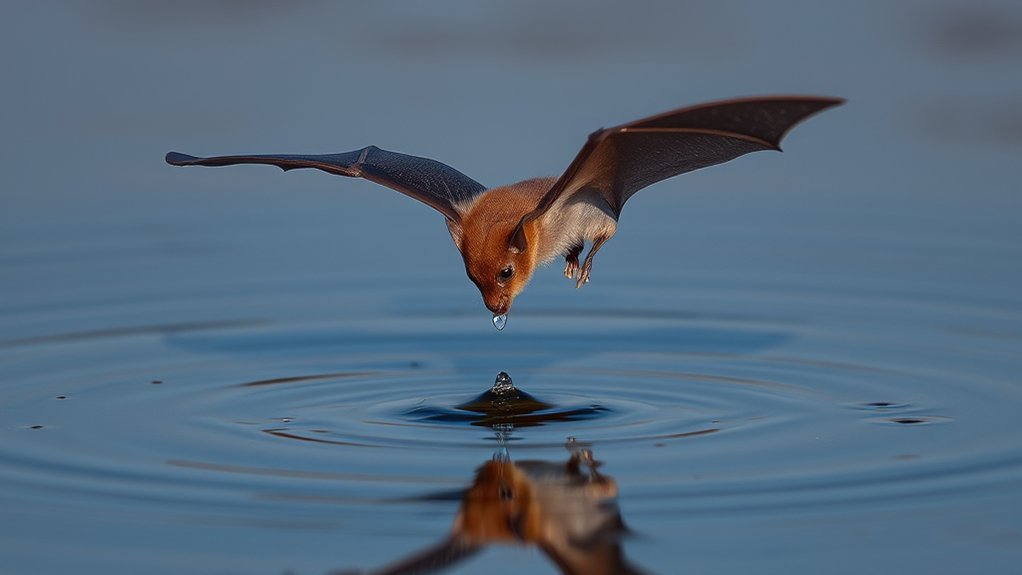
When you watch bats drinking, you’ll see them skim their mouths across the water’s surface while flying. This lets them hydrate quickly without having to stop. Pretty neat, right?
And get this—some species don’t just fly to water, they actually swim! They use their wings and feet to paddle over to water sources when they need to.
Drinking Techniques In Flight
If you watch bats closely at night, you’ll notice they drink water by skimming their mouths just above the surface while flying. This efficient drinking technique lets them hydrate quickly without landing, which is essential during their nocturnal foraging.
Observations show that flying foxes sometimes paddle with their wings and feet if they need to swim to reach water. Occasionally, bats misjudge their approach, resulting in accidental dips that force them to swim briefly.
Here are some key points to visualize this behavior: bats fly low over water, barely touching the surface with their mouths. Drinking water on the wing helps them save time and energy.
Flying foxes use their limbs to swim when necessary. And sometimes, miscalculations happen, leading to short swimming episodes.
This skill really shows how adaptable and precise bats are in their nightly routines. Pretty impressive, right?
Swimming To Access Water
Although bats usually drink while flying, they can swim to access water when necessary. This ability isn’t part of their ordinary behavior patterns but serves as a valuable backup. When natural water sources like ponds are nearby, bats swim to the edge and crawl out if they need to drink water more safely.
Some species, such as flying foxes, swim effectively to reach water or escape danger, showing adaptability beyond their usual flight-based drinking methods.
However, swimming pools with steep sides pose risks, as bats can become trapped and drown.
Water Surface Skimming
Since bats need quick access to water during their nighttime activities, they’ve developed a unique drinking method that lets them skim the water’s surface while flying. This water surface skimming allows bats to hydrate without landing, showcasing their remarkable adaptability.
When drinking, bats glide low over ponds or streams, dipping their mouths just enough to capture water. If they miss or fall in, bats swim using their wings and feet until they reach safety. This technique highlights how bats balance efficient drinking with the risks of landing near water.
- Skim mouths along water without stopping
- Rely on natural water sources but occasionally swim in pools
- Use wings and feet to swim if they fall in
- Adapt drinking habits to scarce water availability
This behavior really shows how flexible bats are when it comes to securing hydration.
How Swimming Pools Threaten Bats
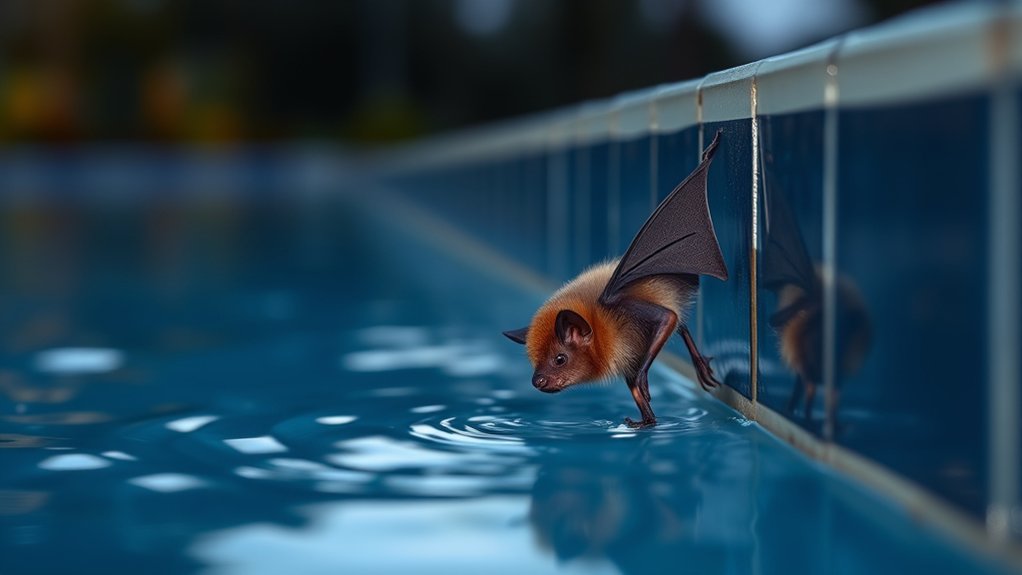
You mightn’t realize it, but swimming pools can actually trap bats because of their steep sides. This often causes many bats to drown.
Believe it or not, about 13% of pool owners have found drowned bats in their pools. That just shows how serious this problem really is.
The good news? Adding small ramps to the pool can give bats an easy way to climb out. This simple fix can help reduce these tragic incidents quite a bit.
Pool Hazards For Bats
When bats approach swimming pools to drink, the steep sides can trap them, often leading to drowning.
Swimming pools create a hazardous environment where bats may slip underwater and struggle to find escape routes. Without proper exit points, many bats drown after becoming submerged while trying to hydrate.
To protect these creatures, you can take simple measures that reduce drowning risks.
Steep pool walls prevent bats from climbing out. Bats often become exhausted trying to escape.
Submerged bats risk drowning before they can fly away.
Installing small ramps offers essential escape routes. These ramps give bats a fighting chance to get out safely.
Drowning Incidence Statistics
Swimming pools pose a significant threat to bats, with surveys showing that 13% of respondents have found drowned bats in their pools. These drowning incidence statistics reveal how common this issue is, especially in urban areas where pools are widespread.
Bats often misjudge their approach to water due to their bat behavior, accidentally falling in and struggling to escape because of the pool’s steep sides. Once trapped, they can quickly become submerged and drown.
Many people have found drowned bats near pools, highlighting the urgency to understand this problem. While escape ramps can drastically reduce these incidents, awareness of how bat behavior interacts with pool design is vital.
Recognizing these risks can help minimize bat drownings and protect local bat populations. It’s important for pool owners to be aware and consider simple solutions to keep bats safe.
After all, protecting bats benefits the entire ecosystem.
Escape Solutions For Pools
Although pools provide an essential source of water, their design often traps bats, leading to dangerous situations. When bats swim in pools, they struggle to find escape routes because the sides are steep and smooth. This lack of exit points increases drowning risks considerably.
To protect these creatures, you can implement simple preventive measures that create safe exit options. It’s easier than you might think!
Consider these solutions:
- Install small ramps or floating platforms, similar to frog ramps, to allow bats to climb out.
- Verify pool edges have textured surfaces for better grip.
- Keep pool water levels consistent to avoid sudden drops.
- Raise awareness about bats’ behavior near pools to encourage wider adoption of safety measures.
How Pool Owners Can Help Bats Escape
Since bats often try to drink from pools and can accidentally drown, you can help by installing small ramps that allow them to climb out safely. These ramps act as effective escape routes, reducing the number of drowning bats. Proper pool maintenance also plays a vital role in minimizing risks by keeping water clean and accessible.
Being aware of how bats swim and behave near water can guide your actions to protect them. It’s pretty simple to make a big difference with just a few thoughtful steps.
| Problem | Solution |
|---|---|
| Drowning bats | Install ramps for escape |
| Trapped in pool | Provide accessible edges |
| Risk in pool care | Regularly check and maintain |
Why Swimming Matters for Bat Survival
Helping bats escape from pools by adding ramps not only prevents drowning but also supports their natural ability to swim when needed.
You’ll find that swimming is essential for their survival, especially when they misjudge landing spots or face urban hazards like steep pool walls.
When bats can swim, they gain access to safety and drinking water, which are critical for thriving amid predators and human environments.
Without proper escape routes, these creatures risk exhaustion and drowning.
Lack of escape routes can lead bats to exhaustion and tragic drowning incidents.
Consider these points about why swimming matters for bat survival:
- Bats use wings and feet to swim effectively, aiding quick escapes from danger.
- Pools with no exit trap bats, increasing drowning risks.
- Swimming helps bats navigate to safe areas when disoriented.
- Access to water sources supports hydration and energy needs.
How Bat Swimming Compares to Other Mammals
When you compare bat swimming to that of other mammals, you’ll notice bats use their wings and feet much like a breaststroke to propel themselves through water. This technique, while effective, is less refined than the natural swimming abilities seen in aquatic mammals like otters or beavers.
Bats typically swim in stressful situations, utilizing their wings not for flight but as paddles to stay afloat and reach safety. Unlike fully aquatic mammals that rely on swimming regularly, bats swim as a last resort.
It’s kind of like how dogs or cats might manage in water even though they’re not really built for it.
These comparative techniques highlight that bat swimming is functional but occasional. It’s all about survival rather than being efficient in the water.
What Bat Swimming Teaches Us About Overcoming Limits
Although bats spend most of their lives in the air, their ability to swim reveals a remarkable adaptability that can inspire you to push beyond your own limits.
When bats swim, they show how overcoming limits means using unique strengths in unfamiliar situations. Just like bats use their wings and feet to navigate water, you can rely on your own skills to face challenges.
Overcoming limits means using your unique strengths to navigate unfamiliar challenges, just like bats swimming with wings and feet.
This adaptability reminds you that limits often exist only until you test them.
Think about how bats swim to teach you about overcoming limits:
- They switch from flying to swimming when necessary, showing flexibility.
- They use all available limbs to maneuver, making the most of their unique strengths.
- They survive unexpected challenges by adapting quickly.
- Their success in water encourages you to embrace new abilities.
Frequently Asked Questions
Can Bats Hold Their Breath Underwater?
You’ll find that bats can hold their breath underwater, but only briefly. They use basic breath holding techniques as part of their survival strategies, especially when trapped in water.
Their underwater navigation skills are limited since swimming isn’t typical behavior, and they lack specialized aquatic adaptations.
Instead, they rely on quick paddling with wings and feet to reach the surface fast. This helps them breathe and survive these rare situations effectively.
Do Baby Bats Learn to Swim From Adults?
No, baby bat behavior doesn’t typically include learning swimming techniques from adults.
You won’t see much parental guidance in this area because swimming isn’t a regular skill bats pass down. Instead, adult bats focus on teaching survival skills like flying and foraging.
Swimming usually happens only in emergencies, so it’s rarely modeled or taught.
If you’re studying bat pups, you’ll notice swimming isn’t part of their usual learning process.
How Fast Can Bats Swim Compared to Flying?
Imagine a giant fruit bat escaping predators by swimming slowly across a pond. When you compare bat swimming speed to flight efficiency, you’ll see they cruise at about 1-2 mph in water, which is far slower than their 60+ mph flight.
This difference highlights their limited aquatic adaptations. Swimming is a rare, emergency bat behavior rather than a primary mode of travel.
Are There Any Predators That Catch Bats in Water?
Yes, water predators do catch bats in aquatic environments. You’ll notice that while bats have some adaptations to swim, they aren’t as skilled in water as in air.
Predators like certain fish and birds of prey exploit this weakness, using specialized hunting techniques to catch them when they’re vulnerable.
Their time in water exposes them, making them easier targets despite their usual agility and echolocation skills.
Can Swimming Bats Get Hypothermia or Other Health Issues?
So, you probably didn’t picture bats donning tiny wetsuits for a swim, but yes, swimming behavior exposes them to serious health risks.
Their thermal regulation isn’t designed for cold water, so hypothermia can hit fast. Without aquatic adaptations, bats struggle to dry wings, inviting fungal infections and exhaustion.
If you spot a soggy bat, it’s battling more than just water. It’s fighting to survive and needs your help to avoid these dangers.
Conclusion
You might be surprised to learn that some bats can swim, using their wings to paddle effectively when needed. While not all species are natural swimmers, this ability helps them survive unexpected water landings or drink mid-flight.
Curiously, research suggests their swimming is more about emergency adaptation than regular behavior. Understanding this challenges assumptions about bats’ limits, showing how they adapt to environmental pressures. It’s a reminder that even small skills can be essential for survival.