How To Swim Faster – Techniques And Tips
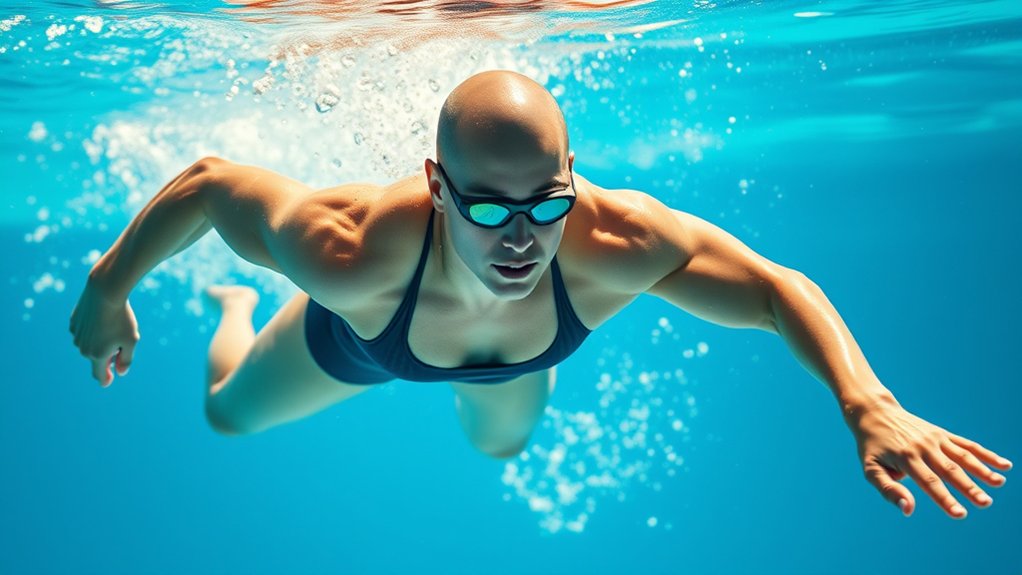
You can swim faster by maintaining a streamlined body position with engaged core muscles and proper side-to-side rotation to reduce drag. Focus on powerful, downward kicks and master the high-elbow pull technique for efficient propulsion.
Synchronize your breathing with strokes while keeping your head aligned to cut resistance. Track your speed and set clear goals to stay motivated.
Use streamlined gear and strengthen your core with dry-land training. Keep exploring these strategies to reveal your full swimming potential.
Focus on Technique for Faster Swimming
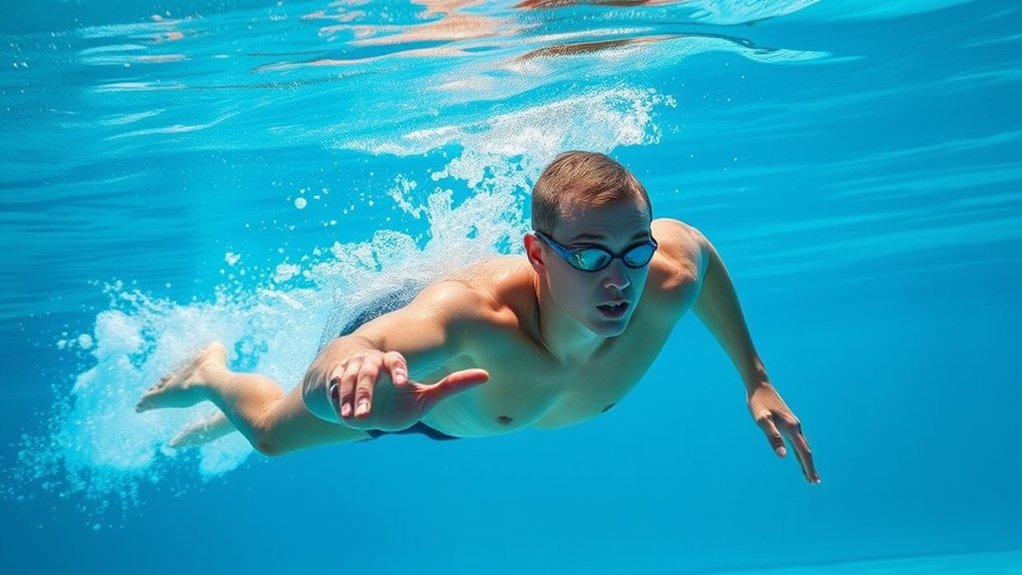
Mastering your swimming technique is the fastest way to shave seconds off your time. Focus on maintaining a streamlined body position by keeping your hips elevated and aligned parallel to the water surface. This reduces drag and allows you to cut through the water more efficiently.
Pay special attention to the pull phase by practicing the high-elbow catch. It maximizes muscle engagement and propulsion, boosting your speed.
Focus on the high-elbow catch during the pull phase to enhance propulsion and increase your swimming speed.
Effective side-to-side rotation complements this by reducing water resistance and enabling smoother breathing.
Incorporate targeted drills like catch-up and side-kick to reinforce these elements.
Improve Your Balance to Cut Drag and Swim Faster
To swim faster, you’ve got to get your body position just right. That means staying aligned and parallel to the water’s surface.
Try to keep your hips and legs up — it really helps cut down on drag and keeps you streamlined.
If you focus on maintaining that balance, you’ll find yourself slicing through the water with way more speed and efficiency.
It’s all about holding that form consistently. Give it a shot!
Body Position Alignment
A balanced body position with your hips and legs elevated slashes drag and boosts your speed in the water. To maximize efficiency, focus on achieving a streamlined alignment where your body stays parallel to the water’s surface. This reduces resistance and lets you glide effortlessly.
Engage your core muscles consistently; they stabilize your body, keeping your position steady and preventing unnecessary movements that increase drag.
Practice drills like the side-kick drill to develop a keen sense of your body’s alignment and balance in the water.
Visualize swimming downhill. Forward momentum naturally lifts your lower body, reinforcing proper position. Mastering this alignment transforms your stroke, making every movement count and propelling you faster through the pool.
Stay committed, and your body will move with precision and speed. You’ll notice the difference as your swimming becomes smoother and more efficient. Keep at it!
Hip And Leg Elevation
Keeping your hips and legs elevated plays an essential role in cutting drag and swimming faster. When your lower body sinks, you create more resistance, which slows down your progress.
Focus on maintaining hip and leg elevation by imagining you’re swimming downhill. This mental image helps you stay streamlined and parallel to the water’s surface.
Engage your core to stabilize your body, allowing the lower body to stay lifted effortlessly. A strong, downward kick supports this position and reduces drag. This, in turn, helps you swim faster.
Try incorporating balance drills like the side-kick drill into your routine to master this skill.
Build a Powerful Kick for Better Propulsion
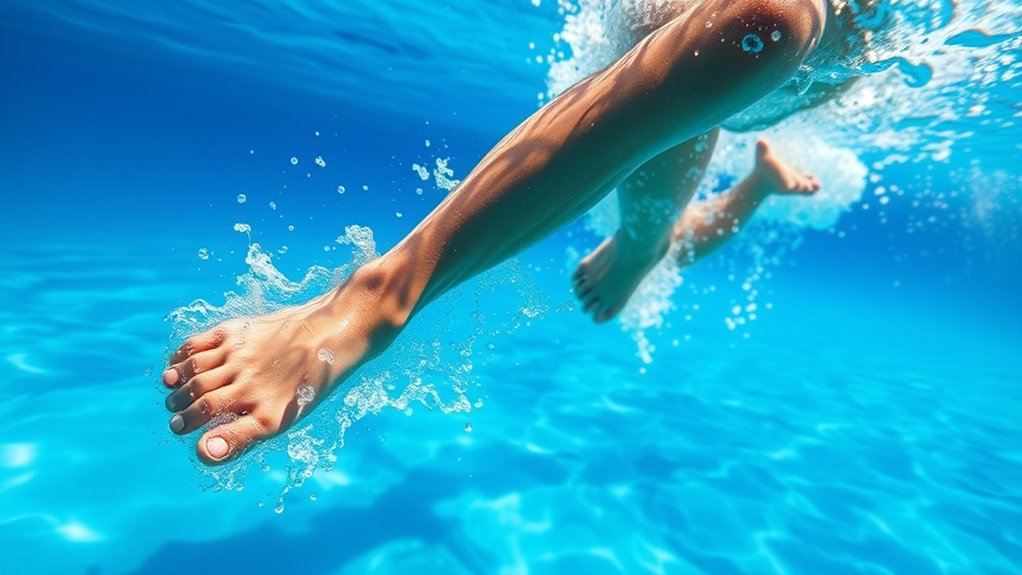
Five key elements make up a powerful kick that propels you efficiently through the water. To kick harder and generate maximum propulsion, you have to focus on technique and body position.
A powerful kick keeps your hips and legs aligned to maintain a streamlined form, which reduces drag. Kick downward to push water effectively, driving you forward with less resistance.
Incorporating a two-beat kick builds endurance and helps you sustain speed over longer distances. Strengthen your legs with targeted kicking drills using a kickboard to develop muscle memory and power.
Keep your body streamlined to translate energy into forward motion. Emphasize downward kicks to maximize water displacement.
Practice two-beat kicking for balanced propulsion and energy efficiency. Master these elements and you’ll swim faster and more efficiently.
Master Your Pull With a High-Elbow Position
When you master the high-elbow position during your pull, you’ll release greater propulsion and efficiency in your stroke.
In freestyle swimming, keeping your elbow high during the arm stroke maximizes muscle recruitment and keeps your forearm parallel to the water’s surface.
This stroke technique increases the surface area in contact with water, which means you displace more water with every pull.
Start each pull by rotating your shoulder inward. Make sure your elbow stays above your wrist, and your wrist stays above your hand throughout the motion.
Begin each pull with an inward shoulder rotation, keeping your elbow above your wrist and wrist above your hand.
Practicing drills that focus on the high-elbow position will help make this essential habit second nature.
This will boost your stroke efficiency and speed. Commit to mastering this technique, and you’ll see real improvements in your freestyle swimming performance.
Master Body Rotation to Reduce Drag and Boost Speed
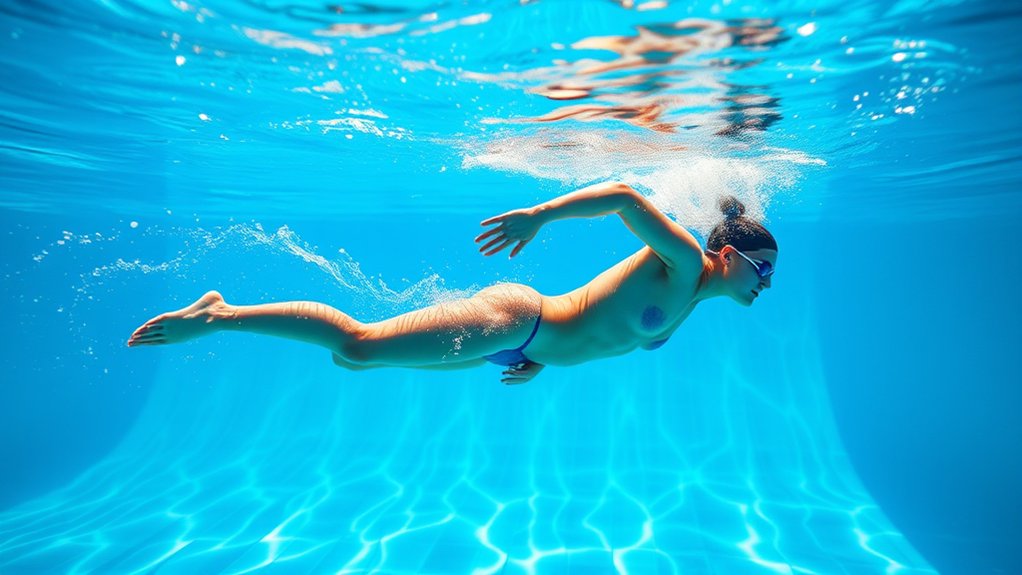
Mastering the high-elbow pull sets a strong foundation, but your speed will truly accelerate once you control your body rotation.
Proper body rotation aligns you along your long axis, streamlining your freestyle technique to reduce drag and boost speed.
When you rotate smoothly, you engage your back muscles more effectively, propelling yourself forward with less resistance. It’s all about working smarter, not harder.
Focus on these key elements to master body rotation:
- Practice side-kick drills to feel and perfect your rhythmic roll
- Time your body rotation to sync with each arm stroke for fluid motion
- Maintain a streamlined position, minimizing your body’s surface area in the water
Getting these right will make your swimming more efficient and faster. Give it a try and feel the difference!
Develop Efficient Breathing to Swim Faster
You’ll boost your speed by mastering the timing of every breath and syncing it smoothly with your stroke.
Just focus on controlling your exhale underwater so each inhale is quick and efficient.
With a bit of disciplined practice, your breathing will fuel your power without breaking your rhythm.
Breathing Timing Mastery
Because efficient breathing timing directly impacts your speed and endurance, learning to exhale continuously underwater and inhale swiftly when you roll to the side is essential. Mastering this skill guarantees your upper body stays aligned, reducing drag and maintaining stroke efficiency.
Focus on integrating breathing timing into your swim training by syncing your breath with body roll and arm pulls. This coordination engages larger back muscles and sustains propulsion.
To master breathing timing, remember to:
- Exhale steadily underwater, allowing a quick, sharp inhalation.
- Maintain a consistent breath count adapted to your race distance.
- Keep your head aligned with your upper body to prevent hips from dropping.
Perfecting these habits accelerates your swim pace and builds endurance efficiently. It’s all about practice and staying mindful of your breathing rhythm during every stroke.
Breath Control Techniques
While improving your stroke technique is essential, developing efficient breath control techniques can greatly boost your swimming speed and endurance.
Start by establishing a breath count that aligns with your distance. For example, limit yourself to two breaths during a 50-yard freestyle to maintain speed.
Exhale continuously underwater to guarantee a smooth inhale. Keep your breathing relaxed and rhythmic.
Roll onto your side to breathe, which keeps your body streamlined and reduces drag.
Apply the buoy pressing technique by pressing down on your head and chest to elevate your hips and legs effortlessly. This enables smoother strokes.
You can also incorporate breathing drills focused on timing and rhythm to coordinate your breath with arm strokes and body movements.
Mastering these swimming tips will enhance your freestyle efficiency and propel you faster through the water.
Give them a try and see how your swimming improves!
Track Your Swimming Speed to Stay Motivated
Although swimming faster requires consistent effort, tracking your speed regularly keeps you motivated and focused on progress. When you track your swimming speed, you create measurable goals that guide your training and highlight improvements.
Use a stopwatch or swimming app to record your times consistently, then analyze them to spot patterns and adjust your strategy. Celebrate hitting personal bests. They’re milestones that fuel your motivation and commitment.
To effectively track your progress:
- Set specific, measurable goals like shaving seconds off your 100-meter time.
- Record your swim times after every session using reliable tools.
- Review your data regularly to identify strengths and areas needing improvement.
Boost Speed With Gear and Dry-Land Training
Tracking your speed lays the foundation, but to truly boost your swimming times, you need the right gear and targeted dry-land training. Invest in streamlined gear like fitted swimsuits and silicone caps to reduce drag and improve your hydrodynamics.
Use fins during practice to strengthen your kick and refine body position. Hand paddles increase resistance, building upper body strength and enhancing stroke technique.
Fins boost your kick and form, while hand paddles build upper body strength and sharpen your stroke.
Complement your time in the pool with dry-land training focused on core stability and leg power. Think squats and planks to sharpen explosive starts and turns.
Don’t neglect flexibility routines targeting shoulders, hips, and ankles. They extend your stroke range and efficiency.
Frequently Asked Questions
How Does Water Temperature Affect Swimming Speed?
Water temperature directly affects your swimming speed by influencing water viscosity, muscle response, and thermal regulation.
In cooler water, reduced viscosity helps you cut through faster, but your muscles might stiffen, slowing you down.
Warmer water boosts muscle flexibility and comfort levels, enhancing stroke efficiency. Yet overheating can hinder performance.
You’ve got to find that sweet spot to optimize thermal regulation, maintain comfort, and maximize your speed in the pool.
Can Diet Impact My Swimming Performance?
Yes, your diet can considerably impact your swimming performance.
Use carbohydrate cycling to fuel your energy needs effectively, especially before intense sessions. Focus on protein timing by consuming protein post-workout to enhance muscle recovery.
Implement hydration strategies to maintain endurance and prevent efficiency loss.
Also, optimize meal frequency by eating balanced meals 2-3 hours before training. These approaches will boost your stamina, speed, and overall swim performance.
Stay disciplined and swim stronger!
What Mental Strategies Improve Race-Day Performance?
Use visualization techniques, goal setting, positive affirmations, and race simulation to sharpen your race-day performance.
Visualize every stroke and turn to boost confidence. Set clear, measurable goals to maintain focus and drive.
Repeat positive affirmations to build mental toughness and resilience.
Practice race simulations to get comfortable with pressure and pacing.
How Often Should I Rest Between Swim Workouts?
You should schedule rest intervals of at least 24-48 hours between swim workouts targeting the same muscle groups. It helps your body recover and get stronger.
Try using active recovery techniques like light swimming or cross-training 1-2 times a week. This can boost your recovery without losing fitness.
Make sure to adjust your workout frequency based on how intense your sessions are.
And always listen to your body to avoid overtraining.
Prioritizing proper rest and recovery techniques is key. It helps prevent injuries and keeps you performing at your best in the water.
Are There Benefits to Swimming Barefoot or With Fins?
Absolutely, swimming barefoot or with fins supercharges your performance!
The barefoot advantages include sharper proprioception and better foot flexibility, boosting your kick’s power and injury prevention.
Fin techniques amplify propulsion and build leg strength, creating efficiency gains that carry over to your regular stroke.
By mixing both, you develop muscle memory and refine your form, making every swim faster and smoother.
Embrace these tools to transform your swim game!
Conclusion
Now that you know the key techniques to swim faster, are you ready to take your speed to the next level? Focus on perfecting your balance, kick, pull, and rotation while developing efficient breathing.
Track your progress and use gear and dry-land training to boost your results. With consistent effort and the right mindset, you’ll slice through the water like never before.
Keep pushing. Faster swimming is within your reach!