How Long After Shocking Pool Can You Swim – Safety Timing
After shocking your pool, wait at least 12 to 48 hours before swimming, depending on the shock type. Chlorine-based shocks like calcium hypochlorite require longer wait times, while sodium dichlor and non-chlorine shocks allow quicker returns.
Always run your pool pump to help distribute chemicals evenly. Test for safe free chlorine levels between 1-4 ppm and a pH of 7.2-7.8 before entering.
Understanding these factors helps you swim safely and confidently sooner.
How Long Should You Wait to Swim After Pool Shock?
Although shocking your pool is essential for maintaining water quality, you should never jump in immediately afterward. After a pool shock treatment, chlorine levels spike and must decrease to guarantee it’s safe for swimming.
With calcium hypochlorite shock, you need to wait 24 to 48 hours, while sodium dichlor requires a 12 to 24-hour wait time.
Calcium hypochlorite requires 24-48 hours wait, sodium dichlor needs 12-24 hours before swimming.
Non-chlorine shock is different. It allows you to swim in just 15 to 30 minutes because it doesn’t greatly raise chlorine levels.
Always test the water after shocking to confirm free chlorine levels fall between 1 and 4 ppm. Monitoring water chemistry carefully guarantees you avoid irritation or health risks.
Why Running Your Pool Pump Matters After Pool Shock
After shocking your pool and waiting for chlorine levels to drop, running your pool pump plays an essential role in keeping the water safe and clear. The pool pump ensures continuous circulation of the shock treatment, spreading it evenly throughout the water. This helps avoid areas with too much chlorine, which can be harmful to swimmers and make you wait longer before using the pool.
Once you’ve shocked the pool, the pump also helps break down contaminants and organic matter, which leads to clearer water. Plus, it filters out dead algae and debris that can cloud the water, improving overall clarity.
By keeping the water moving, you help stabilize chlorine levels faster. This means the pool becomes safe for swimming sooner.
How Pool Shock Types Affect Your Wait Time
When you choose a pool shock type, you directly influence how long you’ll need to wait before swimming again.
Chlorine-based shock treatments like calcium hypochlorite typically require a wait time of 24 to 48 hours because they raise chlorine levels considerably.
Sodium dichlor, a fast-dissolving chlorine-based shock, shortens this to about 12 to 24 hours depending on chlorine levels and environmental factors.
Non-chlorine shock treatments, such as potassium monopersulfate, allow swimming as soon as 15 minutes after application since they don’t elevate chlorine levels.
Remember, the dosage of your shock treatment also impacts wait time. Higher doses mean longer waits.
While pool size plays a role in chlorine dispersion, the type of shock and environmental factors primarily dictate when it’s safe for swimming after shocking your pool.
How Pool Size and Water Conditions Change Your Swimming Timeline
Since pool size and water conditions directly influence how chemicals disperse and stabilize, they play a critical role in determining your safe swimming timeline. Larger pools require extended waiting periods because chlorine levels take longer to reach the safety range after shock treatment.
Water conditions like high temperatures or imbalanced chemical levels also affect chlorine breakdown and stabilization. So, it’s not just about the pool size; the water itself matters a lot.
| Factor | Impact on Swimming Timeline |
|---|---|
| Larger Pools | Longer waiting period due to dilution |
| Poor Water Conditions | Additional time to stabilize chlorine |
| Circulation & Filtration | Speeds chemical distribution, reduces wait |
Proper circulation and filtration help distribute shock chemicals evenly, which shortens your waiting period. Always test chemical levels before swimming to guarantee safety and adjust your timeline accordingly. It’s better to be safe and wait a little longer than to jump in too soon!
How Much Shock You Should Use and What It Means for Safety
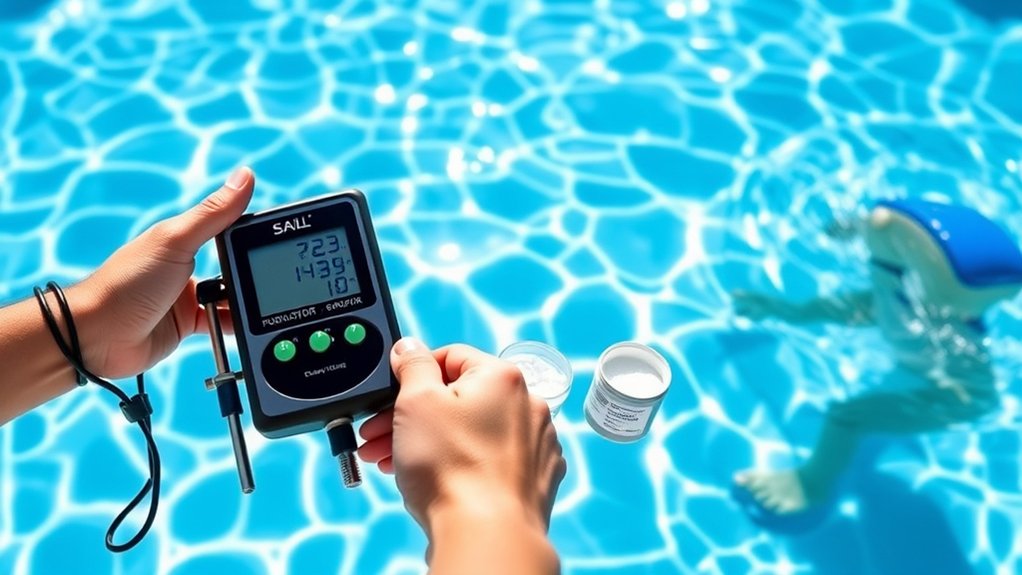
You want to use the right amount of shock depending on your pool’s size—usually about one pound for every 10,000 gallons. This helps keep your pool clean without pushing chlorine levels too high.
If you use too much shock, chlorine can go beyond safe limits, which means you’ll have to wait longer before jumping in to avoid skin and eye irritation.
Proper Shock Dosage
One pound of shock per 10,000 gallons of water usually provides the proper dosage for standard pool treatment, but you may need more for heavily contaminated water.
Using the correct shock dosage is essential to balance chlorine levels, ensuring contaminants are effectively eliminated without overdosing.
Overdosing raises chlorine above safe limits, increasing wait time before you can swim safe, sometimes up to 48 hours.
Conversely, under-dosing leaves harmful bacteria and algae, compromising water quality and swimmer safety.
Always check the product label, as different shock treatments vary in chemical levels and dosage requirements.
Safety Implications
Although proper sanitation requires sufficient shock treatment, using too much can create safety hazards by elevating chlorine levels beyond safe swimming limits. Typically, you should use about one pound of chlorine shock per 10,000 gallons of water. Excessive shock treatment raises chlorine levels above 5 ppm, which means you have to wait longer before it’s safe to swim.
After shocking, always perform water testing to confirm chlorine levels have dropped to 1-4 ppm for safe swimming. Non-chlorine shock, on the other hand, lets you swim within 15-30 minutes since it doesn’t greatly affect chlorine levels.
So, understanding the importance of shocking and sticking to recommended dosages helps keep your pool clean without putting safety at risk.
Regular pool maintenance, including balanced chemical use and monitoring, also helps maintain water clarity and swimmer safety. It’s all about keeping things balanced so everyone can enjoy the pool safely.
How to Test Your Pool Water to Know When It’s Safe to Swim
Before jumping back into your pool after shocking, test the water thoroughly to confirm it’s safe. Use a reliable test kit to measure free chlorine levels, and wait for at least the moment chlorine levels drop below 5 ppm before swimming. You should test your water again 15-30 minutes after shocking to monitor changes.
Verify free chlorine levels fall within the safe range of 1-4 ppm, which is critical for maximum comfort and safety. Don’t forget to check the pH balance as well; it should be between 7.2 and 7.8 to prevent irritation.
While test strips provide quick results, verify with a liquid test kit for accuracy, especially after shocking. Regularly measuring chlorine levels and pH balance helps you know when your pool water is safe for swimming.
It might seem like a bit of extra work, but it’s definitely worth it to keep your swim comfortable and safe. So, take a few minutes to test before you jump in!
How to Handle High Chlorine Levels After Pool Shock
Monitoring your pool’s chlorine levels after shocking is key to knowing when it’s safe to swim. Sometimes those levels stay higher than expected, though.
If chlorine levels exceed 10 ppm, extend your wait time to at least 24-48 hours before swimming. Use a reliable test kit to monitor levels regularly, aiming for the safety range of 1-4 ppm.
To reduce concentration faster, run your pool pump continuously to improve water circulation. If high levels persist despite circulation, partially drain and refill the pool with fresh water to dilute chlorine levels effectively.
Always verify chlorine levels drop to 5 ppm or below before allowing swimming to avoid skin and eye irritation.
Consistent monitoring after you shock your pool guarantees a safe and enjoyable swimming experience.
Tips for Scheduling Pool Shocks Without Disrupting Swim Plans
When you schedule pool shocks thoughtfully, you can maintain crystal-clear water without interrupting your swim plans. Plan your pool shock during off-peak hours like late evening or early morning to allow chlorine levels to stabilize overnight. This way, the water is safe by the next day.
For chlorine-based shocks, you’ll need to wait 24 to 48 hours before swimming. If you use non-chlorine shock, you can swim again in as little as 15 to 30 minutes, which is perfect for last-minute swims.
Regularly monitor your pool’s condition and adjust your shock schedule accordingly, especially after heavy use or rain.
Always communicate your shock timing with family or guests to keep everyone informed and avoid unexpected swim disruptions. This approach guarantees safe, well-timed pool water management.
Frequently Asked Questions
Can I Swim Immediately After Using Natural Pool Shock Alternatives?
You can usually swim shortly after using natural pool shock alternatives, thanks to their rapid dissolution and minimal chlorine impact.
Natural shock benefits include eco-friendly options that reduce chemical interactions, making swimming safety tips easier to follow.
Just verify you test shock dosage calculations and water balance as part of pool maintenance practices.
Avoid swimming pool myths by following alternative shock methods and recommended shock treatment frequency to keep your pool safe and clean.
Does Shocking the Pool Affect Pool Toys or Floats?
Yes, shocking the pool can affect pool toys or floats because of chlorine sensitivity risks and how the materials react. High chemical residue might degrade vinyl or rubber, which can reduce the durability of inflatables.
To keep your pool toys safe, it’s best to remove them during the shocking process. Also, follow any storage guidelines for your toys and make sure to clean them after the shock treatment.
For kids’ safety, check that toys are intact and haven’t been damaged by chemicals.
Don’t forget that UV exposure also impacts how long toys last, so regular maintenance is a good idea.
How Does Rain Impact Chlorine Levels After Shocking?
Rainfall effects can greatly impact chlorine stability after shocking your pool. When it rains, environmental factors like dilution and contaminants cause chlorine depletion, disrupting your pool chemistry.
This weather impact shortens shock duration, forcing you to retest water frequently.
You’ll want to adjust your shock methods accordingly and follow safety guidelines to maintain proper chlorine levels.
Regular water testing post-rain guarantees you address chlorine loss promptly, keeping your pool safe and balanced.
It’s all about staying on top of things so your pool stays clean and clear.
Are There Specific Health Risks if I Swim Too Soon After Shocking?
Yes, swimming too soon after shocking poses health risks like chlorine irritation, skin health issues, and respiratory problems.
Chemical exposure from high shock dosage can cause eye safety concerns and post shock symptoms such as coughing or burning eyes.
Poor water quality during this period increases these risks, so for swimming safety, you should wait until chlorine levels normalize.
Limiting swimming duration immediately after shocking helps minimize exposure and protects your overall health.
Can Pets Safely Swim After the Pool Has Been Shocked?
You shouldn’t let pets swim immediately after pool shock because chlorine exposure can harm pet health. For pet safety, wait at least 24 hours after using chlorine-based shock chemicals, ensuring water quality meets safe swimming standards.
Non-chlorine shocks allow shorter swimming duration waits. Always test chlorine levels before pet supervision and observe animal behavior closely.
Proper pool maintenance and monitoring prevent irritation, keeping your pets safe during pool activities.
Conclusion
Think of shocking your pool like resetting a compass on a foggy night. It clears the way for safe navigation. Waiting the right amount of time after shocking guarantees the water’s clarity and safety, just like trusting your compass guides you true.
By testing chlorine levels and running your pump, you’re steering clear of hidden dangers. So, be patient and precise. Your careful timing keeps every swim both rejuvenating and safe.