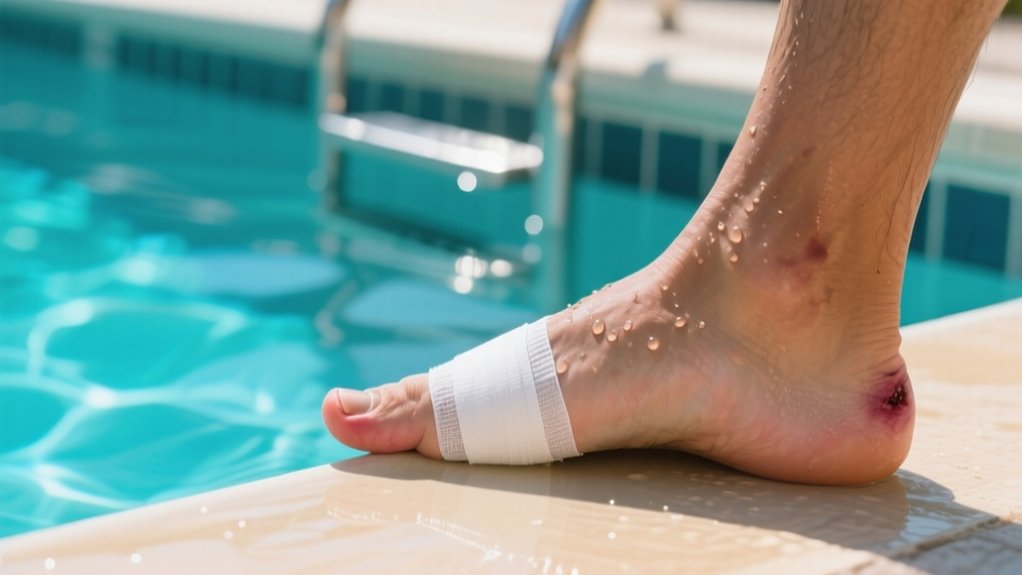
Can You Swim With a Broken Toe?
You can swim with a broken toe only if the fracture is stable, non-displaced, and properly protected, minimizing movement and avoiding water exposure to open wounds. Swimming supports cardiovascular fitness and reduces weight-bearing stress, but you must avoid it if the bone is misaligned, painful, or swollen.
Using taping and gentle strokes helps protect the injury during swimming. Understanding these precautions and recovery details guarantees safe activity and better healing outcomes ahead.
Understanding Different Types of Toe Fractures
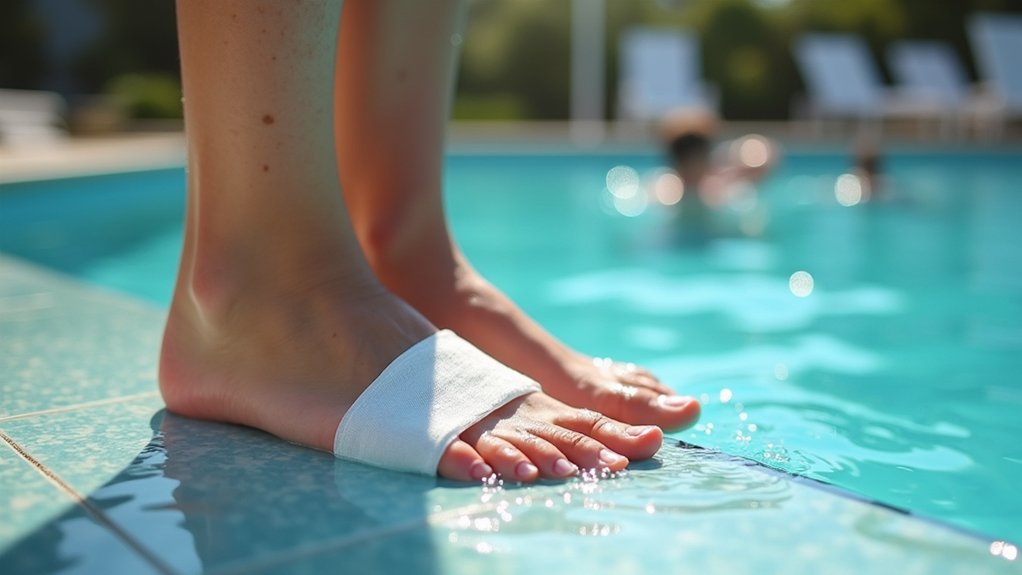
Understanding the different types of toe fractures is essential before deciding whether you can swim with a broken toe.
Toe fractures vary from simple non-displaced cracks, where the bone remains aligned, to displaced fractures involving misaligned bone fragments.
An injured toe with a simple fracture may tolerate limited swimming during recovery, given proper protection and monitoring.
Limited swimming may be possible with a simple toe fracture if proper care and monitoring are maintained
However, displaced fractures require more caution, as movement can worsen misalignment.
Open fractures, where the bone penetrates the skin, present a high infection risk, making water activities unsafe until complete healing occurs.
You must obtain a precise diagnosis and assess the fracture type to determine safe activity levels.
Carefully monitoring your injured toe’s healing progress guarantees you avoid complications if you decide to swim during recovery.
How Fracture Severity Affects Swimming Ability
Because the severity of a toe fracture directly influences healing requirements, you need to carefully evaluate how it affects your ability to swim.
If you have a simple non-displaced fractured toe, swimming may be permissible since the bone alignment remains intact and surgical intervention is unnecessary.
However, with displaced fractures, where bone misalignment occurs, you must avoid swimming until proper realignment is achieved to prevent further injury.
Open fractures demand extreme caution; the exposed bone dramatically increases infection risk when submerged.
To determine if swimming is safe, you should undergo thorough assessment with a health care provider, who’ll evaluate fracture stability and monitor healing progress.
Adhering to professional guidance guarantees that you engage in swimming activities only when medically appropriate, minimizing complications associated with your fractured toe.
Benefits of Swimming During Toe Recovery
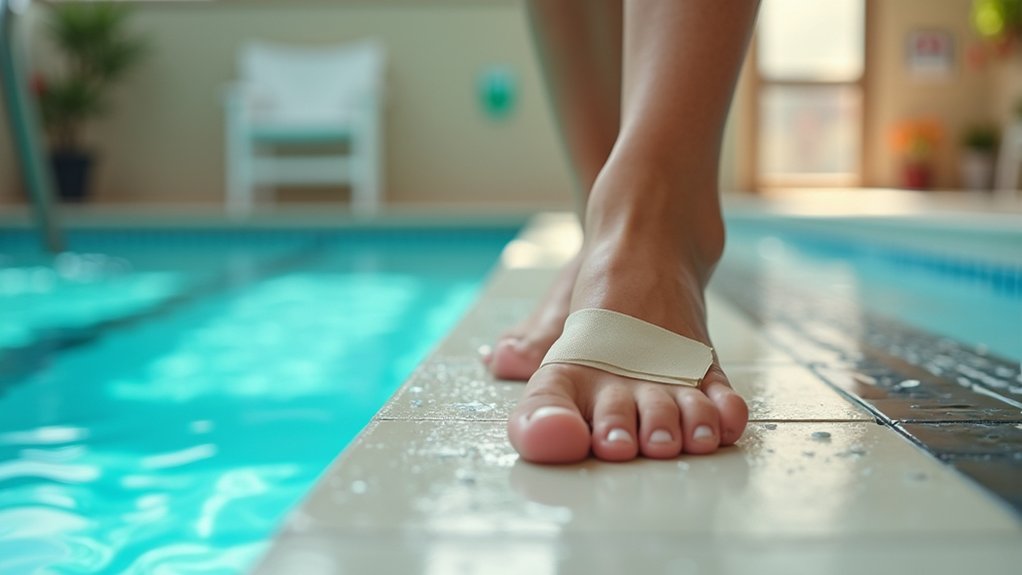
While recovering from a broken toe, you can use swimming as a low-impact exercise to maintain cardiovascular fitness without placing weight on the injury.
The buoyancy of water supports your body, reducing stress on the injured foot and allowing safe movement.
Swimming helps preserve muscle tone and strength, promoting overall fitness during recovery.
Adapting water workouts to your comfort level facilitates a gradual return to activity, minimizing the risk of aggravating the fracture.
Always follow your healthcare provider’s guidance to guarantee safe integration of swimming into your rehabilitation.
- Maintains cardiovascular fitness without weight-bearing stress
- Utilizes water buoyancy to protect the injured foot
- Preserves muscle strength and tone through gentle exercise
- Enables gradual, controlled return to physical activity
When Swimming Is Not Recommended
If your broken toe involves an open fracture or noticeable misalignment, you shouldn’t swim until a healthcare professional confirms it’s safe. Open fractures expose bone to water, greatly increasing the risk of infection.
Likewise, displaced fractures require proper alignment and stabilization before considering swimming.
You should avoid swimming if swelling or pain persists several days post-injury, as water activity may worsen inflammation or delay healing.
Severe bruising or deformity also signals complications, making swimming inadvisable without medical clearance.
Engaging in swimming prematurely risks re-injury and prolongs recovery.
Ultimately, to minimize complications, avoid swimming whenever your toe’s condition is uncertain or unstable, and strictly follow professional guidance before resuming aquatic exercise.
Prioritizing these precautions helps guarantee safe and effective healing.
Protective Measures While Swimming With a Broken Toe
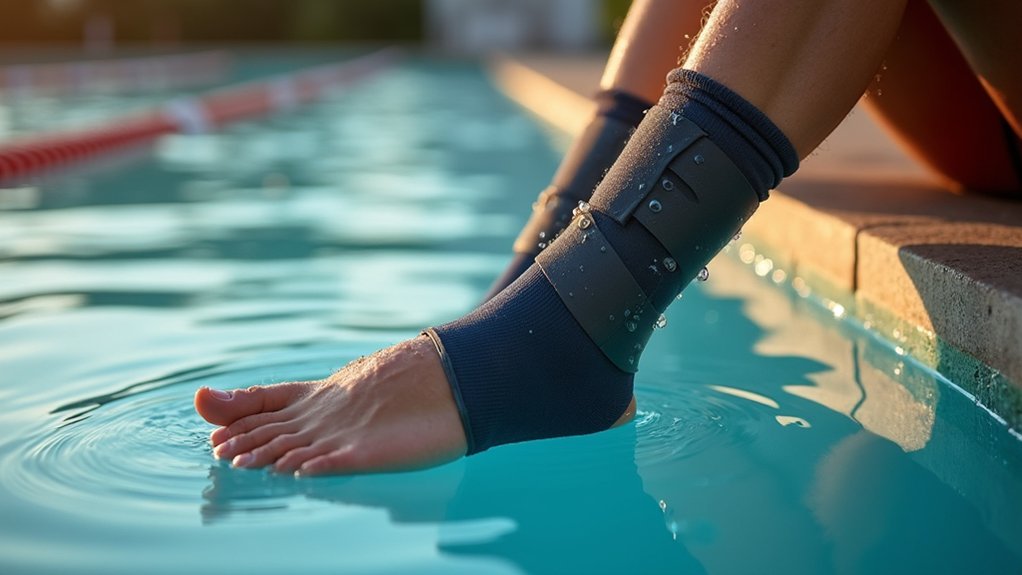
When swimming with a broken toe, you should take specific protective measures to prevent further injury and support healing.
Stabilizing the toe is essential; buddy taping can provide this support but make sure the taped area stays clean and dry to avoid complications.
You must avoid excessive movement of the injured toe to reduce strain. Moreover, using flotation devices helps minimize pressure on your foot.
Follow your healthcare provider’s guidance to gradually increase swimming intensity as healing progresses.
- Buddy taping for stability while keeping the area dry
- Avoid excessive toe movement and flip turns
- Employ flotation aids like kickboards to reduce foot stress
- Refrain from swimming if the fracture is open until fully healed
Buddy Taping and Its Role in Aquatic Activities
You can stabilize your broken toe by buddy taping it to an adjacent toe, which gives it the support it needs while you’re swimming.
Just be sure to put some cotton or gauze between the toes before you tape them together—that way, you avoid any irritation.
And don’t forget, keeping the taped area clean and dry is really important to lower the risk of infection, especially if you’re using public pools or swimming in open water.
Stabilizing With Buddy Taping
Buddy taping involves securing the injured toe to an adjacent toe with soft padding to provide essential stabilization during swimming. This technique limits movement of the fractured toe, reducing the risk of aggravating the injury underwater.
When you use buddy taping, you support the injured toe effectively, allowing safer participation in aquatic activities. However, you should remain cautious and avoid excessive strain that might compromise healing.
Key considerations include:
- Use soft padding to prevent skin irritation between toes
- Make certain the tape is snug but not too tight to maintain circulation
- Minimize toe movements that stress the injury, such as flip turns
- Monitor the taped area regularly for signs of discomfort or swelling
Buddy taping consequently plays a critical role in protecting your injured toe while swimming.
Keeping Taped Toes Dry
Securing a broken toe with buddy taping provides stability, but maintaining the integrity of the taped area during swimming requires careful attention to moisture control. To keep your foot protected, you must prevent water from weakening the tape. Otherwise, it could compromise support and increase infection risk.
Using waterproof tape or a sealed plastic cover effectively shields the taped area. Avoid movements that strain the injury and always inspect the tape before and after swimming.
| Action | Purpose |
|---|---|
| Use waterproof tape | Maintain tape adhesion |
| Cover taped area | Prevent water exposure |
| Limit toe movement | Reduce strain on injury |
| Inspect tape regularly | Guarantee stability and hygiene |
Tips for Minimizing Strain on Your Injured Toe in the Pool
To keep strain off your injured toe while swimming, make sure your buddy taping is snug and secure. This helps keep your toe stable and stops it from moving around too much.
Try tweaking your swim style a bit—steer clear of sharp turns and consider using a kickboard to give your foot some extra support.
Doing these things can really help manage the stress on your fracture, letting you recover safely and steadily while enjoying your time in the pool.
Buddy Taping Maintenance
Although you may feel enthusiastic to swim, you should first guarantee the area between the taped toes is clean and dry to prevent infection and irritation. Proper buddy taping maintenance is essential when engaging in water aerobics or swimming with a broken toe.
Protect the taped area with a waterproof bandage to minimize water exposure and reduce risk of skin maceration. Avoid excessive toe movement during swimming to prevent aggravating the injury.
- Clean and dry the taped area before each session
- Apply a waterproof bandage over buddy-taped toes
- Use a kickboard to limit foot motion and strain
- Monitor for discomfort or skin irritation during activity
Swim Technique Adjustments
When you swim with a broken toe, adjusting your technique is essential to avoid making the injury worse.
Implement swim technique adjustments that minimize pressure and movement of the injured toe. Use a kickboard to keep your legs buoyant and avoid putting weight on the toe.
Choose gentle strokes like breaststroke to reduce toe flexion and keep your feet submerged. Avoid flip turns and sudden pushes off the wall, as these actions can strain the toe.
Consider using a snorkel to stabilize your head position and prevent body rotations that might stress the injury.
Focus on upper body workouts such as water aerobics or resistance exercises to maintain fitness without compromising your toe’s healing.
These precise adjustments help protect your toe while allowing you to stay active.
Alternative Low-Impact Cardio Exercises During Recovery
How can you maintain cardiovascular fitness without stressing a broken toe? Opting for low impact cardio activity is essential to prevent further injury while sustaining your endurance. Several alternatives allow you to engage in effective exercises while protecting your toe.
Consider these options:
- Swimming and water aerobics: These keep weight off your toe, providing excellent low-impact cardio.
- Rowing: Offers a full-body workout without pressure on the injured toe.
- Stationary biking: Safe when seated; monitor foot comfort carefully.
- Upper-body ergometer: Focuses on arm cardio, avoiding toe stress.
Each activity minimizes impact on the toe, allowing you to maintain cardiovascular health cautiously during recovery. If you want to try swimming, Selby Leisure Centre offers swimming pools and classes suitable for various skill levels.
Always prioritize comfort and avoid any exercise that causes pain or discomfort.
Monitoring Healing Progress Before Resuming Swimming
Before you resume swimming, you need to closely monitor your healing progress by evaluating pain, swelling, and toe mobility.
Monitoring healing progress involves regularly reviewing these indicators to confirm the fracture is stabilizing without complications like increased redness or warmth.
It’s important to avoid rushing back into swimming before your toe can move without discomfort, as premature activity risks re-injury.
Keep track of your healing timeline, typically four to six weeks for broken toes, to gauge readiness.
While gradual reintroduction to swimming is possible after medical clearance, your own careful observation remains critical.
Monitoring healing progress is essential to determine when your toe has sufficiently recovered for water activity, minimizing potential setbacks and promoting safe rehabilitation.
Consulting Your Healthcare Provider for Personalized Advice
Monitoring your healing progress provides valuable insights, but consulting your healthcare provider guarantees a thorough assessment of your toe fracture.
When considering swimming, your healthcare provider evaluates fracture type and healing status to advise appropriately. Consulting makes sure you avoid risks associated with premature water activity.
Key points from consulting your healthcare provider include:
- Determining fracture severity (simple, displaced, open) and suitability for swimming
- Receiving personalized precautions like buddy taping or protective footwear
- Scheduling regular follow-ups to monitor healing progress
- Tailoring your recovery plan to balance fitness with safe healing
Frequently Asked Question
Can Swimming in a Pool Cause Infection in a Broken Toe?
Yes, swimming in a pool can cause infection in a broken toe, especially if the skin is broken or the wound is exposed.
While chlorinated water reduces bacteria, it doesn’t eliminate all risks.
You should keep the injured toe clean and protected, avoiding excessive movement that might worsen the injury.
Always consult your healthcare provider before swimming to assess infection risks and confirm when it’s safe to resume aquatic activities.
How Long After a Broken Toe Can I Start Swimming Again?
Think of your toe as a delicate bridge healing over calm waters.
You can usually start swimming again about 4 to 6 weeks after the break, but timing depends on your fracture’s severity.
You’ll want to consult your orthopedic specialist to confirm your toe’s stability and guarantee proper healing.
Gradually reintroduce swimming, avoiding strain to prevent setbacks.
Protect the toe, especially if it’s an open fracture, to keep infection risks at bay.
Are There Specific Swimming Strokes Better for a Broken Toe?
You should focus on freestyle and backstroke when swimming with a broken toe, as they minimize toe movement and reduce stress.
Avoid breaststroke and butterfly because their kicking motions can aggravate your injury.
Using a kickboard helps isolate your upper body, limiting strain on the toe.
Sidestroke may also be suitable due to its relaxed foot positioning.
Always consult your healthcare provider before resuming swimming to confirm these options are safe for you.
Does Water Temperature Affect Toe Fracture Healing During Swimming?
Think of your broken toe as a delicate plant needing just the right climate.
Yes, water temperature does affect healing during swimming.
Cold water reduces inflammation but can cause stiffness if overused.
Warm water improves circulation, aiding recovery, but may increase swelling early on.
Aim for moderate temperatures near body heat to balance these effects.
Always monitor your toe’s response carefully to avoid aggravating the injury as you swim.
Can Wearing Swim Fins Worsen a Broken Toe Injury?
Yes, wearing swim fins can worsen a broken toe injury because they apply extra pressure and restrict foot movement, potentially aggravating the fracture.
If your toe is buddy taped, fins may cause discomfort due to added bulk and pressure.
You should avoid fins or consult your healthcare provider before using them.
Instead, consider finless swimming or a kickboard to maintain activity without straining your injured toe during recovery.
Conclusion
You might think a broken toe automatically sidelines your swim routine, but depending on the fracture’s type and severity, gentle swimming could actually aid recovery. However, ignoring pain or skipping protective measures risks setbacks that mirror the injury’s initial impact.
By monitoring healing closely and consulting your healthcare provider, you guarantee that your return to swimming supports not hinders restoration. Sometimes, the very activity you avoid can become part of your healing process.