How Long After Pool Shock Can You Swim – Safe Waiting Time
After shocking your pool, you should wait 24 to 48 hours for chlorine-based treatments, while non-chlorine options allow swimming in just 15 minutes. The type of shock and pool size can influence these times, so always test the water afterward.
Confirm chlorine levels stabilize between 1 to 4 ppm before taking a dip. Swimming too soon could irritate skin and eyes. There’s more to maintaining your pool’s safety and quality, so let’s explore further.
How Long Should You Wait to Swim After Shocking the Pool?
When you shock your pool, you’ll need to wait before diving back in to confirm safety and water quality.
After using chlorine-based shock treatments, it’s generally recommended to wait 24 to 48 hours before resuming swimming. This allows chlorine levels to stabilize within the safe range of 1 to 4 ppm.
Wait 24 to 48 hours after chlorine shock treatments to ensure safe swimming and stable chlorine levels.
For non-chlorine shock treatments, you can typically swim in about 15 minutes since they don’t considerably affect chlorine levels.
Always test the water after shocking to confirm it’s safe for swimming.
Keep in mind that wait times can vary based on the shock treatment used, pool size, and current water conditions.
Factors That Influence Your Wait Time After Shocking
Your wait time after shocking the pool can vary due to several key factors. The type of pool shock you use plays a significant role.
For instance, calcium hypochlorite can require 24 to 48 hours, while sodium dichlor needs 12 to 24 hours for safe swimming.
If you choose non-chlorine shocks like potassium monopersulfate, you might swim in as little as 15 minutes.
Larger pools often demand longer wait times because chemical distribution happens more slowly, which affects how the shock disperses.
Also, if your chlorine levels exceed 5 ppm, you’ll need to wait longer until they drop to the safe range of 1-4 ppm.
Running the pool pump continuously after shocking can help speed this process up.
Recommended Wait Times for Different Types of Shock
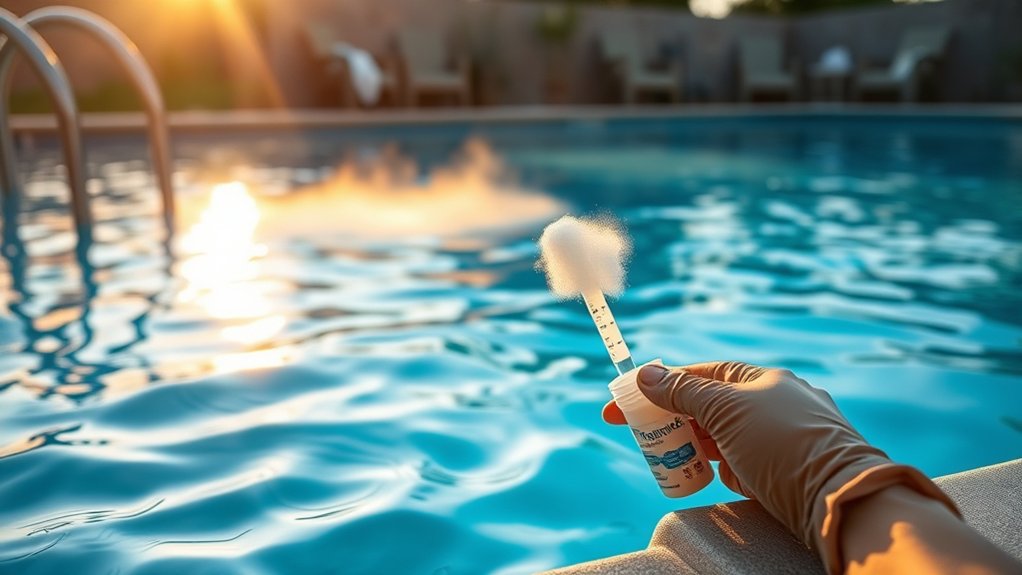
When you use calcium hypochlorite shock, it’s best to wait 24 to 48 hours before swimming. This gives the chlorine levels enough time to drop below 5 ppm, making the water safe.
On the other hand, if you choose potassium monopersulfate shock, you can usually jump in just 15 minutes after applying it.
Either way, always double-check that the free chlorine levels are within the safe range of 1 to 3 ppm before you get in the water.
Safety first!
Calcium Hypochlorite Wait Time
To guarantee safe swimming after using calcium hypochlorite shock, it’s crucial to wait 24 to 48 hours. This wait time ensures chlorine levels drop to a safe range. Calcium hypochlorite can raise free chlorine levels a lot, often going over 10 ppm, which isn’t safe for swimming right away.
| Time Post-Shock | Expected Chlorine Level | Action Required |
|---|---|---|
| 24 hours | 1-3 ppm | Test water |
| 48 hours | ≤ 3 ppm | Confirm safety |
| Varied Conditions | Consult manufacturer | Adjust wait time |
Always test the water to confirm free chlorine meets safety standards before swimming. Also, follow the manufacturer’s instructions for specific guidance.
Non-Chlorine Shock Timing
Although some pool owners may be concerned about swimming immediately after applying shock, non-chlorine shock options, such as potassium monopersulfate, allow you to dive right back in after just 15 minutes.
This rapid return to the water is because non-chlorine shock doesn’t raise chlorine levels, making it safe to swim without delay.
However, for the best water quality and safety, always test your water after application to verify free chlorine levels remain within the recommended range of 1-3 ppm.
While non-chlorine shock is gentler on pool surfaces and skin, it’s essential to follow product guidelines for ideal results.
Stick to these practices, and you can enjoy immediate swimming with confidence.
How to Test Your Pool Water After Shocking
Testing your pool water after shocking is vital for confirming a safe swimming environment. You need to verify that your free chlorine levels are within the safe range of 1-3 ppm.
Here’s how to test your water effectively:
- Collect a water sample: Gather it from the deep end of the pool for the most accurate reading.
- Use a reliable water test kit: Follow the instructions carefully to guarantee accurate results. Improper testing can lead to unsafe conditions.
- Retest the water: After shocking, it’s essential to retest to verify that chlorine levels have dropped to a safe range before swimming.
Regular testing helps maintain proper chemical balance and guarantees a secure swimming experience.
How to Recognize Safe Swimming Conditions?
To recognize safe swimming conditions, first make sure the free chlorine levels are between 1 and 4 ppm.
Also, check that the pH levels are sitting comfortably between 7.2 and 7.8.
Clear water is another key sign to look out for. If the water looks murky or cloudy, that could mean there’s a problem that needs fixing before you jump in.
It’s a good idea to test your pool regularly to keep these levels in check.
That way, you can enjoy a safe and healthy swimming environment every time.
Ideal Chlorine Levels
When you want to guarantee a safe swimming experience, maintaining ideal chlorine levels is essential. These levels should stay between 1 and 3 parts per million (ppm) for best safety.
Here’s how to make sure your pool is ready for swimming:
- Test the Water: Use a reliable water test kit after shocking the pool to check chlorine levels.
- Monitor Waiting Times: Adjust waiting times based on the shock type used; too much chlorine (above 5 ppm) can cause skin and eye irritation.
- Maintain Overall Water Quality: Regular testing helps keep chlorine levels stable and makes certain a safe swimming environment.
pH Balance Importance
pH balance plays an essential role in guaranteeing safe swimming conditions. Maintaining pH levels between 7.2 and 7.8 is critical for maximizing chlorine effectiveness and minimizing skin and eye irritation.
Regular water testing, especially after you’ve applied chlorine-based shock, helps determine when it’s safe to swim. If pH is too low, you risk skin irritation and corrosion of pool equipment; conversely, a high pH reduces chlorine levels, compromising disinfection.
Recognizing the importance of shocking is essential, as a balanced pH allows for quicker contaminant resolution, leading to clearer water.
Always make it a priority to adjust pH levels promptly after testing to guarantee a safe and enjoyable swimming experience for all.
Clear Water Assessment
Evaluating the clarity of your pool water is essential for guaranteeing safe swimming conditions. Clear water typically indicates effective sanitation, but you must always verify with a test kit.
Follow these steps for a clear assessment:
- Check Water Clarity: Look for bright, clear water. Cloudy water suggests contaminants that need treatment.
- Test Chlorine Levels: Make sure chlorine levels are between 1-3 ppm. If they exceed 5 ppm, wait until they normalize.
- Assess Water Chemistry: A crystal-clear appearance doesn’t guarantee safety. Regularly test pH and chlorine to avoid skin and eye irritation.
Mistakes to Avoid After Shocking Your Pool
After shocking your pool, it’s essential to avoid common mistakes that could lead to unsafe swimming conditions. Avoid swimming too soon; wait at least until chlorine levels stabilize between 1-4 ppm to prevent skin irritation.
Don’t skip testing your water; always check chlorine levels after shocking. Ignoring product instructions can put you at risk with elevated chemicals. Confirm your filtration system runs for a minimum of 8 hours to achieve adequate chemical distribution.
Also, avoid shocking during daylight to prevent rapid chlorine degradation.
| Mistake | Consequence | Solution |
|---|---|---|
| Ignoring product instructions | High chlorine levels | Follow label guidelines |
| Swimming too soon | Skin and eye irritation | Wait for proper levels |
| Inadequate filtration | Uneven chemical distribution | Run filter continuously |
Essential Practices for Optimal Pool Water Quality
To maintain ideal pool water quality, regularly testing your water is essential. It guarantees safe chlorine levels between 1-4 ppm for swimming.
Here are three key practices to keep your pool in top condition:
- Shock your pool weekly to eliminate harmful bacteria and algae, ensuring clean and clear water.
- Run the pool pump for at least 8 hours after shocking to enhance chemical dispersion and maintain water quality.
- Adjust pH levels between 7.2 and 7.8 to improve the effectiveness of shock treatments and stabilize chemical levels.
Monitoring weather conditions is equally important. High temperatures and UV exposure can mean you need to shock your pool more often to keep the water clear and safe.
Always test your water regularly for peak upkeep!
When to Seek Professional Help After Shocking Your Pool?
Whether you’ve just shocked your pool or you’re monitoring its condition, knowing when to consult a professional is essential for maintaining water safety and quality.
If chlorine levels stay above 5 ppm for more than 24 hours post-shock treatment, it’s time to seek professional help to assess water quality.
If chlorine levels remain above 5 ppm for over 24 hours after shock treatment, consult a professional for water quality assessment.
Persistent cloudy water may indicate issues like excessive contaminants or improper chemical balance that need expert attention.
Also, if you notice ongoing algae growth or bacterial issues despite regular shocking, contacting a pool professional is necessary.
Finally, if you struggle to maintain proper pH balance and alkalinity, a professional analysis can provide vital insights into your pool’s health, ensuring a safe swimming environment.
Frequently Asked Questions
Can I Swim Immediately if Chlorine Levels Appear Normal?
You shouldn’t swim immediately, even if chlorine levels appear normal.
Chlorine shock treatment can give misleading readings, posing health risks.
It’s essential to wait at least 8 hours for proper water balance before diving in.
Pools need time for chemical reactions to stabilize, ensuring safe swimming.
Always retest the water to confirm safe chlorine levels between 1-3 ppm for swimming safety, protecting both your health and your pool maintenance efforts.
What Happens if I Swim Too Soon After Shocking?
Swimming too soon after shocking is like diving into a cauldron of chemicals! If you do, you risk exposing yourself to chlorine toxicity symptoms, such as skin rashes and eye irritation.
Your pool water chemistry might be off, reducing health safety and the effectiveness of the shock treatment. This could also cloud your water, making pool maintenance and safe swimming more difficult.
Always follow swimming safety guidelines to guarantee your health and enjoyment.
Can I Use My Pool’s Filter While Waiting to Swim?
Yes, you can use your pool’s filter while waiting to swim. Running the filter improves water circulation and enhances filtration efficiency, which is essential for achieving the right chemical balance after shocking.
Follow maintenance tips by operating the filter for a recommended 8 to 12 hours to aid in pool cleaning and guarantee shock effectiveness.
This practice serves as a critical safety measure, helping to break down contaminants and stabilize chlorine levels effectively.
Is It Safe to Swim During a Chlorine-Free Period?
Swimming during a chlorine-free period can be safe if you follow proper guidelines.
Use chlorine alternatives like non-chlorine shock, which offers effective pool cleaning without raising chlorine levels.
Always test the water to verify it’s balanced and safe before diving in.
Adhering to swimming safety guidelines will enhance your experience, and regular pool maintenance practices will keep water clear and clean.
How Often Should I Shock My Pool for Safety?
Keeping your pool sparkling like a gem requires regular care. For safety, you should shock your pool at least once a week, and after heavy usage, rain, or when you notice poor water balance.
Adjust your shock frequency based on chlorine levels and the season; hotter months might need more frequent treatments.
Following safety guidelines enhances chemical distribution, promoting ideal pool health, so you can enjoy that rejuvenating swim without worries.
Conclusion
So, you’ve shocked your pool and you’re itching to jump in. But wait! Before you take that plunge, remember the importance of testing your water and making sure it’s safe.
Factors like the type of shock used and recent weather can impact your wait time. By following the guidelines and avoiding common mistakes, you’ll protect yourself and keep your water pristine.
Will you be patient, or will you risk it? The choice and the rewards are yours!