Can You Swim With Chlorine Tablets in Pool?
You can swim in a pool treated with chlorine tablets only after they’ve fully dissolved and chlorine levels are balanced between 1-3 ppm to avoid irritation. Swimming near undissolved tablets risks skin and eye burns due to high local chlorine concentration.
Use floating dispensers for even distribution and wait 4-6 hours post-addition before entering the water. Monitoring chlorine guarantees safety and comfort.
Keep exploring to understand proper placement, signs of over-chlorination, and emergency procedures.
How Chlorine Tablets Work in Pool Water
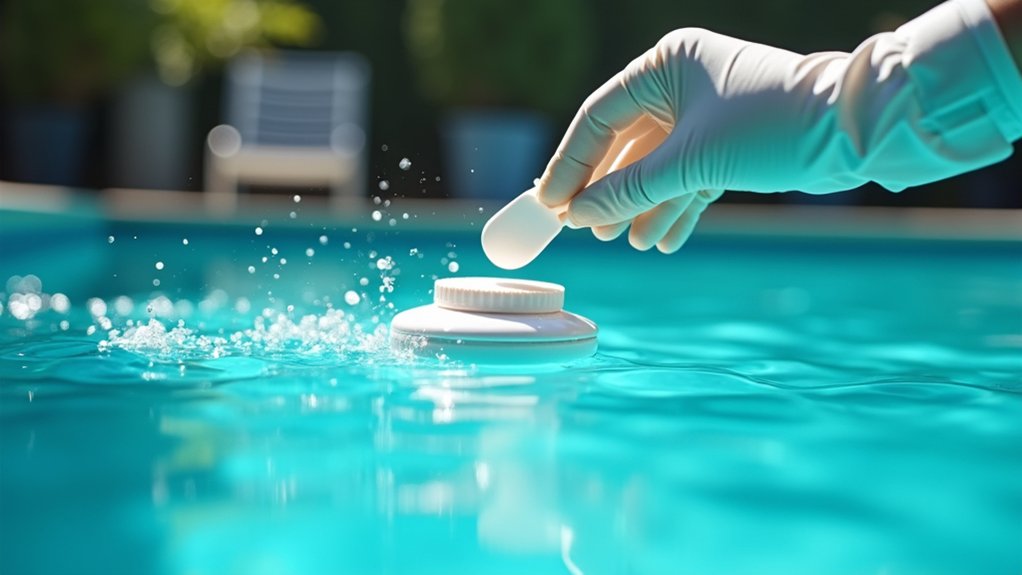
Although chlorine tablets dissolve slowly, they release chlorine steadily into pool water, effectively eliminating bacteria, algae, and other contaminants. This controlled dissolution guarantees a stable chlorine concentration, essential to keep your pool clean and safe.
You’ll typically place chlorine tablets in floating dispensers, skimmer baskets, or automatic chlorinators to promote even distribution. The rate at which these tablets dissolve directly affects sanitizer levels, so it’s important to test chlorine levels regularly.
Maintaining chlorine concentrations between 1-3 ppm optimizes sanitation without risking swimmer discomfort.
Risks of Swimming With Chlorine Tablets in the Pool
If you swim too close to dissolving chlorine tablets, you might end up with skin and eye irritation.
That’s because these tablets release highly concentrated chlorine right where they dissolve. Sometimes, the chlorine doesn’t spread out evenly, which can create spots with really strong chemicals.
Those spots increase the chance of getting chemical burns. So, it’s a good idea to avoid touching the tablets directly and make sure the chlorine levels are balanced before you jump in.
Skin and Eye Irritation
When chlorine tablets dissolve unevenly in the pool, they create localized areas of high chlorine concentration that can cause skin burns and irritation.
Swimming near these hotspots exposes your skin to irritants that may result in discomfort or chemical burns.
Furthermore, eye irritation is a common issue when chlorine levels spike in these concentrated zones, leading to redness, stinging, or excessive tearing.
High chlorine exposure occurs especially if you enter the pool immediately after adding tablets, before the chlorine levels stabilize within the recommended 1-3 ppm range.
To minimize risks, you should wait until the chlorine disperses evenly and reaches safe concentrations.
Monitoring chlorine levels carefully helps prevent skin burns and eye irritation, ensuring a safer and more comfortable swimming experience.
Uneven Chlorine Distribution
Since chlorine tablets dissolve unevenly in the pool, they create localized areas with dangerously high chlorine concentrations. These spots can cause skin burns and eye irritation.
This uneven distribution results in pockets of concentrated chlorine that may exceed safety thresholds, posing risks during swimming. You might even experience discomfort or damage to your swimsuit if you come into direct contact with these dissolving tablets.
Furthermore, such uneven chlorine levels compromise the pool’s overall disinfection. This allows bacteria or algae to persist in untreated zones.
To avoid these hazards, it’s crucial to use floating dispensers or automatic chlorinators that guarantee consistent chlorine dispersion.
Managing chlorine tablets properly prevents concentrated chlorine buildup and maintains both swimmer safety and effective pool sanitation.
Chemical Burn Hazards
Although chlorine tablets effectively sanitize pools, swimming near them while they dissolve poses significant chemical burn hazards. When chlorine tablets release concentrated chlorine locally, you risk chemical burns on your skin due to heightened chlorine levels.
Direct contact with these tablets can cause skin irritation, burns, and damage to swimwear materials. Additionally, chlorine concentrations can spike beyond safe limits, leading to respiratory distress and eye irritation.
To remain safe to swim, always verify pool chlorine levels are tested and maintained within the 1-3 ppm range before entering. Children and pets are especially vulnerable to these chemical burns and should be kept away from dissolving tablets.
Prioritize proper tablet placement and water circulation to prevent localized chlorine buildup and maintain a safe swimming environment.
Recommended Methods for Using Chlorine Tablets Safely
To use chlorine tablets safely, it’s best to put them in a floating dispenser instead of dropping them straight into the skimmer basket. This helps the chlorine spread evenly throughout the pool and keeps your equipment safe from damage.
You’ll also want to test your pool water regularly to make sure the chlorine levels stay between 1 and 3 ppm. Keeping it in this range is key for swimmer safety.
Proper Tablet Placement
Using one chlorine tablet per 10,000 gallons of pool water and placing it in a floating dispenser or automatic chlorinator guarantees gradual dissolution and even distribution.
This method controls chlorine levels effectively while minimizing swimmer irritation.
When adding pool tablets, follow these guidelines for proper tablet placement:
- Always use a floating dispenser or automatic chlorinator to avoid direct contact between tablets and pool surfaces or filtration components.
- Never place tablets directly in the skimmer basket; this risks damaging your filtration system and creating acidic water conditions.
- Allow adequate wait time after adding tablets before swimming, ensuring chlorine disperses evenly and maintains safe levels.
Monitoring Chlorine Levels
When you maintain chlorine tablets in your pool, consistently monitoring chlorine levels is vital for swimmer safety and water quality.
Use a floating dispenser or automatic chlorinator to evenly distribute chlorine tablets, preventing concentrated pockets that can harm pool water and swimmers.
Regularly test chlorine levels with strips or liquid kits, aiming for a safe range of 1-3 ppm.
Avoid placing tablets directly in the skimmer basket to prevent equipment damage and uneven chlorine distribution.
Watch for signs of chlorine overexposure, such as skin irritation or a strong odor, and adjust accordingly.
Store chlorine tablets in a cool, dry place, and check dispenser or chlorinator levels weekly to guarantee continuous, balanced sanitation and ideal pool water conditions.
Proper Placement of Chlorine Tablets in Pools
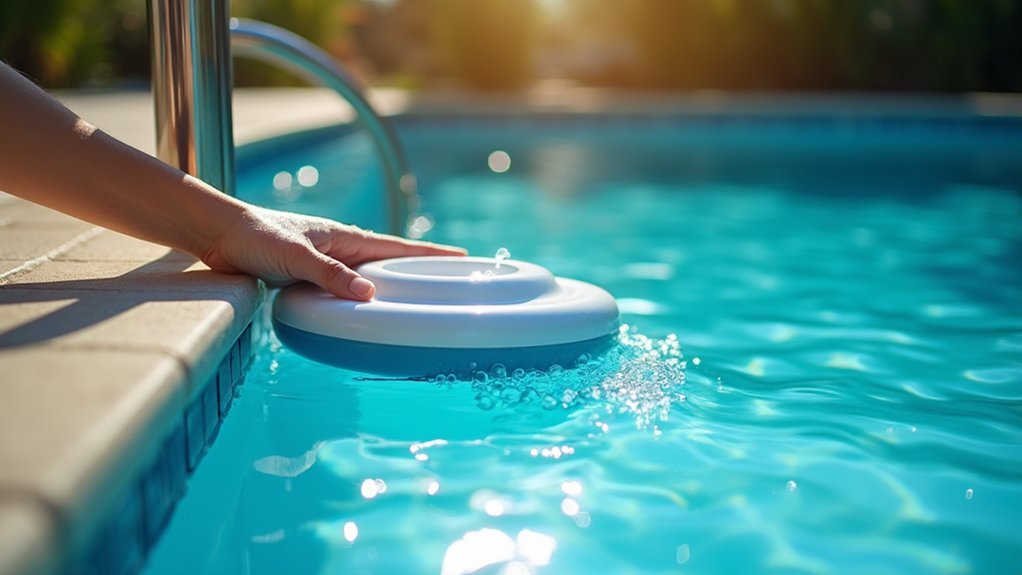
Although chlorine tablets are crucial for pool sanitation, placing them correctly is important to avoid damage to your pool’s filtration system and maintain water balance.
Proper placement guarantees your pool equipment functions efficiently while keeping water chemistry stable. Here’s how to do it right:
Ensuring correct chlorine tablet placement keeps pool equipment efficient and water chemistry balanced.
- Never place chlorine tablets directly in the skimmer basket; this can corrode pool equipment and create acidic water conditions.
- Use a floating dispenser to allow gradual tablet dissolution, promoting even chlorine distribution and reducing swimmer irritation.
- Consider an automatic chlorinator for precise, adjustable release rates that maintain consistent chlorine levels without manual intervention.
Ideal Chlorine Levels for Safe Swimming
You want to keep your chlorine levels between 1 and 3 ppm to make sure the water is properly disinfected without irritating your skin or eyes.
It’s a good idea to test your pool water regularly so you can stay on top of these levels. If the chlorine goes above 5 ppm, it might cause discomfort like redness or itching.
Using the right testing methods really helps you maintain a safe and comfortable swimming environment.
Chlorine Concentration Range
Maintaining the ideal chlorine concentration between 1 and 3 parts per million (ppm) guarantees effective pool disinfection while minimizing irritation risks.
Chlorine tablets release chlorine slowly, helping you sustain this best range without drastic fluctuations.
For safe swimming, keep these points in mind:
- Chlorine levels below 1 ppm reduce disinfection efficiency, increasing microbial risks.
- Levels above 3 ppm can cause skin and eye irritation and contribute to chloramine buildup, producing a strong chlorine odor.
- Consistent chlorine tablet use stabilizes concentration, but you must monitor levels regularly to avoid exceeding safe limits.
Testing Chlorine Levels
Three key methods, test strips, liquid kits, and digital testers, provide accurate measurements of chlorine levels in pool water.
When testing chlorine levels, aim for an ideal range of 1-3 ppm to guarantee safe swimming conditions. Levels exceeding 5 ppm can cause skin and eye irritation, so it’s essential to monitor regularly.
After adding chlorine, you should wait for proper dispersion and test every 4-6 hours to maintain peak water quality. These wait times allow chlorine to stabilize, guaranteeing accurate readings and swimmer safety.
By consistently testing and adjusting chlorine concentration, you prevent over- or under-chlorination, protecting both health and pool integrity.
Following this protocol guarantees you keep the pool safe and comfortable for all swimmers.
How to Test Chlorine Concentration Before Swimming
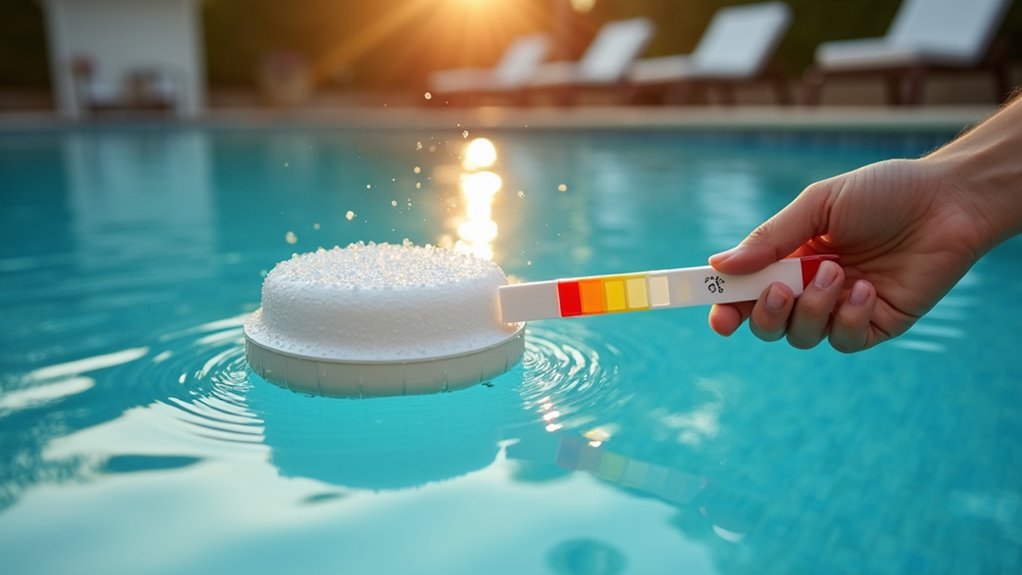
How can you accurately determine if the chlorine concentration in your pool is safe for swimming? As a pool owner, you need to test your water regularly to guarantee chlorine levels remain within the ideal range of 1-3 ppm.
Follow these steps for precise measurement:
- Use test strips or digital testers designed specifically for pool water to measure chlorine concentration accurately.
- Test chlorine levels before swimming and every 4-6 hours after adding chlorine tablets. Be sure to follow the manufacturer’s instructions for reliable results.
- Allow sufficient circulation time after adding chlorine to prevent uneven distribution and localized high concentrations. These can irritate skin and eyes.
Waiting Periods After Adding Chlorine Tablets
Although chlorine tablets effectively sanitize your pool, you should observe specific waiting periods before swimming, depending on how you add them.
If you use a floating dispenser or automatic chlorinator, you can swim immediately because these devices release chlorine gradually, maintaining normal levels in your pool with chlorine.
However, if you place tablets directly into the pool, you must wait at least until they fully dissolve to avoid skin irritation and uneven chlorine distribution.
Wait until chlorine tablets fully dissolve in the pool to prevent skin irritation and ensure even chlorine distribution.
Always test chlorine concentration before swimming; levels should be within 1-3 ppm, the safe range.
Moreover, if you’ve recently shocked your pool or chlorine levels exceed 5 ppm, you should wait at least 8 to 12 hours before swimming to guarantee safety and comfort.
Comparing Chlorine Tablets to Other Chlorine Forms
When you choose chlorine tablets for pool sanitation, you benefit from a slow-release mechanism that maintains consistent chlorine levels over time. This is unlike liquid or granular chlorine, which cause rapid spikes.
This steady release minimizes pH fluctuations and guarantees safer swimming conditions with less frequent testing.
Here’s how chlorine tablets compare:
- Liquid chlorine acts fast but requires a wait time of 2-4 hours before swimming because of the high initial chlorine concentration.
- Granular chlorine demands a longer wait time, often 8 hours, to avoid irritation and chlorine overdose.
- Chlorine tablets, used in floaters or chlorinators, provide continuous sanitation with minimal wait time. This allows immediate swimming as long as chlorine levels remain within safe limits.
Choosing chlorine tablets simplifies maintenance while guaranteeing effective, stable pool sanitation.
Effects of Chlorine Tablets on Pool Equipment
Because chlorine tablets release concentrated chemicals, placing them improperly can cause serious damage to your pool equipment.
For example, dropping chlorine tablets directly into the skimmer can create acidic water that deteriorates both the pump and filter components.
To protect your pool equipment, use a floating dispenser or automatic chlorinator. These options guarantee even chlorine distribution and prevent localized chemical buildup.
Using a floating dispenser or automatic chlorinator ensures even chlorine distribution and protects your pool equipment.
Remember to perform regular maintenance on your chlorinator to avoid accumulation that can impair mechanical function and reduce efficiency.
Overusing chlorine tablets can also lower pH levels, resulting in corrosive water that harms metal parts and pool surfaces over time.
Signs Your Pool Has Too Much Chlorine
If your pool water has a strong chlorine smell, cloudy appearance, or causes skin and eye irritation, these are clear signs that chlorine levels are too high.
Excess chlorine forms chloramines, which emit that pungent odor and irritate swimmers.
You might notice burning eyes or skin redness due to the water becoming highly acidic. Use chlorine drops or test strips to measure concentration; levels above 3 ppm indicate excess chlorine.
Signs your pool has too much chlorine include:
- Strong chlorine odor linked to chloramines buildup.
- Cloudy water reducing visibility and safety.
- Burning eyes and skin irritation from highly acidic water.
Avoid swimming until chlorine levels drop below safe thresholds to prevent discomfort or health risks.
Emergency Actions for Chlorine Overexposure
Excessive chlorine levels can lead to overexposure symptoms that demand immediate attention.
If you experience chlorine overexposure, such as burning skin, red eyes, difficulty breathing, or nausea, exit the pool immediately.
Rinse the affected areas with fresh water for at least 15 minutes to remove residual free chlorine.
For mild symptoms, apply cool compresses and use eye drops for relief.
However, if you develop blisters or have breathing difficulties, call 911 without delay.
After any exposure incident, test the pool’s free chlorine levels to verify they remain within the safe range of 1-3 ppm for swimming.
Educating swimmers about the risks and proper chlorine monitoring is essential to prevent overexposure and maintain a safe swimming environment.
Maintaining Balanced Water Chemistry With Chlorine Tablets
When you use chlorine tablets to maintain your pool, you guarantee a steady release of chlorine that keeps water disinfected and balanced.
Managing water chemistry effectively requires careful attention to tablet placement and dosage. Here’s how to maintain ideal conditions:
- Use a floating dispenser or automatic chlorinator for even chlorine distribution. This prevents localized high concentrations that disrupt water chemistry.
- Regularly test chlorine levels, keeping them within the safe range of 1-3 ppm. This helps avoid skin and eye irritation while ensuring effective disinfection.
- Avoid placing tablets directly in the skimmer. Doing so can cause equipment damage and acidic water conditions that destabilize pool chemistry.
Tips for Safe Pool Use When Using Chlorine Tablets
Although chlorine tablets are effective for maintaining pool sanitation, you should handle them carefully to assure swimmer safety.
Always use a floating dispenser or automatic chlorinator when adding chlorine tablets to guarantee gradual dissolution and even distribution. This approach prevents localized high concentrations that can irritate skin and eyes.
Before swimming, test the pool’s chlorine levels to verify they remain between 1-3 ppm, the safe range for swimmers. After adding tablets, wait until they’re fully dissolved and the water is thoroughly circulated before allowing anyone to enter the pool.
Monitor swimmers closely for signs of irritation or discomfort and inform them about the chemical treatments. Following these steps helps maintain safe chlorine levels and reduces health risks associated with direct tablet contact or uneven chemical distribution.
Frequently Asked Question
Can Chlorine Tablets Affect Pool Water Ph Levels?
Yes, chlorine tablets can affect your pool’s pH levels by lowering them, often by 0.1 to 0.3 units per tablet used.
This drop creates a more acidic environment, so you need to monitor your pool’s pH regularly.
Keeping pH between 7.2 and 7.8 guarantees chlorine works effectively and prevents skin or eye irritation.
If pH drops too low, you’ll have to add pH increasers like sodium carbonate to restore balance.
How Often Should Chlorine Tablets Be Replaced in the Dispenser?
You should replace chlorine tablets in the dispenser every 5 to 7 days. This depends on your pool’s size, usage, and water temperature.
For a standard 10,000-gallon pool, one three-inch tablet is recommended.
Check the dispenser weekly to verify there are enough tablets and adjust based on chlorine demand.
Regularly monitor your pool’s chlorine levels, aiming for 1-3 ppm.
Replace tablets promptly to maintain ideal water chemistry.
Are Chlorine Tablets Safe for Children and Pets Around the Pool?
No, chlorine tablets aren’t safe for children and pets around the pool.
They contain concentrated chlorine that can cause severe health problems if ingested.
Direct contact with dissolving tablets may lead to skin burns or irritation.
You should always use a floating dispenser to minimize exposure and keep tablets out of reach.
Store them in a cool, dry place to prevent accidental ingestion or contact, ensuring safety for kids and pets.
Can Chlorine Tablets Stain Pool Liners or Surfaces?
Yes, chlorine tablets can stain pool liners or surfaces, especially since trichlor tablets are highly concentrated and acidic.
Studies show that direct contact lasting more than a few hours can cause discoloration or bleaching on up to 30% of affected vinyl surfaces.
To prevent this, you should always use floating dispensers or automatic chlorinators to evenly distribute chlorine and avoid tablet contact with pool surfaces, protecting your liner’s integrity and appearance.
What Is the Environmental Impact of Disposing Chlorine Tablets?
Disposing of chlorine tablets improperly can harm the environment by releasing toxic chemicals into soil and waterways.
When these tablets dissolve outside controlled settings, they produce chlorinated byproducts that contribute to water pollution.
You should follow local regulations and dispose of them at designated hazardous waste facilities to avoid contamination and fines.
Using eco-friendly pool sanitizers helps reduce these environmental risks and promotes safer water quality management.
Conclusion
Swimming with chlorine tablets directly in the pool is like diving into a chemical storm. Your skin and eyes could protest with fiery irritation.
To avoid turning your swim into a hazardous experiment, always place tablets in a proper dispenser or skimmer. Keep chlorine levels balanced and monitor regularly. By following these precise steps, you’ll transform your pool into a safe, sparkling oasis instead of a harsh chemical battleground. Safety and clarity go hand in hand.