How Fast Do Dolphins Swim – Speed Facts
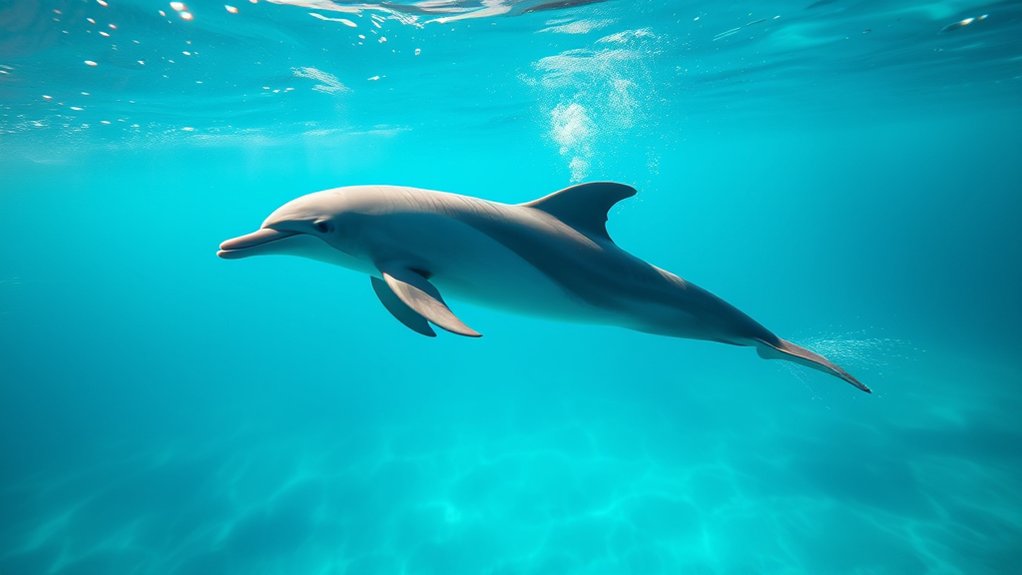
You can expect dolphins to swim at average speeds of 6 to 16 km/h (4 to 10 mph) during regular travel, but some species reach impressive bursts. Common dolphins can hit up to 60 km/h (37 mph). Their streamlined bodies and powerful tails help reduce drag and boost speed.
Factors like energy-saving techniques and human impacts also affect their swimming. Understanding these details reveals how dolphins balance rapid movement with survival strategies in the ocean. It’s pretty amazing how they manage to be so fast and efficient in the water.
How Fast Do Dolphins Swim on Average?
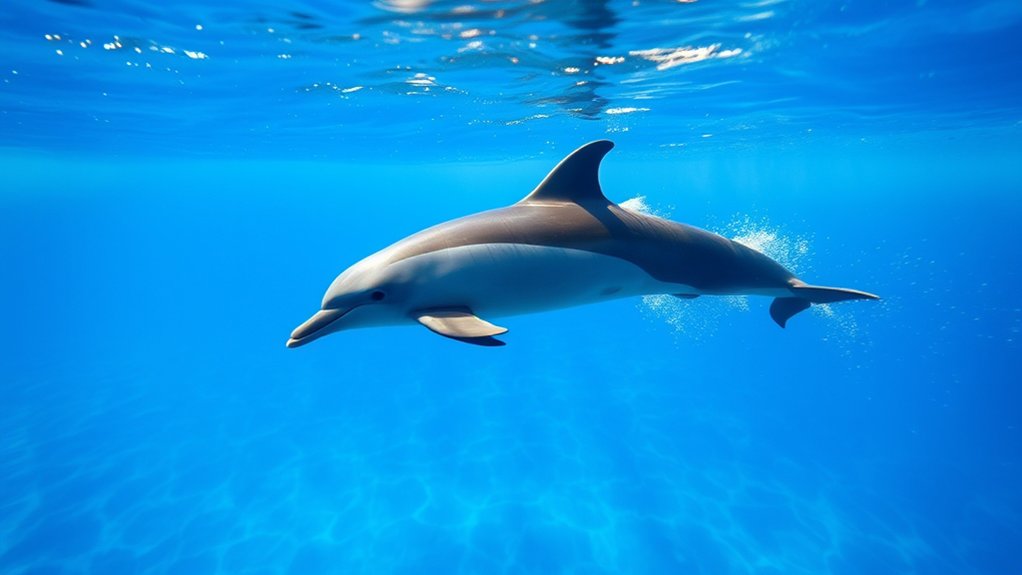
Dolphins typically swim at cruising speeds between 6 and 9.5 kilometers per hour (4 to 6 miles per hour), allowing them to travel efficiently over long distances. This efficient travelling speed conserves energy, which is essential for their survival in the wild.
You should note that dolphins can reach a fast cruising speed of 13 to 16 kilometers per hour (8 to 10 miles per hour) under ideal conditions. This enables quick movement when necessary.
Bottlenose dolphins usually swim around 5.7 kilometers per hour (3.5 miles per hour) but can burst over 30 kilometers per hour (18.6 miles per hour) briefly.
The common dolphin stands out as the fastest, hitting speeds up to 60 kilometers per hour (37 miles per hour) in short bursts. This really showcases the range of swimming capabilities among dolphin species.
How Dolphins’ Bodies Help Them Swim Fast
You’ll notice that a dolphin’s streamlined body shape helps reduce water resistance. This means it can glide smoothly and easily through the ocean.
Plus, their powerful tail flukes create strong propulsion, giving them the push they need to speed up quickly.
When you put all these hydrodynamic features together, it’s clear how dolphins manage to swim so fast and move with such agility in the water.
Streamlined Body Shape
A streamlined body shape minimizes water resistance, allowing dolphins to glide efficiently through their aquatic environment. Their sleek, tapered form reduces drag, enabling faster movement with less marine energy expenditure. When you observe dolphins, you’ll notice how their smooth contours and narrow profiles help them cut through water swiftly.
This streamlined body design optimizes hydrodynamics, allowing dolphins to conserve energy while maintaining high speeds. The reduction in turbulence around their bodies means they can sustain rapid swimming without excessive fatigue.
By minimizing resistance, dolphins convert more marine energy into forward motion, making their swimming highly effective. Understanding this streamlined adaptation reveals how dolphins achieve their remarkable speed and agility in diverse aquatic conditions.
It’s pretty amazing how their shape works so well in water, isn’t it? This design really shows nature’s knack for efficiency.
Powerful Tail Propulsion
Although their streamlined bodies reduce drag, it’s the powerful tail flukes that generate the main propulsion dolphins need to swim fast. These powerful tails contain strong muscles that produce rapid, forceful movements, allowing dolphins to reach speeds over 60 km/h. When you observe dolphins porpoising, leaping above water, they minimize drag and conserve energy while maintaining high speeds.
This tail-driven propulsion also enables quick acceleration, which is essential for escaping predators or hunting prey. Pretty impressive, right?
| Feature | Function | Impact on Speed |
|---|---|---|
| Powerful tails | Generate thrust | Achieve bursts >60 km/h |
| Tail musculature | Rapid contractions | Quick acceleration |
| Fluke shape | Efficient movement | Reduced drag |
| Porpoising | Leap to reduce drag | Sustained high speeds |
| Muscle structure | Energy-efficient | Endurance for chasing |
Hydrodynamic Adaptations
When dolphins slice through water, their hydrodynamic adaptations play an essential role in maximizing speed and efficiency. Their streamlined bodies reduce drag, letting you glide smoothly with minimal resistance.
Powerful tail flukes generate strong propulsion, enabling rapid acceleration and sustained velocity vital for the fastest dolphin species. Dorsal fins stabilize your movement, while flippers provide precise steering and quick directional shifts.
Unique muscle structure supports explosive bursts of speed, saving energy during intense activity. Behavioral adaptations like breaching and porpoising further conserve energy, allowing you to maintain high speeds without exhausting yourself.
These combined hydrodynamic adaptations optimize your swimming performance, making dolphins exceptional swimmers capable of rapid, energy-efficient movement through aquatic environments.
It’s pretty amazing how all these features work together, isn’t it?
Energy Conservation Techniques in Dolphin Swimming
You’ll notice dolphins use porpoising—that’s when they leap above the water to cut drag and save energy while swimming fast. It’s pretty clever, right?
They also take advantage of bow waves created by boats. By riding these waves, they can move quicker without using as much effort.
These smart strategies really help them optimize their energy, whether they’re cruising long distances or making quick bursts of speed.
Porpoising for Efficiency
Dolphins leap out of the water using a technique called porpoising, which reduces drag and conserves energy during high-speed swimming. This energy-saving behavior helps dolphins travel faster with less effort.
When you observe porpoising, note these key benefits: Porpoising cuts water resistance by briefly moving through air, which has lower drag. Dolphins reach speeds up to 17 miles (27 kilometers) per hour more efficiently.
This method enables maintaining higher speeds over longer distances, which helps with hunting and escaping predators.
Dolphins commonly porpoise when chasing prey or swimming alongside boats, showing how practical this technique really is.
Wave Riding Behavior
Building on porpoising’s energy-saving benefits, wave riding behavior offers another remarkable strategy for conserving energy while swimming. Bottlenose dolphins often swim alongside boats, exploiting the bow waves to reduce drag and boost speed.
By riding these waves, they optimize energy efficiency and can reach speeds up to 17 miles per hour (27 km/h) with less effort. This behavior involves saving energy by jumping into and gliding along the wave created by a moving vessel. It allows dolphins to cover longer distances without exhausting their reserves. Pretty clever, right?
Besides efficiency, wave riding behavior also serves social and playful purposes. It highlights dolphins’ intelligent and interactive nature.
This technique really shows how Bottlenose dolphins adapt their swimming to conserve energy effectively in dynamic environments.
Top Fastest Dolphin Species and Their Speeds
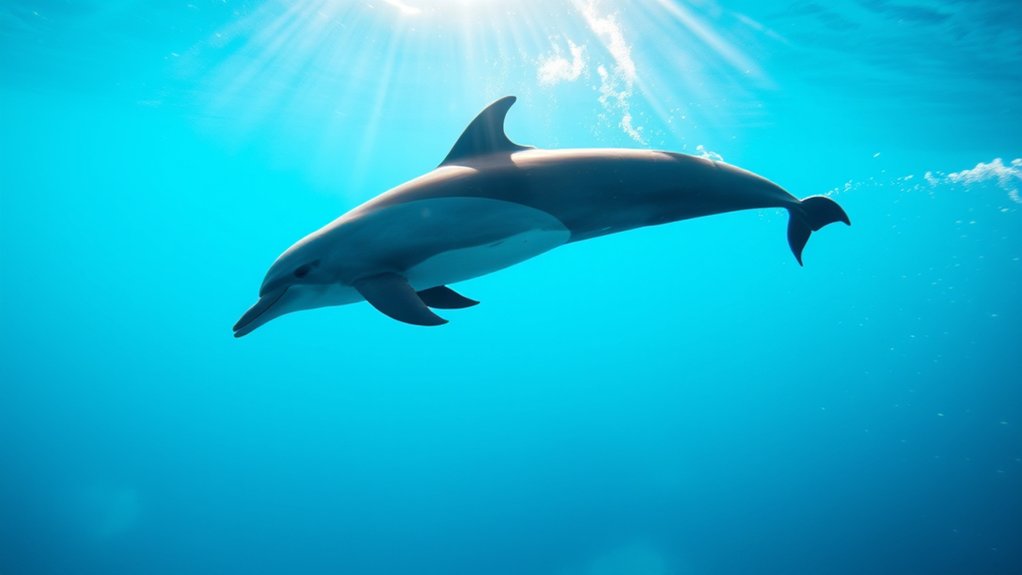
Although many marine animals are swift swimmers, the Common Dolphin stands out as the fastest dolphin species, reaching speeds up to 60 kilometers per hour (37 miles per hour).
If you’re curious about the fastest members of marine life within the dolphin family, here are the top species and their speeds:
- Common Dolphin: 60 km/h (37 mph), the fastest dolphin.
- Orca (Killer Whale): 56 km/h (35 mph), largest dolphin family member with powerful bursts.
- Dall’s Porpoise: 55 km/h (34 mph), one of the fastest small cetaceans.
- Bottlenose Dolphin: 35 km/h (22 mph), swift in short sprints.
These speeds really show the impressive agility and power dolphins have in their aquatic environment.
It’s amazing how fast they can move through the water!
What Natural and Human Factors Affect Dolphin Speed
When you consider the impressive speeds dolphins can reach, it’s important to understand that both natural conditions and human activities play critical roles in influencing their swimming capabilities.
Natural factors like prey availability affect dolphins’ energy and speed during hunting.
Prey availability directly influences dolphins’ energy levels and their swimming speed while hunting.
Human-induced marine noise pollution from vessel traffic and industrial sources disrupts their echolocation. This impairment makes communication and prey detection harder, which limits efficient swimming.
Moreover, fishing nets such as gillnets and driftnets cause accidental entanglement. This restricts dolphins’ movement and escape responses.
Habitat degradation also reduces prey abundance, indirectly impacting their cruising and burst speeds.
Vessel collisions pose another risk, threatening dolphins’ survival and ability to maintain natural speeds.
Together, these factors create a complex environment that directly affects how fast dolphins can swim.
How Scientists Measure Dolphin Speed
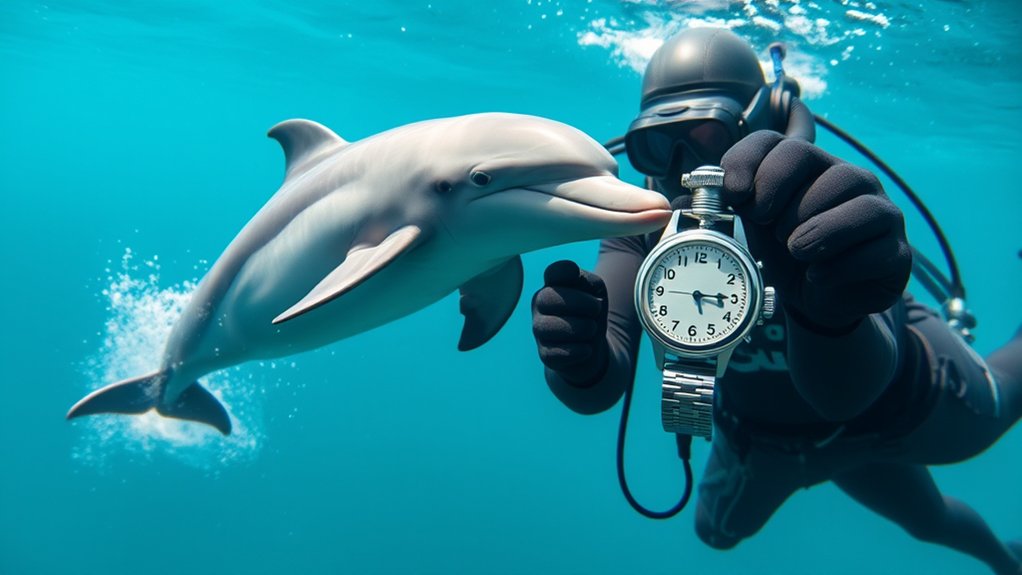
To accurately determine how fast dolphins swim, scientists rely on advanced technologies that track their movements in real time. Measuring dolphin speed helps marine conservation efforts by providing data on their natural behaviors. This includes how they start jumping clear of the water and reach high speeds.
Here’s how researchers measure dolphin speed:
- GPS tags track precise movement over distances, recording speed and travel patterns.
- Underwater cameras capture swimming behavior, enabling velocity calculation.
- Hydrophones analyze dolphin sounds, correlating acoustic signals with activity levels.
- High-speed cameras film breaching and porpoising to assess maximum speed capabilities.
Pretty fascinating, right? These tools give scientists a clear picture of how dolphins move and behave in their natural environment.
Impact of Human Activities on Dolphin Speed
Since human activities increasingly impact marine environments, you should understand how these changes affect dolphin swimming speed. Noise pollution from marine traffic disrupts dolphins’ echolocation, making navigation and hunting less efficient. This can reduce their ability to reach speeds needed for survival.
Pollution and fishing nets damage habitats, forcing dolphins to expend more effort rather than actually saving energy to avoid obstacles. Vessel strikes cause injuries that impair swimming performance. These factors all add up and make life harder for dolphins in the wild.
Moreover, declines in whale populations due to commercial whaling alter ecosystem dynamics, which indirectly influences dolphin behavior and speed. Understanding these effects highlights the importance of conservation efforts aimed at mitigating human activities.
Why Dolphin Speed Matters for Their Survival
Although dolphins face numerous challenges in their environment, their swimming speed remains a significant factor for survival. As a marine mammal, speed enables them to adapt and thrive. Here’s why it matters:
Dolphins can reach up to 60 kilometres per hour to evade predators swiftly, ensuring their safety. Their speed also supports long migrations, like the North Atlantic right whale’s 1,600-kilometre annual journey.
Quick acceleration aids in hunting techniques such as bubble-herding and fish-whacking, which are essential for capturing prey.
Human activities threaten their speed, making conservation efforts critical to protect habitats and maintain these capabilities.
Understanding these points shows just how significant speed is for dolphins’ survival and the health of marine ecosystems.
Frequently Asked Questions
How Do Dolphins Communicate While Swimming at High Speeds?
You rely on dolphins’ echolocation techniques and acoustic signals to communicate effectively while they swim fast. They adjust the frequency and intensity of their sounds to maintain clarity.
This lets them coordinate group activities and strengthen social bonding, even at high speeds.
Their ability to emit distinct whistles and clicks guarantees they can navigate, hunt, and recognize each other. It keeps communication precise and continuous despite rapid movement.
Dolphins really know how to stay connected while on the move.
Can Dolphins Swim Faster Than Sharks?
Yes, dolphins can swim faster than many sharks, especially in short bursts during dolphin hunting. Their streamlined bodies and powerful tails give them an edge in acceleration.
However, shark adaptations favor endurance, allowing them to sustain speed over longer distances.
When you compare speed, dolphins often outpace sharks in quick chases, but sharks maintain consistent velocity.
How Long Can Dolphins Maintain Their Top Swimming Speed?
You can expect dolphins to maintain their top swimming speed for about 30 seconds to a few minutes, depending on their sprinting techniques and species.
They use energy-efficient methods like porpoising to extend their endurance without exhausting themselves.
However, their endurance limits restrict how long they can sustain maximum velocity.
So, they typically switch to cruising speeds to conserve energy for longer distances.
This balance guarantees effective hunting and evasion in the wild.
Do Dolphins Swim Faster in Groups or Alone?
You’ll find dolphins swim faster in groups due to their social behavior, which boosts energy efficiency.
By coordinating movements and taking turns leading, they conserve energy while maintaining higher speeds. Their hunting techniques also benefit from group swimming, allowing them to herd prey effectively.
This collective effort lets dolphins cruise faster and longer than when swimming alone.
It really shows how social dynamics enhance their overall swimming performance. Swimming in groups just makes sense for them!
How Does Water Temperature Affect Dolphin Swimming Speed?
You’ll notice water temperature affects dolphin swimming speed by altering water density and muscle efficiency. Warmer water lowers density, letting dolphins move more easily, while increasing muscle efficiency for faster swimming.
Environmental factors like temperature shifts also impact prey patterns, forcing dolphins to adjust their speed for effective hunting.
In colder water, higher density and reduced muscle efficiency slow them down as they conserve energy.
This highlights temperature’s critical role in their swimming performance.
It’s pretty interesting how such changes can make a big difference in how these animals move around.
Conclusion
You now know that dolphins can reach impressive speeds of up to 25 miles per hour, thanks to their streamlined bodies and energy-efficient swimming techniques. This speed isn’t just for show; it’s essential for catching prey and avoiding predators.
Understanding how natural and human factors affect their swimming helps you appreciate the delicate balance dolphins maintain in their environment. Protecting their habitats guarantees these remarkable swimmers continue to thrive.