How Soon Can You Swim After Plastering Pool?
You should wait at least 10 to 28 days before swimming after plastering your pool to guarantee proper curing and avoid surface damage. During this time, maintain balanced water chemistry, with pH between 7.2 and 7.6 and chlorine levels of 1 to 3 ppm to protect the plaster.
Regular brushing prevents dust buildup and surface blemishes. Avoid pool heaters and foot traffic to preserve plaster integrity. To fully understand the best practices that protect your pool’s finish and longevity, keep exploring these essential guidelines.
Understanding the Plaster Curing Process
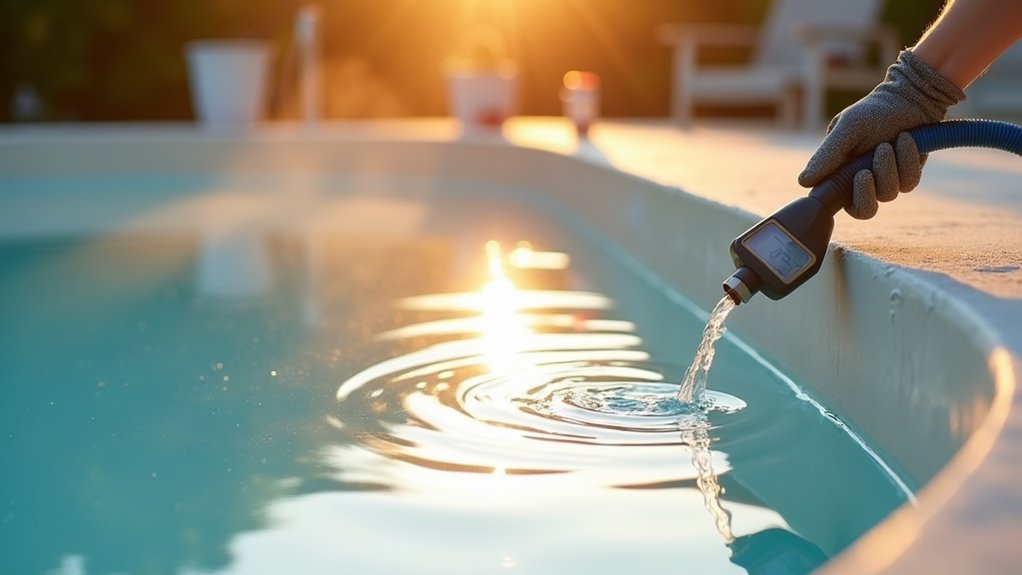
Although it takes about 28 days for pool plaster to fully cure, you can take specific steps during this period to guarantee maximum hardness and durability.
Pool plaster cures in about 28 days, with key steps ensuring maximum hardness and durability.
First, daily brushing is essential to remove plaster dust, which prevents uneven curing and surface blemishes.
Monitoring water chemistry is critical; imbalanced parameters can cause etching or scaling. You must maintain the proper Langelier Saturation Index (LSI) range to keep water balanced, promoting ideal plaster curing conditions.
Avoid foot traffic during this phase, as compressing the plaster can create permanent marks.
Proper startup procedures, including careful water filling and chemical adjustments, help stabilize the curing environment.
Recommended Waiting Period Before Swimming
You should wait about 10 to 28 days after plastering before jumping into the pool. This waiting period helps ensure the surface cures properly.
During this time, it’s really important to keep the water chemistry balanced and sanitized to protect the plaster finish.
Also, make sure the water level reaches at least mid-tile before anyone uses the pool — this helps prevent damage and keeps things safe.
Ideal Waiting Duration
When determining the ideal waiting duration before swimming in a newly plastered pool, you should consider a recommended period typically ranging from 10 to 28 days. This waiting period makes certain the plaster cures properly, maintaining its durability and aesthetic quality.
You must wait until the water is balanced and sanitized according to the National Plaster Council’s guidelines. Furthermore, avoid using the pool heater for at least 28 days, as it may void the plaster warranty.
It’s also essential that the water level reaches the mid-tile line to confirm adequate hydration of the new pool’s plaster surface.
While opinions vary, adhering to this technical waiting period helps protect your investment and guarantees safety before swimming in your new pool.
Water Chemistry Importance
Since the water chemistry must reach proper balance and sanitation before swimming, you need to monitor key parameters like pH and free chlorine levels closely.
As pool owners, once your pool is filling and then filled, it’s critical to wait until these chemical levels stabilize to protect the plaster and verify safe swimming conditions.
Follow these steps:
- Test pH daily, aiming for 7.2–7.6 to prevent surface damage.
- Maintain free chlorine between 1–3 ppm for effective sanitation.
- Monitor the Langelier Saturation Index (LSI) to keep water balanced and plaster intact.
Only swim when the water is clear, free of plaster dust, and chemistry is stable.
This usually takes a few days after the pool is filled. This careful monitoring preserves your plaster’s longevity and guarantees swimmer safety.
Impact of Water Chemistry on Pool Readiness
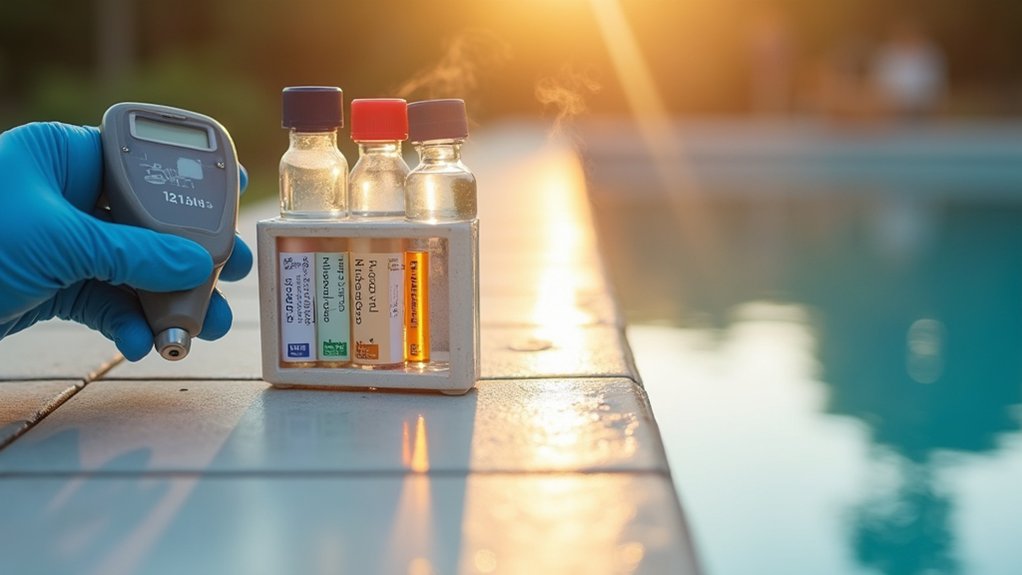
Although the plaster may appear set, swimming in your pool isn’t advisable until water chemistry reaches proper balance.
You need to maintain pH and Free Chlorine (FC) within specified ranges to guarantee swimmer safety and protect the plaster surface.
Monitor the Langelier Saturation Index (LSI) closely; it indicates whether your water is corrosive or scaling, both harmful to the plaster.
Swimming prematurely in improperly balanced water risks aesthetic damage, as even minor shifts from swimmer activities can affect the finish.
Wait until the water clears and plaster dust dissipates, signaling stabilization.
Throughout curing, regularly adjust water chemistry to preserve plaster longevity and appearance.
Only when these parameters are within ideal ranges and water clarity is achieved should you consider swimming, guaranteeing your pool remains pristine and safe.
Role of Brushing and Cleaning in Plaster Care
Maintaining balanced water chemistry sets the foundation for plaster care, but proper brushing and cleaning play a significant role in preserving the surface during curing.
Balanced water chemistry and diligent brushing are essential to protect plaster surfaces during curing.
You should start brushing immediately after filling the pool to remove plaster dust and maintain water clarity.
Use a vinyl head vacuum without wheels to clean the pool for the first few weeks, as it prevents damage to the new plaster finish.
Avoid backwashing the filter after your final brushing session to protect the curing process.
Follow these key practices:
- Brush the plaster surface regularly for 28 days to guarantee a smooth finish and remove residual dust.
- Use appropriate vacuum equipment to avoid surface damage.
- Monitor water chemistry consistently to support plaster longevity.
This approach preserves plaster quality effectively during curing.
Guidelines for Using Pool Heaters After Plastering
You shouldn’t use your pool heater for at least 28 days after plastering. This helps avoid damaging the curing plaster and protects your warranty.
The plaster cures best when it’s fully submerged in water without any added heat. So, if you turn on the heater too soon, it can compromise the plaster’s integrity.
It’s always a good idea to check in with your plastering professional—they can give you advice that’s just right for your pool’s specific conditions.
Heater Usage Restrictions
Because the plaster needs at least 28 days to cure properly underwater, you should avoid using the pool heater during this period.
Heating the water too soon can disrupt the curing process, leading to surface damage and potential warranty issues.
To protect your plaster finish, follow these heater usage restrictions:
- Don’t activate the pool heater until the plaster has fully cured after 28 days.
- Maintain consistent water temperature without artificial heating during the curing phase.
- Consult your plaster warranty terms to confirm heater guidelines and avoid voiding coverage.
Adhering to these restrictions guarantees the plaster cures effectively under water, preserving its structural integrity and aesthetic quality.
This careful management prevents premature deterioration and extends the lifespan of your pool’s surface finish.
Warranty Implications
Although it might be tempting to heat your pool soon after plastering, doing so within the initial 28-day curing period can void your plaster warranty.
The manufacturer’s warranty typically requires strict adherence to curing guidelines, which prohibit heater usage during this critical phase.
Heating the pool prematurely causes uneven curing, leading to cracks or discoloration that compromise plaster integrity.
This damage is often excluded from warranty coverage, leaving you responsible for repairs.
To protect your investment, avoid activating the heater until the plaster has fully cured.
Always consult your plaster installer to understand specific warranty terms related to heater use.
Following these guidelines guarantees the structural and aesthetic quality of your pool surface remains intact and your warranty remains valid.
Heater and Plaster Curing
When managing your pool’s plaster curing, delaying heater activation for at least 28 days is essential to secure proper setting and avoid warranty issues.
Activating the heater prematurely can disrupt curing, cause thermal stress, and void your plaster warranty.
To guarantee superior plaster integrity, follow these guidelines:
- Maintain consistent water submersion without heating during the initial 28-day curing period to promote chemical hydration.
- Monitor and balance water chemistry carefully to prevent damage from imbalanced pH or alkalinity.
- Only activate the heater after the plaster has fully cured, typically after four weeks, to avoid discoloration and thermal expansion impacts.
Safe Equipment Practices During Initial Pool Use
To protect your pool’s plaster during its critical curing phase, you must avoid using wheeled, tracked, or robotic vacuum cleaners for at least the first 30 days.
These devices can cause permanent marks or lines on the delicate plaster surface, compromising its appearance and durability.
Instead, rely on manual vacuuming methods during the initial weeks to gently remove debris without damaging the finish.
Furthermore, refrain from placing any pool accessories, such as chairs or cleaning equipment, in the pool during this period.
Proper equipment management is essential to preserve the plaster’s aesthetics and structural integrity.
Signs Your Pool Is Ready for Swimming
Before you jump into your newly plastered pool, you need to confirm specific signs that indicate it’s safe for swimming. Ensuring these factors will protect both your health and the pool’s finish.
- Clear Water Visibility: The pool bottom should be fully visible, confirming that plaster dust has settled and the water is free of cloudiness.
- Balanced Water Chemistry: Verify that pH levels (7.2 to 7.8) and free chlorine (1 to 3 ppm) are within recommended ranges to prevent irritation and microbial growth.
- Proper Curing Time: At least 7 days should have passed since filling to allow plaster to cure and stabilize, supported by regular brushing during the first 28 days.
Consult your pool professional for tailored advice based on plaster type and environmental conditions before swimming.
Effects of Early Swimming on Pool Plaster
If you jump into the pool too soon after plastering, you might end up damaging the surface for good. That’s because the plaster is still curing, and walking around on it can compress the material before it’s fully set.
The curing process is super important—it’s when all the chemical reactions happen that make the plaster hard and durable. If you don’t give it enough time, the plaster won’t be as strong as it should be.
So, it’s really best to wait at least a week, and sometimes up to four weeks, before taking that first swim. This wait ensures the plaster sets properly and keeps its structural integrity intact.
Trust me, giving it that time will save you from headaches and costly repairs down the line.
Plaster Damage Risks
Although it might be tempting to swim immediately after plastering, doing so can compress and permanently mark the surface. This compromises both its appearance and durability.
You risk damaging the pool plaster in several ways if you enter too soon:
- Foot traffic can create impact spots, leading to uneven finishes and visible defects.
- Disturbing plaster dust before it settles can reduce surface integrity and cause cloudiness.
- Introducing pool chemicals prematurely may cause discoloration or weaken the plaster’s structure.
To maintain the plaster’s lifespan and aesthetic quality, it’s critical to adhere to the recommended waiting period.
This guarantees the surface sets properly without premature physical or chemical stress. Avoiding early swimming prevents irreversible damage and preserves your pool’s finish for years to come.
Curing Process Impact
Since the plaster’s curing process requires at least 28 days to harden fully, swimming too soon can compress and permanently mark the surface, compromising its finish.
Early foot traffic disrupts the curing process, leading to uneven textures or visible spots that degrade the pool’s aesthetic and structural integrity.
The plaster needs this time to achieve ideal hardness and durability. Introducing swimmers prematurely not only risks physical damage but may also interfere with chemical bonding within the plaster.
Furthermore, maintaining proper water chemistry during curing is critical. Imbalanced water can accelerate deterioration and reduce plaster longevity.
To preserve the pool’s surface quality, you must avoid swimming until the plaster is fully cured and water conditions are stable, ensuring a durable and visually appealing finish.
Variations in Professional Recommendations
While recommendations on when you can swim after plastering a pool vary considerably, professionals agree that water chemistry and plaster type heavily influence the timing.
The National Plaster Council (NPC) advises waiting until water is balanced and sanitized before swimming. However, some plaster brands and builders suggest shorter wait times, creating conflicting guidelines.
To navigate these variations, consider:
- Plaster Type. Different materials cure at varying rates, affecting safe swim timing.
- Water Chemistry. Balanced pH and sanitizer levels are critical before pool use.
- Startup Methods. Techniques like Orenda Startup™ can accelerate readiness by optimizing water conditions.
Community Experiences With Swimming Timelines
Opinions from pool owners on when to swim after plastering vary widely. This reflects the complexity of curing processes and water chemistry management. Some community members report swimming as soon as one week post-plastering, while others recommend waiting up to 28 days to guarantee ideal curing.
Many emphasize that balancing water chemistry and eliminating plaster dust are prerequisites before entering the pool. Although certain builders endorse immediate swimming once the pool is filled, plaster professionals caution against this to avoid surface damage.
Clear water visibility and stable chemical levels serve as reliable indicators of swim readiness.
Tips for Maintaining Pool Quality After First Swim
After your first swim, you’ll need to closely monitor and adjust your pool’s water chemistry, focusing on pH and chlorine levels, to maintain ideal conditions.
Consistently check these parameters daily, especially after swimming, to prevent damage to the new plaster surface.
Follow these tips for maximum pool quality:
- Brush the pool surfaces daily for up to 28 days to remove plaster dust and prevent staining.
- Avoid using pool accessories or automated cleaners during the first 28 days to protect the plaster finish.
- If plaster dust is visible post-swim, let it settle before manually vacuuming to avoid scratching.
Adhering to these precise maintenance steps guarantees your pool surface cures properly and remains pristine.
Frequently Asked Question
Can Pool Plaster Cause Skin Irritation After Initial Swimming?
Yes, pool plaster can cause skin irritation after your initial swim.
When you first swim, plaster dust and unbalanced water chemistry may irritate your skin, especially if you have sensitivities.
You’ll want to wait until the plaster fully cures and the water’s pH and chlorine levels are balanced. This reduces the risk of rashes or discomfort.
If you notice persistent irritation, consider consulting a dermatologist for personalized advice.
What Are the Best Swimwear Materials for Newly Plastered Pools?
In the realm of swimwear in newly plastered pools, you want to avoid rocking the boat.
Choose synthetic fabrics like polyester or nylon because they resist chemical absorption better than cotton.
Steer clear of rough seams or embellishments that might scratch the plaster. Dark colors help prevent fading from chemicals, and quick-drying materials reduce water exposure.
Always rinse your swimwear before use to remove detergents that could disrupt pool chemistry and damage the plaster finish.
How Does Plaster Type Affect Water Temperature Preferences?
Your choice of plaster greatly influences water temperature preferences. Darker plasters absorb more heat, warming the pool faster, while lighter ones reflect sunlight, keeping water cooler.
High-quality plaster stabilizes temperatures, providing consistent comfort.
Because freshly plastered pools need cooler water for curing, you might’ve to balance ideal swim temperatures with curing requirements.
Understanding plaster thermal properties helps you optimize heating and manage energy costs efficiently.
Are There Specific Times of Day Best for First Swim Post-Plaster?
When you take the plunge for your first swim post-plaster, aim for late afternoon or early evening. This timing helps prevent thermal shock and avoids rapid temperature swings that could cause surface imperfections.
Steer clear of midday’s harsh sun, which can disrupt water chemistry and plaster curing. Early mornings are cooler and might slow the process.
Keep a close eye on water clarity and chemistry beforehand to guarantee your pool’s plaster remains intact and durable.
Should Pets Avoid New Plastered Pools Initially?
Yes, you should keep pets away from newly plastered pools for at least 28 days.
The plaster needs time to cure properly, and pets’ claws or weight can damage the surface.
Furthermore, chemicals and plaster dust may leach into the water, posing health risks if ingested.
Monitoring water chemistry during this period is essential to guarantee safety for both pets and humans.
Avoid allowing pets near the pool until it’s fully cured.
Conclusion
You’ll want to wait at least 10 to 14 days before jumping into your newly plastered pool to guarantee the curing process is complete and the surface is fully set. Rushing in too soon can cause damage, like putting the cart before the horse.
By following proper water chemistry, brushing, and heater guidelines, you’ll protect your investment and enjoy a smooth, long-lasting finish. Patience now saves costly repairs later.