Can You Swim In A Pool With High Alkalinity – Safety Guide
Swimming in a pool with high alkalinity, defined as levels above 150-180 ppm, can be unsafe. It can lead to skin and eye irritation and reduce chlorine’s effectiveness, making water hygiene a concern.
You’ll likely notice cloudy water or scaling on surfaces. Always check pH and alkalinity levels regularly to maintain safe conditions. If alkalinity exceeds 180 ppm, professional help is advisable.
Learn how to correct high alkalinity and guarantee a safe swimming experience for yourself.
What High Alkalinity Means for Your Pool
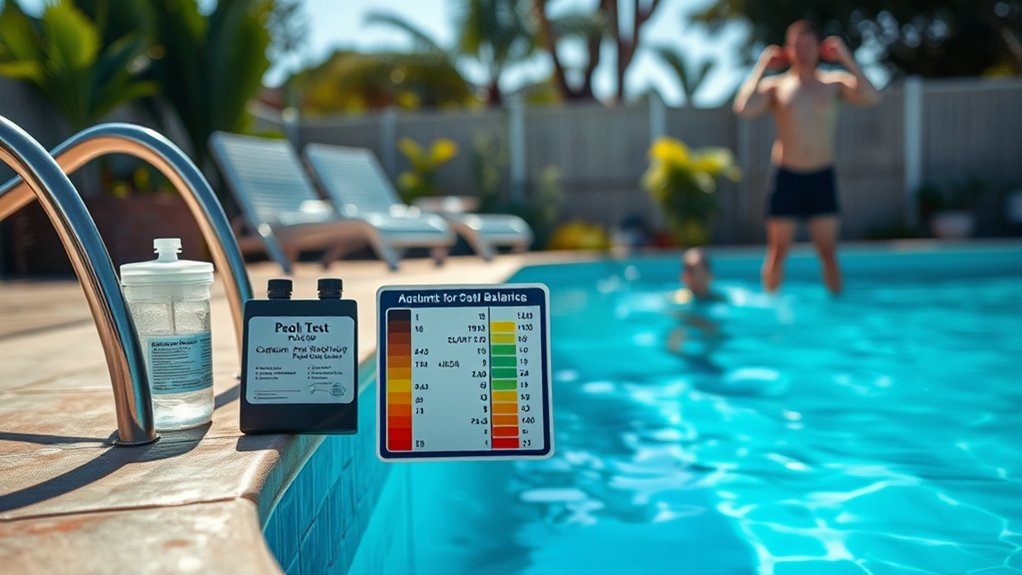
When you have high alkalinity in your pool, it can spell trouble for your water chemistry and swimmer comfort. Defined as total alkalinity levels exceeding 150-180 ppm, high alkalinity makes it difficult to manage pH levels.
You may notice your pH rising above 7.8, which reduces chlorine effectiveness and can lead to cloudy swimming pool water. This can create unsafe conditions for swimmers, as they might also experience skin and eye irritation from the elevated pH.
Moreover, maintaining your pool becomes more challenging, with increased risks of scaling on surfaces and higher maintenance costs.
High alkalinity complicates pool maintenance, raising the risk of scaling and escalating overall upkeep costs.
Regular testing is essential; aim for alkalinity levels between 80-120 ppm to keep your pool safe and enjoyable.
Why High Alkalinity Water Can Compromise Your Safety
High alkalinity water can pose significant risks to your safety as a swimmer. When the alkalinity raises the pH level above 7.8, it can lead to skin irritation and discomfort, affecting your overall swimming experience.
Furthermore, high pH levels can encourage the growth of harmful microorganisms, compromising pool hygiene.
Another serious concern is cloudy water, which obscures visibility and masks potential hazards lurking beneath the surface, increasing the risk of accidents.
Elevated alkalinity also leads to scaling on pool surfaces, resulting in costly repairs over time.
To guarantee a safe swimming environment, it’s essential to maintain a balanced pH range of 7.4 to 7.8, addressing high alkalinity promptly to protect both your health and the pool’s integrity.
How High Alkalinity Affects Chlorine Effectiveness
As alkalinity levels rise above the ideal range, chlorine’s effectiveness in keeping your pool clean and safe diminishes considerably.
When high alkalinity occurs, particularly above 150–180 ppm, it often leads to increased pH levels.
At pH 8.0, chlorine can become over 70% inactive, severely limiting its disinfecting capabilities. This diminished chlorine effectiveness makes it challenging to maintain proper sanitation, allowing harmful algae and bacteria to thrive.
At a pH of 8.0, chlorine’s effectiveness plummets, enabling harmful organisms to flourish and jeopardizing pool sanitation.
Furthermore, high alkalinity may result in cloudy water, which makes it harder to detect these issues. Swimmers could also face skin and eye irritation, even when chlorine levels seem adequate.
Regularly monitoring and adjusting both alkalinity and pH is essential to guarantee your pool remains safe and hygienic for swimming.
How Can You Spot High Alkalinity in Your Pool?
To spot high alkalinity in your pool, start by keeping an eye on the pH levels. If the pH goes above 7.8, that’s a good sign there might be an issue.
Also, take a look at how clear the water is. If it looks cloudy, that could mean the alkalinity is too high, which makes maintaining your pool water a bit trickier.
And if swimmers start complaining about skin or eye irritation, that’s another clue that it’s time to check your pool’s chemical balance.
It’s all about paying attention to these signs so you can keep your pool in great shape!
pH Level Monitoring
Monitoring your pool’s pH level is essential for maintaining a safe and inviting swimming environment. Regular water testing helps you keep track of total alkalinity and pH levels, preventing issues before they escalate.
If your pH frequently sits above 7.8, it’s a clear indication that your total alkalinity may be too high, pushing the pH toward damaging levels.
Look out for persistent cloudiness, scaling on surfaces, and irritation for swimmers. These are all signs that your water needs immediate attention.
Don’t forget, when pH exceeds 8.0, chlorine becomes much less effective, putting your health at risk.
Staying proactive with regular testing guarantees your pool remains a safe haven for enjoyment.
Water Clarity Assessment
Cloudy water can be a telltale sign of high alkalinity in your pool. This cloudiness often indicates an imbalance in water chemistry, affecting overall water clarity.
Keep an eye out for these indicators:
- pH levels above 7.8 may suggest high alkalinity.
- Scaling on pool walls and equipment indicates persistent high alkalinity.
- Algae growth can occur even with regular chlorination, hinting at ineffective sanitation.
- Total alkalinity measurements over 150 ppm are a clear sign of potential clarity issues.
Monitoring these signs is essential for maintaining a safe swimming environment.
High alkalinity can lead to murky water and make it difficult to achieve the clarity you desire. Regular testing guarantees your pool remains clean and enjoyable.
Safe Swimming Practices for High Alkalinity
To stay safe while swimming in high alkalinity pools, it’s important to know what the alkalinity levels are and keep them within safe limits.
You’ll want to regularly check the pH because keeping it between 7.4 and 7.8 helps reduce irritation to your skin and eyes.
Also, make sure the chlorine levels are balanced, around 3 ppm, since this helps stop bacteria from growing and creates a healthier swimming environment overall.
Understand Alkalinity Levels
Maintaining proper alkalinity levels in your pool is essential for ensuring a safe and enjoyable swimming experience. High alkalinity, typically above 180 ppm, can lead to elevated pH levels, which may reduce chlorine effectiveness and increase the risk of cloudy water and bacteria growth. Swimmers might also face skin and eye irritation.
To safeguard your swimming experience, consider the following:
- Keep total alkalinity between 80 and 120 ppm for ideal conditions.
- Regularly test alkalinity and pH levels to detect imbalances.
- Maintain chlorine levels around 3 ppm to combat high alkalinity effects.
- If alkalinity is too high, promptly add a pH decreaser to restore balance.
Taking these steps will enhance your pool’s safety and comfort.
Monitor pH Regularly
High alkalinity can markedly affect your pool’s water chemistry, so it’s crucial to monitor pH levels regularly. Maintaining your pH between 7.4 and 7.8 guarantees ideal swimmer comfort and health. Elevated pH levels, often a result of high alkalinity, can lead to ineffective chlorine disinfection and swimmer discomfort.
| pH Level | Effects | Action Needed |
|---|---|---|
| 7.4 – 7.8 | Ideal comfort and safety | No action needed |
| 7.9 – 8.0 | Slight discomfort, potential issues | Recheck soon |
| 8.1 and above | Skin irritation, red eyes | Use pH decreasers immediately |
| Above 8.0 | Increased bacteria risk | Test more frequently |
| Consistently high | Time for adjustments | Regular testing is vital |
Monitor these levels at least weekly to maintain a safe swimming environment.
Maintain Chlorine Balance
While it might seem challenging to keep your pool safe for swimmers with high alkalinity, maintaining a proper chlorine balance is essential. Proper chlorine levels around 3 ppm guarantee effective disinfection, as higher pH can reduce chlorine’s efficacy.
Regularly test and adjust both pH and alkalinity to guarantee swimmer comfort and safety. Keep pH between 7.4 and 7.8 to prevent skin and eye irritation.
Use pH decreasers like muriatic acid or dry acid to lower pH and alkalinity. Recognize that cloudy water may signal bacterial growth.
Act quickly to correct pH exceeding 7.8 to maintain a safe swimming environment.
Correcting High Alkalinity: Effective Steps to Follow
Balancing the alkalinity of your pool is essential for ideal water quality, and there are effective steps to correct high alkalinity levels.
First, measure your current total alkalinity (TA) accurately.
Accurate measurement of your total alkalinity (TA) is the crucial first step in maintaining pool water quality.
If it’s too high, use a pH decreaser like muriatic acid or sodium bisulfate, targeting a TA of 80-120 ppm.
Add the acid in a single spot while the circulation pump is off to maximize effectiveness.
After waiting 1-2 hours, restart the pump and recheck alkalinity after 4-6 hours.
If alkalinity remains excessively high, consider partial water replacement to dilute the levels.
Regular testing, at least once a week, is vital to maintain balanced alkalinity and prevent future issues.
Maintenance Tips to Prevent High Alkalinity
To keep your pool’s alkalinity levels in check, it’s essential to adopt a proactive maintenance routine. High alkalinity can negatively impact your swimming experience, so stay ahead of the issue with these key practices:
Test your pool water at least once a week, aiming for 80-120 ppm. Use a reliable alkalinity decreaser, such as muriatic acid, to adjust levels as necessary.
Run your pump for 8-12 hours daily to guarantee proper circulation and uniform chemical distribution.
Monitor environmental factors, like rain or hard tap water, and consider water softeners to mitigate external influences.
When to Call in the Professionals for Help With Pool Chemistry
Maintaining proper alkalinity is key to keeping your pool water balanced, but sometimes it can become overwhelming. If your alkalinity levels exceed 180 ppm, it’s time to call in professionals for assistance.
High alkalinity complicates pH adjustments and affects chemical efficacy, which can lead to persistent cloudiness or scaling on surfaces. If you notice that chlorine isn’t effective, experts can identify and correct underlying alkalinity issues.
Moreover, if swimming conditions result in skin or eye irritation, consulting with pool chemistry professionals guarantees you maintain safe and comfortable water for everyone.
They provide tailored solutions, including chemical adjustments and routine maintenance, to prevent further alkalinity problems and ensure your pool remains an enjoyable oasis.
Frequently Asked Questions
What Symptoms Should I Look for When Swimming in High Alkalinity Water?
When swimming in high alkalinity water, watch for symptoms like skin irritation, eye discomfort, or even breathing issues.
You might notice red, itchy eyes or a burning sensation on your skin.
If you experience any difficulty breathing, it’s essential to exit the water immediately.
Furthermore, cloudy water can indicate harmful bacteria, increasing your risk of infections.
Stay alert to these signs to guarantee a safer swimming experience.
How Often Should I Test My Pool’s Alkalinity Levels?
You should test your pool’s alkalinity levels at least once a week to maintain ideal ranges between 80-120 ppm.
After heavy rainfall or water evaporation, retest to catch any alkalinity fluctuations.
If you add chemicals or adjust levels, check alkalinity 24 hours later to verify stability.
Regular testing helps prevent imbalances that can affect pH and reduce chlorine effectiveness, keeping your pool safe and enjoyable for everyone.
Can High Alkalinity Affect Pool Equipment Longevity?
Yes, high alkalinity can greatly affect your pool equipment’s longevity.
It can lead to equipment corrosion due to elevated pH levels, increasing maintenance costs.
When pH balance is off, your filtration and circulation systems might work harder, putting additional strain on the components.
Regular testing and adjustments are vital to prevent costly repairs and guarantee your equipment remains in good condition.
Neglecting these issues can lead to severe long-term damage.
Are There Specific Chemical Products for Reducing High Alkalinity?
When it comes to your pool’s chemistry, you’re in luck! Alkalinity reducers like muriatic acid or dry acid work wonders for lowering high alkalinity. They help you achieve that perfect pH balance without much fuss.
However, remember to prioritize chemical safety. Measure your pool accurately before adding anything. Adding too much can lead to significant fluctuations.
Keep testing your water to maintain those ideal levels of 80-120 ppm for an enjoyable swimming experience!
How Does Weather Impact Pool Alkalinity Levels?
Weather greatly impacts your pool’s alkalinity levels. Rain can increase alkalinity, especially in limestone areas, while high temperatures can lead to evaporation that concentrates minerals.
Cloudy or humid conditions may reduce evaporation but introduce organic debris, disrupting alkalinity balance.
Regular testing during seasonal changes is essential for effective pool maintenance.
Monitoring these weather effects helps you maintain ideal chemical levels, ensuring a safe and pleasant swimming environment for you and your family.
Conclusion
While swimming in a pool with high alkalinity isn’t immediately hazardous, it can lead to discomfort and ineffective chlorine levels, impacting your enjoyment. Knowing how to recognize and manage high alkalinity is essential for a safe swimming experience.
Regular maintenance and timely adjustments can keep your water balanced. But if the issues persist, it’s wise to consult a professional.
Prioritize your safety and make certain that your pool remains a healthy, enjoyable environment for all.