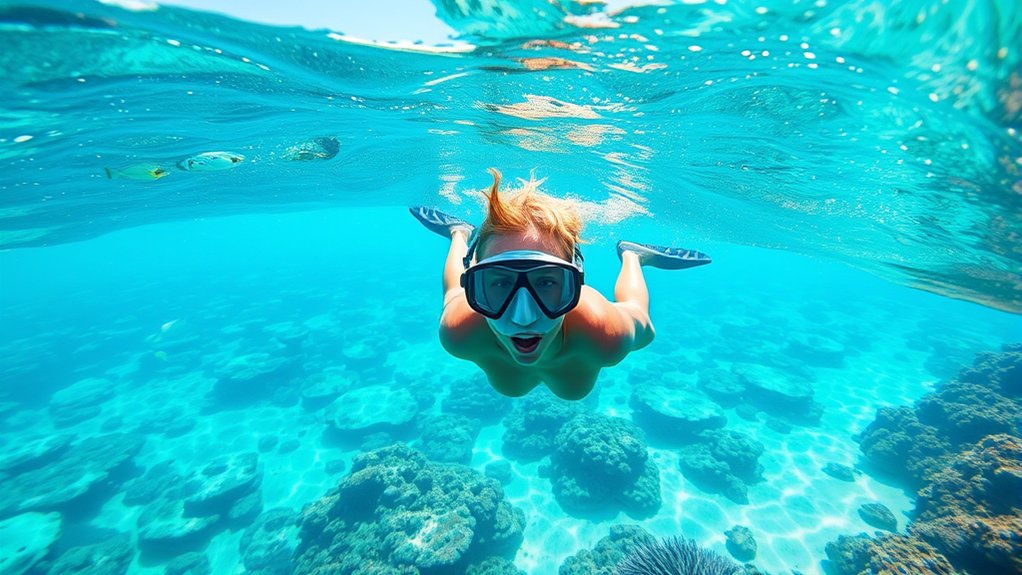
Do You Need To Know How To Swim To Snorkel – Beginner Guide
You don’t need to know how to swim to snorkel safely and enjoyably. Using flotation devices like snorkel vests keeps you buoyant and comfortable, even if you’re not confident in the water.
Choose calm, shallow spots and use well-fitting gear to reduce risks and increase confidence. Guided tours can offer extra support and safety.
With practice and the right approach, snorkeling can be relaxing and fun. Explore further to discover tips that make your experience smoother and safer.
Can You Snorkel Without Knowing How to Swim?
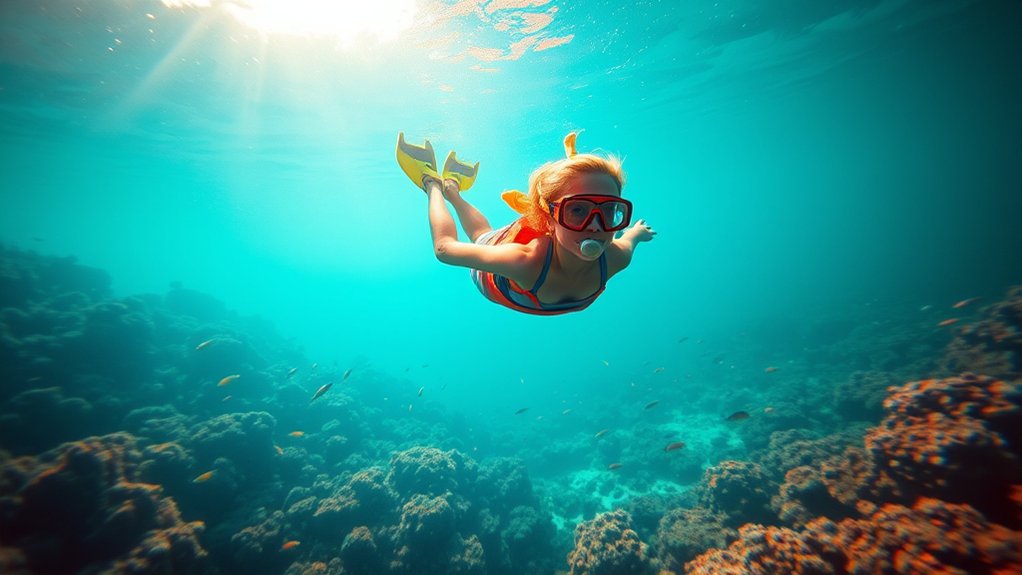
Wondering if you can snorkel without knowing how to swim? The answer is yes. Non-swimmers can enjoy snorkeling safely with the right precautions.
Using a flotation device like a life vest keeps you buoyant and prevents sinking. This lets you relax on the water’s surface without worry.
A life vest provides buoyancy, allowing you to float effortlessly and enjoy snorkeling with peace of mind.
Many snorkeling tours cater specifically to beginners and non-swimmers, offering guidance and support to help build your confidence.
Choosing locations with calm waters, such as shallow bays or protected coves, makes the experience even safer and more comfortable.
With properly fitted snorkeling gear, you’ll feel secure and able to focus on the underwater sights.
Why Flotation Devices Are a Must for Non-Swimmers
Although you might feel hesitant about snorkeling without swimming skills, flotation devices are vital for keeping you safe and comfortable in the water. For non-swimmers, these devices provide essential buoyancy, allowing you to float effortlessly and focus on the snorkeling experience instead of struggling to stay afloat.
A flotation device, such as a life vest or snorkeling vest, enhances your safety by reducing panic and maintaining stability while you explore marine life. Saltwater’s natural buoyancy works with the flotation device, making it even easier for non-swimmers to stay above water.
Many beginner snorkeling tours include flotation devices to guarantee everyone can participate confidently. By wearing one, you protect yourself and fully enjoy the beauty beneath the surface without fear or discomfort.
How to Choose Calm and Beginner-Friendly Snorkeling Spots
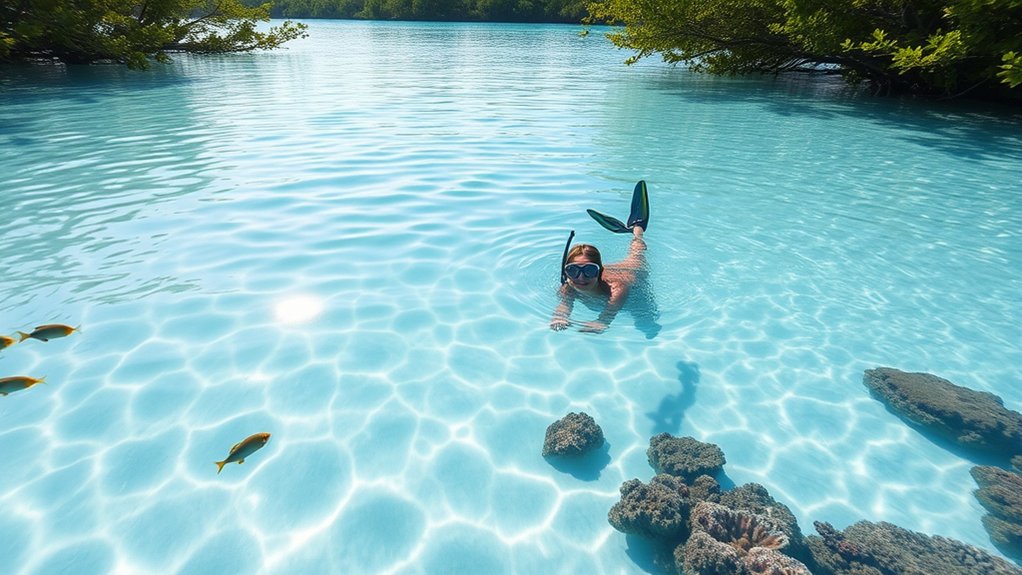
Equipped with a flotation device, your next step is to pick snorkeling spots that suit your comfort level. Focus on calm, shallow waters with gentle currents. These spots are ideal for beginners and non-swimmers because you can snorkel safely here.
Beaches like Turtle Canyon and Hanauma Bay offer clear, sandy bottoms perfect for practice and exploration. Always check weather and water conditions before you go. It’s also a good idea to consider guided tours that specialize in beginner-friendly experiences for added safety.
| Location | Water Type | Features |
|---|---|---|
| Turtle Canyon | Calm, Shallow | Sandy bottom, clear visibility |
| Hanauma Bay | Calm, Shallow | Gentle currents, beach access |
| Guided Tours | Controlled | Expert assistance, safety |
| Beach Entry | Easy | Accessible, shallow waters |
| Weather Check | Variable | Guarantees safe snorkeling |
Choose wisely to enjoy a secure, stress-free snorkeling experience.
Essential Gear Non-Swimmers Need for Snorkeling
Before you immerse yourself in snorkeling, having the right gear is vital, especially if you’re not a confident swimmer. For non-swimmers, a well-fitting snorkel mask is key. It guarantees clear visibility and a proper seal to keep water out.
Pair this with a snorkel vest, an important gear piece that provides buoyancy and boosts your confidence while floating. Consider using a dry snorkel with a purge valve to easily clear any water, reducing discomfort.
While fins aren’t mandatory, they improve maneuverability and help you move smoothly without strong swimming skills.
Finally, practice wearing your gear in shallow water first. This builds comfort and familiarity, making sure your snorkeling experience is safe and enjoyable.
How Guides Support and Keep Non-Swimmers Safe in the Water
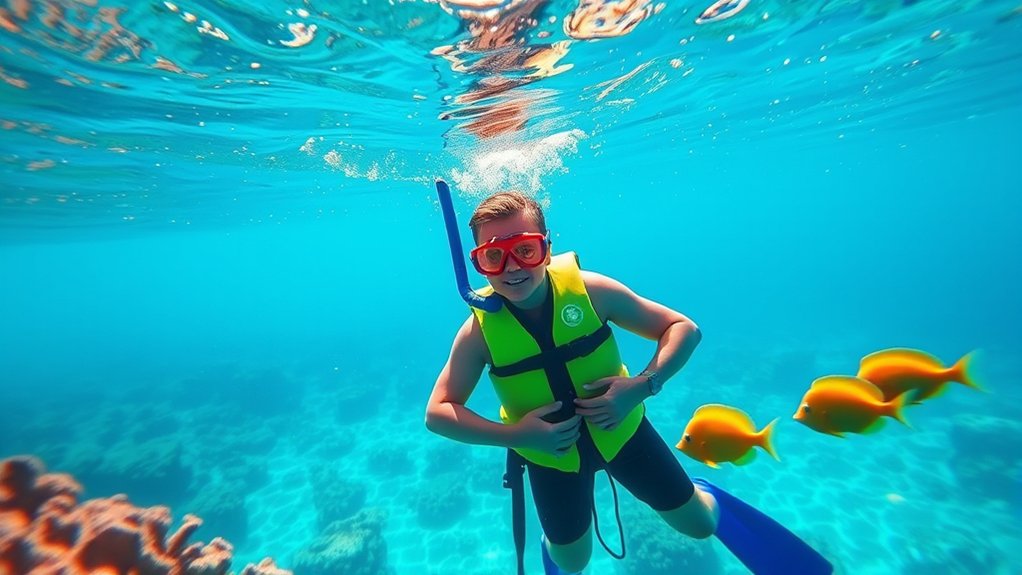
You don’t have to face the water alone. Trained guides stay close by to provide safety assistance and help keep you calm throughout your snorkeling experience. They’re right there with you every step of the way.
They’ll help adjust your gear perfectly, making sure everything fits just right. Plus, they offer continuous guidance to boost your confidence as you explore.
With their expert support, you can relax and focus on enjoying the underwater world without any worries. It’s all about feeling safe and having fun!
Trained Safety Assistance
While snorkeling may seem intimidating if you’re not a confident swimmer, trained guides make sure you’re safe and supported every step of the way. These professionals provide thorough safety briefings, ensuring non-swimmers understand the equipment and procedures before entering the water.
They stay close, offering continuous supervision and quick assistance, which boosts your comfort and confidence. Trained guides use panic management techniques to help you stay calm and focused, making the experience enjoyable rather than stressful.
Many tours cater specifically to non-swimmers, keeping group sizes small so you receive personalized attention. This focused support lets you familiarize yourself with the underwater environment while feeling secure.
With the right guidance, snorkeling is accessible and safe, even if you can’t swim. So, don’t let fear hold you back from exploring the beautiful underwater world!
Gear Adjustment Support
Although snorkeling might feel intimidating without strong swimming skills, trained guides guarantee your gear fits perfectly to maximize comfort and safety. They assist non-swimmers with essential gear adjustments, ensuring your mask, snorkel, and fins suit you well to prevent leaks or discomfort.
You’ll receive personalized instructions on how to clear water from your equipment and use it effectively. This hands-on support helps you relax and focus on the experience rather than your abilities.
Continuous In-Water Guidance
Because guides stay close and provide continuous support in the water, you can snorkel confidently even without strong swimming skills. Their continuous guidance guarantees non-swimmers feel secure throughout the experience, as they monitor your safety closely and respond instantly if you need help.
Trained in strict safety protocols, guides offer personalized instructions and reassurance, helping you stay calm and comfortable. Many carry flotation devices, like life preservers, ready to assist if necessary, adding an extra layer of security.
This close supervision prevents you from drifting away or encountering hazards, letting you focus on enjoying the underwater world. With such dedicated support, you don’t need to worry about your swimming ability.
Your guide’s continuous guidance keeps you safe every step of the way.
How to Overcome Fear and Challenges When Snorkeling for the First Time
If you feel nervous about snorkeling for the first time, start by gradually exposing yourself to water environments to build confidence. This step helps you overcome fear and become comfortable in the water.
As a first-time snorkeler, trust the guidance provided by trained tour guides. They’ll offer safety instructions tailored for beginners and assist you throughout your experience.
Familiarize yourself with the snorkeling gear and practice breathing techniques on land before entering the water.
When snorkeling, focus on staying calm and floating rather than swimming vigorously. Remaining relaxed allows you to enjoy the underwater world fully and reduces anxiety.
How Relaxing and Practicing Can Make Snorkeling Easier for Non-Swimmers
Staying calm in the water really helps you float more easily and feel in control while snorkeling. It’s all about relaxing and letting your body do its thing.
Try practicing with your snorkel gear on land or in shallow water first. Getting comfortable with the equipment beforehand makes a big difference.
Then, spend some time gradually building up your confidence in the water. The more you practice, the smoother and more enjoyable the whole experience becomes.
Importance of Staying Calm
Confidence plays an essential role in making snorkeling enjoyable, especially for those who can’t swim. Staying calm helps you feel comfortable in the water, improving buoyancy and preventing panic.
Relaxation controls your movements, allowing you to float effortlessly and breathe steadily through the snorkel. Practicing breathing techniques on land prepares you to stay calm underwater, reducing anxiety.
| Benefit | Action | Result |
|---|---|---|
| Staying calm | Focus on slow breathing | Enhanced buoyancy |
| Relaxation | Gentle movements | Better stability |
| Feel comfortable | Practice on land | Reduced fear and panic |
Practicing Gear Familiarity
Mastering calmness in the water sets the stage for another essential step: getting comfortable with your snorkeling gear. Start by practicing using your snorkeling equipment on land or in shallow water to build confidence and improve your swimming skills.
Wearing a well-fitted snorkel mask guarantees no water leaks and boosts visibility, helping you feel safe. Incorporate a flotation device, like a snorkel vest, to support your buoyancy. This lets you relax and focus on breathing and observing underwater life without stress.
Regularly practice clearing your snorkel and adjusting your mask to reduce anxiety. Familiarize yourself with breathing through the snorkel on dry land so it feels natural when you’re in the water. This kind of practice makes snorkeling easier, especially if you’re not a strong swimmer.
Gradual Water Exposure
When you ease into water gradually, starting in shallow areas, you build the comfort and confidence needed to snorkel without stress.
Gradual exposure to water allows non-swimmers to acclimate by practicing breathing techniques on land and then in calm, shallow water.
Wearing a life vest enhances buoyancy, helping you relax and focus on the experience rather than your swimming skills.
Use these moments to familiarize yourself with clearing your snorkel and adjusting your mask, boosting your self-assurance.
This steady approach lets you embrace the underwater world with a positive mindset, minimizing anxiety and making snorkeling more enjoyable.
Practical Tips for Confident and Safe Snorkeling as a Non-Swimmer
Even if you don’t know how to swim, you can still enjoy snorkeling safely by taking a few practical steps.
As a non-swimmer, selecting the right snorkeling gear, especially flotation devices like life vests, will keep you buoyant and comfortable. Start by practicing with your gear on land or in calm shallow locations to build confidence.
Joining guided snorkeling tours guarantees professional support and safety, making your experience more enjoyable and secure. Remember to stay relaxed and focus on steady breathing to fully appreciate the underwater world without stress.
Here are practical tips for confident and safe snorkeling:
- Use flotation devices for added buoyancy
- Familiarize yourself with snorkeling gear in shallow water
- Choose calm shallow locations like Turtle Canyon
- Join guided snorkeling tours for expert assistance
- Practice steady breathing and stay relaxed
Frequently Asked Questions
What Is the Best Time of Day for Snorkeling as a Beginner?
The best time of day for snorkeling as a beginner is early morning when the water’s calm and visibility’s at its best. At top snorkeling locations, this helps you use your beginner snorkeling gear effectively.
Plus, it’s easier to enjoy safety snorkeling tips like staying close to shore.
Make sure to follow a snorkeling etiquette guide to respect marine life and other snorkelers. Avoid late afternoons when winds pick up, making conditions tougher for beginners like you.
Early mornings just give you a much smoother, more enjoyable experience overall.
Can Snorkeling Help Improve Swimming Skills Over Time?
About 80% of your body’s oxygen comes from controlled breathing underwater. Yes, snorkeling can improve your swimming skills over time by teaching you essential snorkeling techniques like breathing exercises and fin usage.
These build your lung capacity, leg strength, and coordination while reinforcing water safety.
As you practice floating and kicking, you’ll gain confidence and improve your swimming endurance naturally.
Keep at it, and you’ll notice steady progress in the pool or open water. It’s all about consistent practice and getting comfortable in the water.
Are There Specific Health Conditions That Prevent Snorkeling?
Yes, certain health risks can affect your snorkeling safety.
If you have severe asthma, heart conditions, ear problems, or mobility impairments, you should seek medical clearance before snorkeling. These issues might make breathing, handling water pressure, or moving in and out of water difficult.
Using adaptive equipment can help some individuals snorkel safely.
Always prioritize your health and consult a doctor to guarantee a safe and enjoyable snorkeling experience.
How Does Snorkeling Impact Marine Life and the Environment?
Imagine a popular reef where careless snorkeling damaged coral, disrupting underwater ecosystems. Your actions directly impact marine conservation.
Touching or feeding fish alters their behavior and harms delicate habitats.
By practicing snorkeling ethics, like keeping your distance and avoiding contact, you promote responsible tourism that protects these environments.
You play a crucial role in preserving marine life. This way, future snorkelers can enjoy vibrant reefs without causing lasting damage.
What Should I Do if I Experience Ear Discomfort While Snorkeling?
If you experience ear discomfort while snorkeling, focus on ear pressure relief by using equalization techniques like pinching your nose and gently blowing to pop your ears.
Ascend slowly to avoid worsening pressure.
Make sure to communicate underwater with your buddy if you’re in pain. Signal them to stop and surface safely.
Always follow safety precautions and never rush your ascent.
If the discomfort continues, consult a medical professional to make sure you’re protecting your ears properly.
Conclusion
You don’t need to be a strong swimmer to immerse yourself in the world of snorkeling. Just like a bird needs the right wind, you need the right gear and mindset.
With flotation devices, calm waters, and a supportive guide, you’ll glide confidently through the water. Embrace practice and patience, and soon the ocean will feel like a second home.
Remember, every expert was once a beginner. So take the plunge and enjoy the underwater wonderland safely!