How Do You Drain An Above Ground Swimming Pool – Step Guide
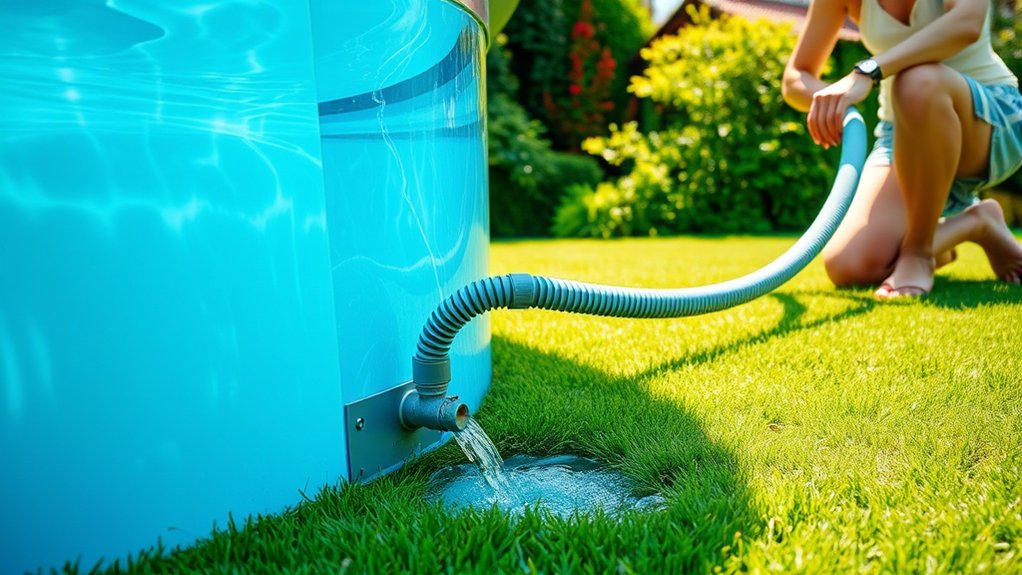
To drain your above ground pool, first turn off all the equipment and check the water chemistry. Attach a submersible pump and use a garden hose to direct the water away from your home. Make sure to follow local disposal rules.
Choose a safe drainage area to prevent flooding. Also, try to avoid draining during hot weather or storms—it can cause problems. Once the pool is drained, clean and inspect it carefully before you refill it with balanced water.
If you want more detailed steps or troubleshooting tips, you’ll find plenty of guidance ahead. Just keep these basics in mind, and you’ll be good to go!
When Should You Drain Your Above Ground Pool?
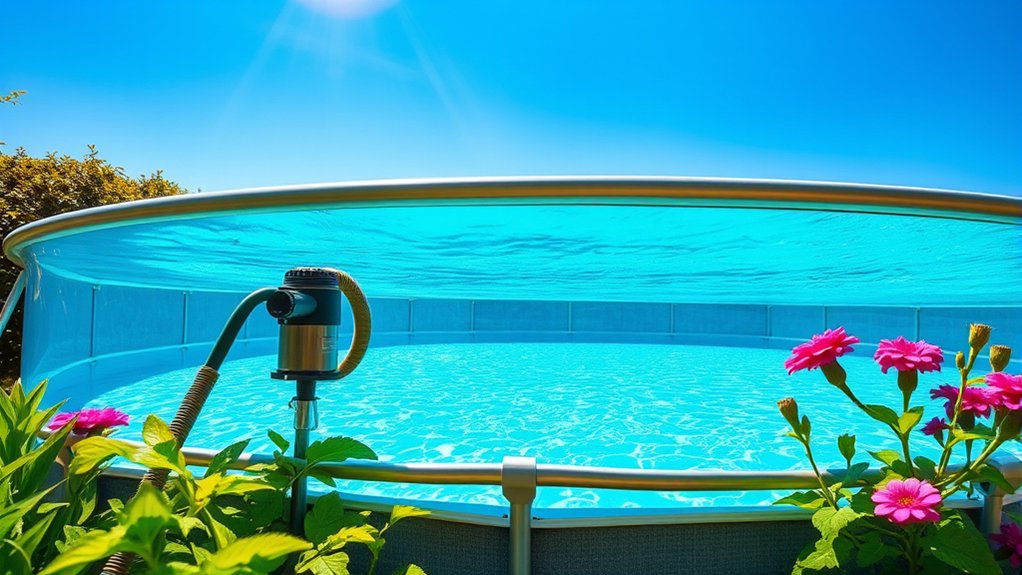
You should drain your above ground pool primarily when the liner needs replacement because of punctures or wear. This makes repairs much easier to handle.
Draining is also necessary if improper winterization has led to contaminated water that cleaning just can’t fix. Plus, if you face a chlorine lock where chlorine levels are too high to sanitize effectively, you might need to drain at least half of the pool water.
Full drainage is important for major repairs or if you’re relocating the pool. It gives you clear, unobstructed access.
Just try to avoid draining your pool during the summer months since intense UV rays and heat can damage the liner once it’s exposed.
What Tools Do You Need to Drain Your Pool?
To drain your above ground pool efficiently, you’ll need the right tools. This usually includes a submersible pump and a garden hose or backwash hose, depending on your pool size and setup.
Make sure you have proper valves to control the water flow and to direct it safely away from your property.
And don’t forget your essential safety gear! Working with electrical equipment near water can be risky, so it’s important to keep the process secure.
Essential Draining Equipment
Three essential tools will make draining your above ground pool efficient and safe: a submersible pump, a backwash hose, and safety gear.
The submersible pump is your primary tool for removing large volumes of pool water quickly. Attach a garden hose to direct the drained water to an appropriate location, complying with local regulations.
The backwash hose connects to your pool’s filtration system, allowing water to bypass the filter and exit directly. This prevents damage and speeds up drainage.
Always wear safety gear such as gloves and waterproof boots to protect yourself from electrical hazards and slippery surfaces during the process.
Using these tools correctly guarantees a smooth, efficient draining operation while maintaining safety and protecting your equipment.
It’s a straightforward approach that saves time and keeps everything running safely.
Choosing The Right Tools
Selecting the proper tools greatly impacts the efficiency and safety of draining your above ground pool. For large pools, a submersible pump is your best choice. It quickly removes water and needs a long discharge hose to direct water away safely.
If your pool is smaller, you can opt for the siphon method using a garden hose. This gravity-driven approach is simple and cost-effective.
Alternatively, you can use your pool pump by switching the multiport valve to “Waste” or “Backwash.” This allows water to drain directly without passing through the filter.
When using this method, make sure you connect a backwash hose securely to the waste port.
Also, always check local regulations on pool water disposal before you start. This way, you’ll be sure to comply with environmental guidelines.
How to Prepare Your Pool and Surroundings for Draining
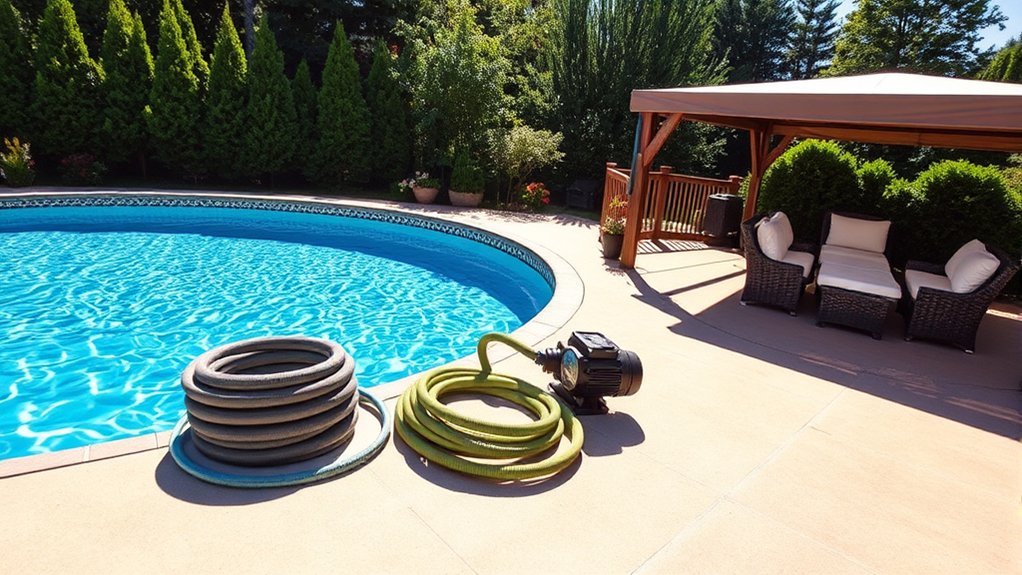
Before draining your above ground pool, make sure you turn off all equipment like pumps and heaters to avoid damage.
First, turn off the pump to stop water circulation and prevent mechanical issues. Next, check that the water’s chemical balance is neutral by testing it; this helps protect the environment when you drain the pool.
Also, be sure to check local regulations for proper water disposal. You want to stay compliant and avoid fines.
Plan your drainage area carefully. Pick a spot away from your house, landscaping, or pavement to prevent flooding or erosion.
Clear the pool surroundings of any obstacles and set up safety measures, especially if children or pets are nearby. Taking these steps ensures a safe, efficient setup before you drain the pool.
How to Safely Drain Your Above Ground Pool
Before you start draining, make sure to turn off all your pool equipment.
It’s also a good idea to check local regulations so you handle the water properly.
Next, get your submersible pump or siphon ready.
Be sure the discharge hose directs water away from your home and landscaping to avoid any damage.
As you drain, stay attentive throughout the process.
This will help prevent flooding and protect your pool liner from getting damaged.
Safety Precautions Overview
Although draining your above ground pool might seem straightforward, taking proper safety precautions is essential to avoid accidents and damage.
Before you begin, make sure to monitor weather conditions closely to prevent complications from rain or wind.
Pay special attention to electrical equipment near the pool, securing all connections to avoid hazards.
Here are three key safety precautions to follow:
- Clear the pool area of obstacles and keep children and pets away to prevent accidents.
- Monitor weather conditions and avoid draining during heavy rain or strong winds.
- Handle electrical equipment with care, ensuring all devices are properly insulated and connections are secure.
Following these steps helps you safely manage the draining process while protecting yourself and your property.
Equipment Preparation Tips
Taking the right safety measures sets the foundation for an efficient draining process.
Begin by selecting a submersible pump rated for at least 3,000 GPH to handle your pool’s water level efficiently. Attach a long discharge hose, checking all connections to verify they’re secure and free from leaks.
Next, locate and test your pool’s inlet valve and drainage system to confirm valves operate smoothly, allowing precise control over water flow.
Gather essential safety gear like gloves and goggles to protect yourself throughout the task.
Finally, plan where to drain the water, directing it away from structures to prevent flooding or damage.
Proper equipment preparation not only speeds up the drain but also keeps the process safe and effective.
How to Dispose of Above Ground Pool Water Responsibly
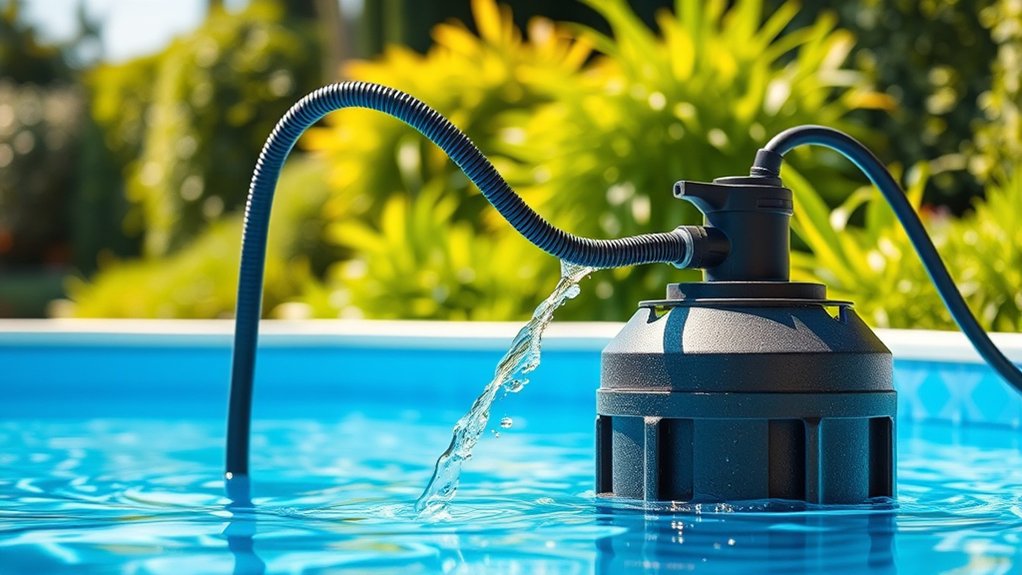
When disposing of above ground pool water, you must follow local regulations to avoid fines and protect the environment.
Before you drain your pool, make sure the chlorine is neutralized by letting the water sit for a few days. This helps ensure that harmful chemicals won’t damage the environment.
When you’re ready to dispose of the water, always direct it properly to prevent ecological damage.
Follow these steps for responsible disposal:
- Dechlorinate water by allowing it to stand for several days to neutralize chemicals.
- Use a hose to guide the water flow into a sanitary sewer system if chemicals remain. Avoid releasing water into storm drains since that can cause pollution.
- If the water is chemical-free, you can release it onto gardens or ditches. Just keep an eye on the water flow so it doesn’t cause flooding or soggy areas.
By following this approach, you’ll be environmentally responsible while effectively draining your pool.
It’s a simple way to protect nature and stay within the rules.
Cleaning and Inspecting Your Pool After Draining
Start by thoroughly inspecting your pool liner for any punctures, tears, or signs of wear that need repair before refilling.
Next, clean the entire pool surface with a mild detergent and a scrub brush to remove dirt, algae, and stains. Focus on stubborn rings around the pool edge, using a non-abrasive cleaner to protect the liner.
While cleaning, check the pool’s structural framework for damage or corrosion. Make sure it remains stable and secure. If you find any issues, take care of them promptly to avoid further deterioration.
After cleaning and inspection, let the pool dry completely. This helps prevent mold growth and gets it ready for refilling.
Proper cleaning and careful inspection at this stage will extend your pool’s lifespan and keep it safe for swimming.
How to Refill and Balance Your Pool Water Correctly
Refilling your above ground pool requires clean, uncontaminated water to guarantee ideal quality from the beginning.
Once refilled, focus on maintaining proper water chemistry and water balance to secure a safe swimming environment.
Follow these steps:
- Test your pool water using a reliable kit, checking pH (7.2-7.8), alkalinity (80-120 ppm), and chlorine levels.
- Use a pool chemical calculator to add precise amounts of chemicals based on your pool’s volume and test results.
- Let the water circulate for at least 24 hours before retesting and adjusting chemicals to achieve balanced water chemistry.
Make sure to regularly monitor and adjust water balance weekly.
This helps prevent algae growth and keeps your pool in peak condition.
It’s easier to stay on top of things than to fix problems later, so keep an eye on those levels!
Troubleshooting Common Pool Draining Issues
Although draining your above ground pool is usually straightforward, you may encounter issues such as slow drainage, leaks, or blockages that hinder the process.
If the hose becomes difficult to remove, check for blockages preventing water from flowing freely. Slow drainage often signals clogs in the hose or pump.
Inspect all connections and clear any obstructions you find. Leaks usually stem from valves that don’t close properly. Take a close look at the valves for damage or debris.
If the water level isn’t decreasing, make sure the pump is working and the discharge hose isn’t kinked or blocked. Properly addressing these issues guarantees efficient water removal when draining your pool.
If problems persist, it’s a good idea to consult a professional. They can evaluate and resolve complex system faults safely and effectively.
Frequently Asked Questions
Can Draining Damage the Pool Liner or Structure?
Yes, draining your above ground pool improperly can damage the liner and compromise structural integrity.
During pool maintenance, draining too quickly may cause the liner to shift, tear, or shrink. This can lead to costly liner repairs.
Plus, an empty pool risks structural failure because there’s no water pressure supporting the walls.
To protect your pool, drain it slowly and avoid exposing it to extreme weather.
Also, keep an eye on groundwater levels to help maintain its long-term durability and performance.
How Long Does It Typically Take to Drain an Above Ground Pool?
Draining an above ground pool typically takes 6 to 12 hours, depending on your drainage techniques and equipment.
Using a submersible pump speeds up pool maintenance by moving water faster, often finishing in 8 to 10 hours.
If you opt for the siphon method, expect longer drainage times, sometimes over 12 hours.
Always plan your water disposal carefully to avoid damage or environmental issues during the process.
It’s better to be prepared than caught off guard!
Is It Necessary to Remove Pool Accessories Before Draining?
Yes, removing pool accessories is essential before draining. Studies show that 70% of pool owners face complications when accessories obstruct the drainage process.
Taking necessary precautions by removing ladders, floats, and skimmers prevents damage and helps avoid accidents.
Clearing the pool area guarantees smoother water flow and lets you inspect the liner and walls easily.
Don’t skip this step—it’s key to an efficient, safe, and damage-free drainage process. Trust me, it makes everything a lot easier!
Can I Drain My Pool During Winter or Cold Weather?
You shouldn’t fully drain your pool during winter or cold weather because of winter precautions. Instead, drain it only halfway to protect the liner and the structural integrity. Always check the water temperature and avoid draining when it’s near freezing.
Proper pool winterization is essential. Make sure pumps and filters are winterized before partial draining.
It’s best to choose a milder day for this task to help minimize damage.
Taking these steps keeps your pool safe throughout the cold season. That way, you avoid costly repairs and ensure your pool is ready when warmer weather returns.
What Should I Do if My Pump Stops Working Mid-Drain?
If your pump stops working mid-drain, start with some basic troubleshooting tips.
Check the power supply first, then inspect for any clogs. Don’t forget to clean or replace the filter as needed.
Once you’ve done that, try restarting the pump.
If it still doesn’t work, you might want to use emergency backup solutions like a submersible pump or try the siphon method.
Always remember to follow safe draining practices.
Keep a close eye on water levels to avoid uneven pool structure and potential damage from incomplete drainage.
It’s better to be cautious!
Conclusion
Draining your above ground pool is like giving it a fresh breath. It’s essential for maintenance and longevity. By preparing properly, using the right tools, and disposing of water responsibly, you guarantee a smooth process.
After cleaning and inspecting, refilling with balanced water keeps your pool ready for fun. Follow these steps carefully and you’ll keep your pool in top shape. This helps you avoid common pitfalls and extend its life.
Stay proactive and enjoy a crystal-clear swim every time.