Is It Hard To Learn To Swim – Beginner Guide And Tips
Learning to swim can feel challenging at first, but you’re not alone in this journey. By starting in shallow water and practicing essential skills like breathing techniques and floating, you can build confidence gradually.
Using supportive equipment and enrolling in lessons can enhance your comfort and mastery. Remember, it’s all about patience and consistent practice.
With the right approach, you’ll find yourself swimming with ease in no time, and there’s so much more to discover about becoming a skilled swimmer.
Is Swimming Hard for Beginners?
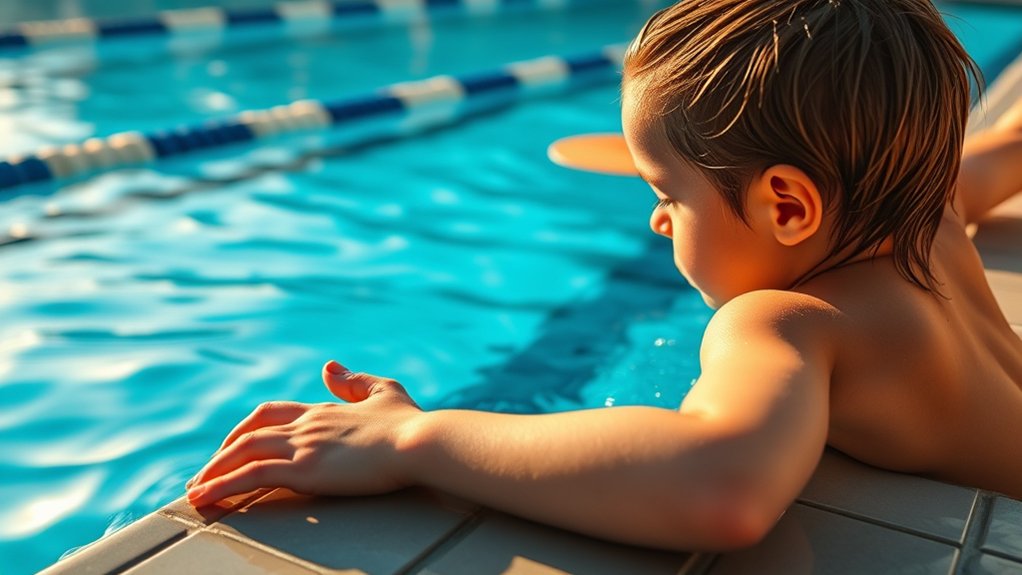
When you first dip your toes into swimming, it might feel challenging because you’re trying to coordinate movements like kicking, arm strokes, and breathing all at once.
For beginner swimmers, mastering basic skills is essential. You may struggle with key elements like proper breathing techniques or stroke technique, making the learning curve steep.
However, don’t get discouraged! It’s normal to feel a bit overwhelmed at first.
Feeling overwhelmed at first is completely normal, so stay positive and keep practicing!
Consistent practice is crucial, and focusing on one skill at a time can greatly boost your confidence in the water.
As you improve your techniques like floating and swimming strokes, you’ll notice significant progress.
Tips for Overcoming Fear and Getting Comfortable in Water
Feeling anxious about swimming is common among beginners, especially as you work on improving your skills. To start swimming confidently, begin in shallow water. This helps you feel comfortable while practicing basic skills like floating and kicking.
Gradually introduce submerging your face in the water. Practice exhaling through your mouth and nose to adapt to the sensation. Use supportive equipment, like kickboards, to focus on your technique and security.
Incorporate breathing techniques by timing your inhales and exhales with your movements to reduce anxiety and improve coordination.
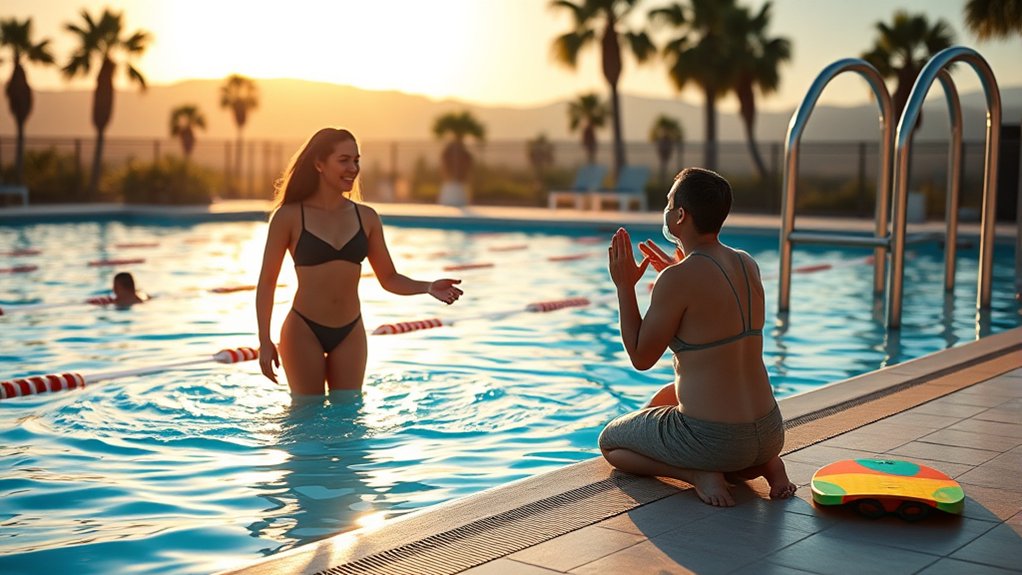
Finally, consider enrolling in swimming lessons with a certified instructor who can provide personalized guidance and encouragement, easing your fears and boosting your confidence in the water.
What Are the Essential Skills for New Swimmers?
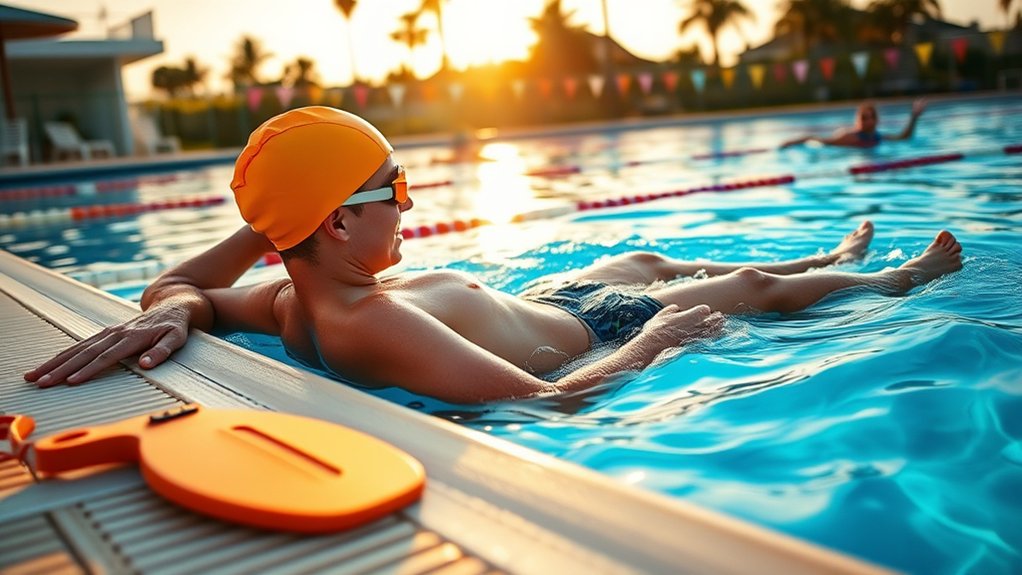
To become a confident swimmer, you’ll want to master some essential skills.
Start by focusing on basic water safety techniques and fundamental swimming movements. These are the building blocks that will help you progress smoothly.
Basic Water Safety Skills
Start by learning how to get in and out of the water safely; take your time entering or use steps for a quick exit.
Practicing breathing techniques will help you manage fear. Exhale underwater and inhale when your head comes up.
Develop your floating skills to stay calm in deep water, beginning with back floating for support.
Don’t forget about kicking, which is fundamental for building strength and stability. Try practicing while holding the pool’s edge.
Finally, focus on coordinating your limbs to maintain proper body position, allowing you to swim safely and effectively.
Fundamental Swimming Techniques
Master essential swimming techniques to build a solid foundation for your swimming journey.
Start with breathing techniques; practice exhaling underwater and inhaling as your head surfaces for better rhythm and reduced fatigue.
Develop your floating skills by learning to float on your back. This enhances your confidence and safety in the water.
Focus on kick fundamentals, using relaxed, small kicks with loose ankles to improve propulsion.
Then work on arm coordination by understanding the catch, pull, and recovery phases for each stroke to maximize efficiency.
Finally, explore stroke variety with options like freestyle and breaststroke. These help engage different muscle groups and boost your swimming speed.
Understanding Basic Swimming Techniques?
To become a confident swimmer, you gotta master some key stroke techniques like freestyle, backstroke, and breaststroke.
It’s not just about moving your arms and legs; understanding how to breathe right and coordinate your movements really makes a big difference in how efficient you’re in the water.
So, let’s dive into these basics together.
We’ll help you find your rhythm and build up your skills step by step.
You’ll see, once you get the hang of it, swimming becomes way more enjoyable and natural!
Key Stroke Techniques
Learning the key stroke techniques in swimming can greatly enhance your efficiency in the water and boost your confidence. Here are essential tips for mastering strokes:
- Freestyle Stroke: Keep a horizontal body position, use a flutter kick, and practice rhythmic breathing to minimize drag.
- Backstroke Technique: Maintain a tilt in your pelvis, use controlled kicks, and visualize grabbing water with your arms for propulsion.
- Breaststroke Leg Technique: Focus on the whip kick, drawing heels towards your hips while rotating your feet outward to generate propulsion.
- Timing and Coordination: Sync your kicks and pulls in breaststroke, as mastering timing is vital to overcoming common challenges in proper swimming.
Incorporate these techniques into your swim workouts for a solid foundation in your basic swim skills.
Importance of Breathing
Breathing is a critical element in swimming that transforms your experience in the water. Mastering proper breathing techniques can help you manage fear and build confidence, making each swim more enjoyable.
Focus on exhaling through your mouth and nose while your face is submerged, then inhale when your head surfaces to keep your rhythm. Timing your breaths with strokes not only enhances coordination but also reduces fatigue, allowing for smoother freestyle sessions.
Practicing drills like side breathing is essential; it can greatly improve your comfort in the water.
Remember, establishing effective breath control is key to gliding effortlessly and enjoying your time while swimming.
With persistence, you’ll find that breathing becomes second nature in no time!
Mastering Coordination Skills
- Practice kicking with your legs while holding onto the pool’s edge to build confidence.
- Focus on integrating your arm movements with your breathing for a smooth stroke rate.
- Use drills for strokes like the front crawl and breaststroke to strengthen your overall technique.
- Pay attention to your lower back, abdomen, and hips’ movements to maximize propulsion and minimize drag.
Essential Swimming Equipment for Beginners
Having the right swimming equipment can make a big difference in your comfort and confidence as a beginner. Here are some essential swimming equipment items to evaluate:
| Equipment | Purpose |
|---|---|
| Swim Goggles | Protect your eyes from chlorine and enhance visibility underwater. |
| Swim Cap | Keeps hair out of your face, reduces drag, and can help retain warmth. |
| Kickboards | Isolate leg movements, allowing you to focus on kicking technique. |
Investing in these items will help you feel comfortable in the water and improve your technique as you swim. Your fitness level may vary, but mastering these basics will set the foundation for your swimming journey and help you progress confidently!
Why Swim Lessons Are Vital for New Swimmers?
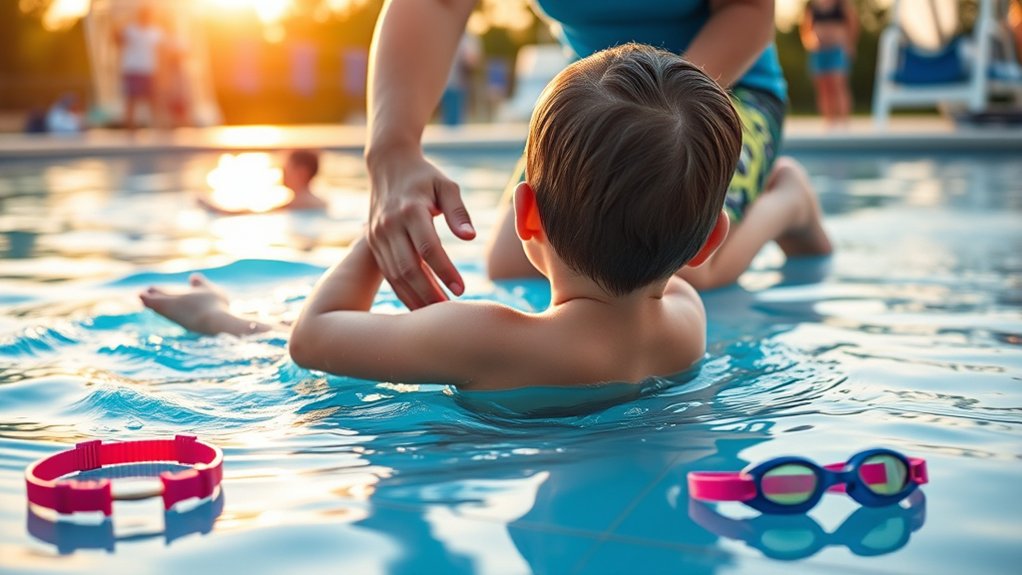
Choosing the right swimming equipment lays the groundwork for your aquatic journey, but taking swim lessons is where you truly start to build your skills.
Here’s why swim lessons are crucial for new swimmers:
- Structured Learning: You’ll receive guidance on essential skills like floating, proper breathing, and stroke techniques.
- Correction of Mistakes: Instructors help you identify and correct common errors early, promoting good habits.
- Confidence Building: Regular participation in lessons boosts your confidence in the water. This is essential for overcoming fears.
- Safety Education: You’ll learn critical skills for getting in and out of the water safely and preventing accidents.
In this beginners guide, swim lessons set the foundation for a safe, enjoyable, and skilled swimming experience.
How to Build Confidence and Progress in Swimming?
As you commence your swimming journey, building confidence is essential for making progress in the water. Start by mastering basic water safety skills, like getting in and out of the pool, to prevent injuries and foster comfort.
Practice floating and treading water to enhance relaxation and safety. Gradually integrate breathing techniques by exhaling underwater and inhaling when your head surfaces; this helps manage fear.
Practice floating and treading water to build relaxation and confidence, while mastering breathing techniques to ease your fears.
Set SMART goals: specific, measurable, achievable, relevant, and time-bound. These help you track your progress in swimming and keep your motivation high.
Joining a beginner swimming class or finding a mentor can offer invaluable guidance and constructive feedback, making your learning experience enjoyable and effective.
With patience and practice, you’ll build confidence and see significant progress.
Navigating Common Beginner Swimming Challenges
While diving into swimming can be intimidating, understanding and addressing common beginner challenges can make the journey smoother.
Here are some tips to help you navigate these hurdles:
- Fear of Water: Begin in shallow water and gradually build your confidence through acclimation techniques.
- Breathing Techniques: Practice exhaling underwater and synchronize your inhalations with your strokes to enhance coordination and reduce fatigue.
- Coordination Difficulties: Focus on drills that isolate your arms and legs to improve control and synchronization.
- Learning Strokes: Start with simple drills before progressing to more complex strokes, allowing for mastery over time.
Frequently Asked Questions
How Long Does It Typically Take to Learn Swimming?
It typically takes you around 4 to 8 lessons to learn swimming basics, but the timeline varies based on your practice frequency and individual factors.
Consistent practice, ideally 2 to 3 times a week, helps you reach swimming milestones faster.
Overcoming fear and focusing on essential skills are vital for adult learning.
Prioritizing water safety will further enhance your confidence and comfort in the water as you progress towards mastering different strokes.
Can I Learn Swimming Without Taking Formal Lessons?
Yes, you can definitely learn to swim without formal lessons using self-taught methods. Start with instructional videos and swimming books to grasp technique and safety precautions.
Create practice routines that focus on floating, breathing, and kicking in a shallow area.
Expect common challenges, but don’t get discouraged. Regular practice will build your confidence and skills.
Having a friend to provide support can also make a big difference in your learning journey.
What Should I Wear for Swimming Practice?
For swimming practice, choose snug swimwear made from chlorine-resistant fabrics to enhance your performance.
Don’t forget to wear a swim cap to keep hair out of your face and reduce drag.
Invest in well-fitting goggles for clear vision underwater; they’re essential for comfort.
If the pool’s cold, consider water shoes for warmth and grip.
How Do I Practice Swimming Techniques at Home?
You can practice swimming techniques at home using basic drills and equipment. Try mimicking strokes and kicks while watching technique videos to enhance your form.
Incorporate breathing exercises, practicing your rhythm and head positioning with a towel.
Don’t forget to focus on your core through fitness routines for better stability in the water.
As you improve, always keep water safety in mind to make the most of your skills and confidence in swimming.
Are There Age Limits for Learning to Swim?
There’re no age limits for learning to swim.
Imagine a lifelong journey through water! Whether you’re a toddler taking splashy baby steps or an adult overcoming fears, swimming offers numerous benefits like fitness, relaxation, and water confidence.
You can choose instructors who specialize in swimming styles that fit your needs, making sure safety measures are prioritized.
Conclusion
In the grand ocean of swimming, every stroke you take brings you closer to mastering the waves. Remember, every swimmer started as a beginner, just like you.
Embrace the splashes and let go of the fear. It’s a journey filled with joy and newfound confidence. With practice, patience, and possibly some lessons, you’ll soon find yourself gliding through the water like a graceful dolphin.
So, plunge into the water and let it carry you to new heights!